
NVH Engineering in Brake Pads: How Top Manufacturers Eliminate Noise
Summary:
Noise-free brake pads are engineered, not accidental. For importers and distributors, understanding NVH (Noise, Vibration, Harshness) engineering is critical to avoiding costly returns and protecting brand reputation. This guide breaks down how top manufacturers design quiet braking through material formulation, structural features like chamfers and shims, precision manufacturing, and rigorous testing, highlighting common sourcing mistakes to avoid.
NVH Engineering in Brake Pads: How Top Manufacturers Eliminate Noise
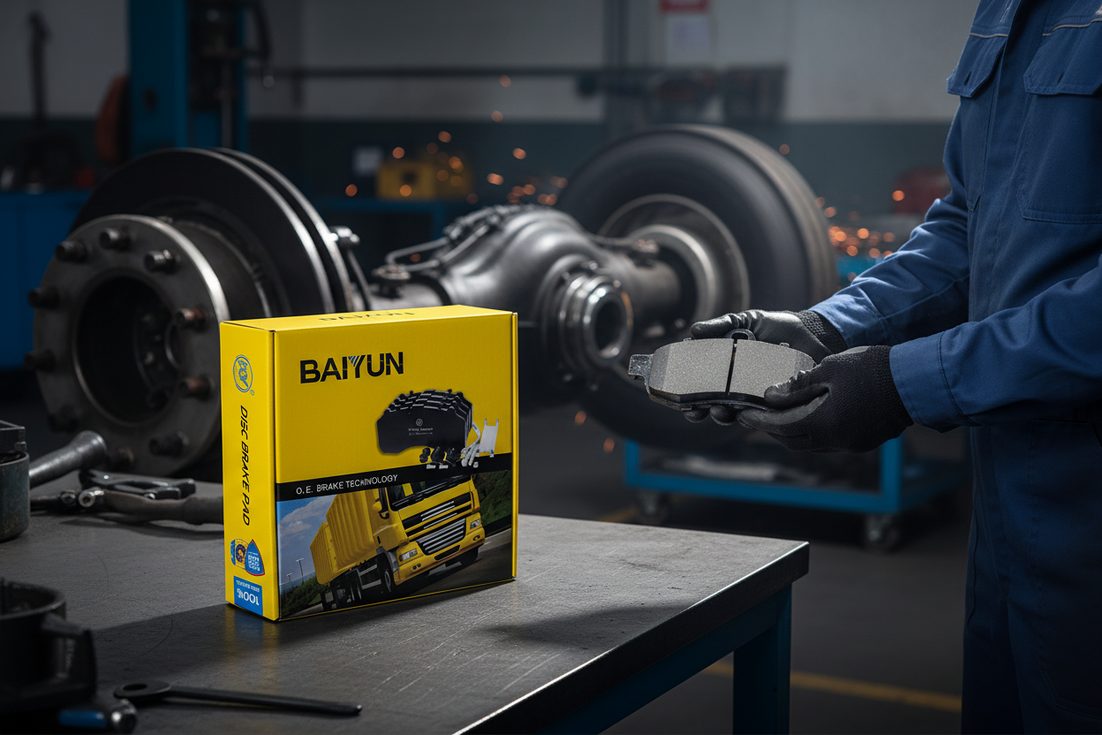
You've probably heard the story before. A distributor imports a container of brake pads that look great on paper and pass a basic visual inspection. They get installed on customer vehicles, and within a few weeks, the complaints start rolling in. Not about stopping power, but about noise. A high-pitched squeal, a low-frequency groan, or a metallic chatter that turns a simple brake job into a warranty nightmare. For importers and distributors, brake noise isn't just an annoyance; it's a direct hit to your brand reputation and your bottom line.
NVH – Noise, Vibration, and Harshness – is the single biggest cause of customer complaints and product returns in the aftermarket brake industry. Some reports suggest noise-related issues account for over 70% of all brake pad complaints. The mistake many buyers make is treating NVH as an afterthought, a problem to be solved with a cheap shim or a spray-on coating. In reality, quiet braking is engineered into a pad from the very first stage of formulation and design. It's a complex interplay of material science, structural mechanics, and precise manufacturing tolerances.
So, how do you source truly quiet, noise-free brake pads? You need to understand the engineering behind them and the common pitfalls in the supply chain that compromise NVH performance. Let's break down what separates a low-NVH manufacturer from the rest.
Where Does Brake Noise Actually Come From?
Think of your brake system as a musical instrument. When the stationary pad contacts the spinning rotor, it can induce vibrations. These vibrations travel through the pad assembly, caliper, and suspension, amplifying until they produce audible noise. The frequency determines the sound – a high-pitched squeal is often in the 1-16 kHz range, while a groan might be below 500 Hz.
The root causes are varied. It can be a phenomenon called "stick-slip," where the friction material alternately grips and slides over the rotor surface. It can be resonance, where the natural frequency of the pad assembly matches the excitation frequency from the rotor. Or, it can be simple mechanical instability caused by poor fitment or degraded components. As one industry technical note points out, the buildup of debris or corrosion at the bond line between the friction material and the backing plate can mask a delamination, but any degradation there will change the pad's NVH characteristics, usually for the worse.
For an importer, the first mistake is assuming all compounds are equal. A semi-metallic pad formulated purely for high-temperature stability might be inherently noisier than a ceramic or low-metallic NAO formulation designed with NVH as a primary goal. You're not just buying friction material; you're buying a tuned system.
The Four Pillars of NVH Control in Manufacturing
Top-tier manufacturers don't just hope for a quiet pad; they design and build for it. This process rests on four critical pillars.
1. Friction Material Formulation and Tuning
This is the foundation. The blend of binders, abrasives, lubricants, and structural fillers dictates the pad's fundamental personality. Manufacturers like BAIYUN Brake use proprietary ceramic and low-metallic NAO formulas engineered for a linear friction profile. A linear profile means the coefficient of friction remains stable as temperature changes, preventing the sudden grip-and-release action that causes squeal. These compounds are also formulated to generate a beneficial transfer layer on the rotor—a thin, even layer of pad material that promotes smooth, quiet engagement.
2. Structural Design: Chamfers, Slots, and Shims
This is where physics meets design. Simple modifications to the pad shape dramatically alter its vibrational behavior.
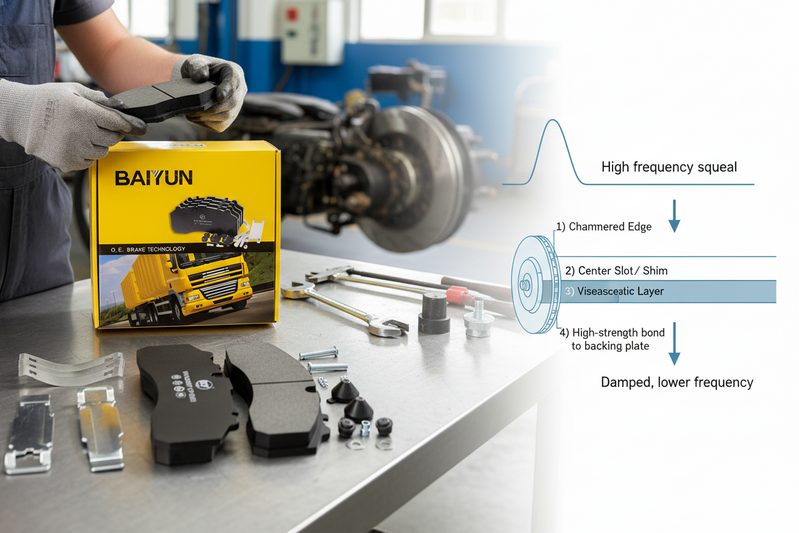
- Chamfers: Angled cuts on the leading and trailing edges of the friction material break up the contact patch, preventing the pad from "digging in" and exciting vibrations.
- Slots (or Grooves): A center slot or multiple grooves serve several purposes. They vent gases, shed debris, and, crucially, they segment the pad to change its natural resonant frequency. As noted in industry resources, these slots "tune" the pad to oscillate at a frequency less likely to produce audible noise.
- Integrated Shims: A high-quality, multi-layer shim (or insulator) is a vibration damper. It sits between the pad backing plate and the caliper piston. Cheap, thin shims or adhesive-backed stickers do little. Premium shims use viscoelastic layers that convert vibrational energy into negligible heat. The bond is critical; excessive heat or pressure can degrade the shim's attachment, rendering it useless for NVH control.
3. Precision Manufacturing and Bonding Integrity
You can have the best design and formula, but poor manufacturing will ruin it. The bond between the friction material and the steel backing plate is paramount. Rust jacking—where corrosion forms under the material and lifts it—is a guaranteed source of noise and failure. Manufacturers combat this with multi-stage surface treatments: shot blasting for texture, followed by high-temperature curing of anti-corrosion coatings.
The molding process itself must be precise. Inconsistent density or voids within the friction material create hot spots and uneven wear, leading to brake judder and noise. Automated, pressurised molding in an IATF 16949 certified facility ensures every pad in a batch has identical structural integrity. This consistency is what allows a distributor to trust that the 500th set will perform exactly like the first.
4. Rigorous Post-Production Testing
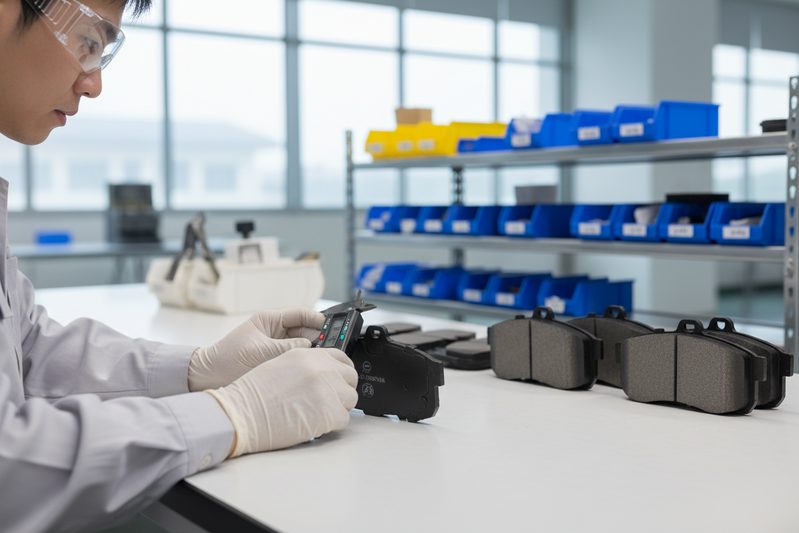
This is the final gatekeeper. Does the manufacturer test for NVH, or just for friction and wear? Dynamometer testing should simulate real-world conditions, including noise-sensitive low-pressure drags and high-temperature stops. At BAIYUN Brake, pads undergo NVH screening on inertia dynos that can detect the specific frequency ranges associated with common brake noises. This data is compared against OE benchmarks. It's not enough to say a pad is "quiet"; you should be able to see the test reports proving it. You can review sample data in our passenger car brake pad test report.
Common Buyer Mistakes That Lead to Noisy Brake Pads
Understanding the engineering is one thing; avoiding supply chain traps is another. Here are the most frequent errors importers and distributors make.
Mistake 1: Prioritizing Price Over Formulation. Sourcing the cheapest possible compound is a false economy. A pad that's $2 cheaper per set but generates a 5% return rate for noise will erase any savings—and then some—through reverse logistics, warranty labor, and lost customer trust.
Mistake 2: Ignoring the "System" Approach. Brake pads don't work in isolation. A quiet pad paired with a cheap, out-of-spec rotor will still likely make noise. Educating your installers or providing guidance on proper rotor resurfacing/preparation is part of selling a quality product. Our brake pad installation guide covers these critical steps.
Mistake 3: Overlooking Packaging and Storage. NVH features like integrated shims with adhesive can be compromised by improper storage. Pads stored in damp, humid conditions can experience backing plate corrosion before they're even installed. Ensure your supplier uses sealed, moisture-resistant packaging.
Mistake 4: Not Asking for Proof. Any manufacturer claiming low NVH should provide evidence. Ask for dynamometer test charts showing friction stability and noise evaluation. Request samples for your own vehicle testing. Certifications like ECE R90 are a good baseline—they mandate performance retention after thermal cycling—but they don't specifically grade noise. You need NVH-specific data.
How to Vet a Low-NVH Brake Pad Manufacturer
Your supplier checklist should go beyond MOQs and lead times. Ask these questions:
- "Do you have a dedicated NVH testing protocol and equipment? Can I see a sample report?"
- "What is your process for ensuring bonding integrity and preventing rust jacking?"
- "Are chamfers and slots standard on your relevant part numbers, or an extra cost?"
- "What is the composition and thickness of your anti-noise shims? How are they attached?"
- "Can you provide traceability for friction material batches?"
A manufacturer with serious NVH engineering will have clear, confident answers. They'll talk about their R&D capabilities and material science team, not just their production capacity. For example, with over 49 years in the industry, our engineers focus on designing noise out of the system from the start, which is a core part of our competitive advantages.
FAQ: NVH and Brake Pads for Importers & Distributors
Q: We've had noise issues before. Can adding aftermarket shims or paste fix a noisy pad batch?
A: Sometimes, but it's a band-aid, not a cure. Anti-squeal paste can help dampen vibrations at the caliper interface, and clip-on shims might reduce certain frequencies. However, if the noise is inherent to the friction material formulation or caused by a poor bond, these fixes will be temporary at best. You're adding cost and labor to mask a core product flaw. It's better to source pads with the damping engineered in from the factory.
Q: Do ceramic brake pads guarantee no noise?
A: No material guarantees absolute silence, but premium ceramic formulations are generally superior for NVH control. They tend to have more stable friction coefficients and generate less abrasive dust that can contribute to noise. The key is the specific formulation. A low-quality ceramic pad can still be noisy if poorly manufactured. Look for manufacturers who highlight NVH as a design goal for their ceramic lines.
Q: How important is proper installation for preventing noise, and what should we tell our installers?
A: It's critical. Even the best pad can squeal if installed incorrectly. The top three installer tips are: 1) Always clean and lubricate the caliper slides and contact points (not the rotor or pad surface!) with high-temperature silicone grease. 2) Properly bed-in the pads according to the manufacturer's procedure to establish an even transfer layer. 3) Ensure rotors are within specification for thickness, parallelism, and have a clean, non-glazed surface. A detailed process is available in our brake pad troubleshooting resources.
Quiet brake pads aren't an accident; they're the result of deliberate, sophisticated engineering at every stage. For distributors, the lesson is clear: sourcing based solely on a low price per box is a high-risk strategy. The true cost of a brake pad includes its performance in the field—and nothing signals poor performance to a customer faster than a loud, annoying squeal.
Partnering with a manufacturer that prioritizes NVH engineering in their core process protects your brand, reduces warranty headaches, and builds customer loyalty. It turns a commodity purchase into a value-added component of your business.
Ready to source brake pads engineered for quiet, reliable performance? Explore our full brake pad product range, including our low-NVH ceramic and premium formulations. Request samples and test reports to verify the quality for yourself.
Was this article helpful?
Average Rating: 5/5 (1882)