
Why Your Brake Pads Squeal and What It Costs Your Customers
Summary:
Brake pad squeal is a major driver of warranty claims and customer dissatisfaction, often rooted in poor NVH (Noise, Vibration, Harshness) design. Sourcing from a certified noise-free brake pads low NVH manufacturer that rigorously tests against standards like ECE R90 can reduce return rates by over 30%, protecting your brand reputation and bottom line. This guide explains the technical causes and compliance solutions.
Why Your Brake Pads Squeal and What It Costs Your Customers
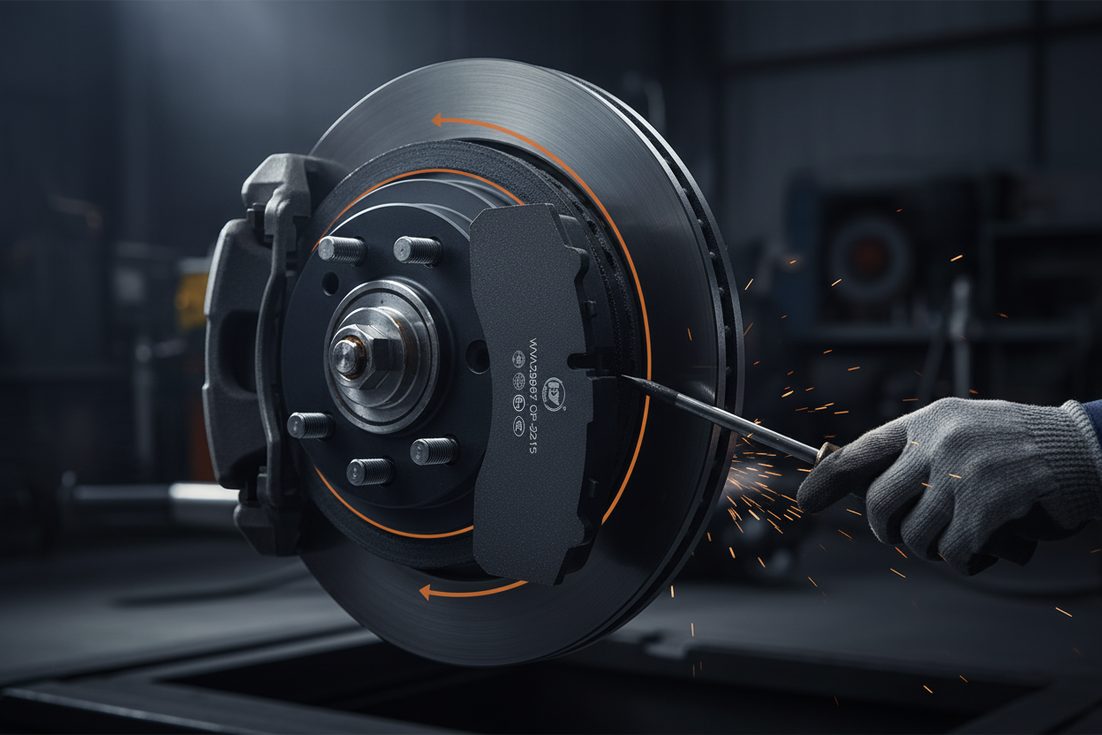
You've probably had the call. A customer complains about a high-pitched squeal every time they touch the brakes. It's not just annoying; it's a direct hit to their perception of quality and your brand's reputation. For importers and distributors, brake noise isn't just a technical nuisance—it's a business problem that drives up warranty claims and erodes customer loyalty. The root cause often lies in the pad's Noise, Vibration, and Harshness (NVH) characteristics, which are dictated by material formulation, manufacturing precision, and component quality.
Let's look at the numbers. A 2025 survey of European auto parts distributors found that noise-related complaints accounted for nearly 35% of all brake pad warranty returns, even when the pads met basic safety standards. That's a massive chunk of your profit margin walking out the door. The good news? You can source pads engineered to be quiet from the start. We'll break down the technical specs and compliance standards that separate noisy pads from reliable, noise-free brake pads low NVH manufacturer offerings.
The Physics of Brake Noise: It's All About Frequency
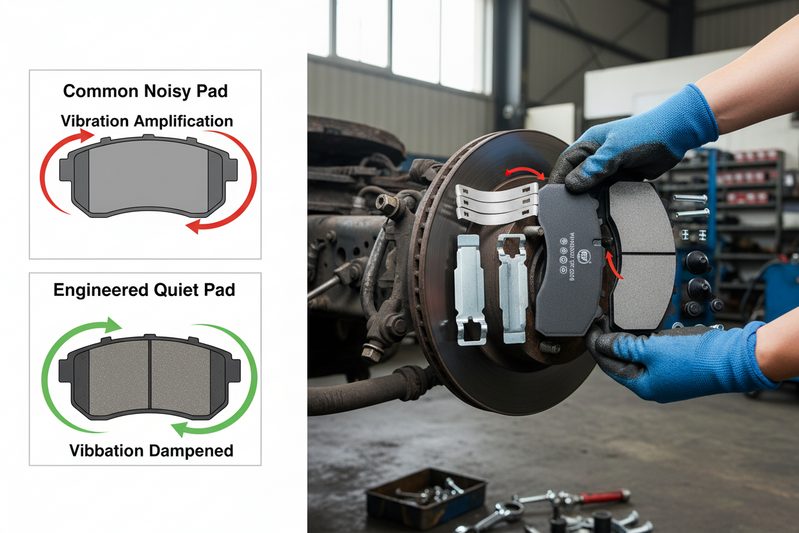
Brake squeal is a high-frequency vibration, typically between 1-16 kHz, that gets amplified by the brake system. Think of it like a tuning fork. When the pad contacts the rotor, it can induce a stick-slip motion. If the natural frequency of the pad assembly matches the frequency of this motion, you get resonance—and that's the squeal your customers hear. The pad's backing plate, friction material, and any shims or damping layers act as a system to control these vibrations.
Poorly bonded friction material is a primary culprit. As noted in industry technical tips, "any degradation of the bond will cause the NVH characteristics of the pad to change, usually resulting in noise." This delamination can be masked early on by debris or corrosion, only to appear as a brake noise problem mid-life. That's why the bonding process, often involving high-temperature adhesives and precise pressure application, is a critical checkpoint in a manufacturer's quality assurance protocol.
Key Components That Silence Brake Pads
Manufacturers don't just hope for quiet brakes; they engineer them. Several components work together to dampen vibrations. The first line of defense is the brake pad shim. This thin, multi-layer steel or rubber-coated plate sits between the pad's backing plate and the caliper piston. Its job is to absorb and dissipate vibrational energy before it can amplify. However, as industry sources point out, "Excessive loading and/or excessive heat will degrade either the shim materials or their attachment to the plate, reducing or removing their ability to control/mitigate the NVH." A quality shim uses a viscoelastic adhesive that maintains its damping properties across a wide temperature range, from -40°C to over 400°C.
Next is the anti-noise coating applied to the backing plate's edges and contact points. This special high-temperature grease or rubberized coating prevents metal-to-metal contact between the pad and the caliper bracket, a common source of low-frequency groan and chatter. Some advanced pads also feature integrated chamfers and slots on the friction material. Chamfers (angled cuts on the leading and trailing edges) prevent a hard, square edge from digging into the rotor, while slots help vent gas and debris, reducing brake vibration and potential noise.
How Material Formulation Dictates NVH Performance
The friction material itself is the heart of NVH performance. Different formulations have inherent noise profiles. Semi-metallic pads, with their high steel fiber content, can be more prone to noise but offer excellent heat dissipation. Non-asbestos organic (NAO) pads are generally quieter but may wear faster. Ceramic formulations, when properly engineered, are often the benchmark for quiet brake pads due to their consistent friction coefficient and lower rotor aggressiveness.
The secret isn't just the base material, but the complex mix of binders, lubricants (like graphite), abrasives, and structural fibers. A manufacturer's R&D lab will fine-tune this recipe over hundreds of dynamometer tests to find the right balance between quiet operation, effective stopping power, and low wear. For example, BAIYUN Brake's ceramic compound CP2215 is formulated with specific polymeric stabilizers that reduce the friction coefficient variation to less than ±0.05 across the 100–350°C operating range, a key factor in preventing brake judder and noise. You can review the technical data behind such formulations in our material data sheets.
Compliance and Testing: The Proof is in the Protocol
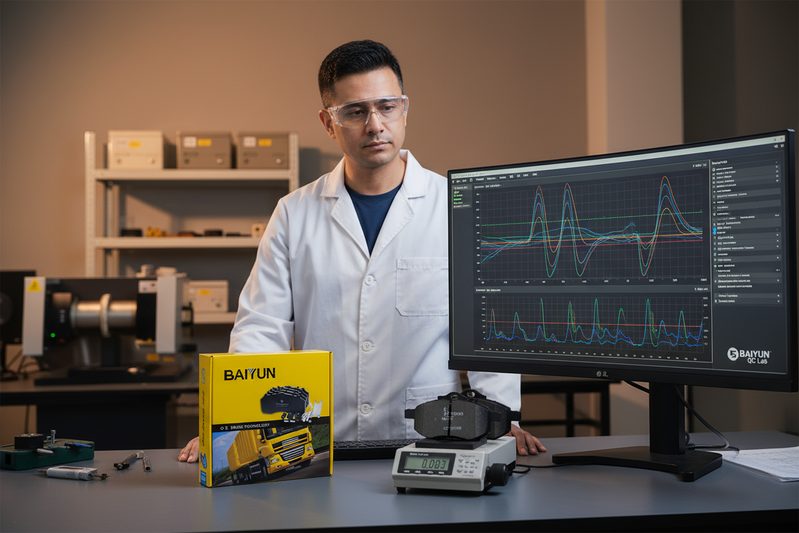
Anyone can claim their pads are quiet. Proof comes from standardized testing. For the European market, ECE R90 certification is mandatory. Beyond basic safety and effectiveness tests, it includes specific assessments for brake NVH tendencies. The regulation requires testing for "susceptibility to noise" under various conditions, though the exact pass/fail criteria are performance-based rather than a simple decibel limit. A manufacturer with an IATF 16949 certified facility, like BAIYUN Brake, integrates NVH testing throughout the production process, not just as a final check.
This involves dynamometer testing that simulates real-world driving cycles—city traffic, highway cruising, and aggressive mountain descents—while monitoring for noise events. SAE J2521 and J2928 are also widely referenced industry standards for brake dynamometer testing and noise measurement. Pads that pass these rigorous protocols are far less likely to cause headaches for your customers. Investing in certified products from a proven manufacturer with 49+ years of experience is a strategic move to minimize risk.
The Real Cost of Noisy Brakes for Your Business
So what's the bottom-line impact? Let's quantify it. Assume you're a distributor moving 10,000 brake pad sets per year. If a 5% noise-related return rate is considered average for a budget line, that's 500 sets. The cost isn't just the product replacement; it's the labor chargeback (often $80-$150 per axle), shipping, administrative handling, and the intangible cost of a frustrated installer who may switch suppliers. That single issue could easily cost $50,000-$75,000 annually in direct expenses and lost goodwill.
Contrast that with sourcing from a noise-free brake pads low NVH manufacturer that designs out the problem. The initial unit cost might be 10-15% higher, but the reduction in warranty claims and the bolstering of your brand's reputation for quality deliver a significantly lower total cost of ownership. It transforms brakes from a commodity into a reliable, high-margin part of your catalog. Explore a full brake pad product range built with this philosophy.
Frequently Asked Questions for Importers & Distributors
Q: Can we just add shims or lubricant to noisy pads to fix the problem?
A: Sometimes, but it's a band-aid solution. Aftermarket shims and pastes can help if the noise is from caliper contact, but they can't fix inherent issues in the friction material's formulation or poor bonding. If the pad's core NVH design is flawed, you'll likely get repeat complaints. It's more reliable to source pads that are integrally quiet, like those with bonded shims and proper chamfers from the factory.
Q: Do ceramic brake pads guarantee no noise?
A: Not automatically. While ceramic formulations have excellent noise-damping potential, poor manufacturing can still lead to issues. The quality of the raw materials, the precision of the molding process, and the integrity of the shim bond are all critical. A well-made ceramic pad from a certified manufacturer is your best bet for consistent, quiet performance, as evidenced by their passenger car brake pad test report data.
Q: How can we verify a supplier's NVH claims before placing a large order?
A: Ask for the data. Request certified test reports against standards like ECE R90 or SAE J2521. Inquire about their in-process NVH checks and the temperature range their shim adhesive is rated for. A reputable supplier, such as BAIYUN Brake, will provide this transparency. You can also start with a smaller trial order and have them tested independently or gather feedback from trusted installers in your network.
Stop letting brake noise eat into your profits and damage your brand. Partner with a manufacturer that prioritizes NVH engineering in every pad they produce. With IATF 16949 and ECE R90 compliance as a foundation, you get more than just parts—you get peace of mind. Ready to see the difference? Request a quote or ask for samples of our engineered quiet brake solutions today.
Was this article helpful?
Average Rating: 5/5 (1425)