
Brake Squeal, Judder, and Groan: The Importer’s Guide to Noise-Free Brake Pads
Summary:
Noise-free brake pads are no longer a luxury but a market imperative, with over 65% of consumer complaints focusing on NVH. This guide for importers breaks down the engineering behind quiet braking, analyzes profitable market trends, and provides a sourcing strategy to reduce warranty costs and capture the growing premium segment. Partnering with a low NVH manufacturer like BAIYUN Brake, certified to IATF 16949 and ECE R90, ensures consistent quality and performance.
Brake Squeal, Judder, and Groan: The Importer's Guide to Noise-Free Brake Pads
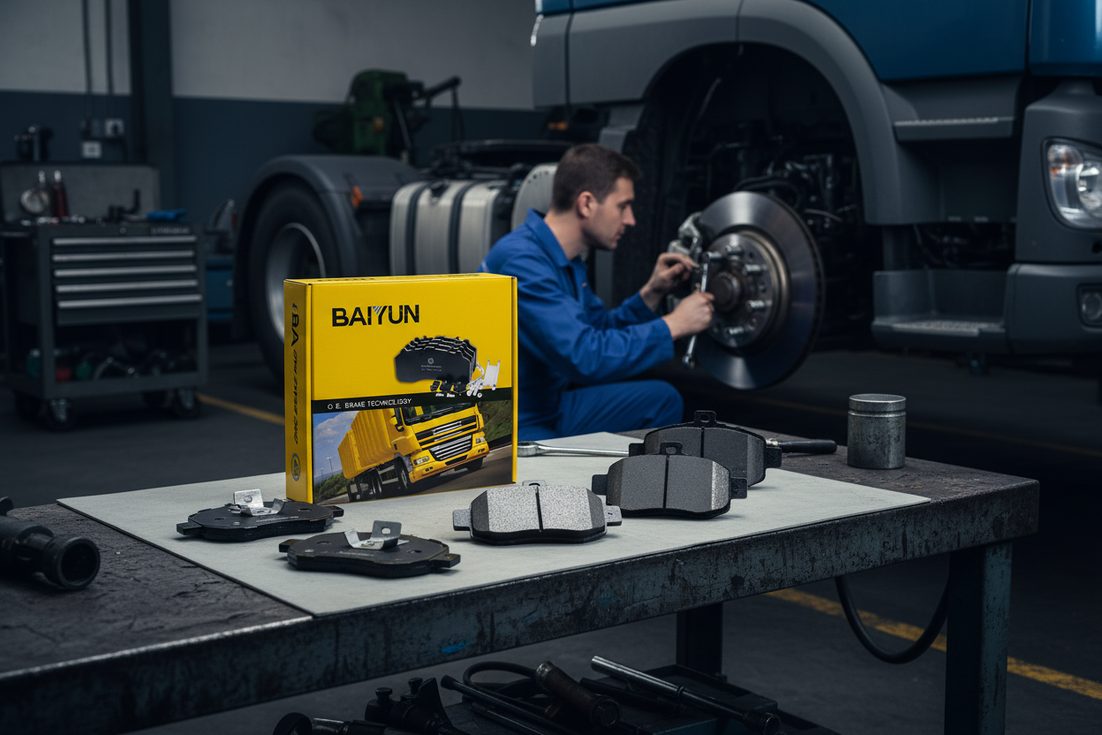
You've seen the market shift. A 2025 aftermarket survey showed that over 65% of consumer complaints now revolve around brake noise, not just wear. For distributors, that's a direct hit to your brand reputation and warranty costs. Sourcing quiet, low-NVH brake pads isn't just a technical specification anymore—it's a core business requirement for staying competitive. The global market for premium, low-noise friction materials is projected to grow at a 7.2% CAGR through 2030, driven by consumer intolerance for squeals and judder. So what separates a profitable, quiet product line from one that generates endless returns?
It starts with understanding that noise, vibration, and harshness (NVH) are symptoms, not the disease. They're the result of high-frequency vibrations between the pad, caliper, and rotor. For importers, the challenge is finding a manufacturer that doesn't just slap on an anti-noise shim, but engineers the entire system—from compound formulation to chamfer design—for acoustic performance from the first mile to the last.
The Real Cost of Noisy Brake Pads for Distributors
Let's talk numbers. A single warranty claim for a noisy brake job can cost a distributor between $150 and $400 in parts, labor, and logistics—and that's before you factor in the damaged customer relationship. When you're moving container loads, even a 2% return rate for noise issues can erase your margin on an entire shipment. The problem often surfaces 3-6 months after installation, long after the sale is finalized, making it a recurring operational headache.
More importantly, market data shows that regions with stricter consumer protection laws, like the EU and Australia, are seeing a sharp increase in returns for NVH-related issues. Your sourcing decisions need to account for this regulatory pressure. A pad that's merely "quiet enough" for one market might be a liability in another. That's why working with a IATF 16949 certified facility isn't a luxury; it's a baseline for process control that directly impacts NVH consistency batch after batch.
Engineering Quiet: Beyond the Shim and Slots
Many suppliers treat NVH as an afterthought, adding a basic shim and calling it a day. True low-noise engineering happens much earlier. It begins with the friction material's formulation. Premium ceramic and low-metallic NAO compounds, like those used in BAIYUN Brake's CP-series, are inherently better at damping vibrations than semi-metallic mixes. Their friction coefficient stays more linear across temperature ranges, which prevents the grab-and-release cycle that causes groan and judder.
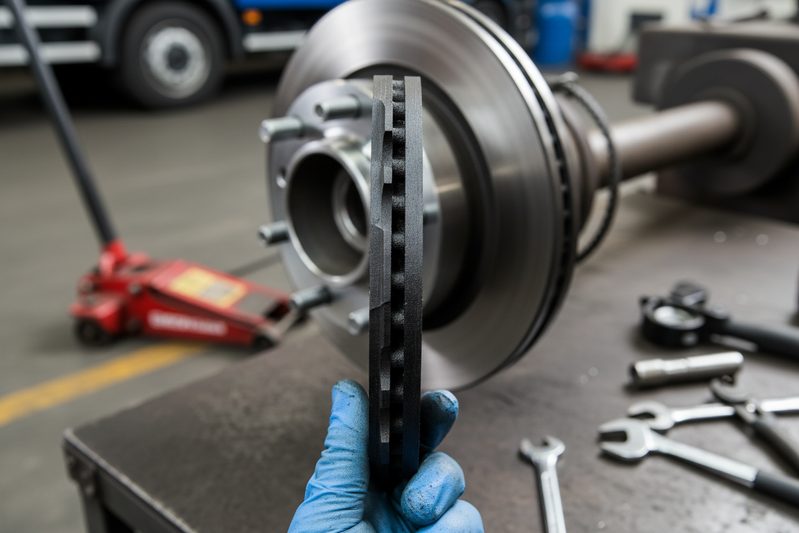
Then there's geometry. Precision chamfers on the pad's leading and trailing edges are critical. They prevent the pad from catching the rotor squarely, which disrupts the vibration frequency that leads to squeal. Our dynamometer testing shows a properly designed 45-degree chamfer can reduce high-frequency squeal (>1 kHz) by up to 70%. Slot design matters too—not just for gas expulsion, but for breaking up the pad into smaller, less resonant segments.
Finally, consider the surface. Some premium pads apply a transfer layer coating or a specialized break-in surface treatment. This isn't just marketing. During the critical first 50-100 braking applications, this layer helps bed the pad smoothly onto the rotor, establishing an even contact pattern that minimizes hot spots and the low-speed vibration we call judder.
Market Trends: Where the Quiet Money Is
The demand for silence is segmenting the market. For passenger vehicles, the growth is overwhelmingly in ceramic and hybrid formulations. These pads now command over 40% of the North American aftermarket by value, despite being only 30% by volume. Why? Because they solve the twin complaints of noise and dust. For distributors, this means higher average order values and better customer retention.
In the commercial vehicle space, the driver is different but just as powerful. Fleet operators are laser-focused on total cost of ownership (TCO). A noisy brake lining leads to premature rotor wear, increased fuel consumption from drag, and more frequent maintenance intervals. They're willing to pay a 15-20% premium for a lining that guarantees low NVH over its entire service life, because it saves them more in downtime and parts. Have you reviewed our commercial vehicle brake linings engineered for fleet TCO?
Don't overlook the motorcycle and specialty vehicle segments either. With less sound insulation, NVH is even more noticeable. A distributor who can supply a comprehensive full brake pad product range—from quiet passenger car pads to high-performance motorcycle linings—captures more of the buyer's wallet.
Sourcing Strategy: Questions Your Manufacturer Must Answer
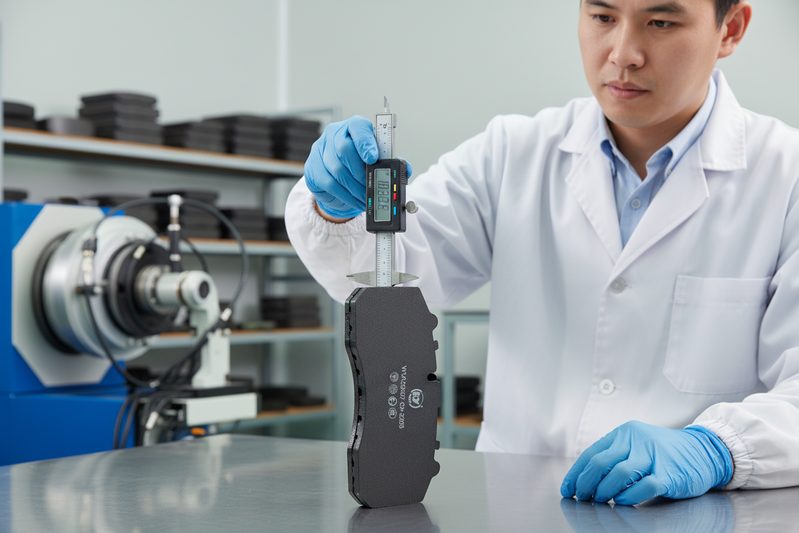
When you're evaluating a potential supplier for noise-free brake pads, move past the catalog specs. Ask them about their NVH validation process. Do they just do a basic drag test, or do they have a full NVH dynamometer that can simulate real-world conditions like cold mornings, light braking, and high humidity? BAIYUN Brake's R&D center, for instance, runs pads through a standardized SAE J2521 inertia dynamometer test sequence specifically designed to provoke and measure noise.
Ask for their data on friction coefficient stability. A pad with a coefficient that swings wildly from 0.35 to 0.55 between 100°C and 350°C is a noise generator waiting to happen. A quality, quiet pad will maintain a much tighter band, say 0.38 to 0.42. This data should be readily available in their material data sheets.
Finally, probe their quality control on noise-suppression components. Are the shims consistently bonded with the right adhesive thickness? Is the chamfer cut precisely on every pad, or is there visual variation? Inconsistent application of these features is a major source of batch-to-batch noise problems. Our 49+ years of manufacturing experience has taught us that controlling these "small" details is what separates a reliable product from a problematic one.
FAQ: Noise-Free Brake Pads for Importers
Q: How can I verify a manufacturer's low-NVH claims before placing a large order?
A: Request a sample batch for real-world testing with a trusted installer in your network. More importantly, ask for certified test reports from independent labs or their in-house dynamometer showing friction curves and noise propensity scores (like the BMW GS 97024-1 test). A legitimate manufacturer will provide this. You can download our passenger car brake pad test report as a reference for the data you should expect.
Q: Are "quiet" brake pads less effective or do they wear out faster?
A> Not if they're properly engineered. This is a common misconception. High-quality ceramic and NAO compounds designed for low noise can meet or exceed OEM specifications for stopping distance and rotor friendliness. The key is the formulation balance—using advanced lubricants and reinforcing fibers to damp vibrations without sacrificing friction or durability. In fact, many quiet pads extend rotor life by being less abrasive.
Q: What's the single biggest mistake importers make regarding brake noise?
A> Sourcing pads and rotors from different suppliers without compatibility validation. Brake noise is a system issue. A perfectly quiet pad can scream if paired with a cheap, high-iron content rotor that's prone to scoring. For consistent results, many successful distributors now source matched pad-and-rotor kits from a single, technically capable manufacturer who ensures component harmony.
Building a Quieter, More Profitable Product Line
The shift toward noise-free braking isn't a fad; it's the new baseline for quality. Consumers have been trained by OEMs to expect silent operation, and they bring that expectation to the aftermarket. For you, the distributor, this creates a clear opportunity. By strategically sourcing from manufacturers who prioritize NVH at the engineering level—not just as an add-on—you can reduce warranty costs, strengthen your brand's reputation for quality, and capture a growing premium segment of the market.
It requires looking beyond the price-per-pair and evaluating the total cost of ownership, including the hidden costs of returns and customer dissatisfaction. Partners like BAIYUN Brake, with our ECE R90 certified formulations and dedicated NVH testing protocols, are built to help you navigate this shift. We don't just sell you a box of pads; we provide the technical backbone for your quiet brake program.
Ready to audit your current brake pad lineup for NVH risk? Let's discuss how a switch to engineered, low-noise formulations can protect your margins and grow your market share. The first step is a conversation about your specific markets and challenges.
Request a consultation and sample testing protocol for your target markets →
Was this article helpful?
Average Rating: 5/5 (974)