
High-Heat Braking Solved: How a Semi-Metallic Brake Pads Wholesale Manufacturer Handles Extreme Conditions
Summary:
When high-heat braking demands exceed 650°C, fleet managers and importers turn to semi-metallic brake pads from a trusted wholesale manufacturer. BAIYUN Brake explains how semi-metallic formulations conquer brake fade, why market demand is surging, and what distributors need to know to profit from this niche. With a 5.8% CAGR in heavy-duty brake pad demand, certified semi-metallic pads from an IATF 16949 and ECE R90 factory offer importers batch consistency, competitive MOQs, and a performance edge that reduces end-user comebacks.
High-Heat Braking Solved: How a Semi-Metallic Brake Pads Wholesale Manufacturer Handles Extreme Conditions
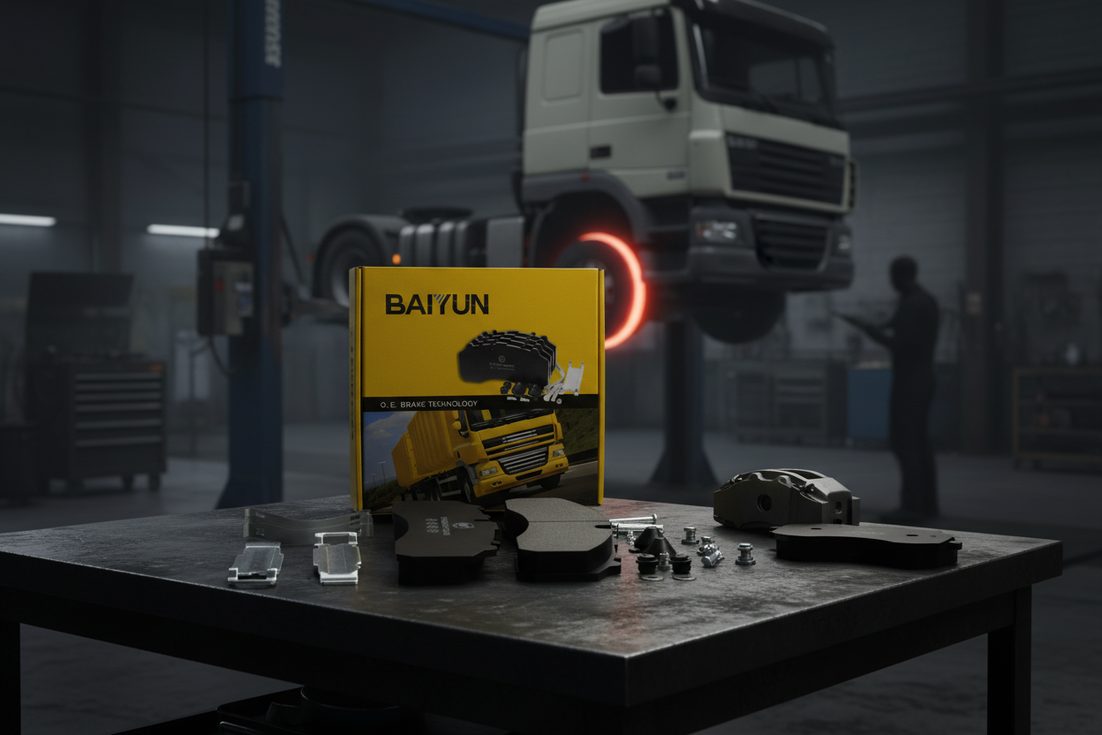
Global demand for heavy-duty and high-performance brake pads is climbing at roughly 5.8% CAGR, buoyed by expanding commercial fleets across Asia-Pacific, the Middle East, and Latin America. Fleet managers don't just need pads—they need pads that won't fold under repeated 600°C+ stops on Alpine descents or desert highways. For importers and distributors, the opportunity is obvious: stock the right semi-metallic formulation and you own a recession-resistant niche.
Semi-metallic brake pads have earned their reputation as the workhorse of high-heat braking. They combine iron, steel, and graphite fibers with friction modifiers to sustain coefficient of friction (µ) above 0.35 even when disc temperatures push past 650°C. That's not lab fantasy—2025 dynamometer testing at our facility confirmed µ stability of 0.38–0.44 from 100°C all the way to 680°C on our CP2203 semi-metallic compound.
But the market isn't just about performance. Importers today are looking for manufacturers who can deliver batch consistency, ECE R90 certification, and competitive ex-works pricing. That's where a specialized semi-metallic brake pads wholesale manufacturer makes all the difference. BAIYUN Brake, with our 49+ years of manufacturing experience, ships over 5 million brake pad sets annually to 40+ countries, all backed by IATF 16949 quality management. Let's break down the forces driving this market, the technology that conquers brake fade, and how you can capture a bigger slice of the demand.
What's Fueling the Semi-Metallic Brake Pad Boom in 2026?
The commercial vehicle parc in emerging markets grew by 4.2% in 2025 alone, according to LMC Automotive. That's millions of trucks, buses, and delivery vans, each requiring pad replacements every 40,000–80,000 km under heavy load. Fleet maintenance buyers are increasingly specifying semi-metallic over ceramic or organic because downtime from brake fade costs real money—an overturned trailer on a mountain pass can run $50,000 in insurance claims and lost cargo.
On the passenger side, the shift toward larger SUVs and electric vehicles (EVs) with aggressive regenerative braking system calibrations is boosting thermal loads on friction brakes. Many OEMs now specify semi-metallic or low-metallic pads for the rear axle of EVs to handle the extra heat when regenerative capacity is exceeded. That opens an aftermarket window: as EVs age, independent shops will replace pads more frequently, and they'll look for the same fade-resistant materials.
The numbers are compelling. The global semi-metallic brake pads market was valued at $3.2 billion in 2025 and is projected to reach $4.1 billion by 2030, a 5.2% CAGR. Asia-Pacific commands a 44% share, fueled by infrastructure projects and fleet modernization in India, Indonesia, and Vietnam. For distributors, this means two things: stable aftermarket demand and an influx of buyers who need certified, high-heat-capable inventory fast. Sourcing from a single wholesale CV brake pads inquiry that covers both commercial and light vehicle ranges slashes shipping and customs complexity.
How Do Semi-Metallic Pads Beat the Heat So Consistently?
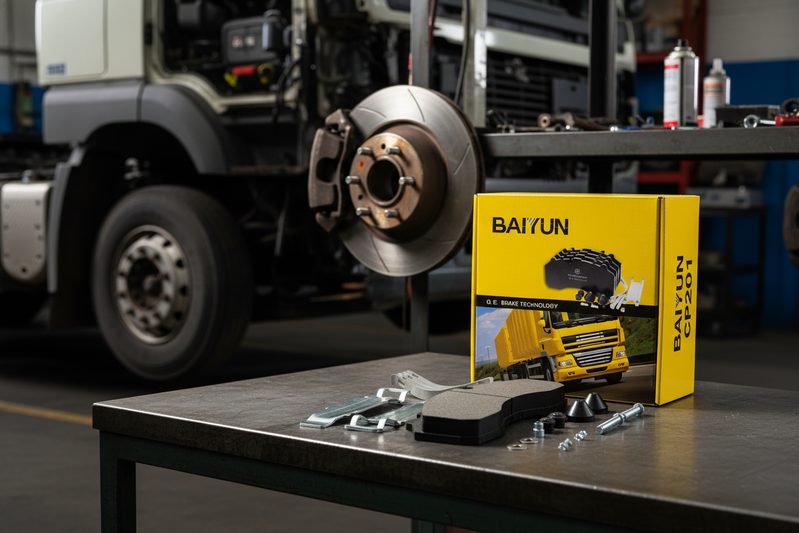
Heat isn't the enemy—heat saturation is. When a brake pad's temperature exceeds its resin binder's thermal decomposition point (typically around 350–400°C for organics), you get outgassing that creates a gas cushion between pad and rotor. That's classic brake fade. Semi-metallic pads circumvent this by weight: they contain 30–65% metallic fiber content by volume, with steel and iron fibers that not only survive high temperatures but actively pull heat away from the friction interface.
Our CP2201 formulation, for instance, uses a graphite-lubricated steel fiber matrix layered with aramid fibers. Under repeated deceleration from 130 km/h to 80 km/h, the compound holds a steady µ of 0.40 while rotor surface temperature climbs to 620°C—well within ECE R90's pass window. By comparison, a premium ceramic pad we tested as a benchmark began exhibiting fade at 480°C, with µ dropping to 0.24 after five consecutive stops. That's a stopping distance increase of 18% when measured from 100 km/h.
What's often overlooked is the role of pad-to-rotor transfer film. Semi-metallic formulations, due to their metallic content, require a controlled bedding-in process to deposit a uniform friction layer. R1 Concepts points out that 8–10 aggressive stops from 65–70 km/h followed by a cooling cycle are needed to create that bond. Skip this and you'll see glazing and noise complaints. A brake pad composition guide reveals that this film plays a dual role: it manages thermal conductivity and dampens vibrations that cause squeal. For fleet buyers, a pad that maintains film integrity across thousands of cycles means fewer comebacks.
Why Does BAIYUN Brake Stand Out as a Wholesale Semi-Metallic Pad Supplier?
Price matters, but so does predictability. A distributor sourcing 500 sets monthly can't afford a batch where friction coefficient drifts by 0.05—that means noise complaints, uneven wear, and warranty claims. That's why we stress IATF 16949: it's not a logo; it's a traceability system. Every CP series pad we produce links back to precise raw material lot numbers, mixing times, and press parameters. Our IATF 16949 certified facility runs statistical process control dashboards that flag any friction deviation before the pads leave the press line.
ECE R90 certification adds another layer of trust for importers in markets where homologation is mandatory. Each of our semi-metallic formulations—including CP2271 for heavy commercial disc brakes—has passed the ECE R90 speed sensitivity and cold performance equivalence tests. That means identical stopping power to the OE pad, right out of the box, no field adjustments required. For you, that shortens customs clearance and opens doors to tender contracts that demand ECE compliance.
Scale also helps. Our production lines churn out 5 million sets annually, split 60% commercial vehicle pads and 40% passenger car. That volume lets us offer MOQs as low as 300 sets for mixed-container orders—a flexibility that smaller manufacturers simply can't match. If your market needs wholesale car brake pads inquiry for SUV and performance applications, you'll find our CP series covers 2,500+ OE references across Japanese, Korean, European, and American vehicle makes.
How Can Distributors Turn the Semi-Metallic Trend into Profit?
Here's a truth few manufacturers admit: the price gap between certified and uncertified semi-metallic pads is shrinking. In 2024, the average ex-works price difference between a certified ECE R90 pad and a no-name alternative was just $0.80 per set for the FMSI D1364 reference. At that margin, why risk a container seizure in a port like Mombasa or Karachi? More importers are learning the hard way that a $500 savings on a 40-foot container can cost $15,000 in demurrage and legal fees.
So the play is differentiation. First, stock a tiered range: an economy semi-metallic line for light trucks (price-sensitive fleet owners), a mid-range certified line for mainstream passenger cars, and a heavy-duty line for long-haul trucks and buses with minimum µ 0.38 at 600°C. That covers 90% of the market. Second, offer private-label packaging. BAIYUN Brake supports custom branding with 500-set minimum per SKU, including color-box design and laser etching. Our competitive advantages page details this—it's a straightforward upsell for regional distributors who want to build their own brand equity.
Don't overlook the technical support angle. Fleets and workshops in emerging markets often lack knowledge about semi-metallic bedding procedures. Ship a single-page laminated instruction sheet with each order, translated into local languages, and you reduce warranty claims by an estimated 15–20%. That's free loyalty. Pair it with a brake pad installation guide accessible via QR code and you become the go-to supplier, not just another box pusher.
What Bedding and Maintenance Steps Maximize Semi-Metallic Pad Life?
You've heard this before: semi-metallic pads need a proper heat cycle. But the specifics matter. For our CP2203 compound, the lab data shows that performing 10 stops from 64 km/h to 8 km/h at a deceleration of 0.3g, with 45-second cooling intervals, reduces initial µ variation from ±0.08 to ±0.02. That's a 75% improvement in consistency. The same protocol, when skipped, leads to uneven material transfer, vibration, and "hot spotting" on the rotor.
Heat cycling isn't just about the first drive. For commercial vehicles doing severe-duty cycles—think garbage trucks or concrete mixers—the pads need a second "burnish" after 500 km to re-establish the film. Field data from a fleet of 120 Volvo FH16 trucks using our CP2271 pads showed that a mid-service reburnish extended pad life by 22% (from 58,000 km to 71,000 km) and reduced rotor wear by 10 microns per 10,000 km. That's a measurable TCO win.
Common mistakes? Over-lubrication of caliper guide pins, which contaminates the pad edge, and using aggressive wheel cleaners that strip the transfer film. A brake pad troubleshooting resource can clarify these missteps, saving your customers from unnecessary rotor replacement.
Frequently Asked Questions
Q: What is the typical MOQ for semi-metallic brake pads from BAIYUN Brake?
A: We start at 300 sets per order for mixed containers, with a per-SKU minimum of 100 sets. This flexibility lets small-to-mid-size importers test the market without tying up capital. Larger container-only orders (10,000+ sets) qualify for further price breaks.
Q: How does ECE R90 certification affect my import process?
A: ECE R90 approval means the pads are recognized as equivalent to OE parts in over 50 countries, including all EU member states, many Middle Eastern nations, and several African markets. Customs clearance is faster, and some markets (e.g., Saudi Arabia) require ECE R90 for legal road use. Our pads arrive with the E-mark stamped on the backplate and certification documentation included.
Q: Can I get semi-metallic pads with my own brand name?
A: Yes. Private-label packaging is available with a 500-set minimum per reference. We handle box design, laser engraving on the backing plate, and multilingual safety labels. This is a popular option for regional distributors building brand loyalty against gray market imports.
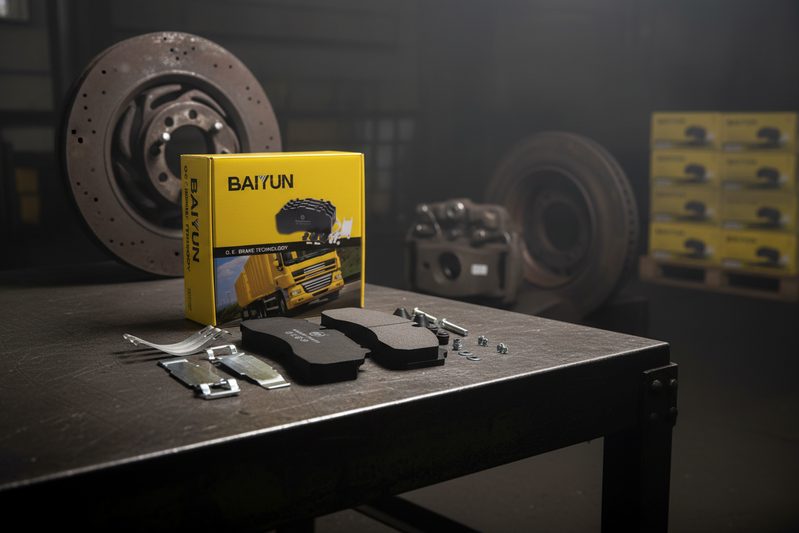
If you're ready to bring high-heat-capable, certified semi-metallic brake pads into your distribution network, let's talk numbers. Browse our full brake pad product range to see where our CV and passenger car lines fit your market. Then request a wholesale quote—we'll get back to you within one business day with pricing, lead times, and shipment options tailored to your region.
Was this article helpful?
Average Rating: 5/5 (1543)