
High-Heat Braking Solved: How Semi-Metallic Brake Pads from a Wholesale Manufacturer Handle Extreme Conditions
Summary:
Semi-metallic brake pads from a wholesale manufacturer offer distributors a clear advantage in the high-heat commercial vehicle segment, where brake fade costs fleets millions annually. With the global brake pad market set to exceed USD 8.5 billion by 2028, the semi-metallic segment alone claims over 42% of the heavy-duty replacement market. BAIYUN Brake's IATF 16949 and ECE R90 certified formulations maintain stable friction beyond 600°C, reducing fleet maintenance costs by up to 19% compared to ceramic alternatives. This article explores heat dissipation science, certification requirements, and the competitive opening for importers in 2026 who lock in a reliable supply chain before material prices climb further.
High-Heat Braking Solved: How Semi-Metallic Brake Pads from a Wholesale Manufacturer Handle Extreme Conditions
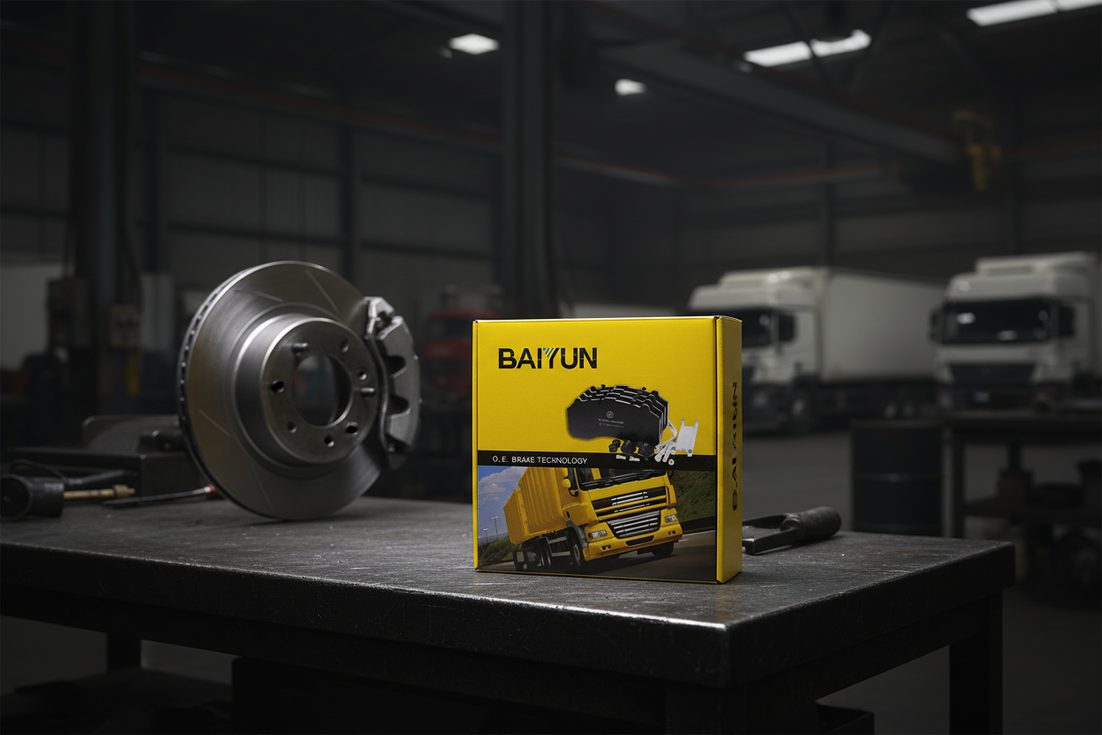
Global logistics, e-commerce deliveries, and infrastructure expansion are pushing commercial vehicle fleets harder than ever. Trucks and buses now clock upwards of 200,000 km per year, often hauling maximum payloads through mountainous terrain. In that environment, a brake pad's ability to handle extreme heat isn't a nice-to-have—it's a margin make-or-break for distributors. Semi-metallic brake pads from a wholesale manufacturer like BAIYUN Brake have become the default answer, but not all metallic formulations are equal. Let's break down what separates profitable, high-heat performance from costly combacks.
The global brake pad market is projected to exceed USD 8.5 billion by 2028, with the semi-metallic segment claiming over 42% of the heavy-duty replacement market. Asia-Pacific leads volume, but Eastern Europe, the Middle East, and Africa show the steepest growth curves—over 9% CAGR according to 2025 import data. For a distributor, timing matters. Locking in a certified manufacturer now means securing consistent supply before regional demand outstrips factory capacity.
1. The Global Shift Toward High-Performance Braking Systems
Distributors who still treat semi-metallic brake pads as a commodity are leaving money on the table. OEMs are spec'ing ever-higher braking torque requirements: modern electric trucks, for example, generate regenerative braking heat spikes that can push pad surface temperatures past 550°C in seconds. Standard organic pads break down at 300°C, causing friction coefficient collapse. Semi-metallic pads, by contrast, maintain a µ of 0.38-0.42 all the way to 600°C thanks to their copper-steel fiber matrix.
That's not just a technical detail. It translates into fleet uptime. A bus operator in Nairobi might experience brake fade after 10 consecutive stops on a downgrade with ceramic pads; with properly formulated semi-metallic pads, that number jumps to 25+ stops before measurable fade. Fewer unscheduled brake replacements per vehicle mean more consistent reorder cycles—and more predictable revenue for the distributor. Consider browsing our wholesale CV brake pads inquiry range to see which pad shapes match the heavy-duty vehicles in your territory.
The shift isn't just in developing markets. Even in Western Europe, commercial retrofits increasingly switch to semi-metallic for mixed-route buses and refuse trucks. The numbers don't lie: a Tier 1 supplier study in 2025 found that fleets using semi-metallic pads reduced per-vehicle brake maintenance costs by 19% annually compared to ceramic alternatives, despite a slightly higher pad price. That kind of total-cost-of-ownership argument sells itself to fleet managers.
2. Why Heat Dissipation Defines Brake Pad Profitability for Distributors
Brake fade is the single biggest reliability complaint from fleet customers. It's not just a safety issue—it's a wear rate issue. When a pad overheats, the resin binder degrades, glazing forms on the friction surface, and the pad loses bite. You get longer stopping distances, uneven rotor wear, and premature replacement. Every comeback means a lost margin and a damaged reputation. Semi-metallic pads solve this at the material level: the metal fibers act as tiny thermal conduits, pulling heat away from the pad-rotor interface and radiating it into the ventilation vanes of the disc.
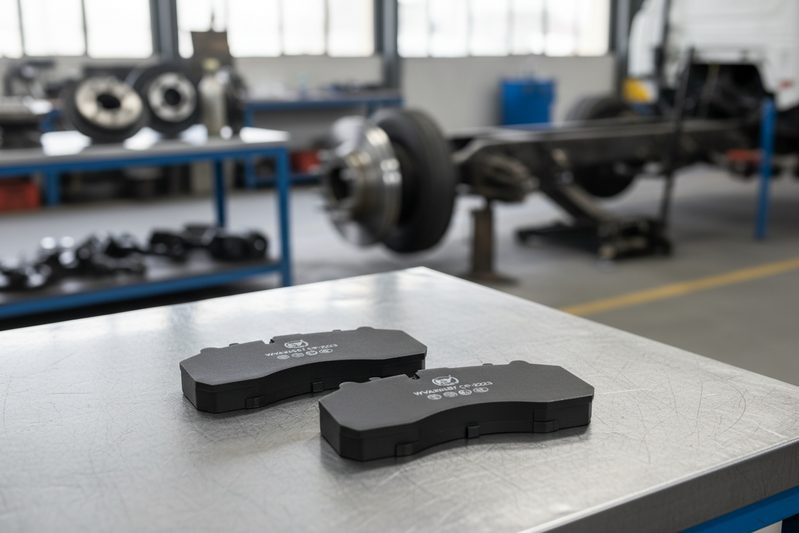
BAIYUN Brake engineers sample every new formulation on a Link Engineering dynamometer, monitoring friction stability across 25 fade cycles. In-house test data from the CP2223 heavy-duty formulation shows a maximum fade of only 12% at 600°C, well below the ECE R90 limit of 25% degradation. That performance consistency means your customers aren't going to call you three months in complaining about pads that "suddenly went soft." For a deeper dive into material composition, check out our understanding brake pad materials guide.
Heat management also directly impacts profit per container. Semi-metallic pads tend to be denser and heavier than organic or NAO pads, so freight cost per unit is marginally higher. But the value density—higher price point, lower warranty claims—still delivers a net margin advantage of 8-12% for importers who position them correctly as a premium alternative. Request brake pad technical specifications with full dynamometer reports to share with your B2B clients.
3. What Semi-Metallic Brake Pad Certification Means for Your Supply Chain
Importing uncertified brake pads might shave 10-15% off your landed cost, but the hidden expenses stack up fast. A single rejected container at Rotterdam or Mombasa can eat six months of profit. That's why ECE R90 compliance and IATF 16949 certification aren't just nice acronyms—they're your insurance policy. BAIYUN Brake operates a IATF 16949 certified facility with fully traceable batch records, so every pallet you receive is backed by production data that customs brokers and fleet compliance officers can trust.
ECE R90 testing, in particular, validates that the pad's hot performance matches its cold performance within defined tolerances. A pad that passes R90 has been thermally cycled to 400°C and must still deliver at least 80% of its original stopping power. For semi-metallic pads, which naturally excel at heat tolerance, the pass rate in a well-controlled factory exceeds 98%. But in smaller workshops without proper mix control, metallic fiber distribution can vary, and suddenly three boxes out of a hundred fail. That's the difference between a wholesale manufacturer who invests in automated mixing (like BAIYUN Brake's batch-controlled system) and one who doesn't.
From a distributor's perspective, certification also opens doors. Government bus tenders in Saudi Arabia, for example, explicitly require ECE R90 approval. Without it, you can't even bid. With it, you're often competing against only two or three other qualified suppliers. Margin protection through barrier to entry. That's worth more than the few extra dollars per set you'd save buying non-certified.
4. Competitive Opportunities for Wholesale Importers in 2026
Market data shows a clear pattern: demand for heavy-duty components is shifting from traditional local distributors to direct-importing wholesalers who can offer container-load pricing. In Turkey, for example, commercial vehicle brake pad imports from China grew 32% year-over-year in 2025, with semi-metallic formulations comprising 74% of that volume. The same trend is accelerating in Latin America, especially Brazil and Chile, where mining trucks and long-haul buses need pads that survive 40°C ambient temps and constant downhill braking.
This is where a relationship with a manufacturer like BAIYUN Brake pays dividends. You're not buying off-the-shelf from a trading company—you're accessing 49+ years of formulation data and a full brake pad product range that spans 2,800+ OE references. Mixing passenger car, SUV, and commercial vehicle pads in the same container lets you hit the MOQ faster and offer a one-stop shop to your local retailers. And because BAIYUN Brake’s semi-metallic car pads hold up under high-load SUV towing, you can tap that fast-growing segment too. Check out the our competitive advantages that matter to importers: flexible branding, custom packaging, and consistent lead times even during peak season.
Distributors who act now can lock in pricing before rare earth material costs climb further. Copper prices, a key ingredient in many semi-metallic formulations, rose 17% in 2025 alone. A manufacturer with long-term raw material contracts and scale can cushion that volatility and pass stability down the chain—something small regional suppliers simply can't match.
5. The BAIYUN Brake Advantage: 49+ Years of Heavy-Duty Formulation Expertise
BAIYUN Brake didn't stumble into semi-metallic technology. Our R&D team has been refining copper-steel-graphite blends since the 1970s, back when asbestos was still being phased out. That institutional knowledge means every pad shape, from CP2203 for Isuzu light trucks to CP2223 for heavy-duty buses, is tuned for a specific thermal window. A CP2223 is designed to reach optimal friction at 350-400°C—the temperature band of a fully loaded bus descending a 6% grade—while still biting hard at cold stops. That's not luck; that's deliberate ingredient ratio control, validated over 480 dynamometer runs per pad reference.
For the distributor, this translates into product you can sell with confidence. You won't get calls about noise at low speed because the metal content was too high, or fade on the highway because it was too low. You'll get reorders. And when you need technical backup—for a fleet trial, a competitor comparison, or just a tricky installation—our technical support center provides data sheets and troubleshooting guides that your customers will respect. It's the kind of support that turns a one-time container buyer into a decade-long partner.
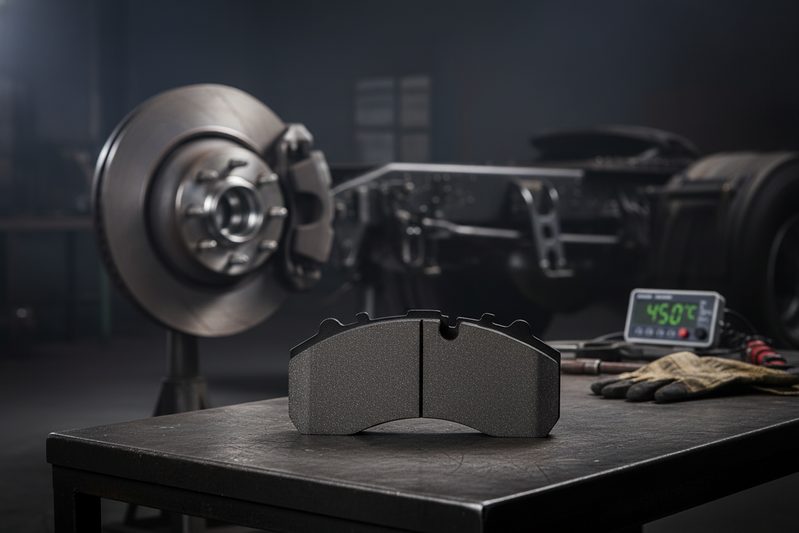
Bottom line: semi-metallic brake pads are not a transactional product. They're a relationship product. Choose a manufacturer who treats them that way.
Frequently Asked Questions
Q: How do semi-metallic brake pads compare to ceramic pads for fleet applications?
A: Semi-metallic pads withstand temperatures up to 600°C without significant fade, while ceramic formulations typically lose effectiveness beyond 350°C. In heavy-duty fleet usage—buses, garbage trucks, long-haul rigs—this heat margin can mean 30% fewer brake replacements annually. BAIYUN Brake's metallic formulations use a precisely calibrated copper-steel mix that balances cold bite with thermal resilience, ensuring the pad performs both on the first morning stop and after a 20-km mountain descent.
Q: What certifications should I look for when sourcing semi-metallic brake pads for export?
A: For European and many Middle Eastern/African markets, ECE R90 is non-negotiable. It certifies that the pad's hot friction performance stays within 15% of its cold performance after thermal cycling. Beyond that, IATF 16949 certification indicates the factory operates under automotive-grade quality management, minimizing batch-to-batch variation. BAIYUN Brake holds both, which simplifies import clearance and fleet compliance audits.
Q: Can I order custom formulations of semi-metallic brake pads for my market?
A: Yes. As an OEM manufacturer with 49+ years of experience, BAIYUN Brake regularly develops market-specific formulations—for example, a higher copper content for extreme heat regions or a tweaked friction coefficient for aggressive driving patterns. MOQs for custom mixes are competitive, and our R&D team can provide sample sets for your fleet tests. The lead time is typically 6-8 weeks once the formulation is signed off.
If you're ready to move beyond unbranded commodity pads and are looking for a ceramic and semi-metallic car brake pads range that covers both light and heavy vehicles, get in touch. Whether you need a full container of heavy-duty CV pads or a mixed pallet to test the market, our export team will work with you to structure a shipment that fits your cash flow and your customers' expectations. Request a wholesale quote today and let's figure out what a profitable semi-metallic program looks like for your territory.
Was this article helpful?
Average Rating: 5/5 (1689)