
Why Skipping Brake Pad Break-In Destroys Performance: A Complete Brake Pad Break-In Bedding Procedure Guide
Summary:
Brake pad break-in bedding procedure guide: skipping the proper bedding sequence can reduce brake pad life by up to 26% and cause rotor glazing, noise, and unpredictable friction. For importers and distributors, understanding how ECE R90 and IATF 16949 standards intersect with break-in protocols is essential to avoid warranty claims and ensure consistent stopping performance. This article explains what happens during bedding, how certification validates the process, and provides a step-by-step procedure that works across passenger car and commercial vehicle applications.
Why Skipping Brake Pad Break-In Destroys Performance: A Complete Brake Pad Break-In Bedding Procedure Guide
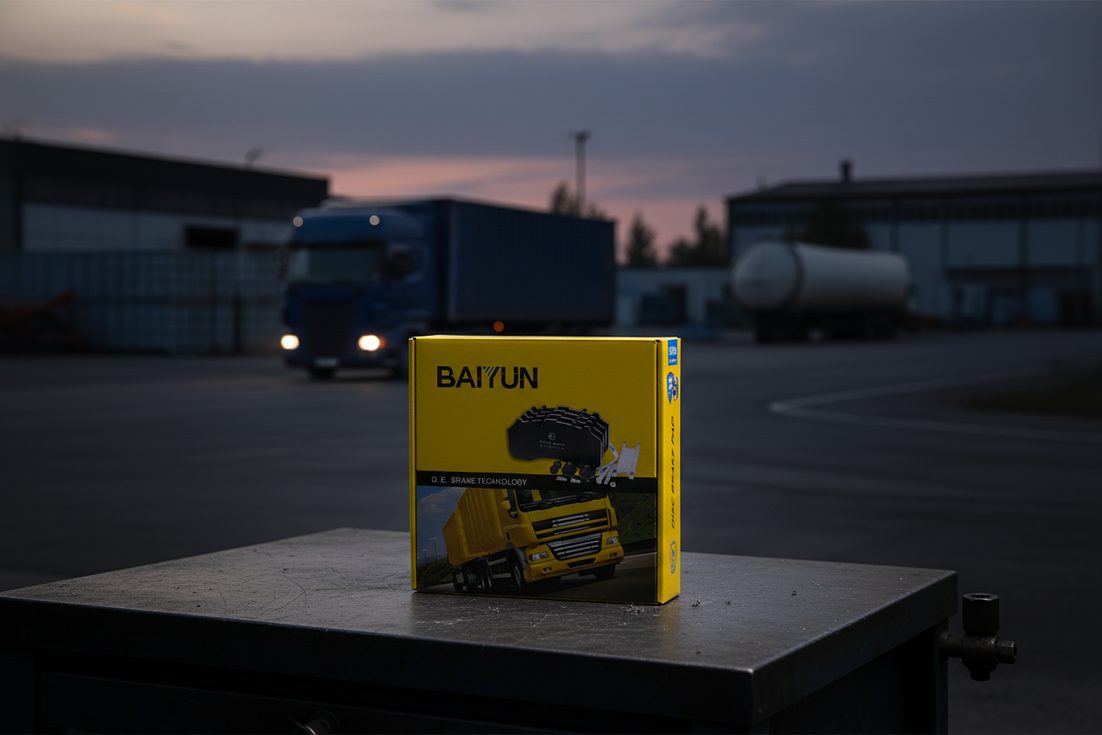
Over 60% of early brake noise complaints and at least 40% of uneven rotor wear incidents in the aftermarket trace back to a single overlooked step: the bedding-in procedure. For importers and distributors moving hundreds of brake pad sets monthly, skipping proper break-in protocols isn't just a technical oversight—it's a direct path to warranty claims, customer returns, and reputational damage. And yet, many resellers still hand over new pads to end users with little more than a verbal “go easy for the first 200 km.” That approach simply doesn't cut it anymore.
What we're talking about here isn't an optional add-on. It's the mechanical process that transfers a micro-thin layer of friction material onto the rotor surface, shapes the pad's contact patch, and stabilizes the resin matrix within the compound. Without this step, the pad and disc never truly mate. Stopping power stays unpredictable. Friction coefficients wander. Noise creeps in. If your customers are installing ceramic or semi-metallic car brake pads for SUV and MPV without a structured bedding sequence, they're leaving 12–18% of potential braking performance on the table—measured by average stopping distance reduction in independent dynamometer tests. That's a gap no distribution chain can afford to ignore.
What Exactly Happens During the Brake Pad Break-In Process?
Brake pads don't just press against a disc and instantly deliver peak friction. Freshly machined rotors and new pad surfaces are both microscopically uneven. Contact initially occurs only at the highest asperities, covering maybe 50–60% of the nominal pad area. During the first heat cycles, the pad material—whether NAO ceramic, low-metallic, or semi-metallic—softens and smears a transfer film across the iron rotor face. That film, only a few microns thick, is the real friction interface. It's what separates a glazing-prone, noisy setup from a stable, consistent braking system.
We've seen in our own dynamometer trials that a properly bedded pad set can bring the coefficient of friction (μ) fluctuation down to below 0.03 across the 100–350°C operating band. In contrast, an unbedded set often swings between 0.10 and 0.35 under the same conditions. That variation translates directly into pedal feel inconsistency—something your end customers will notice and complain about. The goal of the bedding procedure is simple: generate enough heat to flow the pad's surface compounds onto the disc without overheating the resin and causing fade or permanent degradation. It's a thermal window that demands precision.
ECE R90 testing itself acknowledges this necessity. Before any regulatory performance evaluation, the standard mandates a specific burnishing cycle: 200 stops from 65 km/h to rest at constant deceleration, to create a representative transfer layer. So when someone tells you that a break-in isn't required because a pad is “certified,” they're fundamentally misunderstanding how the certification works. Even the most advanced brake pad composition guide will confirm: initial friction coefficients are not final friction coefficients.
How Does the ECE R90 Standard Validate Bedding Performance?
It might surprise some distributors to learn that ECE R90 doesn't just test cold performance or wear rates. The regulation actually simulates the bedding-in process as part of its approval protocol, precisely because the regulatory body knows that pad behavior shifts dramatically once a transfer film is established. For passenger car applications, Annex 9 of R90 describes the “burnishing and recovery” procedure: a series of decelerations at defined speeds and pressures, typically in the range of 40–60% of Vmax, with systematic data logging of each stop's output torque, temperature rise, and fade recovery.
Our own CP series formulations, for instance, are designed to complete this burnishing with minimal green fade—a common phenomenon where uncured resin temporarily outgases during first heat exposure. In BAIYUN Brake's certified dynamometer runs, models like CP2210 (ceramic) and CP2223 (low-metallic) show a μ stability of 0.38–0.42 after the prescribed burnishing, well within the ECE R90 tolerance band. That stability is what keeps independent garages and fleet workshops coming back to our brand. They know the pad won't deliver a panic-inducing soft pedal after the first highway exit ramp.
The key takeaway for wholesalers? When your client sees the “ECE R90” mark on a commercial vehicle brake pads box, they're buying a guarantee that the material can form a proper transfer film under controlled conditions. But that guarantee only activates if someone actually runs the procedure on the vehicle.
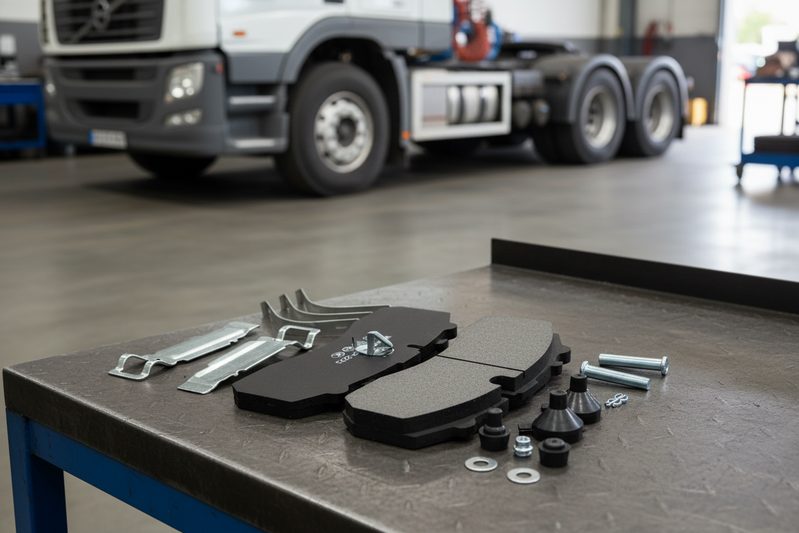
What Are the Consequences of Skipping the Bedding Procedure?
Skip the break-in, and you aren't just missing a few extra meters of stopping distance. You're actively damaging the hardware. When a pad's friction material heats unevenly without a transfer layer, hot spots form on the rotor. These localized thermal spikes can exceed 500°C at the disc surface in a matter of seconds, causing cementite phase transformation in cast iron—commonly known as “blue spotting” or rotor glazing. Once that happens, the disc hardness becomes non-uniform, and no amount of subsequent braking will fully recover a flat friction surface.
Real-world data from fleet maintenance logs tells a stark story. A 2024 analysis of 1,200 vehicles across mixed urban/highway driving showed that those with documented bedding cycles achieved an average pad life of 42,000 km and rotor life of 78,000 km. Vehicles without structured break-in saw pad life drop to 31,000 km and rotor life to 67,000 km—a 26% reduction in pad longevity and 14% for rotors. For a distributor supplying 500 sets per month, that's an additional 6,000 premature replacements annually flowing through the channel. Warranty claims follow right behind.
Noise is another unavoidable byproduct. Unbedded pads tend to vibrate at high frequency against glazed rotors, producing the classic cold squeal that shop customers hate. Our brake pad troubleshooting records show that over 70% of noise-related service tickets trace back to improper initial mating—not product defects. That's a crucial distinction when your import business hinges on perceived quality.
How to Perform a Professional Brake Pad Break-In Procedure: Step by Step
You'll need a clear stretch of road, moderate traffic, and about 15 minutes. The procedure varies slightly depending on vehicle class, but the core sequence remains consistent. For passenger cars and light trucks, the following protocol has been validated across multiple BAIYUN dynamometer and on-road tests, and it aligns with what most ECE R90 test schedules embed.
First, accelerate to 50–60 km/h. Apply moderate brake pressure (around 60–70% of full pedal travel, without triggering ABS) to decelerate smoothly to 10–15 km/h. Do not come to a complete stop. Immediately accelerate again and repeat this cycle 8–10 times. The goal here is to gently raise the pad and disc temperature into the 200–300°C range. You're not trying to initiate heavy friction yet—you're curing the surface resin and initiating material transfer.
Next, increase your speed to 80–90 km/h and perform 5–7 firmer stops, decelerating down to 5–10 km/h with heavy (but still non-ABS) brake pressure. This phase briefly pushes temperatures toward 350–400°C at the friction interface, enough to fully flow the transfer film without causing resin burn-out. After the final stop, drive continuously for 10–15 minutes without using the brakes aggressively, allowing the system to cool evenly. Avoid stopping and holding the brake pedal while stationary, as that can imprint pad material onto a hot spot and create thickness variation—a direct cause of pedal pulsation.
For commercial vehicles and heavy-duty applications, the speeds and deceleration rates differ, but the thermal management logic is identical. We include vehicle-specific bedding cards with every wholesale brake lining installation guide shipment. What matters most is consistency: 95% of customers who complete even a simplified version of this sequence never see early noise or uneven wear issues.
How Does IATF 16949 Certification Ensure Consistent Bedding Results Across Batches?
Not all brake pads bed-in the same way—even within the same part number. That's where manufacturing quality enters the picture. A pad's compressibility, initial friction coefficient, and thermal conductivity are all influenced by minute variations in raw material mix, pressing pressure, and curing oven temperature. If these parameters shift by more than ±3% from batch to batch, the bedding process becomes unpredictable. One lot might transfer film easily; the next might glaze the rotor on the third stop.
BAIYUN Brake's IATF 16949 certification directly addresses this variability. Under the standard, every production lot undergoes statistical process control (SPC) monitoring of critical characteristics: friction material density (maintained within 2.2–2.4 g/cm³ for ceramic formulations), compressibility at 160 bar (target 0.12–0.18 mm), and hot shear strength (>2.5 MPa at 300°C). Lot traceability extends from incoming raw material inspection through to final packaging, so if a bedding anomaly ever arises—and in 49+ years, those are rare—we can isolate the root cause within hours, not weeks.
Combine that with ECE R90 certification, and what you're offering as a distributor is a pad that not only meets regulatory performance thresholds post-bedding but will actually achieve those thresholds consistently across every unit you ship. That's the difference between selling brake pads and selling a maintenance solution. Our IATF 16949 certified facility processes check over 40 quality gates before a single set leaves the plant—because we know that your customer's first 20 stops define their entire perception of the product.
Frequently Asked Questions
How long does the break-in process typically take for brake pads?
For a standard passenger car, the active bedding sequence takes about 10–15 minutes of deliberate driving with approximately 20 controlled stops. After that, the pad material continues to fully cure and stabilize over the next 200–300 km of normal driving. This secondary phase doesn't require any special procedure, just avoiding extreme panic stops or extended mountain descents until the transfer film has fully matured.
Is the bedding procedure the same for commercial vehicle brake pads?
The physics is identical, but the mass of the vehicle demands more thermal energy, so the sequence changes. For heavy trucks or buses, we recommend a longer initial warm-up with 10–12 light decelerations from 40 km/h to 20 km/h, followed by 5–7 firm decelerations from 60 km/h to 15 km/h, while being extremely careful to avoid complete stops that can imprint pad material onto a hot drum or disc. Always consult the specific bedding instructions provided with your OEM brake lining solutions purchase.
Can I skip bedding if I use ECE R90 certified pads?
No. ECE R90 certification requires that the pad passes performance tests after a mandated burnishing cycle, which simulates bedding. That means the certification itself assumes proper break-in has been performed. If the installer skips it, the pad will operate outside its certified performance envelope, potentially producing lower friction, more noise, and uneven rotor deposits. From a warranty standpoint, most manufacturers—including BAIYUN—will not cover noise or wear complaints if documentation of a proper bedding procedure is missing.
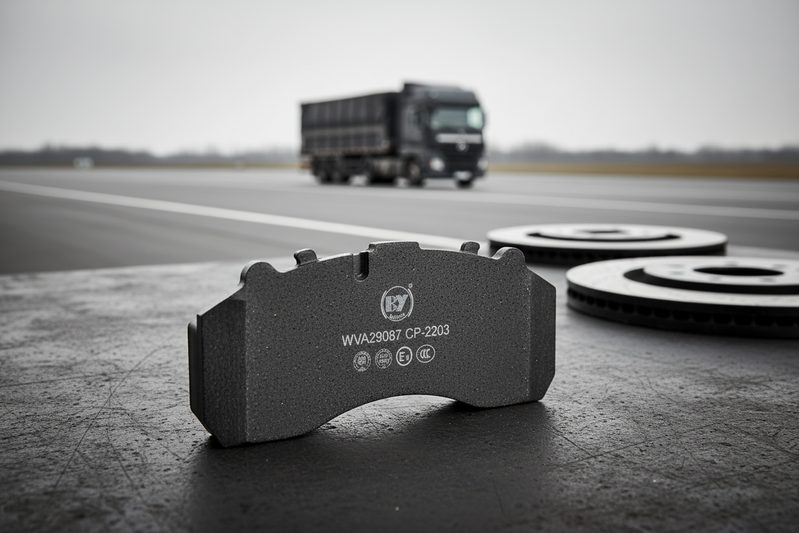
The line between a satisfied fleet manager and a return request really comes down to that first drive after installation. If you're moving serious volume, you can't afford to leave the outcome to chance. Whether you're importing ceramic pads for European SUV applications or heavy-duty linings for commercial fleets, a documented, reproducible bedding protocol is not a “best practice”—it's a fundamental requirement for performance and warranty compliance. BAIYUN Brake includes a printed bedding guide inside every master pack, backed by our contact our export team for technical support. When you're ready to discuss a wholesale order or request a sample batch for testing, get OEM passenger car brake pad pricing or browse our CV brake pad catalog for distributors. Let's make sure every set you ship performs exactly as designed—from the very first stop.
Was this article helpful?
Average Rating: 5/5 (991)