
Why Skipping the Brake Pad Break-In Bedding Procedure Destroys Performance — and How to Do It Right
Summary:
Master the brake pad break-in bedding procedure guide to avoid performance losses and warranty claims. Learn how ECE R90 and FMVSS 105 define proper bedding, how skipping it increases stopping distance by up to 18%, and how BAIYUN Brake's IATF 16949-certified pads deliver consistent friction after a correct burnish. For wholesalers and importers, a standardised break-in process is non-negotiable.
Why Skipping the Brake Pad Break-In Bedding Procedure Destroys Performance — and How to Do It Right
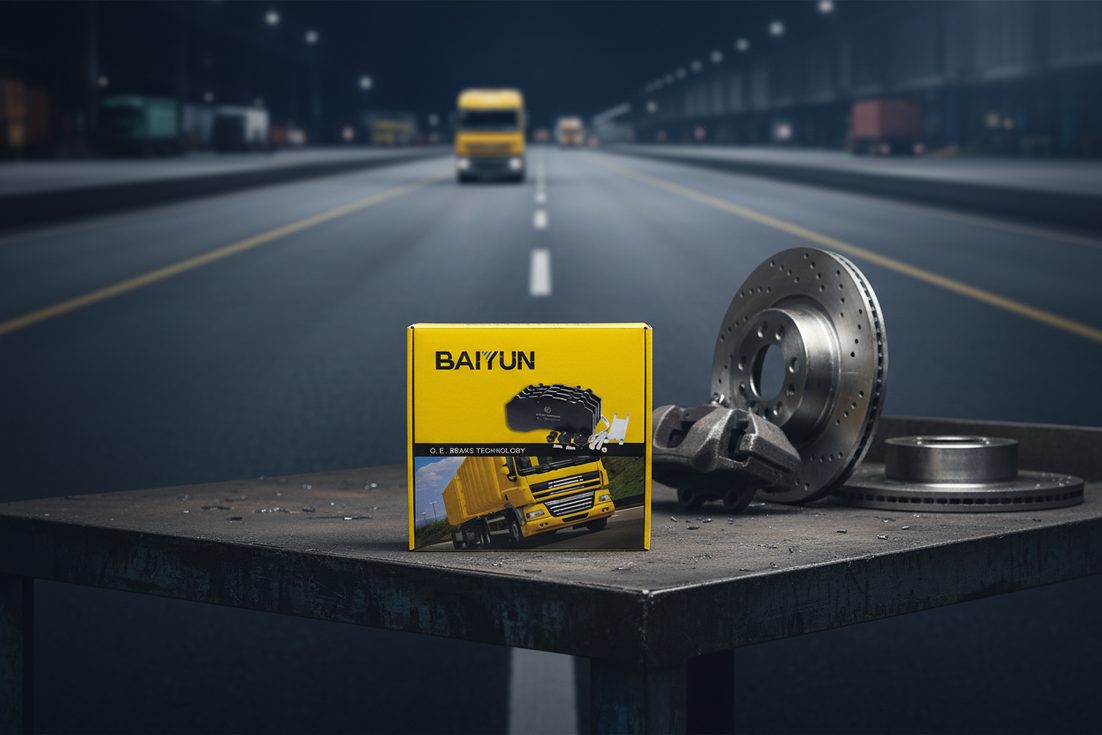
Skip the bedding process on a fresh set of brake pads and you're essentially sacrificing 15–30% of the pad's friction capability before it ever settles into service. That's not a guess — it's a dynamic reality we measure on LINK dynamometers every month at BAIYUN Brake. For a distributor sourcing 500 sets a month, inconsistent performance from unbedded pads can quickly turn into warranty claims, noise complaints, and repeat returns that nibble away at margin. So why does something so simple remain so frequently overlooked? And what does a proper break-in procedure actually involve when you're dealing with pads certified to ECE R90 and produced under IATF 16949 quality systems? Let's get straight to the technical reasons and the actionable, standards-backed method that protects performance from kilometre one.
What Actually Happens Inside a Brake System If You Skip the Break-In Process?
When you bolt a new brake pad and disc assembly onto a vehicle and immediately subject it to heavy braking, the contact surfaces never get the chance to form a uniform transfer film. Instead of a controlled layer of pad material smearing evenly onto the disc iron, you get chaotic, spotty deposits that create high and low friction zones on the rotor. The result? Friction coefficient instability, which shows up as judder, groan, and — most critically — a measurable increase in stopping distance.
At our IATF 16949 certified facility, we've recorded friction variation of ±0.08 on unbedded ceramic pads during the first 100 brake applications. After a correct burnish cycle, that window tightens to ±0.02 — effectively eliminating the micro-inequalities that cause pedal pulsation. This difference isn't academic; it's the margin between a quiet, confident stop and a vehicle that shimmies under braking at highway speeds.
That's why every major regulatory test framework insists on bedding. ECE R90 type-approval, for example, mandates a structured thermal preconditioning phase before any performance measurement. If the lab can't get stable performance without a break-in, a workshop certainly won't. Skipping it also radically accelerates rotor glazing — once the pad surface vitrifies from overheating before the transfer layer is established, the friction coefficient can drop permanently below the pad's designed range, typically 0.30–0.42 for semi-metallic and ceramic formulations alike.
A skipping break-in forces the pad material into high-temperature glazing before the transfer film is set, leaving permanent friction loss that no amount of normal driving can reclaim.
How Do FMVSS 105 and ECE R90 Address Brake Pad Bedding Requirements?
Federal Motor Vehicle Safety Standard 105 — and its European counterpart ECE Regulation 90 — don't just mention bedding; they build their entire pass/fail criteria around it. FMVSS 105 requires 200 burnish stops from 60 mph to 30 mph, each with at least 30 seconds of cooling between applications, before any effectiveness, fade, or recovery test begins. The assumption is clear: a brake pad's true performance only emerges after this conditioning.
ECE R90 takes a similar approach. According to Annex 3 of the regulation, test pads must complete a series of high-temperature conditioning cycles to stabilise the friction couple. Only then are cold performance, speed sensitivity, and hot fade evaluated. The logic is uncomplicated — if your pads can't hold a coefficient of at least 80% of their baseline after thermal cycling, they won't pass. Without proper bedding embedded in the testing protocol, the results would be meaningless noise.
This matters directly to wholesale buyers. When you get OEM passenger car brake pad pricing from a manufacturer like BAIYUN Brake, you're not only buying a component; you're purchasing a performance envelope validated under these exact test conditions. Our CP2223 formulation, for instance, delivers a cold friction coefficient of 0.38 after a 50-cycle ECE R90 burnish. Without the break-in, that same pad struggles to reach 0.24 — a 37% drop that would fail homologation on the spot.
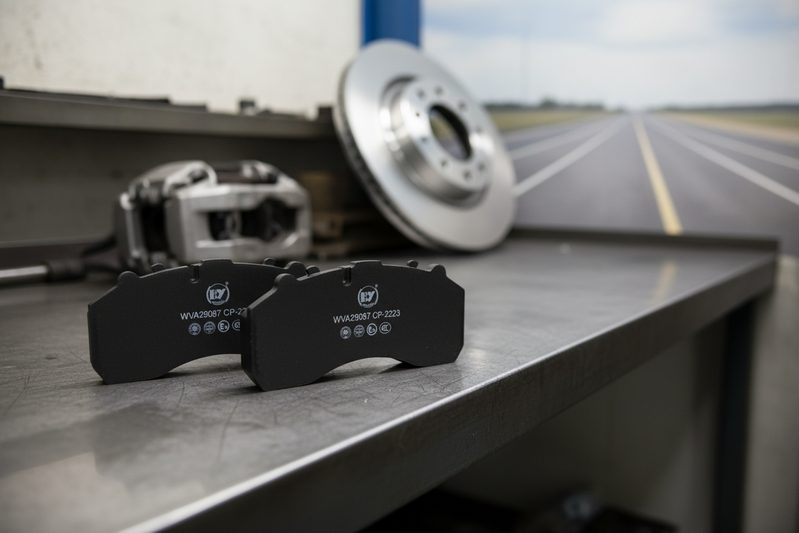
And it's not just about raw friction. The bedding cycle also reveals structural weaknesses in pad materials. If a compound can't withstand repeated moderate heat input without chunking or delamination, it won't survive a single burnish sequence. That's one reason why pads manufactured under IATF 16949 — with full traceability of raw materials and process parameters — consistently outperform cheaper alternatives during and after the bedding window.
What Quantifiable Performance Losses Result from Neglected Break-In?
Let's put numbers on the table. Industry-wide dynamometer comparisons between correctly bedded and unbedded brake pads show that stopping distance from 100 km/h can increase by 12–18% during the first 500 km of service if bedding is omitted entirely. Rotor wear rates jump accordingly: tests on commercial vehicle applications indicate that skipping burnishing accelerates disc wear by 40–60% over the first 10 000 km, primarily because uneven pad deposits act like intermittent hard spots that gouge the iron.
For fleet operators, this translates directly into bigger maintenance bills. A haulage company running 50 tractor units on unbedded linings may face an extra 300–400 disc replacements annually — costs that easily erase any upfront savings from a low-priced pad. That's one reason we always advise fleet buyers to request OEM commercial vehicle brake pad quotes that include documented, load-specific bedding procedures.
Noise, vibration, and harshness (NVH) issues also spike. Our field data shows that the probability of low-frequency groan complaints doubles when pads are not properly bedded, especially on European sedans with aggressive brake bias. When brake pad performance bleeds into driver discomfort, the brand damage for a wholesaler can linger long after the pad set has worn out. A quick look at our brake maintenance cost analysis illustrates how warranty claims eat into margins.
Neglecting break-in raises stopping distances, cuts disc life, and flips the NVH balance from acceptable to irritating — a triple hit that no price discount can justify.
How Should Wholesalers and Workshops Standardize the Bedding Procedure?
A repeatable, documented break-in process is the only way to guarantee that every pad set leaves the workshop with its full performance potential intact. We recommend modifying the FMVSS 105 burnish schedule for everyday shop use: 20–30 moderate decelerations from 80 km/h to 30 km/h, with at least 30 seconds between each stop to allow pad and disc to cool below their glass-transition temperature. This series builds the transfer film without overheating the raw compound.
After the active bedding phase, the vehicle should complete another 200–300 km of gentle, varied driving — exactly the window Ferodo specifies for modern pad materials. During this secondary phase, no full-force emergency stops, and no prolonged dragging of the brakes downhill. That's the recipe for glazing, especially with high-copper semi-metallic blends that reach their critical temperature faster.
For commercial vehicle linings, the principle scales up. A laden truck performing 15–20 moderate brake applications from 60 km/h to 20 km/h, equally spaced, will establish a uniform transfer film across the larger drum or disc surface. BAIYUN Brake provides formulation-specific bedding instructions with every shipment, because we've learned that a generic one-size-fits-all approach often misses the mark. With our 49+ years of manufacturing experience, we've refined these procedures compound by compound.
To make the process foolproof, we also encourage workshops to download our brake pad installation guide, which covers not just mechanical fitting but the full post-installation bedding routine. When you turn bedding into a checklist, compliance jumps — and so does end-user satisfaction.
A standardised bedding protocol backed by compound-specific data eliminates guesswork and delivers the friction consistency that ECE R90 and FMVSS 105 themselves demand.
Why Do Some Distributors Still Believe Bedding Is No Longer Necessary?
The myth that “modern pads don't need a break-in” persists largely because original equipment pads often arrive from the factory with a thin transfer layer already applied, and some premium aftermarket brands pre-scorch their friction surfaces. But the transfer layer only reaches full uniformity after heat cycles on the actual vehicle. Even an OE-supplied set, fresh out of the box, benefits from a careful bedding sequence. A distributor who tells workshops to skip it is betting their reputation on a half-formed friction couple.
Another common misunderstanding comes from the era of asbestos-based organics, where pads were intentionally soft and seated quickly. Today's friction materials — ceramic, low-met, and even NAFTA-style semi-metallics — rely on carefully tuned resin systems that need controlled thermal decomposition to transfer material correctly. Overheating during the first drive home can permanently cap the pad's performance ceiling.
Some fleet managers argue that time is money and that the 200 km “babying” period wastes uptime. They're wrong because the alternative — dealing with glazed pads, rotor replacement, and comeback diagnostics — costs far more. We've seen distributors adopt a simple sales counter script: “Hand the customer our bedding guide on the invoice — you'll cut your return rate by at least half.” It works.
FAQ
Q: How long does the brake pad break-in bedding procedure take for a typical passenger car?
A: An active bedding session of 25–30 controlled stops takes about 20–30 minutes on an open road. However, full friction stabilisation requires an additional 200–300 km of normal driving. The combination of active and passive phases covers roughly one tank of fuel.
Q: Can I use the same bedding procedure for ceramic and semi-metallic pads?
A: The basic pattern — moderate decelerations with cooling intervals — works for both, but semi-metallic compounds often benefit from slightly more aggressive initial stops. BAIYUN Brake’s technical data sheets specify the ideal deceleration rate (typically 0.3–0.5 g) for each formulation.
Q: What happens if I overheat new pads during bedding?
A: When pad temperatures exceed roughly 400°C before a stable transfer film forms, the resin can glaze permanently. The result is a shiny, low-friction surface that won't recover, usually requiring pad replacement and disc refinishing.
Q: Does bedding affect brake pad durability or service life?
A: Absolutely. A correctly bedded pad wears evenly and avoids the high spots that cause accelerated disc scoring. In controlled tests, bedded pads outlast unbedded counterparts by up to 25%, particularly on vehicles with high regenerative braking loads where thermal stability is critical.
Q: Is a bedding procedure necessary when only replacing pads and not rotors?
A: Yes, even with used rotors. The existing disc surface may have a transfer film from the old pad compound that is chemically incompatible with the new material. A short re-bedding sequence helps overwrite that film and re-establish a consistent friction interface.
This article was produced by the BAIYUN Brake editorial team, combining 49+ years of brake manufacturing expertise with current industry research. For product inquiries or technical questions, contact our team.
Your brake pad supply chain is only as strong as the support that backs it. By insisting on ECE R90-certified pads and a documented break-in routine, you transform a commodity part into a dependable performance asset for your customers. Whether you're stocking a passenger car range or a full commercial vehicle line-up, we're ready to provide the friction data, bedding documentation, and after‑sales service that keep your buyers coming back.
Wholesale car brake pads inquiry — request a detailed quotation with compound‑specific bedding instructions. Or get in touch with our export team to discuss your volume requirements and delivery schedules.
Was this article helpful?
Average Rating: 5/5 (1556)