
Which Brake Pad Material Stops Commercial Trucks Better — Ceramic or Semi-Metallic?
Summary:
Ceramic vs semi-metallic brake pads comparison for commercial trucks reveals a critical performance trade-off. Semi-metallic pads deliver a higher, more stable friction coefficient (0.40-0.45 μ) under extreme heat, making them the default choice for heavy-duty, high-GVW applications per ECE R90 standards. Ceramic pads excel in NVH control and longevity but may show reduced effectiveness in sustained high-temperature braking scenarios common in commercial haulage.
Which Brake Pad Material Stops Commercial Trucks Better — Ceramic or Semi-Metallic?
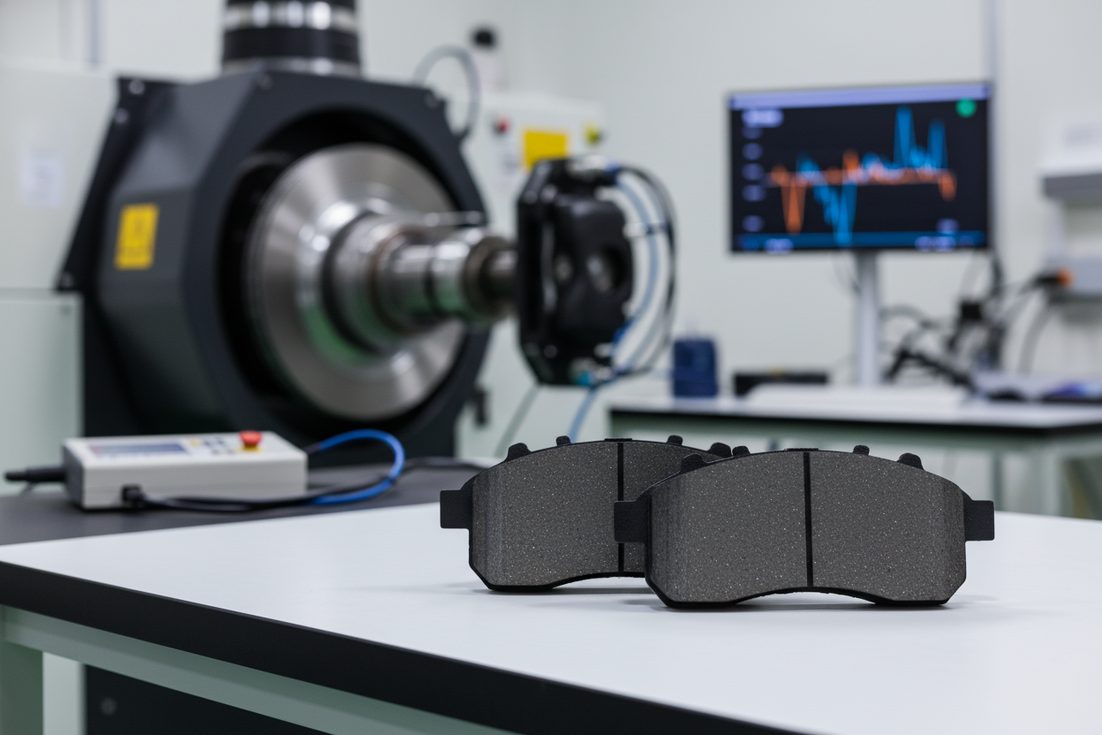
You’re sourcing brake pads for a fleet of 40-ton rigs. The spec sheet lists both ceramic and semi-metallic options, but the price difference is significant. Which one actually protects your investment and keeps drivers safe when it matters most? The answer isn't about which material is 'better' in a vacuum—it's about which one meets the specific technical and compliance requirements of commercial haulage. Let's cut through the marketing and look at the data that defines real-world performance.
What Technical Standards Govern Commercial Vehicle Brake Pad Performance?
ECE Regulation 90 is the global benchmark for aftermarket brake pad approval. It mandates that a replacement pad must perform equal to or better than the vehicle's original equipment across a battery of tests. For commercial vehicles, the most critical is the 'Type 1 Fade Test' performed on a dynamometer. This test simulates a series of high-energy stops to heat the brake system to over 400°C, measuring if the pad maintains at least 80% of its cold friction effectiveness. A pad that fails this test can't be ECE R90 certified for sale in over 50 countries.
IATF 16949 certification for the manufacturing facility adds another layer. It’s not a product stamp but a process guarantee. It means every batch of pads from an IATF 16949 certified facility is produced under a rigorous quality management system designed for the automotive industry. For an importer, this translates to traceability, consistency, and significantly reduced risk of field failures. You can't claim compliance without the data to back it up.
Compliance isn't optional; it's the baseline for liability and performance in the commercial vehicle sector.
How Do Friction Coefficients Compare Under Real-World Trucking Conditions?
A dynamometer tells the real story. Semi-metallic formulations, with their high metal fiber content (typically 30-65% by weight), are engineered for aggressive bite. In controlled testing per ISO 26867, a quality semi-metallic pad for heavy-duty applications will show a stabilized friction coefficient (μ) between 0.40 and 0.45 across the operational range of 100°C to 500°C. This high, stable μ is non-negotiable for stopping a loaded trailer on a mountain descent.
Ceramic pads use a different friction mechanism. They rely on a dense ceramic matrix and often deposit a smooth transfer layer on the rotor. This provides exceptionally consistent, low-wear performance. However, their μ curve is different. While excellent at low to moderate temperatures (0.38-0.42 μ), some formulations can experience a gradual decline in friction output as temperatures soar past 350°C—a scenario common in commercial use. This isn't a failure; it's a material characteristic. The commercial vehicle brake pad test report for each material tells this exact story.
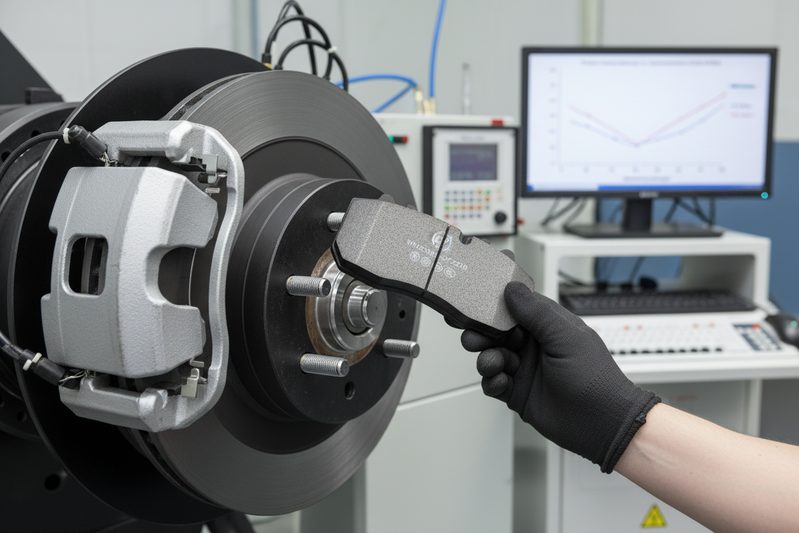
The choice hinges on the vehicle's duty cycle: high, sustained heat demands semi-metallic's stability; mixed urban/suburban routes may benefit from ceramic's cleanliness and rotor life.
What Are the Trade-Offs in Noise, Vibration, and Wear?
Noise, vibration, and harshness (NVH) is where ceramic compounds shine, and physics explains why. Ceramic materials possess high internal damping—they absorb vibrational energy. Combined with that smooth transfer layer, they minimize the 'stick-slip' events that cause audible brake squeal, especially at low speeds. For refuse trucks, buses, or any fleet operating in noise-sensitive areas, this is a major advantage.
Semi-metallic pads have a different NVH profile. The metal-on-metal contact can be inherently more prone to generating noise, particularly during low-speed, light-pressure braking. This isn't a defect; it's a byproduct of their high-friction composition. Proper engineering with chamfers, shims, and specific lubricants mitigates this, but it rarely matches the near-silent operation of a well-formulated ceramic pad. The trade-off is clear: maximum stopping power often comes with a higher acoustic signature. You can find more on diagnosing these issues in our brake pad troubleshooting resources, though the principles apply to CVs.
If your client's primary complaint is brake noise, ceramic is the straightforward answer. If their priority is fade resistance under load, semi-metallic is the proven choice.
What Do Total Cost of Ownership and Durability Data Show?
Initial price is a poor indicator of lifetime cost. A semi-metallic pad might have a 10-15% lower upfront cost per axle set compared to a premium ceramic equivalent. However, ceramic pads typically offer 20-30% longer service life and produce significantly less abrasive brake dust, which translates to extended rotor life—sometimes doubling the intervals between rotor replacements. For a fleet manager, this reduces downtime and the total cost per mile.
Semi-metallic pads wear faster and are harder on rotors. That's the trade-off for their aggressive friction. The calculation for a fleet operator becomes: are the more frequent pad and rotor change-outs (and associated labor costs) justified by the superior high-temperature performance and potentially lower initial part cost? For long-haul, high-GVW applications, the answer is usually yes. The safety margin is worth the maintenance schedule. Our brake maintenance cost analysis provides a framework for making this calculation.
Durability favors ceramics for longevity; operational safety under extreme stress favors semi-metallics—the cost model must account for both.
What Are the Most Common Misconceptions About Brake Pad Materials?
Misconception: Ceramic pads are always the 'premium' choice for every vehicle.
Reality: Premium is application-defined. For a commercial truck, 'premium' means consistent, high-friction performance under brutal thermal cycling. A ceramic pad designed for a passenger car's duty cycle may not meet that definition. Always match the pad specification to the vehicle's Gross Vehicle Weight Rating (GVWR) and intended service.
Misconception: A higher friction coefficient (μ) number automatically means better braking.
Reality: Consistency is more critical than peak μ. A pad that fluctuates between 0.25 and 0.50 μ is dangerous, as it gives the driver unpredictable pedal feel. ECE R90 requires the friction curve to remain within a tight band (typically ±0.05 μ) across the entire test sequence. A stable 0.40 μ is superior to an unstable 0.45 μ.
Misconception: All semi-metallic or ceramic formulations are essentially the same.
Reality: The specific recipe—the blend of metal fibers, abrasives, lubricants, and binders—dictates performance. A C.V. brake pad from a manufacturer with 49+ years of formulation experience will behave completely differently from a generic import. The proof is in the dynamometer report, not the marketing name.
Frequently Asked Questions (FAQ)
Q: Can I use passenger car ceramic pads on a light commercial vehicle?
A: It's not recommended. Passenger car pads are engineered for lower mass and different thermal loads. Even a 1-ton van generates more brake heat. Using an under-specified pad accelerates fade and wear. Always select pads engineered and certified for commercial vehicle applications.
Q: Do semi-metallic pads always cause excessive brake dust and rotor wear?
A: Not necessarily. While they are generally more abrasive, advanced formulations from technical manufacturers like BAIYUN Brake use engineered lubricants and modified metal fibers to reduce aggressive wear. The key is the specific material data sheet, which should show controlled wear rates against standard cast iron rotors.
Q: How critical is the ECE R90 certification for my target market?
A> It's legally mandatory in all EU member states, the UK, Turkey, Australia, and many other countries. Selling non-certified pads in these markets carries significant liability risk and can result in fines or import seizures. It's the first box to check on your supplier checklist.
Q: What's the real-world impact of a 0.05 difference in friction coefficient?
A: In a panic stop from 80 km/h for a 40-ton truck, a 0.05 μ decrease can increase stopping distance by several meters—the difference between a safe stop and a collision. Consistency in friction output is a direct safety metric, not just a technical specification.
Q: How can I verify a supplier's test data claims?
A> Request the full dynamometer test report aligned with ECE R90 or similar standards (like GB 5763). Reputable manufacturers, including BAIYUN Brake, provide these reports for their brake pad catalog listings. Look for graphs showing friction coefficient vs. temperature and specific results for fade and recovery tests.
The debate between ceramic and semi-metallic isn't about finding a universal winner. It's about precision matching. For the severe service conditions of commercial trucking—high gross weights, sustained braking, and extreme heat buildup—the technical data overwhelmingly supports semi-metallic formulations as the default choice for primary stopping power. Their ability to maintain a high, stable friction coefficient when the system is under maximum stress is unmatched. Ceramic technology offers brilliant advantages in specific niches where NVH and longevity are the paramount concerns, provided the thermal load remains within the material's designed operating window.
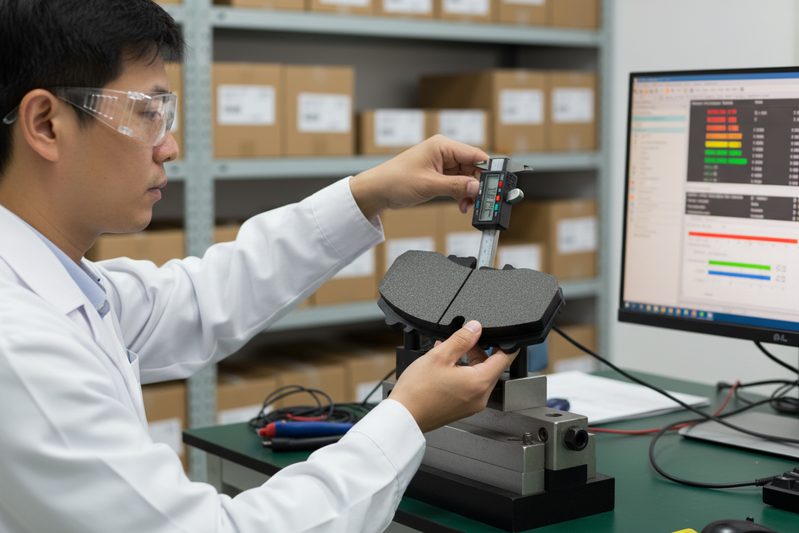
Your decision should start with the vehicle's OEM specification and the compliance requirements of your destination market. Then, partner with a manufacturer that doesn't just sell you a product, but provides the engineering data to prove it fits your exact need. That's where our competitive advantages in formulation and testing come into play.
Ready to specify the right material for your fleet or customers? Contact us with your vehicle applications and target markets. We'll provide specific product recommendations, complete with ECE R90 test reports and compliance documentation to streamline your sourcing process.
Was this article helpful?
Average Rating: 5/5 (1227)