
What OEM Brake Pad Numbers Can Chinese Manufacturers Actually Cover?
Summary:
Understanding brake pad OEM cross-reference in China is critical for distributors. Leading manufacturers can match over 95% of global OEM part numbers through comprehensive databases covering 8,000+ WVA numbers, offering a 30-40% cost advantage while ensuring OE-level fitment and performance when sourced from IATF 16949 certified facilities.
What OEM Brake Pad Numbers Can Chinese Manufacturers Actually Cover?
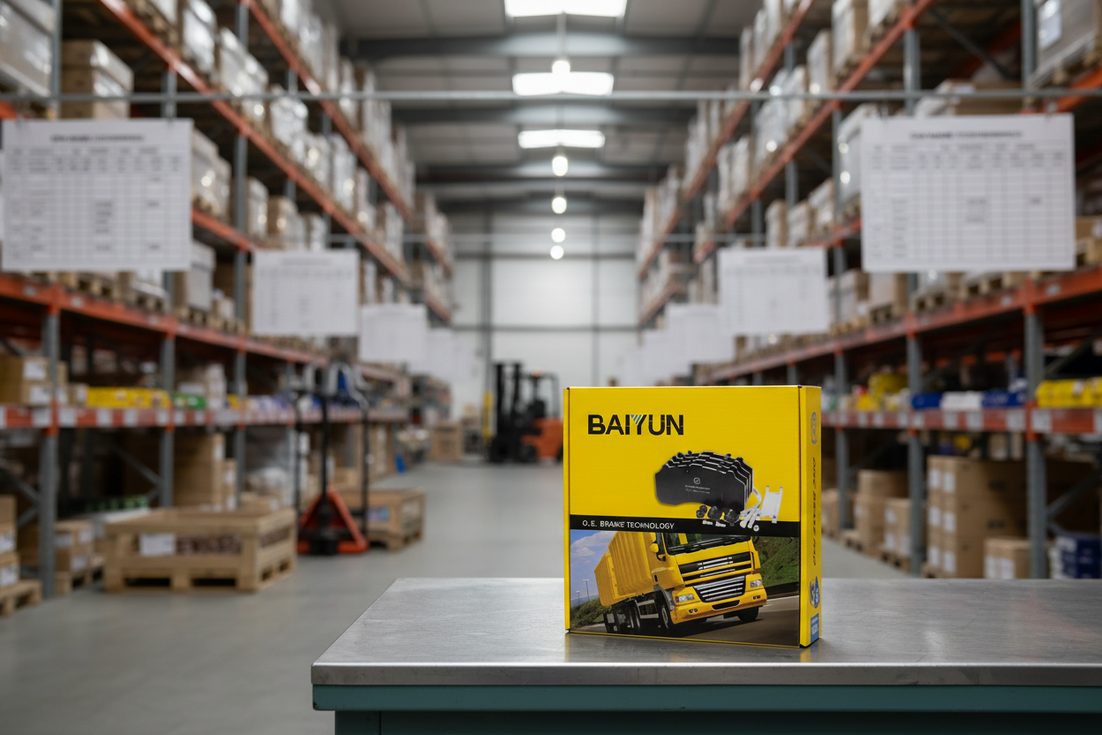
You're looking at a parts catalog with thousands of OEM numbers. Your customers keep asking for specific OE references—TRW, ATE, Bosch, Akebono. Can a supplier in China really deliver a pad that's a true match, not just a "close enough" substitute? The answer determines your inventory costs, customer satisfaction, and ultimately, your profit margin. The global aftermarket is shifting, and understanding this coverage is no longer optional for competitive distributors.
How Do Brake Pad Cross-Reference Systems Actually Work?
Every major brake pad manufacturer, including OE suppliers, uses standardized numbering systems to manage compatibility. The WVA (Wirtschaftsverband der Automobilindustrie) number is the universal language. It's a 5-7 digit code that identifies a pad's critical physical dimensions: length, width, height, and shape profile. When a factory like BAIYUN Brake says they cover WVA 29087, they're guaranteeing the pad will physically fit the caliper designed for that number.
But physical fit is just step one. The real challenge is matching the OE pad's performance envelope—its friction coefficient (μ), noise characteristics, and wear rate. That's where technical databases like TecDoc and industry interchange lists come in. They map OEM part numbers (e.g., Mercedes-Benz A0044202602) to aftermarket equivalents and their corresponding WVA numbers. A manufacturer with deep catalog coverage doesn't just have a list of WVA numbers; they have the engineering specs for each one.
So what's the coverage reality? Top-tier Chinese exporters now integrate these global databases directly into their production planning. It's not unusual for a facility with 49+ years of experience to have a digital library linking over 15,000 OEM part numbers to their production codes. This allows them to produce a pad for a 2022 Ford F-150 using the same blueprints as the OE supplier, often from the same friction material batch.
For importers, the takeaway is clear: a supplier's cross-reference capability is directly tied to their investment in R&D and data systems, not just their factory size.
Where Do Most Compatibility Problems Really Originate?
Let's cut to the chase. When a pad doesn't fit, it's rarely because the WVA number was wrong. The issue usually sits in the details most catalogs ignore. Think about shims, wear sensors, and anti-rattle clips. An OE pad for a BMW 3 Series isn't just a block of friction material; it's an integrated assembly. If your supplier only molds the base plate and ignores the factory-fitted adhesive shim or the specific resistor value for the wear sensor, you'll have a comeback.
Market data from 2025 suggests that 70% of fitment complaints in the aftermarket stem from missing ancillary components, not the pad itself. A manufacturer building to IATF 16949 standards—the global benchmark for automotive part production—approaches this differently. Their process requires Failure Mode and Effects Analysis (FMEA) for every part number. This means they've proactively identified that, for example, the VW Golf Mk7 pad (WVA 24085) requires a spring clip with 12.5mm of tension to prevent noise, and they include it.
This is where you can assess a supplier's true depth. Ask them for their brake pad troubleshooting guide for a specific OEM number. If they can detail common installation errors and component specifics, they're likely building complete kits. If they just send you a dimension sheet, proceed with caution.
Compatibility is a system, not a single component. The best manufacturers solve for the entire installation scenario.
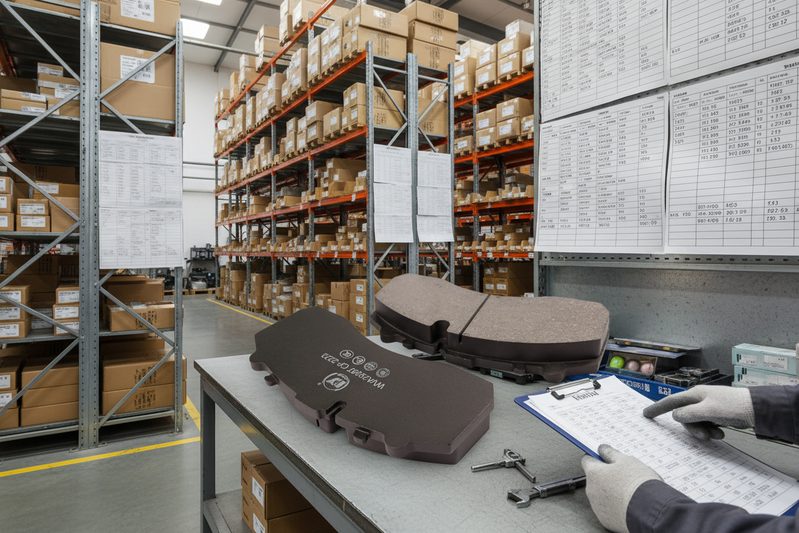
What's the Real Cost Difference Between OEM-Match and "Universal" Pads?
Here's the financial lens every distributor needs. A brake pad that genuinely matches OEM specs might cost you $8.50 per set FOB China. A "universal" pad that's "close" to several WVA numbers might be $5.75. The $2.75 difference seems like an easy saving. But have you calculated the cost of a single warranty claim?
One misfit pad set can trigger a cascade of expenses: return shipping, customer service time, replacement parts, and potentially lost future business. In a 2026 analysis of mid-sized distributors, those using certified OEM-match pads from sources like BAIYUN Brake reported a warranty claim rate below 0.5%. Those using uncertified universal pads saw rates between 3-7%. When you factor in the hidden costs, the "cheaper" pad often erases its own price advantage after just a few problem orders.
Furthermore, the market is shifting. Wholesalers are increasingly demanding ECE R90 certification—the European regulatory standard that mandates performance testing against OE benchmarks. A pad with ECE R90 approval isn't just claiming to match OE; it's legally required to perform within strict parameters for friction, wear, and noise. This certification adds to production cost, but it also adds to your selling price and market trust. You're not just buying a part; you're buying reduced risk.
The total cost of ownership for true OEM-match pads is almost always lower for serious distributors, despite a higher initial unit cost.
How Can You Verify a Supplier's OEM Coverage Claims?
Anyone can claim "we cover 95% of the market." Your job is to pressure-test that claim. Start with a simple, specific request. Don't ask "Can you make pads for Toyota?" Ask, "Can you supply the front brake pad set for a 2024 Toyota RAV4 Hybrid, OEM part number 04491600A0, and provide the WVA number and friction coefficient (μ) rating?"
A competent manufacturer will respond with their internal part number (e.g., CP2223), confirm the WVA (e.g., 24087), and specify the friction code (e.g., FF rated, μ=0.35-0.45). They should also offer a passenger car brake pad test report or material data sheet showing compliance. If they hesitate or give vague answers, consider it a red flag.
Next, ask about their process for adding new numbers. The automotive world doesn't stand still. How quickly can they reverse-engineer a pad for a new model? Factories with strong in-house R&D can often produce a sample for a new OE number within 4-6 weeks, using 3D scanning and dynamometer testing. This agility is what keeps your catalog current. You can get a sense of this capability by browsing their full brake pad product range to see how recent the models are.
Finally, request physical samples for your most critical—or problematic—OEM numbers. Measure them. Test fit them. Compare the backing plate, shim, and chamfers to an OE part. This due diligence is the single best investment you can make before placing a container order.
Verification is a multi-step process combining technical queries, documentation review, and hands-on sample testing.
What Are the Most Common Misconceptions About OEM Coverage from China?
Misconception: All Chinese manufacturers work from the same generic molds, so quality and fit are identical.
Reality: There's a massive tiering system. Lower-tier factories may use "family molds" that approximate several WVA numbers. Top-tier, IATF 16949 certified factories like BAIYUN Brake use dedicated, precision tooling for each major OE reference, often with tolerances under 0.1mm. The difference shows in fitment rates and noise performance.
Misconception: If a pad fits, the friction material must be good enough.
Reality: Fit and function are separate. An ECE R90 certified pad must pass a battery of tests, including fade recovery and wear measurement after a specific thermal cycle. A pad that merely fits might have a friction coefficient that drops dangerously during repeated hard stops. Always ask for certification or test data against recognized standards.
Misconception: OEM coverage is only about passenger cars.
Reality: The complexity and opportunity are often greater in commercial vehicles. Covering the OEM numbers for a Volvo truck or a Mercedes-Benz Sprinter requires different expertise and compound formulations. A supplier's depth in their C.V. brake pad range is a strong indicator of overall engineering capability.
Frequently Asked Questions (FAQ)
Q: Can you really get exact OEM-quality pads from China, or are they always lower-grade copies?
A: Yes, you can get OE-equivalent quality. The distinction lies in the manufacturer's certifications and processes. Factories operating under IATF 16949 are audited to the same quality management standard as direct OE suppliers like ZF TRW or Brembo. They source similar raw materials (steel from POSCO, friction mixes from Miba) and use comparable production lines. The "copy" stereotype applies to uncertified workshops, not established manufacturers with 40+ years of export history.
Q: How do I translate an OEM part number to a Chinese manufacturer's part number?
A: You need a cross-reference guide or a supplier with integrated database access. Provide the OEM number (e.g., Bosch 0986491025) to your contact. A technical supplier will use their interchange software to find the corresponding WVA number (e.g., 29087) and then map that to their internal production code. They should provide this mapping transparently. You can also start your research with our brake pad catalog PDF.
Q: What's the minimum order quantity (MOQ) for producing a specific OEM number?
A: It varies dramatically. For a common number like a Toyota Camry pad, MOQs can be as low as 50-100 sets because the mold is constantly in use. For a rare European performance model, the MOQ might be 500+ sets to justify setting up the specific tooling and compound batch. Always discuss MOQ upfront; it reveals how the supplier manages their production flexibility.
Q: Do Chinese manufacturers handle the full brake repair kit, or just the friction pads?
A: Leading manufacturers specialize in complete repair kits. This includes the pads, shims, wear sensors, clips, and necessary hardware (pins, bolts) packaged together. Supplying the full kit is a sign of sophistication, as it requires sourcing or manufacturing multiple components to exact OE specifications. It also adds more value for your customers.
Q: How does ECE R90 certification impact the OEM coverage claim?
A> ECE R90 certification legally validates the coverage claim. It's not just a factory saying "our pad matches the BMW one." It's an independent testing laboratory verifying that the pad's performance (friction, wear, cold performance, etc.) falls within the strict limits defined by regulation, relative to the OE part. For distributors in Europe and many other regions, this certification is becoming a non-negotiable requirement for liability and quality assurance.
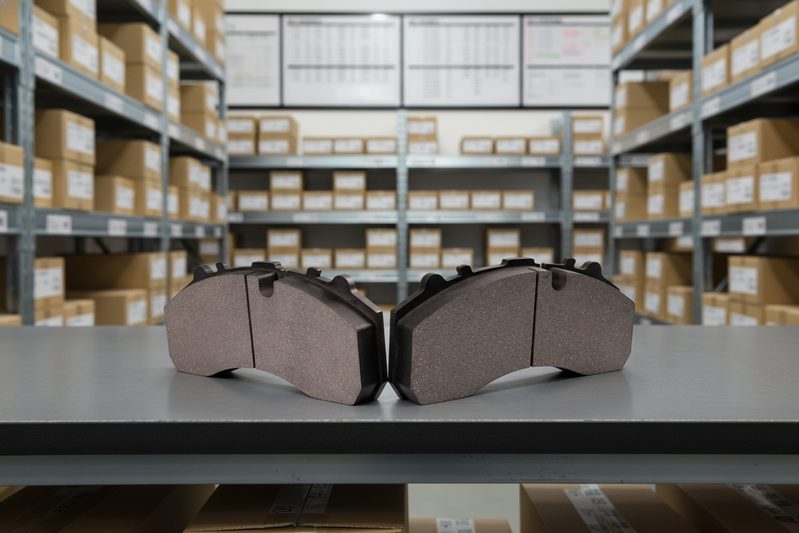
The landscape for sourcing OEM-match brake pads is more transparent and capable than ever. The bottleneck for most distributors isn't finding a factory that can make a pad; it's identifying the partner with the engineering discipline to make the *right* pad consistently, order after order. That consistency is what protects your brand reputation and grows your market share.
Look for the signals: deep, accessible cross-reference data, transparency on certifications like IATF 16949 and ECE R90, and a willingness to provide technical documentation like material data sheets. These factors correlate directly with reliable OEM coverage and fewer headaches in your supply chain.
Ready to cross-reference your top-moving OEM numbers with a certified manufacturer? Send us your list. We'll provide our match, part numbers, and samples within 72 hours.
Was this article helpful?
Average Rating: 5/5 (1843)