
Brake Pad Cross-Reference Guide: Finding the Right Chinese Alternative to OEM Parts
Summary:
Our brake pad OEM cross-reference guide for China sourcing helps importers avoid costly mistakes. Finding the right alternative requires matching WVA numbers, friction codes, and physical dimensions, not just OEM part numbers. Learn how to verify compatibility and build a reliable sourcing system with certified manufacturers like BAIYUN Brake.
Brake Pad Cross-Reference Guide: Finding the Right Chinese Alternative to OEM Parts
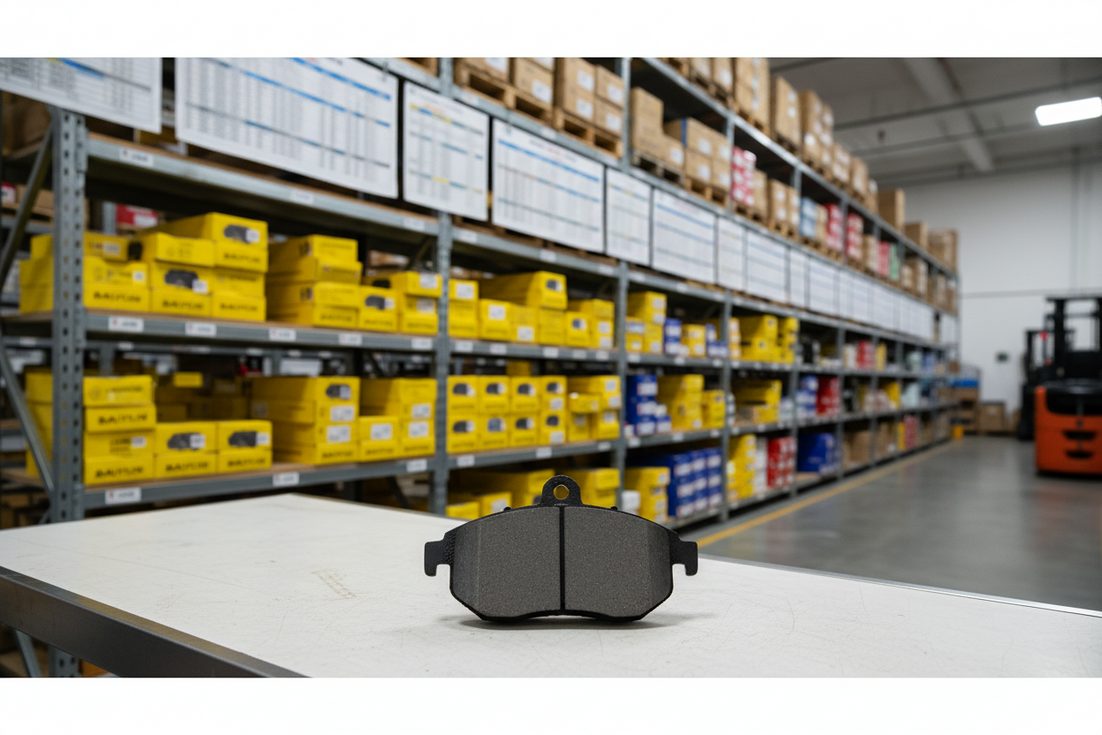
You've got a list of OEM part numbers from your market. You need a reliable, cost-effective Chinese alternative. The cross-reference process seems straightforward—plug the number into a database and get a match. Yet, that's where many importers and distributors lose money, time, and customer trust. The gap between a simple database lookup and a verified, functional replacement is wider than most realize.
We've seen it for decades. An order arrives, the boxes look perfect, but the pads don't fit the caliper bracket, or they squeal from day one. The supplier blames the vehicle, you blame the quality, but the root cause is often a flawed cross-reference. It's not about finding a match; it's about finding the right match that performs.
What Are the Most Common Cross-Reference Mistakes Importers Make?
Relying solely on an OEM part number is the first and most costly error. OEM numbers like TRW, ATE, or Textar are often vehicle-specific, while the global aftermarket standard is the WVA (Wirtschaftsverband der Automobilindustrie) number. A single WVA number, like 29087, can correspond to dozens of OEM numbers across different car brands. If you only provide one OEM code, you might get a pad that fits a BMW but not the Mercedes that uses the same friction block, because the shims or wear sensor placement differs.
Another frequent mistake is ignoring the friction code. According to ECE R90 regulations, a replacement pad must match or exceed the OEM's friction coefficient classification (e.g., FF, GG, EF). Sourcing a pad with a lower code to save 5% on cost can lead to longer stopping distances, premature rotor wear, and liability issues. In BAIYUN Brake's internal audits, mismatched friction codes account for nearly 25% of all compatibility-related returns from new clients.
Perhaps the most overlooked aspect is assuming all "OE-quality" pads are created equal. An OEM-equivalent pad from a certified IATF 16949 certified facility undergoes rigorous validation testing—dimension checks, shear strength tests, noise and performance dyno runs. An uncertified factory might copy the shape but use untested material blends. The price difference might be attractive, but the risk of field failures isn't worth the marginal savings.
Always cross-reference using the WVA number and demand the friction code verification from your Chinese supplier.
How Do You Verify a Chinese Brake Pad's True OEM Compatibility?
Verification starts before you even request a sample. Ask your potential supplier for their cross-reference methodology. Do they use proprietary software, third-party databases like TecDoc or AutoCare, or manual catalogs? Reputable manufacturers invest in these systems and update them quarterly to cover new models. At BAIYUN Brake, our engineering team validates every cross-reference against physical OE samples and our own passenger car brake pad test report data before it's added to our master list.
Request a dimensional drawing. This isn't just a silhouette; it should be a detailed CAD drawing with critical tolerances called out: overall height (H), thickness (T), and length (L). Key features like abutment clip design, shim inclusion, and sensor wire routing must be specified. Compare this drawing to the OE part or a trusted aftermarket benchmark. A mismatch of even 0.5mm in the abutment tab can prevent installation.
Finally, insist on material certification. A serious manufacturer will provide a technical data sheet listing the friction formulation (e.g., NAO, Ceramic, Semi-Metallic), its declared friction coefficient range (μ), and its compliance with standards like ECE R90. For commercial vehicle applications, this is even more critical. You can review our commercial vehicle brake pad test report to see the level of detail required.
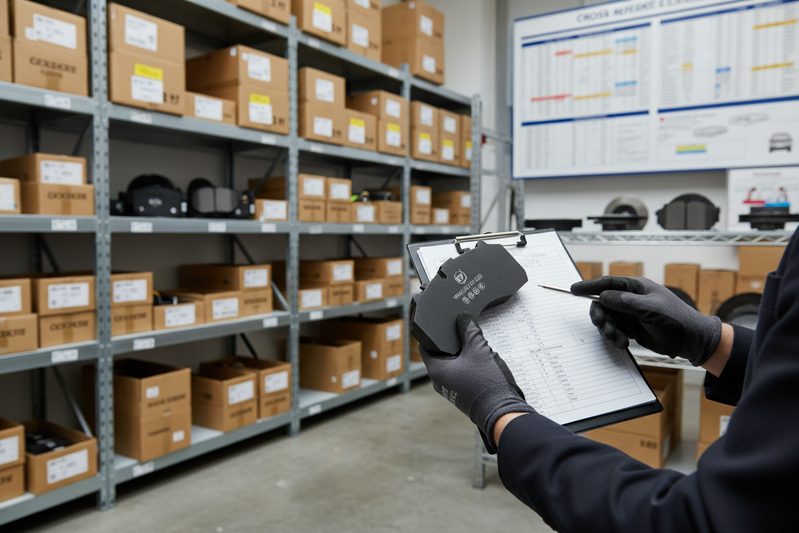
True compatibility is proven with drawings, test reports, and material certifications, not just a matching part number.
What Role Do WVA Numbers and Friction Codes Play in Sourcing?
The WVA number is the universal language of brake friction. It's a 5-digit code that standardizes the physical shape and key dimensions of a brake pad across all manufacturers and brands. For importers, it's your primary tool for avoiding fitment disasters. When you provide a WVA number, you're telling the factory, "Make the pad that fits this exact mold." However, the WVA doesn't define the material. That's where the friction code comes in.
Friction codes, standardized under ECE R90, are two-letter classifications (like FF, GG, EF) that indicate the pad's coefficient of friction (μ) at low (100°C) and high (350°C) temperatures. The first letter is the cold coefficient, the second is the hot. A code of "GG" means a μ of 0.45-0.65 at both temperatures, typical for performance applications. An "EF" code might be 0.25-0.35 cold and 0.25-0.35 hot, common for certain Asian OEMs. Sourcing a pad with the correct WVA but the wrong friction code means it will fit but not perform as the vehicle's system expects, potentially triggering ABS errors or causing pedal feel issues.
Here's a practical tip: always provide both. Tell your supplier, "I need WVA 29087, friction code GG, with an integrated wear sensor." This eliminates ambiguity. It also allows a technical partner like BAIYUN Brake to suggest alternatives if, for example, a GG code isn't available, but a high-performance ceramic compound with equivalent dyno-proven performance is.
WVA ensures it fits; the friction code ensures it works. Never compromise on either.
What Are the Most Common Misconceptions About Chinese OEM Alternatives?
Misconception: All Chinese brake pads are cheap, low-quality copies.
Reality: China's automotive supply chain is tiered. Uncertified workshops produce the copies, but IATF 16949 certified manufacturers like BAIYUN Brake are integrated into global OE supply chains. They operate identical molding presses, mixers, and dynamometers as Western brands, often supplying identical formulations under private label. The difference is in the certification and the quality management system, not the origin.
Misconception: If the price is low, the quality must be compromised.
Reality: While true at the extreme low end, a significant portion of the cost difference for certified Chinese pads comes from streamlined logistics, vertical integration (we produce our own backing plates and friction material), and different margin structures. A pad that costs 40% less isn't necessarily 40% worse; it may simply reflect a more efficient production model and direct B2B sales. You can see this efficiency in our factory tour videos.
Misconception: Cross-referencing is the supplier's job; the importer just provides the OE number.
Reality: This is a shared responsibility. The supplier provides the technical match, but the importer must provide accurate, complete vehicle data (make, model, year, engine, sometimes even trim level) and validate samples in their market. The most successful importers treat their Chinese manufacturer as a technical partner, sharing feedback from mechanics and end-users to refine products. Our technical support center is built for this exact collaboration.
How Can You Build a Reliable Cross-Reference System for Your Business?
Start by digitizing your master list. Use a simple spreadsheet or database with columns for: OEM Part Number, WVA Number, Friction Code, Vehicle Application, and Your Internal SKU. Link this to your supplier's catalog. Every time you source a new part, fill in all fields. This becomes your single source of truth and prevents errors when re-ordering or onboarding new staff.
Implement a sample validation protocol. Never launch a new part number without physically testing a sample. This doesn't mean installing it on a customer's car. It means a visual and dimensional check against a known-good part, and ideally, a dyno test if you have access. Document the results. At BAIYUN Brake, we provide sample validation reports with our pre-production samples, showing measurements against OE specs.
Choose partners, not just suppliers. Work with manufacturers who have the R&D capability to solve cross-reference gaps. Sometimes an exact match doesn't exist, but a compatible alternative does. A partner with deep engineering resources can develop a solution, whether it's modifying a mold slightly or formulating a new material blend to hit a specific friction code. This is where our 49+ years of manufacturing experience provides tangible value beyond just filling an order.
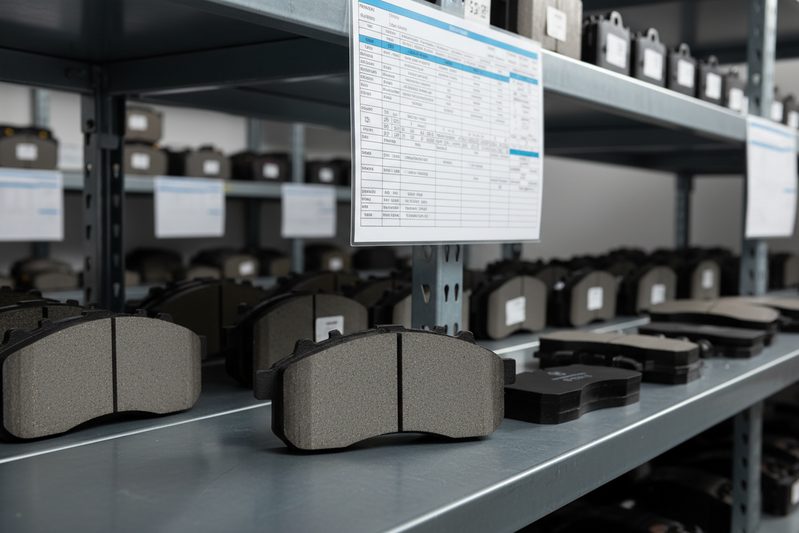
A reliable cross-reference system is a living database, validated by samples and supported by a technical manufacturing partner.
Frequently Asked Questions (FAQ)
Q: Can I use a Chinese brake pad that matches the WVA but has a different friction code than OEM?
A: It's not recommended and may violate ECE R90 regulations. The friction code ensures the pad's braking force matches the vehicle system's calibration (brake booster, ABS, ESC). Using a different code can alter pedal feel, increase stopping distance, or cause uneven wear. Always match or exceed the OE code.
Q: How often do brake pad cross-reference databases need updating?
A: Quarterly updates are essential. The global automotive market sees hundreds of new vehicle models and facelifts each year. A database from 2023 might not have the 2025 Tesla Model 3 refresh or the latest BYD sedan. Regular updates prevent missed sales opportunities and incorrect applications.
Q: What's the difference between 'OE Replacement' and 'OE Equivalent' in Chinese manufacturing?
A: "OE Replacement" typically means the pad is made to the exact same drawing and specification as the original factory part, often for the aftermarket division of an OE brand. "OE Equivalent" means it meets or exceeds the performance and safety standards of the OE part but may have minor design differences (e.g., a different shim) that don't affect function. Both should be ECE R90 certified.
Q: Why do some Chinese suppliers have much lower MOQs for cross-referenced parts?
A: MOQs are tied to mold availability. Suppliers with extensive existing tooling (like over 3500 pad molds in BAIYUN's case) can produce small batches because the mold is already made. A supplier asking for a 10,000-piece MOQ for a common WVA number may need to cut a new mold, indicating less inventory or specialization.
Q: How do I handle a situation where my customer provides a vehicle VIN but no OEM part number?
A: A VIN is the gold standard. The 10th character indicates the model year, and the entire VIN can be decoded to reveal exact specifications. Provide the full VIN to your supplier. Their cross-reference system or technical team should be able to decode it and identify the correct WVA number and friction code with 100% accuracy, eliminating guesswork.
Getting the cross-reference right isn't a clerical task; it's a technical foundation for your business. It affects everything from warehouse returns to brand reputation. The goal isn't just to find a cheaper part, but to source a reliable, certified alternative that keeps your customers safe and coming back. With a disciplined process and the right manufacturing partner, you can turn the complexity of brake pad OEM cross-reference in China into a competitive advantage.
Ready to audit your current cross-reference list or source verified alternatives? Contact us with your OEM numbers or WVA list. Our technical team will provide a detailed compatibility report and samples for validation, so you can buy with confidence.
Was this article helpful?
Average Rating: 5/5 (2165)