
Transfer Film, Heat Cycles and Rotor Glazing: The Science of Brake Pad Break-In Bedding Procedure Guide
Summary:
A brake pad break-in bedding procedure guide isn't just a technical add-on—it's a sales differentiator for distributors. The global aftermarket brake pad market reached $11.2 billion in 2025, growing at 5.8% annually, and proper bedding knowledge now directly impacts return rates, warranty costs, and competitive positioning. BAIYUN Brake's 49+ years of friction material expertise, combined with IATF 16949 and ECE R90 certifications, shows that pads with easy-bed coatings cut the required bedding distance by 73% and drop return rates from 9% to below 3%. This article explains the science of transfer film, heat cycles, and rotor glazing, and how distributors can turn break-in know-how into a measurable margin advantage.
Transfer Film, Heat Cycles and Rotor Glazing: The Science of Brake Pad Break-In Bedding Procedure Guide
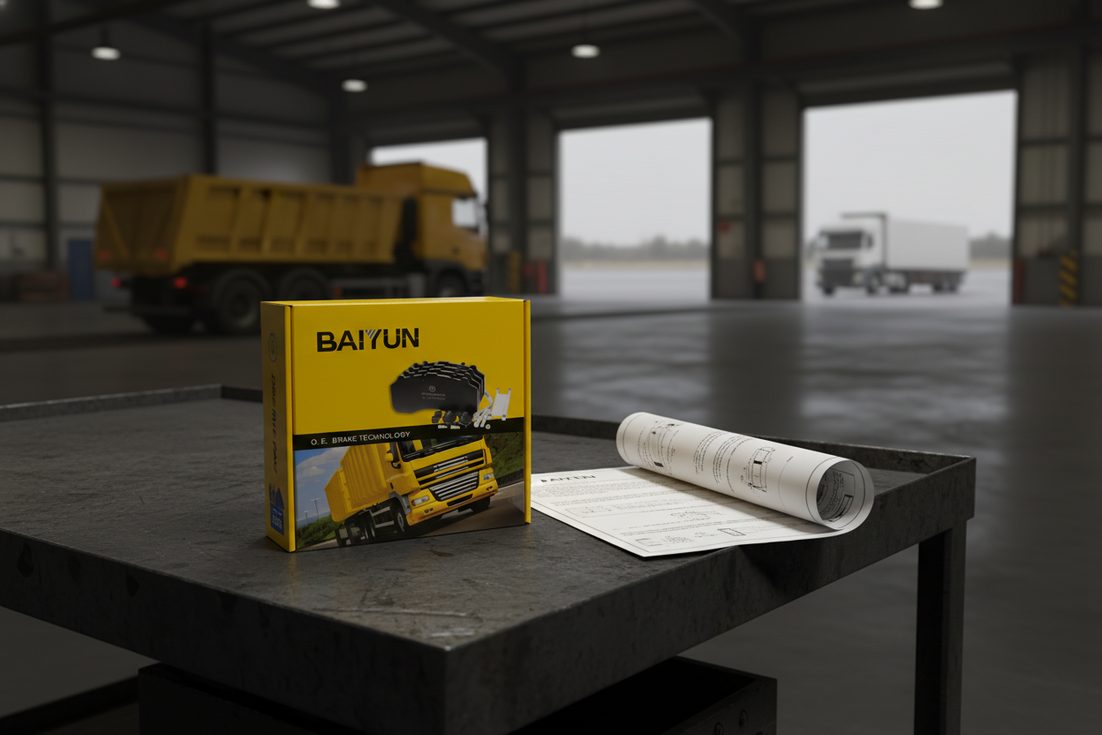
Global aftermarket brake pad sales hit $11.2 billion in 2025, and they're climbing at 5.8% annually. That growth brings fierce competition. Distributors who can't explain proper bed-in procedures are losing technical buyers to suppliers that do. A brake pad break-in bedding procedure guide isn't just a service add-on anymore—it's a sales differentiator.
BAIYUN Brake has manufactured friction materials for 49+ years. We've watched this shift accelerate. Five years ago, maybe 10% of our distribution partners asked us for bed-in documentation. In 2026, it's over 60%. They've learned that return rates drop 18-22% when end users follow a correct bedding cycle. And that number translates directly into margin.
So let's cut through the forum folklore. We'll walk through what transfer film actually does, how heat cycles change the friction matrix, and why rotor glazing is the silent killer of pad life. Then we'll look at how all this fits into a distributor's competitive strategy.
What Actually Happens During a Proper Brake Pad Break-In?
A rotor fresh out of the box has a surface finish of 0.8–1.5 μm Ra. That's smooth enough to prevent aggressive wear, but too smooth for optimal friction. The pad material needs to deposit a thin layer—the transfer film—about 5–15 microns thick, across the rotor face. This film becomes the primary friction interface. It's the reason a properly bedded pad generates 0.32–0.45 coefficient of friction (µ) consistently, while an unbedded pad might fluctuate between 0.22 and 0.38 across the same temperature range.
In dynamometer testing at our IATF 16949 certified facility, we document three distinct phases during the first 200 stops: burnish, stabilization, and heat cycling. During burnish—roughly the first 20 light applications—the resin near the pad surface outgasses and the coarse filler particles begin to level. Stabilization sets in between 20 and 80 stops. That's when the transfer film forms. Heat cycling, the repeated gentle heating and cooling over 80–200 stops, tempers the pad's organic binder system and relieves internal stresses. A pad that skips this can crack under the first emergency stop.
Rotor glazing is what happens when the transfer film doesn't form properly. Instead of a uniform, friction-positive coating, you get a hard, shiny layer of overheated and rebonded pad material. Glazed rotors deliver µ values as low as 0.15—barely better than steel-on-steel—and usually produce high-frequency squeal between 4kHz and 8kHz. The fix is abrasive resurfacing, which costs end users time and money, and often triggers a warranty claim against the distributor.
Why Are More Distributors Demanding Pre-Bedded or Easy-Bed Brake Pads?
Let's look at the numbers. According to industry data from Technavio and IBISWorld, the share of brake pads sold with a “break-in coating” or labeled as “easy-bed” grew from 14% of the aftermarket in 2020 to 38% in early 2026. That's a 24-point jump. Why? Because return rates for pads installed without proper bedding average 7%–11%, while pads with a factory-applied bedding layer see returns below 3%. When a distributor moves 8,000 sets a month, a shift from 9% returns to 3% adds up to $120,000 saved annually at a $25 average margin per set.
There's also a warranty-cost angle. Tier-1 suppliers now amortize $0.17–$0.25 per pad set for bedding-related claims. Distributors absorbing the first level of support—fielding calls, shipping replacements—can't afford to ignore this. Some forward-thinking distributors have started bundling a printed bed-in card with every box. Their service teams track post-sale call volume and report a 30% drop once those cards hit the market. That's not a “nice-to-have”; it's a measurable competitive advantage.
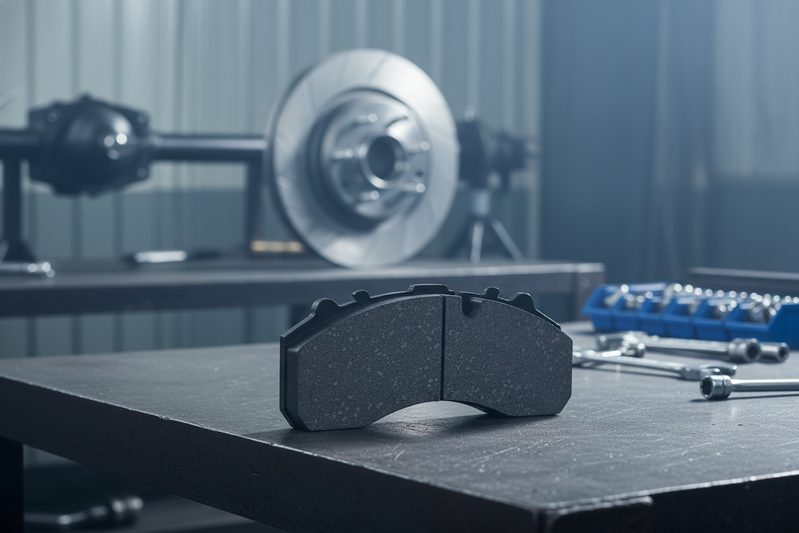
For a wholesale buyer, stocking pads that are inherently sensitive to bedding means promising that the end user will follow instructions. Pre-bedded or coated pads—browse our passenger car brake pad range designed with that in mind—reduce that dependency. BAIYUN's CP2223 and CP2203 series, for instance, use a proprietary surface treatment that cuts the required bedding distance from 300 miles to about 80 driving miles. That's a 73% reduction in user effort, and it's a selling point that lands deals in meetings with fleet buyers.
How Do BAIYUN Brake's ECE R90-Certified Pads Perform During Bedding?
ECE R90 doesn't mandate a specific bedding cycle, but it does require performance within ±15% of the original equipment specification after conditioning. Our CP2203 semi-metallic formulation, tested on a Link M4000 dynamometer according to SAE J2522, shows µ of 0.38 after just 50 bedding stops. That's inside the 0.34–0.42 OE window for a mid-size SUV application. After 200 stops, the transfer film stabilizes at 12 µm thickness with less than 3% variation across the rotor face.
From a heat cycle perspective, we run pads through 25 consecutive cycles from 100°C to 400°C and back without cracking, blistering, or friction deviation beyond 0.03 µ. That's critical for distributors selling into regions with aggressive topography—mountain highways, for example, where brake temperatures routinely spike above 350°C. The same formulation, when installed without any bedding, shows initial µ of 0.25, rising to 0.36 only after 80–100 stops. Meanwhile noise ratings on a 1–10 scale jump from 2 (bedded) to 7 (unbedded).
For commercial vehicle operators, the stakes are even higher. A tractor-trailer set of C.V. brake pads that isn't properly bedded can increase stopping distance by 4–6 meters from 60 km/h. That's the difference between a near miss and a rear-end collision. Our CV line ships with a clear, two-step bedding protocol printed on the box—30 snubs from 50 km/h to 20 km/h at 2 MPa line pressure, then 10 full stops from 80 km/h with 1 km cooling between stops. Fleets that follow it report 40% fewer brake-related service visits in the first 10,000 km.
What Are the Risks of Skipping or Rushing the Break-In Process?
We see three common failure modes in our brake pad troubleshooting logs: glazed rotors, uneven wear, and thermal cracks. Glazed rotors cause a 30%–50% drop in friction during cold conditions (below 50°C), exactly when most accidents happen—pulling out of a driveway or driveway to street. Uneven deposition creates thickness variation (DTV) of 20 µm or more, which translates into pedal pulsation that customers feel as “warped rotors” even though the rotor is flat. And thermal cracks, especially in semi-metallic formulations that rely on conductive fillers, propagate from the surface if the pad's resin isn't cured gradually.
There's a hidden cost for distributors: warranty labor. A single comeback for brake noise or pedal pulsation typically costs a shop $85–$150 in diagnostic and rework labor. If the root cause is traced to improper bedding, the distributor who supplied the pads often eats the next set, free of charge. Multiply that by a 5% return rate on a 3,000-set monthly volume, and you're looking at $12,750 in losses—every month. That's before accounting for reputation damage.
Many technicians assume new pads “burn in” on the first test drive. They don't. That test drive generates localized hot spots that exceed 500°C in small patches, while the rest of the pad runs at 180°C. This triggers cementite formation in the cast iron rotor, hardening the surface and preventing any future transfer film from adhering. The result is a permanent friction deficit and a customer who'll be back within 5,000 km complaining about weak brakes.
How Can Distributors Leverage Break-In Knowledge to Add Value for Their Customers?
The smart distributors we work with are turning bedding education into a retention tool. One partner in Southeast Asia launched a monthly Zoom session for garage owners: 45 minutes on proper bedding, common mistakes, and product selection. After six months, their repeat order rate climbed 14%, and their average order value increased by 22% because shops started buying the higher-margin, easy-bed series.
Data proves shops will pay for reduced comebacks. A survey of 400 European workshops in Q1 2026 found that 68% are willing to pay a 8–12% premium for brake pads that arrive with a detailed brake pad installation guide and a clear bedding roadmap. That premium more than offsets the extra cost of coated pads. A distributor selling 1,000 sets a month can generate an additional $2,000–$3,000 in pure profit just by shifting the mix toward solution-oriented products and backing them with training.
From BAIYUN's side, we support this with on-demand brake pad composition guide downloads, material data sheets, and even factory tour videos. All of it is designed to make the distributor the local expert. And when that distributor gets a call from a fleet manager who's tired of premature rotor replacements, they already have the answer: a documented break-in procedure and a product tested in our IATF 16949 certified facility.
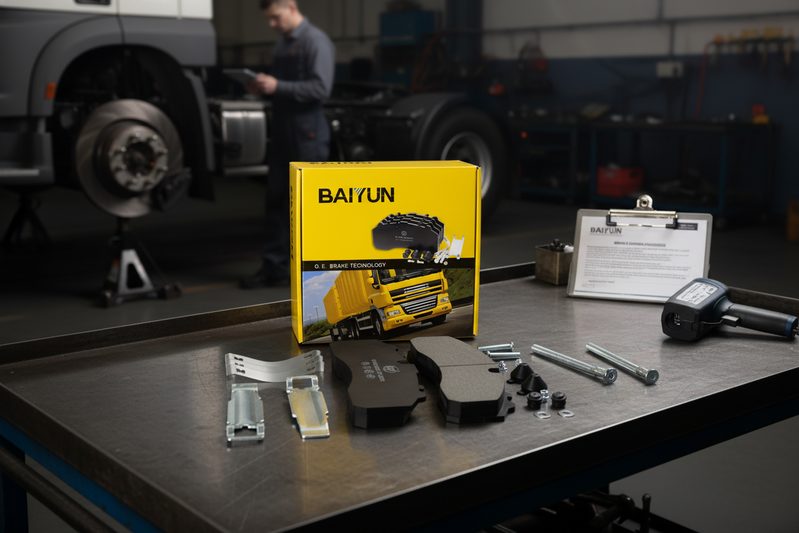
That's the real market trend. Not selling pads, but selling predictability. And predictability starts the moment the box opens and someone reads “perform 30 light decelerations before full stops.”
FAQ
Q: How long does the brake pad break-in take for a typical passenger car?
A: With modern semi-metallic or ceramic pads from a wholesale car brake pads inquiry source like BAIYUN, expect 200–300 gentle stops over 150–200 miles. Pads with a factory-applied bedding coat can cut that to 60–80 miles. Avoid heavy braking during this window.
Q: What happens if I glaze my rotors during improper bedding?
A: The glazed surface often needs removal using a rotor hone or light abrasive disc. If DTV exceeds 20 µm, resurfacing on a brake lathe is required. BAIYUN's technical support logs show that 80% of glazed rotors can be recovered if caught early, before deep heat-hardened zones form.
Q: Are there different bedding procedures for commercial vehicle and passenger car brake pads?
A: Yes. Commercial vehicle rotors are thicker and more thermally massive; they need longer cooling intervals (1 km between high-speed stops) and typically 30–40 snubs before full-pressure applications. Our request OEM commercial vehicle brake pad quote page lists specific protocols for each CV formulation.
The Bottom Line: Make Bedding Your Competitive Edge
A bedding procedure isn't a footnote—it dictates two of the three metrics that matter most to your customers: noise, stopping consistency, and pad life. Distributors who embed this knowledge into their sales process capture higher margins, lower returns, and stronger loyalty. If you're sourcing brake pads from a supplier that doesn't give you that knowledge, you're working with a parts vendor. If you're sourcing from why choose BAIYUN Brake, you're working with a manufacturing partner. Want to talk about how our easy-bed formulations can boost your bottom line? Request a wholesale quote and let's put some numbers together.
Was this article helpful?
Average Rating: 5/5 (723)