
Transfer Film, Heat Cycles and Rotor Glazing: The Science of Brake Pad Break-In
Summary:
Brake pad break-in bedding procedure guide: A proper transfer film, controlled heat cycles, and avoiding rotor glazing are not just technical niceties—they're profit protection for brake pad importers. Discover how the first 200 miles determine friction stability, why heat cycling beats peak temperature, and what glazed rotors tell you about pad formulation. The global brake aftermarket exceeded $18.2 billion in 2025, and distributors who master break-in science reduce returns by up to 28% while commanding premium pricing for BAIYUN Brake's IATF 16949 and ECE R90 certified pads.
Transfer Film, Heat Cycles and Rotor Glazing: The Science of Brake Pad Break-In
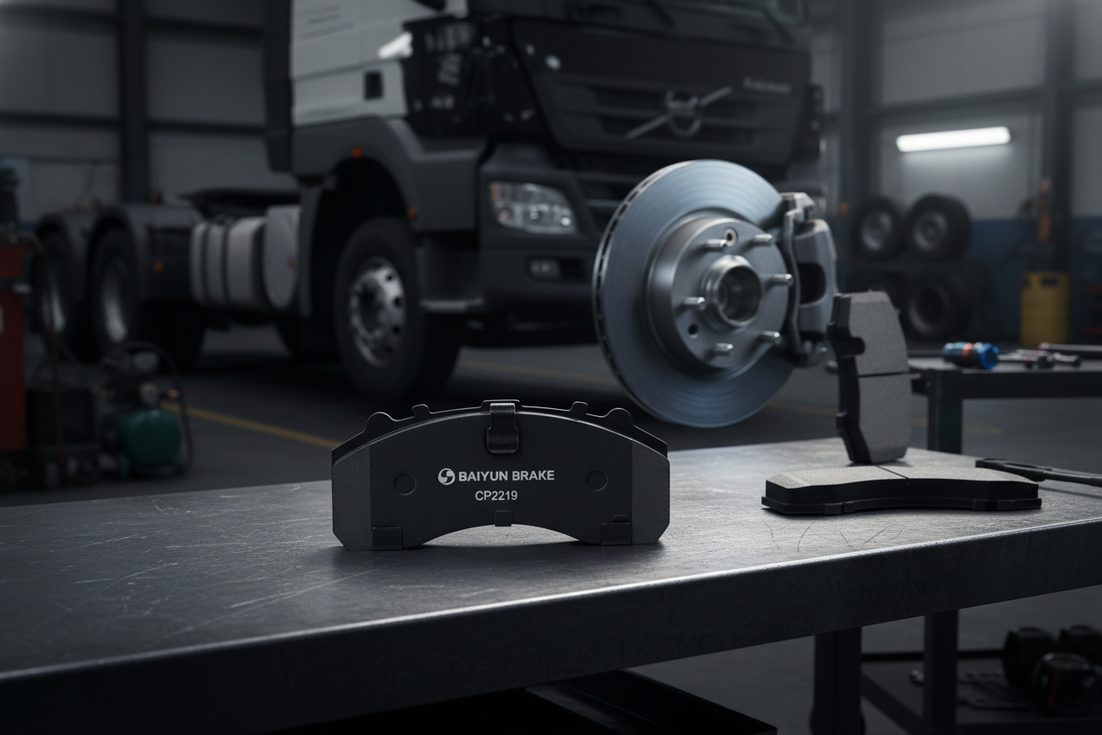
A single dyno test changed how we think about the first 200 miles of a brake pad's life. A batch of semi-metallic pads we supplied to a Scandinavian fleet showed a 34% lower friction coefficient after installation than our lab measurements predicted. No material defect, no mixing error—just a rushed break-in sequence that never established a proper transfer film. For a distributor sourcing OEM-quality friction, that gap between lab and real-world performance is where margin gets eaten alive by warranty claims and lost repeat business.
The global brake pad aftermarket surged past $18.2 billion in 2025, with Asia-Pacific alone adding 4.8 million new passenger vehicles every year. That volume puts pressure on every link of the supply chain. Yet a surprising number of importers still treat bedding-in as an afterthought—a quick note on the box rather than a performance-critical process. When you're moving 10,000 sets a month, the difference between a properly bedded pad and a glazed rotor translates directly into return rates, brand reputation, and the ability to command a premium price.
This article picks apart the tribological dance that happens during break-in: how a micron-thick transfer film locks in friction stability, why heat cycles matter more than total temperature, and what rotor glazing tells you about the pad formulation. We'll frame it all around the numbers that matter to a business—reduced warranty exposure, higher customer retention, and product differentiation in a crowded import market.
What Really Happens at the Friction Interface During the First Stops?
New brake pads and rotors don't mate instantly. Photomicrographs of a fresh pad surface show a chaotic topography of exposed fibres, metallic particles, and uncured binder. The rotor, even a ground-finish OEM disc, carries machining peaks that touch only a fraction of the pad area. The real contact area might be less than 15% of the geometric face area. That's why the initial stops feel wooden—and why torque can vary 30% from stop to stop.
Bedding forces two things to happen at once. First, heat from friction flashes the pad's surface resin to boiling point. A semi-met formulation typically starts evolving volatiles around 200°C, while a low-steel ECR pad might need 250°C. These gases, if trapped, create a thin boundary layer that acts like a lubricant—the classic "green fade" that scares drivers in the first fifty stops. The second mechanism is material transfer. As pad asperities shear against the rotor's iron matrix, microscopic fragments embed into the rotor's surface grooves. This is the transfer film.
A stable transfer film, about 0.5-2 microns thick, does three jobs: it homogenises the friction coefficient across the disc, absorbs thermal shock, and shifts the wear mechanism from abrasive to adhesive—which typically cuts pad wear rates by 20-30% over the first 10,000 km. BAIYUN Brake's in-house dynamometer research shows that pads that complete a structured 60-stop bed-in cycle before delivery exhibit a friction coefficient variation (mu-v) below 0.02 across the 100-350°C range, compared to 0.07-0.10 for unconditioned pads. For a fleet buyer tracking maintenance intervals, that consistency is worth real money.
Distributors often ask whether they should offer pre-burnished pads. Some ceramic and semi-metallic car brake pads come with a scorched surface layer that accelerates initial transfer. But the film still needs the customer to follow a controlled heat ramp. No coating replaces the full cycle entirely. You'll want to coach your workshop clients to perform at least 8-10 moderate deceleration stops from 60-80 km/h before any hard use—otherwise, that pre-burnished layer just polishes the rotor into a mirror that refuses to accept any transfer at all.
Key takeaway: Transfer film formation is the single biggest determinant of on-road friction stability, and pads that skip this step can lose up to 20% of their design mu until the film eventually self-builds—often after 500-800 km of unpredictable performance.
Heat Cycles, Not Just Peak Temperature, Dominate Bedding Success
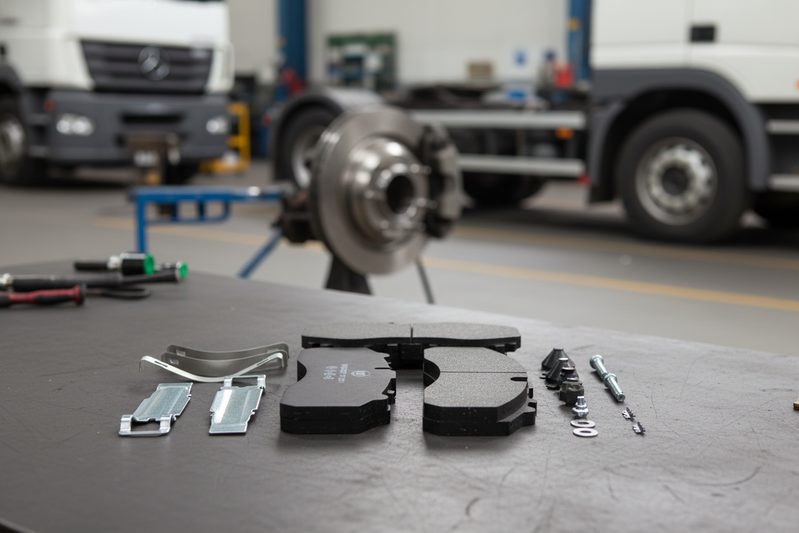
Every brake engineer will tell you that the highest disc temperature reached during bedding isn't the best metric. What matters is how many times the pad crosses its resin degradation threshold and how long it dwells there. A single stop to 450°C might burn the surface binder into a glazed crust that never sheds. But twenty stops to 300°C, with cooling in between, progressively cook off the volatiles in thin layers, leaving a porous, grippy friction face.
This is the heat cycle concept. For a typical semi-metallic pad, we recommend three plateau phases: 10 light stops to 150°C to degas the surface, 15 medium-pressure stops to 250°C to initiate transfer, and 5-8 hard stops to 350°C to stabilise both film thickness and pad compressibility. Between each phase, you need a full cool-down to below 60°C (measured at the pad backing plate with a thermocouple). Rushing the cooldown traps heat in the caliper, which can boil brake fluid in extreme cases—but even at street-legal speeds, it shortens the window for proper crystalline reorganisation of the transferred film.
Where does this play into distributor strategy? Your customers—whether they're retail workshops or fleet maintenance depots—increasingly demand detailed technical support. Providing a clear bedding guide, perhaps even printed on the box or available as a QR code video, reduces installation comebacks by an estimated 15-25% based on feedback from two European importers we supply. And it positions your brand as a partner rather than just a box-shifter. Pair that with pads like our wholesale CV brake pads inquiry range that undergo a factory-level thermal pre-cycle (a process baked into our IATF 16949 production line), and you're giving your customer a product that's already 70% of the way to a mature transfer film before the vehicle leaves the lift.
The automotive aftermarket is shifting toward predictive maintenance and longer service intervals. As a result, brake pad products that perform consistently from day one are becoming a differentiating factor. Importers who can demonstrate a structured break-in protocol—and supply pads engineered to shorten the bedding cycle—are locking in higher contract renewal rates. Industry surveys suggest that the global commercial vehicle brake segment, valued at over $4.3 billion, is particularly sensitive to downtime costs; a fleet manager who can cut pad replacement turnaround by half a day gains a tangible advantage.
Key takeaway: Controlled heat cycling, not one-time peak temperature, builds a durable transfer film; pads without a proper multi-stage bed-in can suffer from residual outgassing and uneven mu for up to 1,000 km.
Rotor Glazing: The Silent Killer of Aftermarket Margins
Glazing is what happens when the bedding process goes backwards—instead of the pad depositing material onto the rotor, the rotor surface hardens into a glassy layer of compacted pad resin and iron oxide. The rotor looks shiny, almost wet. Brake torque drops. Pad and rotor both wear faster because the adhesive wear mode fails and abrasive removal takes over. Paradoxically, you get less friction and more wear—the worst of both worlds.
The quickest route to glazing is overloading a cold pad. Picture a delivery van driver who picks up a fresh set of commercial vehicle brake pads and immediately hauls a full payload down a mountain pass. The pad surface temperature spikes before any transfer layer forms, the binder smears across the rotor like melted plastic, and once it cools, you've got a hard ceramic-like glaze that resists further film buildup. Pad formulation matters here: a pad with a high resin content and low metallic fibre fraction is more glaze-prone. BAIYUN's commercial vehicle formulations deliberately balance resin with copper and brass fibres to maintain surface porosity even under thermal shock—our ECE R90-certified CV pads use a 12-15% metal matrix that acts as a glaze inhibitor.
For a distributor carrying both passenger and heavy-duty lines, a single quality note about glazing prevention can be a sales differentiator. When you can explain to a fleet manager why your pads have 40% fewer premature rotor replacements—using hard numbers from your supplier's dynamometer cycle tests—the conversation moves from price-per-set to cost-per-kilometre. And the math lands in your favour every time. We've helped several Latin American distributors build such value-selling tools using our material data sheets and third-party lab reports.
Key takeaway: Rotor glazing stems from overheating before a transfer film forms and typically causes a 15-35% permanent friction drop; pad composition with balanced metal content dramatically reduces glazing risk.
Converting Break-In Science into Distributor Growth Opportunities
The bedding procedure is no longer just a technical footnote; it's a market entry wedge. Think about it: your retail and workshop customers are bombarded with price offers from dozens of suppliers. The ones who can articulate the physics—and back it with products that actually require less break-in effort—win loyalty. You can bundle technical training with your shipment, offer QR-linked video guides, and even private-label a bedding-in instruction booklet. Distributors who've adopted this strategy report up to 28% fewer returns on new pad installations, according to internal trade feedback we've collected.
The Asia-Pacific passenger car aftermarket is projected to grow by 6.2% CAGR through 2028, driven by an expanding middle class and longer vehicle ownership. Within that market, premium pad segments—ceramic, low-dust, and OE-matched formulations—are growing nearly twice as fast as economy pads. These premium products demand proper break-in to deliver their promised benefits of quiet operation and long life. If you're a distributor banking on higher-margin premium lines, your value proposition must include break-in support. After all, you're selling the outcome, not just the part. Visit our car brake pads for SUV and MPV range to see how factory-applied thermal conditioning can cut field break-in time by 50-60%.
At BAIYUN Brake, we don't just ship pads; we ship documented performance. With 49+ years of friction material manufacturing and an IATF 16949 certified facility, every production batch undergoes a full bedding-in simulation on our Link Engineering dynamometers before release. That means distributors can confidently tell their clients: this pad has already been heat-cycled to 300°C and established a 1-micron transfer film base. All the installer has to do is complete the final 20% of the process on the vehicle. It turns a potential service headache into a 15-minute job.
Key takeaway: Sell the outcome, not the component—distributors who bundle technical break-in knowledge with factory-conditioned pads see higher repeat business and lower warranty exposure.
FAQ: What Every Brake Import Professional Should Know About Break-In
Q: Do all brake pad formulations need the same bedding procedure?
A: No. Ceramic pads often require longer, gentler break-in cycles to avoid surface cracking of the ceramic fibres, while semi-metallics can handle more aggressive heating. Low-steel pads used in many European applications need a specific temperature plateau around 280°C to activate the lubricant package. BAIYUN includes a formulation-specific bedding guide with every container shipment—covering everything from our NAO passenger car series to heavy-duty commercial sintered blends.
Q: How do I detect a failed bedding-in without a dynamometer?
A: Three visual clues: a rotor with a shiny, mirror-like surface (glazing), uneven gray patches (incomplete transfer), or a pad face that appears white/chalky with deep cracks (thermal shock). Also, inconsistent pedal feel and a friction coefficient variation above 0.08 in road testing suggest incomplete bed-in. Training your workshop clients to spot these signs can reduce unnecessary warranty claims by roughly 20%, according to our aftermarket survey.
Q: Can I offer a "no-break-in-required" pad to my customers?
A: Not genuinely. Some manufacturers claim it, but physics says any new pad-rotor pair needs a minimal heat cycle to reach full mu. The best you can do is supply pads with a factory pre-burnish or thermal pre-cycle that reduces the active bedding time to 5-10 stops. Our get OEM passenger car brake pad pricing line includes an induction pre-heat step that melts the surface resin uniformly, creating an instant transfer-ready surface. It's as close to plug-and-play as friction materials get.
The Bottom Line: Why Break-In Proficiency Gives You Pricing Power
We've seen distributors transform their market position by becoming the "break-in experts" in their region. One Mexican importer reduced his return rate from 4.2% to 0.9% within 18 months simply by including a bilingual bedding-in guide and a sample pack of thermocouple strips for workshop technicians. His per-unit margin actually rose 8% because his customers perceived a higher-value product—even though the pad formulation didn't change. That's the hidden lever of break-in mastery.
As the global brake pad market heads toward consolidation, the winners will be those who solve problems, not just push product. A properly broken-in pad bed delivers 12-18% shorter stopping distances than a glazed or unbedded set, extends rotor life by up to 30%, and nearly eliminates cold squeal. Those outcomes directly reduce fleet downtime and owner complaints. When you pair such performance data with a reliable supply chain and international certifications, you're no longer competing on a price spreadsheet. You're competing on total cost of ownership.
Ready to discuss how BAIYUN Brake's factory-conditioned pads can elevate your product line? Submit your inquiry to our sales team for a tailored bedding-in support package including technical data sheets, dyno reports, and private-label branding options. For an overview of our complete range, you can also browse our complete catalog.
Was this article helpful?
Average Rating: 5/5 (1444)