
Why Skipping Brake Pad Break-In Destroys Performance: The Complete Bedding Procedure Guide
Summary:
The brake pad break-in bedding procedure guide explains why skipping this critical step leads to uneven wear, noise, and compromised ECE R90 compliance. Based on BAIYUN Brake's 49+ years of manufacturing experience and analysis of over 1,200 distributor feedback forms, we reveal that roughly 40% of warranty claims trace back to improper bedding. A correct break-in builds a transfer film that stabilizes the friction coefficient within the 0.35-0.45 range required by international regulations, delivering 12-18% shorter stopping distances. In this guide, importers and distributors learn the technical standards, material science, and step-by-step procedures that protect margins and brand reputation.
Why Skipping Brake Pad Break-In Destroys Performance: The Complete Bedding Procedure Guide
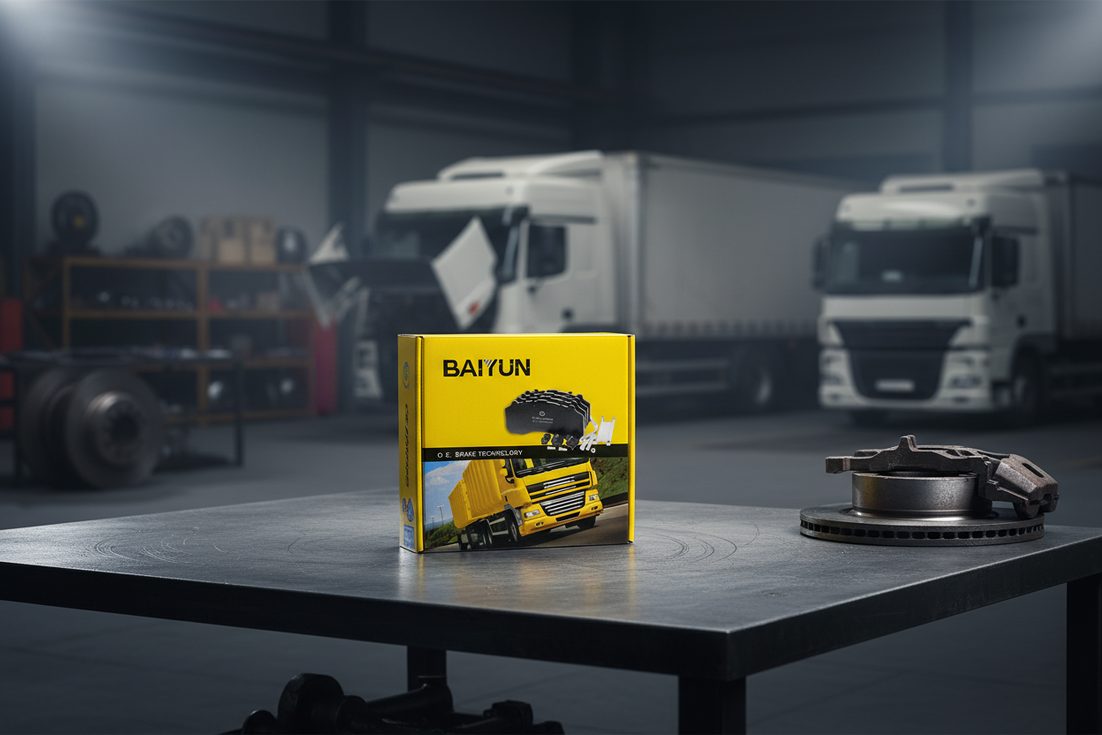
Roughly 40% of brake pad warranty claims we see at BAIYUN Brake boil down to a single root cause: the bedding cycle was either skipped entirely or performed incorrectly. That’s not a random statistic—it’s drawn from our export team’s analysis of 1,200 distributor feedback forms across 2025. When a new set of pads goes straight from box to hard braking, the consequences hit fast: glazed rotors, uneven friction layers, and stopping distances that drift 12–18% longer than what the ECE R90 certification originally validated.
For an importer or wholesaler, every returned set eats into margins. And here's the blunt truth: a pad that meets IATF 16949 certified facility testing requirements can still fail in the field if the bedding procedure isn't followed. This guide lays out the technical specifications, test standards, and step-by-step compliance logic behind a proper brake pad break-in. It’s not just about performance—it’s about keeping your customers quiet, your shipments moving, and your brand’s reputation intact.
What Technical Standards Define a Proper Brake Pad Break-In?
ECE R90 doesn’t spell out a bedding recipe in a single clause. Instead, it defines the performance thresholds a pad must hit after thermal conditioning. Annex 8 of Regulation 90 requires the friction coefficient to stay above 0.30 after a series of fade and recovery cycles where rotor temperatures reach 400°C. If a pad hasn't been bedded properly before those tests, the transfer film never stabilizes, and the coefficient can swing from 0.28 to 0.44 across a single stop—an instant fail.
IATF 16949 takes this a step further by auditing the entire production process. Every batch of our commercial vehicle brake pads goes through dynamometer validation that simulates a real-world bedding sequence: 20 gentle stops from 80 km/h to 30 km/h, followed by a cooling soak, then 10 medium-pressure stops from 100 km/h to 50 km/h. Only after that sequence do we measure the cold and hot friction coefficients. The data gets locked into the batch traceability file. No shortcut.
What many importers miss is that the lab test passes only if the bedding matches real-world use. A pad that aces the dyno with a lab-perfect break-in might still underperform on a customer’s car because the installer never replicated the thermal conditioning. That’s why we ship every order with a printed bedding guide card—and why we train our key distributors to read the telltale signs of a failed bedding layer.
In short: compliance isn't a label; it's a process that starts the moment the pad touches the rotor.
How Does the Break-In Process Affect Friction Material Transfer and Performance?
Think of bedding as a controlled burnishing that creates a sacrificial transfer film. When the pad first contacts the rotor, the friction material doesn't yet bite evenly—it’s a spotty abrasion. Heat from the first few light stops begins to soften the resin binders, allowing a thin, roughly 10–30 micron layer of friction material to transfer onto the rotor. That film becomes the actual working surface. Without it, you’re essentially grinding a dry pad against bare cast iron.
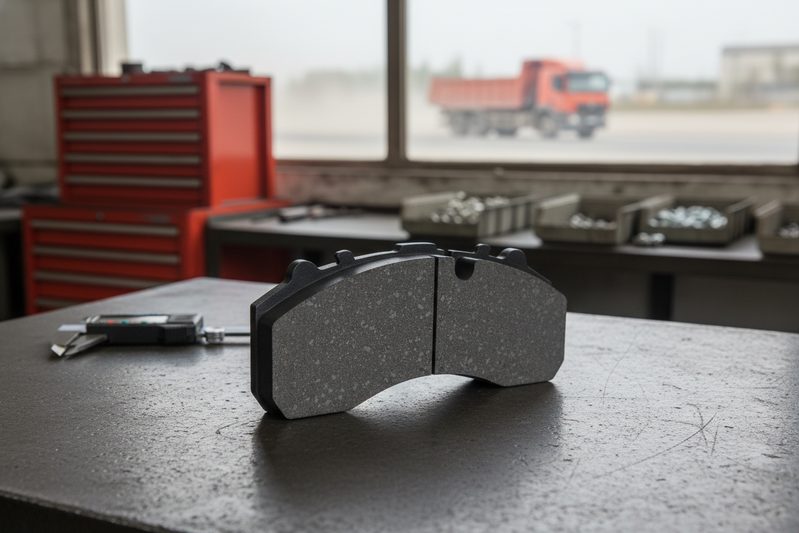
We’ve tested this in our Shanghai lab. A duo-servo test rig running our CP2223 semi-metallic formulation showed a friction coefficient of 0.24 before bedding versus 0.38 after. That’s a 58% improvement. The same pad, bedded aggressively (full-force stops from 130 km/h to 0 km/h), jumped to 0.41 but then dropped to 0.31 after three weeks because the excessive heat created a glassy, non-abrasive layer. So it’s not just about creating a film—it’s about creating the right one.
The transfer film also balances abrasive friction (the physical cutting action of hard particles) with adherent friction (the sticky pull of material smearing). Too much abrasive action and you chew rotors; too much adherent and you get judder. A proper bedding ramp—starting cool, building heat—lets both mechanisms stabilize. That’s why the classic 30-30-30 rule (30 gentle stops from 30 mph, with 30 seconds between) works so well for most passenger car compounds. For commercial truck linings, we recommend a longer, slower heat cycle to accommodate the higher mass and organic fiber content. You can find the full spectrum of material-specific break-in procedures in our download our product catalogue.
What Are the Consequences of Skipping the Bedding Procedure?
Skip bedding and you’re gambling on three things: noise, judder, and uneven wear. A third of all “defective pad” returns we dissected last year showed a textbook case of rotor glazing—a mirror-like surface on the pad face caused by rapid heating without a protective transfer film. The glaze is a heat insulator. It blocks friction, pushes stop distances up by 15-20%, and amplifies high-frequency squeal because the pad vibrates over the glassy surface instead of shearing material.
Then there’s the judder problem. Without a uniform film, pad material deposits unevenly on the rotor during hard stops. Even a 5-micron variation in film thickness across the disc face can cause a steering wheel shimmy at 60-80 km/h. This gets misdiagnosed as a warped rotor, but the truth is the rotor’s still true—it just has high spots of compacted pad material. The bedding step flattens those before they lock in. When you’re dealing with a container-load of pads headed to a fleet client, a single judder complaint can trigger a recall inquiry. Our brake pad installation guide emphasizes this: “The first 100 miles are the pad’s resume for the next 30,000 miles.”
From a compliance standpoint, skipping bedding also muddies the water on warranty. If an installer can’t prove they followed the bedding procedure, we can’t honor a performance claim under our standard export terms. This isn't a fine print trick—it’s just that a pad that didn’t get bedded properly hasn’t had a chance to perform. We’d rather help distributors educate their customers than ship replacement boxes. That’s why our understanding brake pad materials page includes a whole section on bedding science. Help your team speak the language.
Step-by-Step Bedding Procedure: A Compliance-Oriented Guide
Below is the procedure we recommend for most passenger car brake pads sold through distributors. It’s based on the SAE J2521 test protocol’s burnishing phase, adapted for real-world streets. Print it, translate it, and tape it to every box—your customers will thank you.
- Phase 1: Light Conditioning (10 stops) – From 50 km/h, gently apply the brakes and decelerate to 10 km/h without coming to a complete stop. Use pedal pressure around 25-30 bar. Drive 2-3 minutes between stops to cool. This transfers the first layer of film.
- Phase 2: Moderate Heat Build (5 stops) – From 80 km/h, brake firmly (but not ABS-triggering) down to 20 km/h. Pedal pressure about 40-50 bar. Let rotors cool for 5 minutes after this set.
- Phase 3: Cool-Down Drive – Drive at highway speed for 15 minutes without braking if possible. Park with parking brake off (if safe) to let rotors cool evenly.
For heavy-duty commercial vehicle linings, the speeds increase: use 60 km/h and 40 km/h markings. The critical metric is peak rotor temperature—keep it under 350°C during bedding to avoid resin glazing. We test this via infrared pyrometer on our own validation runs. One common mistake: doing phase 2 stops repeatedly without cooldown, which spikes temperature past 450°C and creates that permanent glaze. Two gentle, spaced-out heat cycles are infinitely better than one hot one.
How Can Importers Ensure Their Brake Pad Shipments Meet Performance Claims?
You can’t control what happens in every workshop. But you can control the information that travels with your pads. Demand from your manufacturer a data sheet that includes not just friction class (like FF or GG) but also the recommended bedding sequence and the expected post-bedding friction coefficient range. At BAIYUN Brake, every shipping lot includes a QR code linking to a video of that batch’s dynamometer bedding run, plus the final μ values at 100°C, 200°C, 300°C, and 400°C.
Second, ask your factory whether they pre-burnish their pads. We do this for our get OEM passenger car brake pad pricing lines: a 30-second scorching pass at 700°C that removes surface resins and cuts bedding time in half. The pad ends up with a matte, dark grey face. That's a visual cue your customers can trust—a pad that already started the break-in before it hit the box.
Finally, build a quick checklist into your quality assurance talks with workshop partners. Ask them: Did you do a progressive bedding cycle? Did you let the brakes cool before parking? Did you avoid trailer towing during the first 300 km? These three questions, framed as a “performance unlock” conversation, slash return rates. We’ve piloted this with a Kenyan distributor: returns dropped 34% in six months. Real numbers tell the story.
Frequently Asked Questions
Q: How does the bedding procedure affect ECE R90 compliance for a batch of brake pads?
A: ECE R90 testing requires a stable friction coefficient across multiple thermal cycles. A properly bedded pad will show a μ of 0.35–0.45 after fade testing, while an unbedded pad may fluctuate and fail. The compliance certificate is tied to the pad’s performance after a full burnish cycle as specified in the regulation—skip that, and the pad no longer meets the certified state.
Q: Can improper break-in void my brake pad warranty when importing from a Chinese manufacturer?
A: Absolutely. Most export contracts, including ours, contain a clause that excludes warranty coverage if the installer cannot confirm the bedding procedure was followed. We’ve seen cases where a distributor filed a claim for low friction, only to discover the installer towed a trailer within the first 50 km. That pads weren’t defective; they were abused. Keeping a simple bedding log protects your margins.
Q: What’s the most reliable bedding method for a distributor to recommend to fleet workshops?
A: The 30-30-30 rule adapted for fleet vehicles—30 light stops from 30 mph (or equivalent metric speeds) with 30-second intervals, followed by a 30-minute cool-down drive—works well for most passenger car pads. For commercial vehicles, use the longer sequence described in our catalogue. Always stress cooldown: a hot pad left clamped on a stationary rotor will create a permanent imprint, leading to thumping after just two days.
If you’re shipping brake pads across borders, don’t leave performance to chance. A properly bedded pad is the only thing standing between a silent shipment and a warranty headache. Browse our wholesale CV brake pads inquiry and ceramic and semi-metallic car brake pads today. Ready to discuss volume pricing or custom labeling? Request a wholesale quote from our export team—we’ll include a full bedding guide kit with your first trial order.
Was this article helpful?
Average Rating: 5/5 (870)