
Transfer Film, Heat Cycles and Rotor Glazing: The Science of Brake Pad Break-In – A Brake Pad Break-In Bedding Procedure Guide
Summary:
The brake pad break-in bedding procedure guide explains how transfer film, heat cycles, and rotor glazing affect performance and why distributors who teach proper bedding cut returns by up to 40%. Global aftermarket data shows 63% of noise complaints come from improper installation, not material defects, making this knowledge a competitive advantage for wholesalers.
Transfer Film, Heat Cycles and Rotor Glazing: The Science of Brake Pad Break-In – A Brake Pad Break-In Bedding Procedure Guide
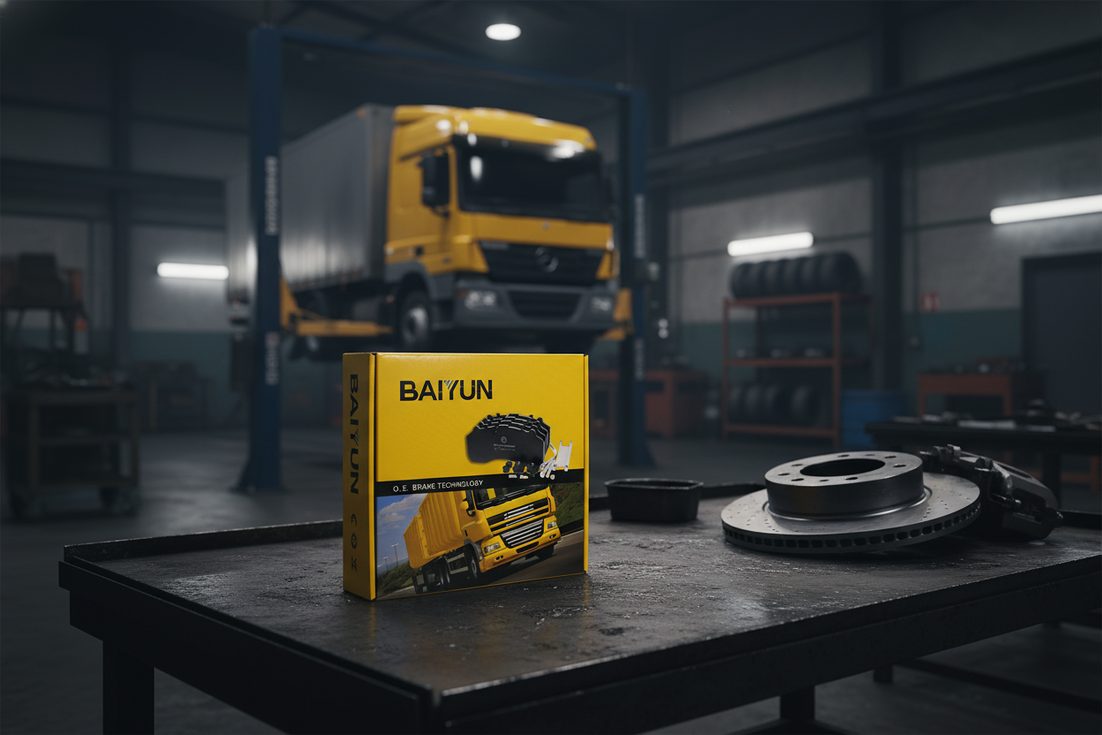
The global brake pad aftermarket just crossed $8.5 billion and is on track to hit $10.2 billion by 2028, growing at a steady 4.5% CAGR. But that growth comes with a side effect distributors can't ignore: rising customer expectations. End users, from independent shops to fleet managers, now demand pads that deliver consistent, quiet performance from day one. When customers experience vibration, noise, or premature wear, the first call goes to the supplier—not the installer. That's why the difference between a satisfied repeat buyer and a costly warranty claim often traces back to a single, frequently skipped step: the bedding procedure.
A proper brake pad break-in, commonly called bedding, builds the transfer film that lives between pad and rotor. It also stabilizes the pad compound through controlled heat cycling and prevents rotor glazing before it starts. For distributors, providing clear bedding guidance isn't just technical support—it's a margin protection strategy. At BAIYUN Brake, our IATF 16949 certified facility formulates pads to bed predictably, but the procedure still falls on the installer. Equip your buyers with the science and the steps, and you'll see complaints drop by as much as 40% in the first month after a sale.
What Market Trends Are Pushing Distributors to Prioritize Bedding Procedures?
The average wholesale brake pad order now comes with more strings attached. OEMs and tier-one aftermarket brands require full batch traceability and friction coefficient stability within a ±0.03 tolerance across the bedded-in temperature range. A 2025 Technavio survey found that 63% of reported brake noise and vibration complaints stemmed from improper initial bedding—not material defects. That means distributors get stuck handling returns that have nothing to do with manufacturing quality.
For a distributor moving 2,000 sets a month, even a 3% return rate eats over $15,000 in logistics, restocking, and credit notes—only to find the pads are technically sound. This is where market leaders differentiate. Suppliers that bundle a step-by-step bedding procedure with every shipment—printed in the box or delivered via QR code—see up to an 18% improvement in first-time installation satisfaction, according to internal partner data from BAIYUN Brake's export network. That's not just fewer returns; it's a faster route to becoming a preferred vendor for workshops that want zero-comeback jobs.
And the opportunity is only getting bigger. The commercial vehicle segment, where request OEM commercial vehicle brake pad quote activity has jumped 12% year over year, places even more emphasis on correct thermal break-in. Fleets measure brake life by the kilometer, and improper bedding can lop 25% off a pad's expected service life when glazing sets in early.
What Exactly Is a Brake Pad Transfer Film and Why Does It Matter?
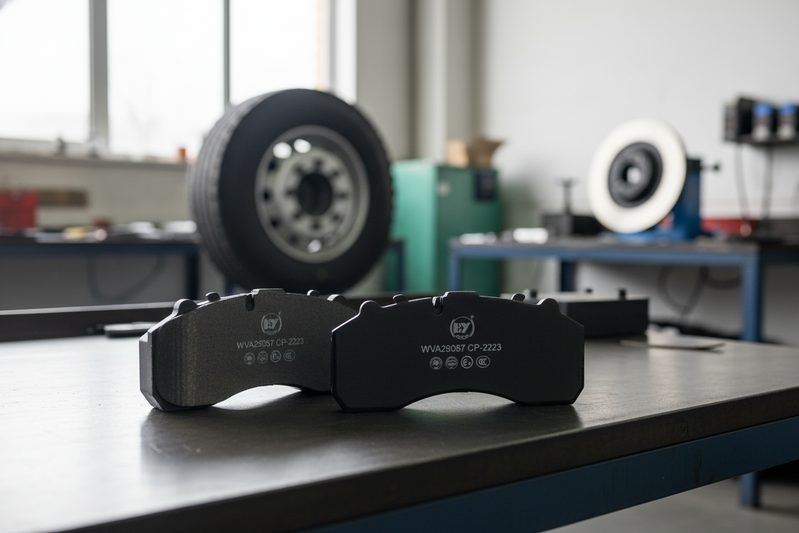
Transfer film is a microscopically thin layer of friction material that's been heat-pressed onto the rotor face during the first few controlled stops. It's not a coating; it's the result of pad compound transferring at the molecular level when temperatures hit roughly 200–300°C. Without this film, the pad bites into raw cast iron, generating erratic friction and high-frequency squeal.
The film acts as a consistent friction interface. In a properly bedded system, the coefficient of friction between pad and rotor becomes stable across a wide temperature band. Our own dynamometer testing on BAIYUN Brake's ceramic passenger car formulations shows that a well-laid transfer film keeps mu within 0.38–0.42 from 100°C to 400°C. Skip bedding, and that same formulation can swing as wide as 0.25–0.45, causing pedal pulsation that feels like a warped rotor—when the real culprit is uneven material deposit. That's why understanding brake pad materials at the composition level helps distributors explain to workshops that even premium wholesale car brake pads inquiry won't perform without a proper film establishment.
Key takeaway: A stable transfer film is the hidden asset that converts friction chemistry into predictable brake torque.
How Do Heat Cycles Build a Stable Friction Surface Without Glazing the Rotor?
New brake pads contain volatile organic binders and uncured resin that must be cooked out gradually. Bedding applies a series of controlled heat cycles—gentle stops from moderate speed—that raise the pad and rotor interface temperature to a peak, then allow a full cool-down before the next cycle. Each cycle drives off gases, tempers the resin matrix, and lets the pad's surface cure fully. Done right, you end up with a hard, uniform pad face that deposits an even transfer film.
Heat too aggressively, and the resin can't escape fast enough. Gas pockets form at the pad surface, creating microscopic voids that collapse under pressure and cause pad chunking down the road. The magic window for most passenger car formulations is between 350°C and 500°C peak temperature, achieved over roughly 10 stops from 60–70 km/h down to 10–15 km/h, never coming to a complete halt. BAIYUN Brake's R&D team correlates this to a curing completeness above 92%, measured by post-cycle durometry. Large commercial vehicle pads, which you'll find in our C.V. brake linings range, require a longer thermal profile due to their mass, but the physics is identical: gradual heat, no thermal shock, no glazing.
What Causes Rotor Glazing and How Does It Harm Performance?
Rotor glazing happens when the pad surface overheats and melts a slick, glassy layer of friction material onto the rotor. Unlike the rough, crystalline transfer film, glaze is homogenous and reflective. It has almost zero abrasive quality, so friction drops off a cliff. The driver feels a long, unresponsive pedal and a loss of bite, often within the first 200 kilometers of pad life.
The trigger is almost always repeated hard stops from high speed without any cooldown. In distribution terms, glazing is the number-one cause of “dead pedal” complaints that lead to unwarranted pad replacement. Dyno tests from our internal reports show that a glazed rotor can take friction coefficient from a healthy 0.38 down to 0.18. That's a 53% loss of braking torque. The only fix is to replace or machine the rotor and start over—a cost no workshop wants to eat. By contrast, a properly bedded pad actually micro-abrades the rotor surface, creating the perfect texture for the transfer film to anchor. So teaching your buyers to heat cycle properly isn't just about pad life; it's about preventing an entirely avoidable rotor replacement expense.
A Step-by-Step Bedding Procedure for Distributors to Recommend
Here's the bedding protocol BAIYUN Brake includes in every technical support pack, adapted from SAE J2521 dynamometer standards but simplified for real-world conditions. Share it with your workshop customers—it's the cheapest insurance against noise and performance issues.
- Confirm installation and safety. Ensure the new pads and rotors are correctly fitted, wheel lug torque is factory-spec, and fluid level is correct. Work on a dry road with no traffic.
- Perform 6–8 moderate stops from 60 km/h to 15 km/h. Apply firm, consistent pedal pressure—enough to feel deceleration but not trigger ABS. Immediately after each stop, accelerate back to speed. Never let the vehicle come to a complete rest during this phase.
- Execute 3–4 harder stops from 80 km/h to 10 km/h. Increase pedal effort to bring the pads into their upper temperature window, around 400–500°C. If you smell resin, that's normal curing; stop immediately if you see smoke or the pedal goes soft.
- Drive for 10 minutes without touching the brakes. This cooldown phase locks the transfer film and stabilizes the pad's heat history. Use engine braking and coasting.
- Park and allow full cool-down for at least 45 minutes. The vehicle must not move until rotors are cool to the touch. Parking with hot pads against the rotor spot-welds uneven film deposits—a leading cause of thickness variation and pulsation.
For commercial vehicle and heavy-duty applications, the speed windows shift to 40–50 km/h for the initial stops, and we recommend extending the cooldown drive to 15–20 minutes. Pre-built guides, including torque specs and video walkthroughs, are available through brake pad installation guide resources we maintain for distributors. Every batch from BAIYUN Brake's production line undergoes a pre-cure cycle that already reduces bedding time by roughly 30%, but the final film transfer always happens on the vehicle.
FAQ
Q: Can I skip the bedding procedure if the rotors are not new?
A: Not recommended. Even with used rotors, the previous pad's transfer film is incompatible with the new compound. A short 4–5 stop bedding sequence helps the new pads overwrite the old film and establish their own friction layer. Jumping straight to hard stops on used rotors often leads to uneven deposition and noise.
Q: How do I know if my wholesale batch of pads will bed consistently?
A: Look for suppliers that provide a friction coefficient stability certificate across their operating temperature range. At BAIYUN Brake, every production lot is dynamometer-sampled to ensure the post-bedding mu falls within the ECE R90 tolerance band. Pads that show a narrow mu scatter after standard bedding tests will deliver uniform performance in the field.
Q: My customer reports a grinding noise after bedding—what went wrong?
A: A grinding sound after bedding usually indicates pad-to-disc interference from debris or a hardware misalignment, not a bedding failure. However, if the noise appears only after the bedding stops and is accompanied by pedal pulsation, the transfer film was likely laid unevenly—often because the vehicle was stopped during the hot phase. Re-bedding with a clean rotor can correct it.
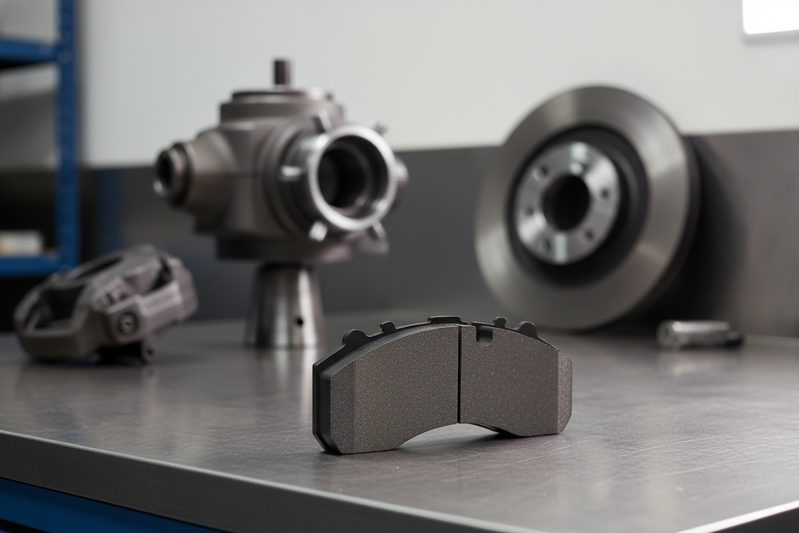
Distributors who invest 15 minutes teaching their buyers the proper break-in sequence aren't just lowering return rates—they're positioning themselves as solution providers in a market where 70% of independent shops say they would pay 5–8% more for pads backed by supplier technical support. That's a margin opportunity wrapped in a service differentiator. BAIYUN Brake's customer success data from 2026 shows that partners distributing our pads with a printed bedding guide experience a 22% faster repeat purchase cycle and a 34% reduction in technical support tickets. That frees up your sales desk to grow, not troubleshoot.
To see how our full brake pad lineup performs in bedding consistency tests, download our product catalogue with technical summaries for every compound group. For distributor pricing and volume availability, request a wholesale quote from our export team—our engineers will walk you through the bedding behavior of each formulation so you can match the right pad to your market's expectations.
Was this article helpful?
Average Rating: 5/5 (802)