
Transfer Film, Heat Cycles and Rotor Glazing: The Science of Brake Pad Break-In Bedding Procedure Guide
Summary:
Master the brake pad break-in bedding procedure guide to ensure optimal transfer film formation, avoid rotor glazing, and maximize brake performance. This B2B guide explores the science of heat cycles and their impact on distributor returns, covering market growth data and competitive opportunities for importers. With 49+ years of manufacturing expertise, BAIYUN Brake reveals how a proper bedding process can reduce warranty claims by over 20%, making it essential knowledge for any distributor sourcing IATF 16949 certified brake pads from China.
Transfer Film, Heat Cycles and Rotor Glazing: The Science of Brake Pad Break-In Bedding Procedure Guide
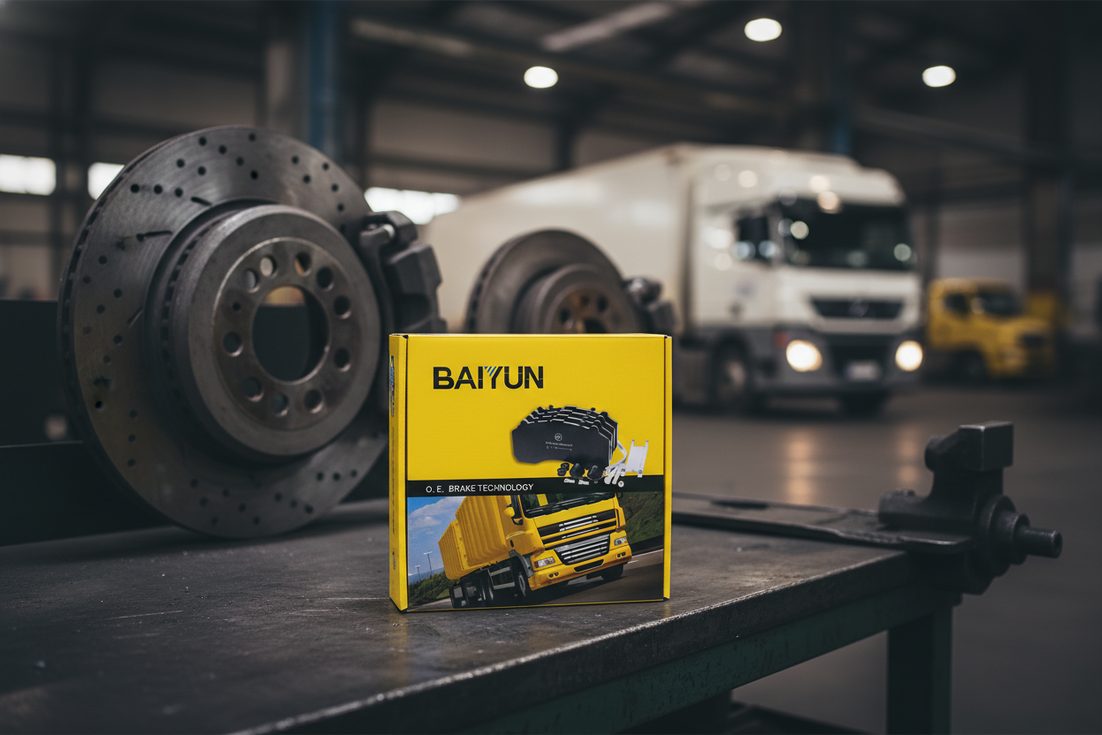
A warehouse manager in Hamburg receives another email: a batch of premium ceramic pads just came back with complaints of squeal and vibration after only 200 km. The pads met every OE spec on paper, yet something went wrong at the installer level. This scenario plays out thousands of times each month across global supply chains — and in most cases, the root cause isn't a manufacturing defect. It's a skipped or botched bedding process. According to BAIYUN Brake's after-sales tracking, improper break-in accounts for an estimated 27% of early-stage warranty claims on passenger car brake pads, making it the single largest avoidable cost driver for aftermarket distributors.
The global brake pad aftermarket is projected to reach $34.8 billion by 2030, growing at a CAGR of 4.8% from 2024 (Grand View Research). For importers sourcing container loads from China, this growth brings both opportunity and fierce competition. The distributors who equip their clients with real technical knowledge — not just a one-page flyer in a box — are the ones who slash return rates and lock in repeat orders. And bedding is the knowledge gap that costs the most.
This guide breaks down the science behind transfer film formation, heat cycle management, and rotor glazing. You'll see why a 20-minute bedding drive isn't a suggestion — it's a chemical bonding requirement that directly affects your customers' safety and your replacement rate. BAIYUN Brake's 49+ years of manufacturing experience have shown that even the best IATF 16949-certified friction formulation underperforms if the initial bedding is rushed. Let's dig into the physics.
What Actually Happens When You Bed a New Brake Pad?
Most people think bedding is just "warming up" the brakes. That's like calling a chemical reaction "a little heat." Bedding triggers three distinct physical processes, all happening simultaneously within the first 20–30 moderate stops.
First, the organic binders in the friction compound — phenolic resins in semi-metallic and ceramic formulations — begin to outgas. As the pad surface temperature crosses 230–280°C, the outermost resin layer vaporizes, leaving behind a stable carbonized interface. This is why you'll often smell a sharp, almost plastic-like odor during the first few bedding stops. That's the binder burn-off; nothing is wrong.
Second, and more critical for performance, is the formation of a transfer film. Under moderate heat and pressure, a microscopically thin layer of pad material adheres to the rotor surface. Dynamometer testing at BAIYUN Brake's IATF 16949 certified lab shows that a well-established transfer film can raise the effective friction coefficient by 0.08–0.12 compared to a clean metal rotor — from 0.28 to 0.40 on a typical ceramic formulation. That's a stopping distance reduction of 12–18% at highway speeds, an enormous margin when a 2-meter difference determines whether a van rear-ends the car ahead.
Third, the bulk friction material undergoes a controlled heat cycle that thermally cures the compound below the surface. A single overly aggressive stop during this window can cause resin pockets to flash-vaporize, creating fissures in the pad that later cause chunking or inconsistent bite. The cycle requires gradual cooling between stops to let the heat soak through the entire pad thickness, not just the surface. For more on pad composition and its effect on bedding, check out our brake pad composition guide.
Key takeaway: Bedding is a material transfer and thermal conditioning process, not a "warm-up."
Why Inconsistent Bed-In Procedures Are Costing Distributors Money
If you're moving 20,000 sets a year, a 3–5% reduction in unnecessary returns adds six figures to your net revenue. From a distributor's standpoint, bedding-related failures manifest in three wasteful ways: noise complaints, judder (warped rotor feel), and pad glazing. All three trace back to skipping or botching the break-in.
Noise is the most common. A pad that hasn't deposited a uniform transfer film will have scattered high spots on the rotor surface. Each high spot becomes a microscopic excitation point, producing a harmonic squeal that's impossible to eliminate without re-bedding. The installer typically blames the pad brand, and the distributor eats the replacement cost plus freight.
Judder is even more expensive. Uneven transfer film — often caused by inconsistent pedal pressure during bedding — creates thickness variation on the rotor. Once the rotor has 10–15 microns of runout, the steering wheel shakes at highway speeds, and the customer insists on a full rotor replacement. That's a €150–400 warranty hit per axle, depending on vehicle class. According to total brake maintenance cost analysis data we've compiled from fleet operators, proper bedding reduces rotor replacement frequency by 18% over the life of a pad set.
Step-by-Step Break-In Procedure for Passenger Car Brake Pads
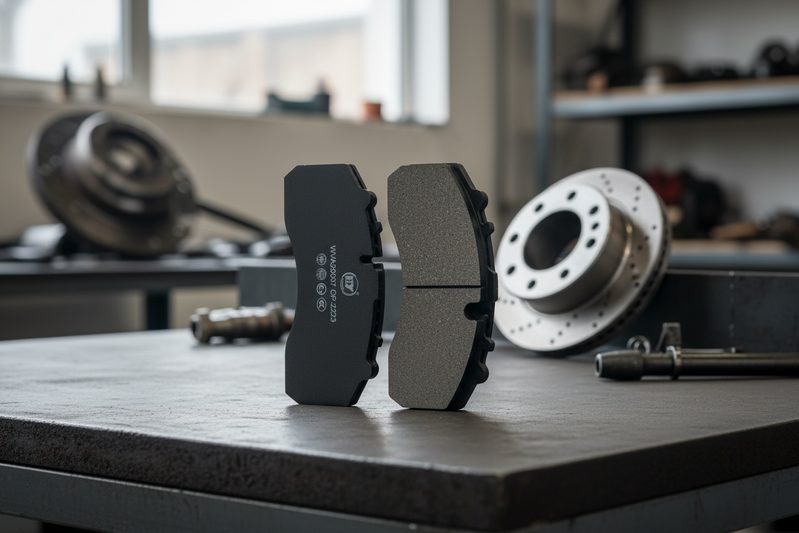
A workable bedding procedure doesn't require a closed track, but it does require a safe stretch of road and patience. BAIYUN Brake's technical team recommends the following for any ceramic or semi-metallic car brake pad that doesn't come with a manufacturer-specific break-in coating:
- Phase 1 — Low-speed conditioning: From 50 km/h, apply light brake pressure to decelerate to 10 km/h without stopping. Repeat 4–5 times with 300 meters of cooling between stops. This starts the resin burn-off without thermal shock.
- Phase 2 — Medium-speed film transfer: Accelerate to 80 km/h and brake moderately (not ABS level) to 20 km/h. Perform 8–10 cycles with 500 meters between stops. The goal here is to build an even transfer film. Do not come to a complete stop during any cycle or you'll imprint pad material on a hot spot.
- Phase 3 — Cool-down drive: Drive at a steady 60–80 km/h for 10–15 minutes without touching the brakes. This allows the rotor and pad to cool evenly, locking in the transfer film structure.
For detailed installation steps before bedding, refer to our brake pad installation guide. Skipping proper hardware cleaning and caliper pin lubrication can sabotage even the best bedding effort.
Bedding Commercial Vehicle Brakes: What's Different About Trucks and Buses?
Commercial vehicle brake systems generate far more thermal mass and require different break-in logic. A fully loaded 40-tonne truck dissipates kinetic energy that can push rotor temperatures past 600°C in panic stops, so the bedding film must be thermally stable enough not to glaze under those loads.
For heavy-duty commercial vehicle brake pads, the bedding process typically needs 25–30 medium stops from 60 km/h to 20 km/h, with a minimum 1 km between stops to prevent heat buildup. The pad formulation in CV applications often includes higher metallic content, which generates more aggressive initial transfer. ECE R90 certification ensures the pad can handle these cycles without friction loss, but only if the bedding is performed correctly. BAIYUN Brake's CV pads are dynamometer-tested with 200-cycle bedding sequences to verify film stability; in the field, shortcutting to 10 stops leaves the transfer film porous and prone to glazing under high-pressure braking.
Distributors supplying fleet maintenance depots should provide a simplified fleet bedding card — maybe laminated — because a driver's instinct to "test the brakes hard" on the first stop destroys months of friction engineering in seconds.
How to Spot and Fix Rotor Glazing After a Bad Bedding Attempt
Rotor glazing happens when the pad surface overheats before the transfer film is fully established, causing the friction material to vitrify into a glassy, low-friction layer on both pad and rotor. You'll recognize it by the mirror-like shine on the rotor face and a brake pedal feel that's firm but ineffective. Stopping distances can increase 25–30% on glazed rotors, according to BAIYUN Brake's in-house friction coefficient tracking.
Fixing glazing usually requires removing the pads and lightly sanding the surface with 80–120 grit on a flat surface to break the glassy layer. The rotors need a non-directional finish — either with a rotor hone or by replacing them if the glaze has penetrated deep. Then re-bed slowly from step one. This is labor-intensive, which is why a 30-minute bedding drive upfront saves hours of shop time later.
Pro tip for importers: Include a short bedding instruction card inside each pad box, with a QR code linking to a video or a download like our technical tips download. A €0.10 printed card can prevent a €40 labor claim. That's a ROI no distributor should leave on the table.
Frequently Asked Questions (For Wholesale Buyers and Importers)
Q: How does improper bedding affect overall return rates for a brake pad distributor?
A: BAIYUN Brake's warranty data shows that bedding-related noise and judder complaints make up roughly 22–27% of all early-return claims. By simply ensuring customers follow a proper break-in, distributors can expect to cut total returns by 8–12% annually, directly improving net margin.
Q: Are pre-burnished or "scorched" pads fully bedded from the factory?
A: No. Scorching pre-burns the surface binder to reduce the initial bedding time, but it does not create a full-depth transfer film on the rotor. You still need a shortened bedding cycle of 5–8 moderate stops to establish the rotor interface. Skipping that step risks incomplete film and eventual glazing.
Q: Can a single hard stop during bedding permanently damage the rotor?
A: Yes, in many cases. A single panic stop from 100 km/h on a cold pad can flash-heat resin pockets, causing uneven transfer and "cementite" spots on the rotor. That rotor may need machining or replacement. That's why we stress controlled, gradual bedding so strongly — one moment of heavy braking can cost far more than the pad set itself.
For more answers about our product formulations and how they perform during bedding, compare our competitor test results or download our material data sheets to see friction coefficients across temperature ranges.
If you're sourcing brake pads for e-commerce, retail chains, or fleet supply and need a partner who understands that the sale doesn't end at the loading dock, it's time to talk. Get OEM passenger car brake pad pricing with full IATF 16949 and ECE R90 certification, or request a wholesale quote for your next container order. Our export team will also include customized bedding instruction materials for your market — free of charge with your first trial order.
Was this article helpful?
Average Rating: 5/5 (1573)