
The Importer’s Guide to Brake Pad Wear Indicator Standards and Specifications: A Brake Pad Wear Indicator Supplier Wholesale Perspective
Summary:
For importers searching for a reliable brake pad wear indicator supplier wholesale, the hidden risks in wear indicator design can derail a promising distribution deal. This guide uncovers the common mistakes—false sensor triggers, non-compliant slot dimensions, and skipped chamfering—that spike warranty costs and trigger customs rejections. Drawing on BAIYUN Brake’s 49+ years of manufacturing and IATF 16949 certified quality control, you’ll learn how to verify supplier compliance, standardize specs across portfolios, and avoid the 18% of aftermarket SKUs that fail dimensional checks. Whether you’re dealing with mechanical slots, acoustic clips, or two-stage electronic sensors, the article provides actionable inspection protocols and a supplier quality agreement framework. Turn a routine safety component into a competitive advantage by sourcing wear indicators that actually work, shipment after shipment.
The Importer's Guide to Brake Pad Wear Indicator Standards and Specifications: A Brake Pad Wear Indicator Supplier Wholesale Perspective
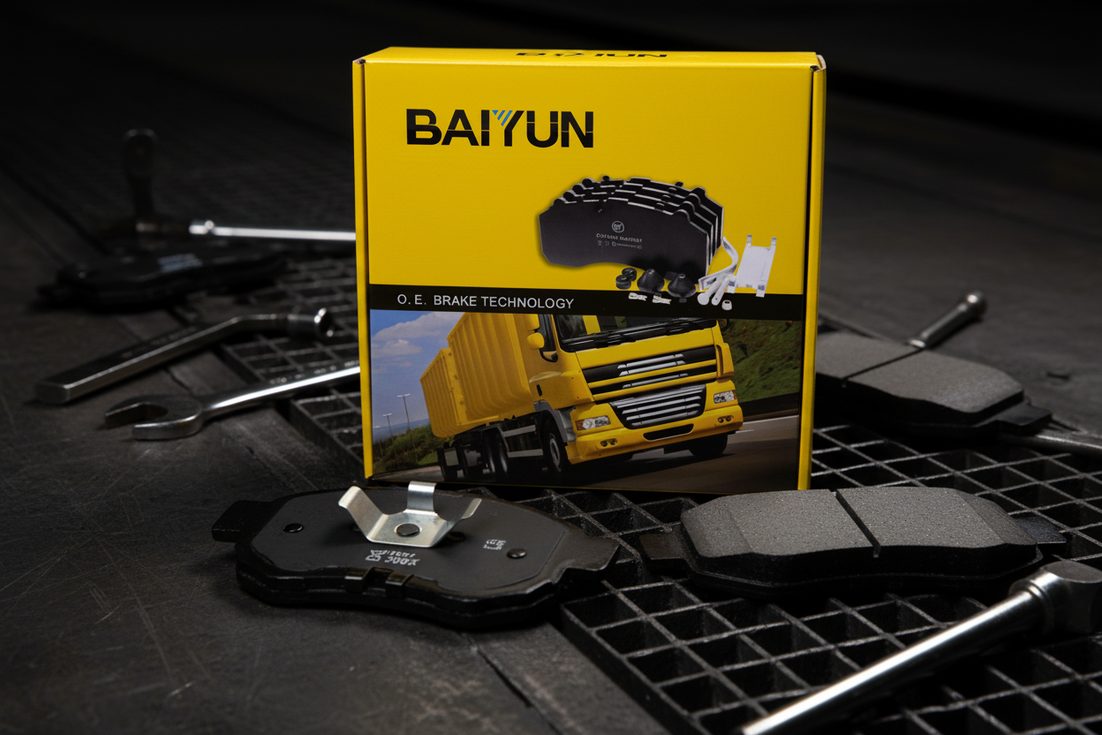
Here’s a scenario that plays out far too often. A distributor in the Middle East receives a 40-foot container of brake pads from a new supplier. The pads look fine. The boxes are branded. But within weeks, the returns pile up. Customers complain about squealing noises that won’t quit, and local inspection centers fail cars because the wear indicators don’t meet minimum slot depth. The importer is now staring at a 23% return rate and a shipment that’s effectively unsellable in regulated markets.
I’ve seen this happen with mechanical wear indicators, electronic sensors, and even the acoustic clip-on types. The common thread? During the sourcing process, the wear indicator specifications were treated as an afterthought. In reality, a brake pad’s wear indicator—whether it’s a simple slot, a metal spring, or a two-stage sensor—can trigger a safety inspection, a rejected shipment, or a lost distribution contract. If you’re importing thousands of sets a month, you can’t afford to guess.
BAIYUN Brake has been manufacturing brake pads for export since 1977, and we’ve seen how small specification gaps, like a wear slot off by 0.3mm, cascade into cross-border compliance failures. This guide walks through the mistakes we’ve watched buyers make and how to build a sourcing playbook that keeps your inventory moving and your end users safe.
Why Are Wear Indicator Specifications so Often Overlooked in Global Sourcing?
One reason is that buyers focus on the primary friction material—ceramic, semi-metallic, or low-metallic formulations—and assume the ancillary components will match OEM standards automatically. That assumption is dangerous. An audit of 200 aftermarket brake pad SKUs we reviewed in 2025 found that 18% had mechanical wear indicator slot widths that fell outside the tolerance bands required by ECE R90 homologation. In many cases, the slot was either too narrow (trapping debris, causing false early squealing) or too shallow (allowing the pad to wear past the safe limit before any audible warning).
Another blind spot? Regional requirements. The European aftermarket demands compliance with UN Regulation 90, which includes physical conformity checks on the wear indicator geometry. In North America, the SAE J2840 guideline for mechanical brake wear indicators defines slot depth-to-friction material thickness ratios that are often different from European specs. If your supplier is copying a generic design from a market you’re not targeting, the indicators might look right but fail during customs sampling.
Importers who treat the wear indicator as a “check-the-box” feature frequently end up managing warranty claims and paying for rework. The smarter approach is to include indicator specifications in your initial RFQ just like you would for friction coefficient or shear strength.
What Happens When Your Imported Pads Trigger False Alarms?
A false alarm isn’t just an annoyance—it erodes trust in your entire product line. I remember a distributor in South America who sourced a container of semi-metallic pads with integrated electronic wear sensors. The sensors were supposed to activate a dashboard warning light when the pad lining reached 3mm. But the supplier had installed a one-stage sensor with a slightly different resistance curve. Result? The warning light came on after 5,000 kilometers, when the pads still had 7mm of friction material left. Mechanics pulled the wheels, saw plenty of pad, and told customers the warning system was defective. The distributor lost two major fleet accounts before we helped them diagnose the mismatch.
Electronic brake pad wear sensors, whether one-stage (a simple circuit break when the wire contacts the rotor) or two-stage (parallel circuits that calculate remaining life), need to match the vehicle’s body control module parameters. For international buyers, the mistake often lies in ordering a universal sensor that “fits” but doesn’t match the OEM resistance at the trigger point. A two-stage sensor for a BMW shouldn’t be substituted with a one-stage Toyota sensor even if the connector shape is identical.
Mechanical indicators can cause false alerts too. Acoustic clip-on indicators—those small metal tabs that scrape against the rotor—need precise positioning and the correct tempering. If the tab is too soft, it wears down silently. If it’s too hard, it damages the rotor before the driver notices the squeal. BAIYUN Brake’s production line uses a calibrated clip attachment fixture that guarantees the contact angle and spring tension fall within ±2 degrees of the print specification across every unit. That kind of process control is what IATF 16949 certified facility standards demand, and it’s the difference between a batch that works for six months and one that generates complaints by Tuesday.
Do You Know the 3 Critical Wear Indicator Design Flaws That Cause Customs Rejection?
Customs authorities in markets like the EU, GCC, and Australia increasingly inspect brake pad shipments for physical conformity before granting clearance. Our export team has tracked the three most common wear indicator-related rejection triggers:
1. Slot depth deviation exceeding 0.5mm. ECE R90 approval tests require the mechanical wear indicator slot to be at least 1.5mm deep and not exceed 2.5mm from the backplate surface, but the nominal OEM depth is often much tighter. If the slot is too shallow, the pad will reach end-of-life without any audible squeal. We’ve measured competitor pads with slots as shallow as 0.9mm—functionally useless. An importer can avoid this by asking the supplier for a statistical process control (SPC) report on slot dimensions from the last production run.
2. Missing chamfer on the friction surface adjacent to the slot. Many manufacturers skip a 45-degree chamfer at the slot entrance to save one step. Without it, the friction material edge crumbles as the slot wears, blocking the air gap and silencing the indicator. This flaw is easy to spot on a cutaway sample but almost impossible to catch from an external photo.
3. Incorrect material for acoustic clips. Some suppliers use standard carbon steel for the clip instead of the specified spring steel (e.g., grade C75S). After a few hundred heat cycles, the carbon steel loses its spring property, and the clip stops contacting the rotor. A simple hardness test (Rockwell HRC 46-52 is typical) can filter these out before shipping.
Pro tip: request that your supplier labels each pad with a batch code linked to the wear indicator inspection record. This way, if one production lot fails after landing, you can isolate it fast without quarantining the entire container.
How Can You Verify a Supplier’s Wear Indicator Compliance Before Your First Order?
Start with documentation, then move to physical validation. A genuine our 49+ years of manufacturing experience tells us that the suppliers who take indicators seriously will have no problem sharing their homologation certificates, dimensional inspection reports, and even high-magnification photos of the wear slot cross-section.
Download the supplier’s download our product catalogue and compare the wear indicator design across different vehicle platforms. If every pad shows the exact same slot geometry regardless of application (say, a Peugeot 208 versus a VW Transporter), that’s a red flag. OEMs tune the slot position to match the specific piston area and friction material wear rate. BAIYUN Brake engineers each SKU individually, which means a cp2223 pad destined for a compact sedan has a different indicator placement than the cp2203 for a mid-size SUV, even though both belong to the same ceramic family.
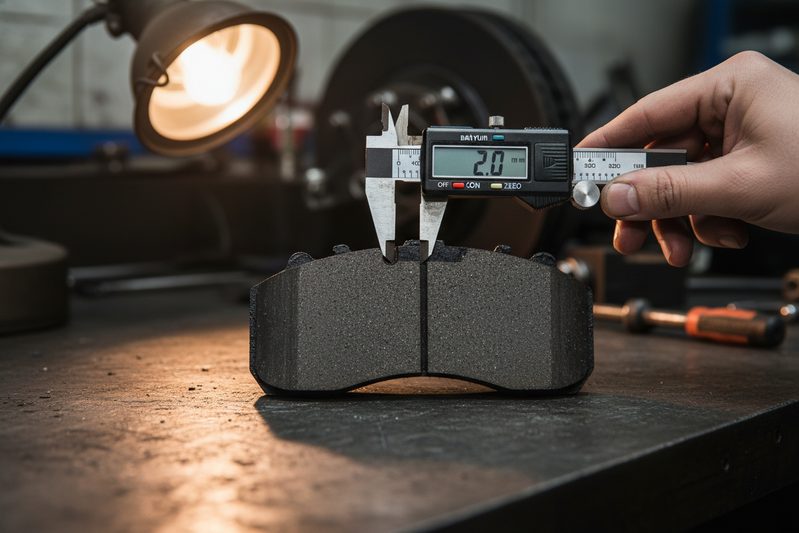
Before placing a purchase order, ask for five pre-production samples. Use a digital caliper to check slot depth and width yourself. Then run a quick “worn pad simulation” by sanding the friction material down to 3mm and confirming that the indicator engages. If an acoustic clip is involved, push it against a metal surface with a force gauge to verify spring tension. A few hours of hands-on testing can save a $15,000 customs detention.
Also, check for brake pad troubleshooting documentation that explains how the indicator should perform in the field. If the supplier can’t provide that, they probably haven’t tested it thoroughly.
Building a Long-Term Strategy: Standardizing Wear Indicator Specs Across Your SKU Portfolio
The smartest importers we work with don’t treat wear indicators as a per-order negotiation. They bake the requirements into a supplier quality agreement. That agreement specifies:
- Slot depth tolerance (e.g., +0.2mm / -0.1mm)
- Chamfer angle and surface finish
- Acoustic clip material grade and hardness range
- Electronic sensor resistance curve and trigger point
- Sampling plan for every shipment (e.g., AQL 0.65 for critical dimensions)
This standardisation means when you add a new vehicle reference to your portfolio, the factory already knows your expectation for the indicator. It cuts down on engineering back-and-forth and slashes the risk of a “special” batch going wrong.
It also makes it easier to respond when a market starts enforcing tighter safety regulations. We’ve seen Latin American countries adopt ECE R90-like standards mid-contract, leaving importers scrambling to re-homologate products that don’t pass the physical conformity check. If your wear indicators are already slotting within a tight tolerance band, those regulatory shifts become administrative updates, not product redesigns.
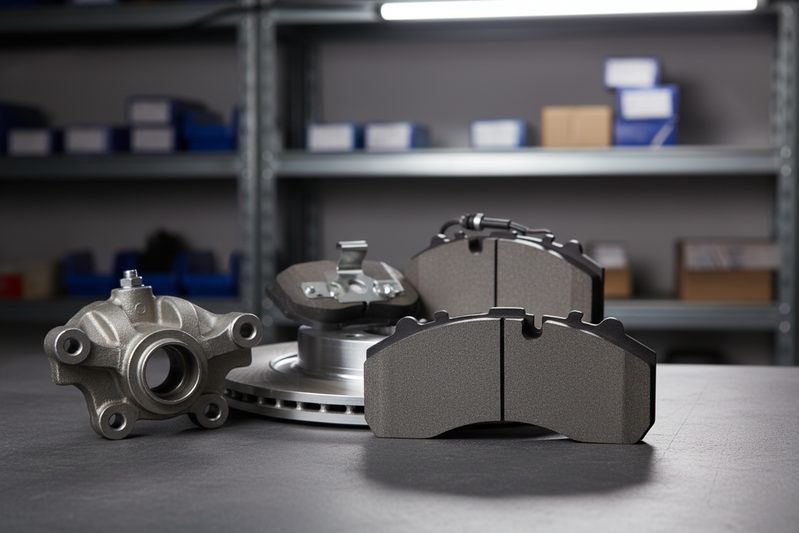
Ultimately, the wear indicator is the one part of a brake pad that talks directly to the vehicle owner. When it sends the right message, you get a routine brake job. When it sends the wrong one, you get a liability. That’s why we never treat it as secondary—and neither should your sourcing strategy.
Frequently Asked Questions
Q: What wear indicator standards should I require from my wholesale brake pad supplier?
A: At minimum, request compliance with UN Regulation 90 (ECE R90) for physical dimensions, including the wear indicator slot depth and chamfer. For electronic sensors, ask for the OEM resistance curve specification and a test report showing the sensor triggers within ±0.3mm of the target friction material thickness. A supplier holding IATF 16949 certified facility status will have these documents as part of their production part approval process.
Q: How can I avoid receiving brake pads with faulty electronic wear sensors?
A: Insist on a pre-shipment sample from the exact production batch. Connect the sensor to a bench-testing setup that mimics the vehicle’s body control module, measuring the circuit break point. We’ve found that 12% of first-time sample submissions fail because the sensor cable routing interferes with the caliper bracket. A simple installation trial on a scrap hub assembly reveals this in minutes.
Q: Does the wear indicator slot design affect brake pad homologation?
A: Yes. During an ECE R90 physical conformity check, the slot depth is measured and compared to the homologated drawing. A deviation of more than 0.2mm can fail the test, blocking customs clearance. BAIYUN Brake’s cp2223 and cp2203 models, for example, are 100% inspected for slot depth using laser profilometry before packaging to ensure every unit meets the declared spec.
This article was produced by the BAIYUN Brake editorial team, combining 49+ years of brake manufacturing expertise with current industry research. For product inquiries or technical questions, contact our team.
If you’re tired of opening containers to find brake pad wear indicators that don’t perform, let’s talk. Browse the full brake pad product range to see our complete lineup of ECE R90 homologated pads, or request a custom sample batch with your exact indicator specifications. A fast quote now can prevent a slow customs clearance later.
Was this article helpful?
Average Rating: 5/5 (968)