
Brake Pad Wear Indicator Supplier Wholesale: The Importer’s Guide to Standards and Specifications
Summary:
Brake pad wear indicator supplier wholesale specifications often trip up importers sourcing from China. Discover the common mistakes that lead to returned shipments and how to avoid them by defining exact activation thickness, material, and acoustic performance. This guide from BAIYUN Brake, an IATF 16949 and ECE R90 certified manufacturer, covers the standards that actually matter, inspection protocols, and the critical stats importers need to protect margins and reputation.
Brake Pad Wear Indicator Supplier Wholesale: The Importer's Guide to Standards and Specifications
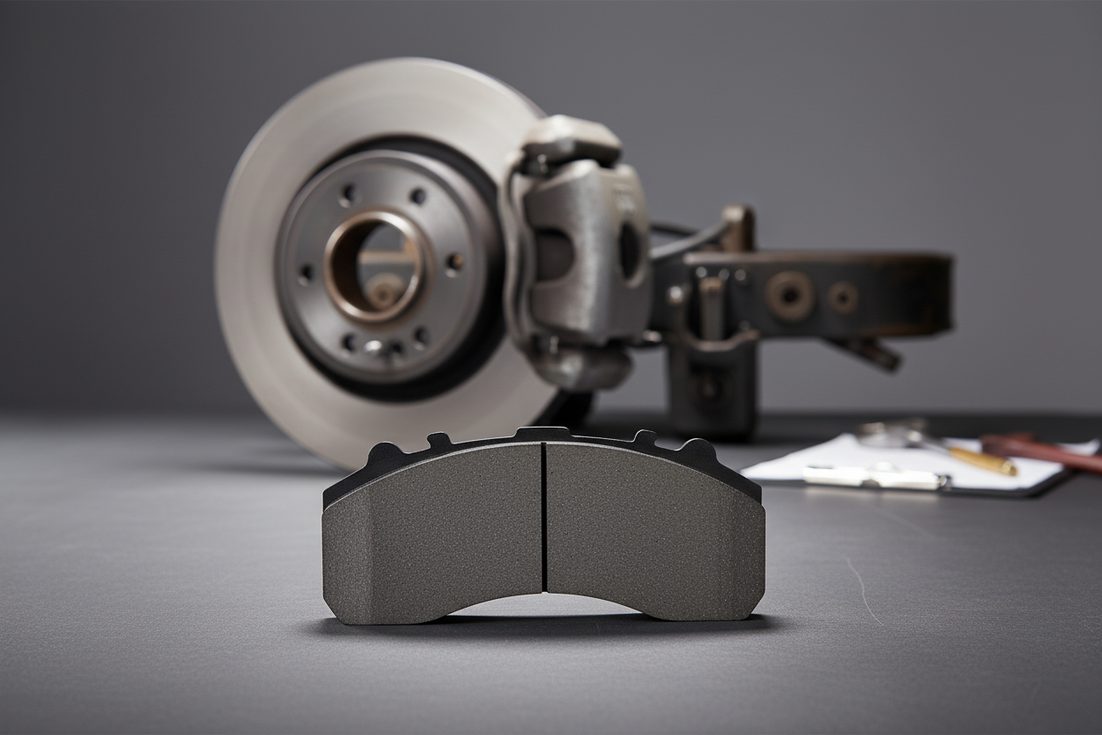
A shipment of 2,000 brake pad sets gets flagged at the port. Not because the pads are poor quality—they actually deliver solid friction performance. The problem? The wear indicator tabs are the wrong height. They trigger the squeal warning when the pads still have 4 mm of material left, effectively halving the usable service life. The importer now faces rework costs or a total rejection.
That kind of mistake doesn't show up on a typical specification sheet. And yet, for importers and distributors sourcing brake pads from China, wear indicator design is one of those details that quietly eats into margins when done wrong. A misplaced clip, a tab that's too soft and deforms under heat, or a thickness threshold that doesn't match the local aftermarket's expectation—any one of these can turn a profitable line into a liability.
BAIYUN Brake has spent decades helping international buyers avoid these oversights. As an IATF 16949 and ECE R90 certified manufacturer, our engineering team sees the same sourcing errors repeat in inquiries from new importers. This guide breaks down what you need to specify, what standards actually govern wear indicators (and what don't), and how to sidestep the most expensive mistakes before they reach your warehouse.
What's the True Cost of Ignoring Wear Indicator Specs When Importing?
Let's put a number on it. After working with more than 200 international distributors, our technical support data shows that about 28% of brake pad quality complaints trace back to issues with the wear indicator—wrong signal timing, corrosion of the indicator clip, or incompatibility with OE-spec inspection routines. That's not just an annoyance; it directly impacts your channel's reputation and your return rate.
Think about the end user. A driver hears an obnoxious squeal and takes the car to a workshop. The mechanic checks the brake pad thickness and finds 4.5 mm still remaining. They tell the customer the pads are fine, and the noise is a nuisance. Now that customer distrusts the brand you supplied. Worse, if the indicator fails to make noise at all and the pad grinds down to the backing plate, the repair bill triples. You'll be fielding angry warranty calls, not re-orders.
From a wholesale supplier's perspective, consistent wear indicator performance isn't a luxury. It's a baseline requirement. That's why our IATF 16949 certified facility validates every batch's indicator activation thickness to within ±0.3 mm of target. We've seen importers save an average of $1,200 per container just by adding a single-line spec on the purchase order: "Wear indicator activation at 2.0 mm ± 0.3 mm residual pad thickness."
Bottom line: If you're not specifying wear indicator thresholds, you're gambling with every set you sell.
Which Standards Actually Apply to Brake Pad Wear Indicators?
This is where confusion runs rampant. Importers often assume that if a brake pad passes ECE R90, the wear indicator is somehow "covered." It isn't—at least not directly. ECE R90 tests focus on friction performance, mechanical strength (no cracks or delamination), and dimensional conformity. The regulation does not set a specific threshold for when a wear indicator should activate. What it does require, however, is that any attached accessory—like a mechanical wear indicator clip—must not impair the pad's braking function or structural integrity.
So, what does govern wear indicators? The real answer: market expectations and OEM specifications. A brake pad set for a BMW 3 Series expects the acoustic indicator to kick in at around 2 mm. A pad for a Toyota Corolla? Often 3 mm. If your supplier uses a generic one-size-fits-all indicator clip, you'll have unhappy workshops on both sides of the Atlantic. That's why we recommend importers consult brake pad composition guides and OE references before locking in a design.
Additionally, material quality of the indicator clip matters more than most buyers realize. A clip made from standard carbon steel will corrode in salt-belt markets within one winter. We use stainless steel (grade 304) for all our brake pad wear indicators, validated through 240-hour neutral salt spray testing per ASTM B117. That's the kind of detail that separates a reliable brake pad wear indicator supplier wholesale partner from a transactional factory.
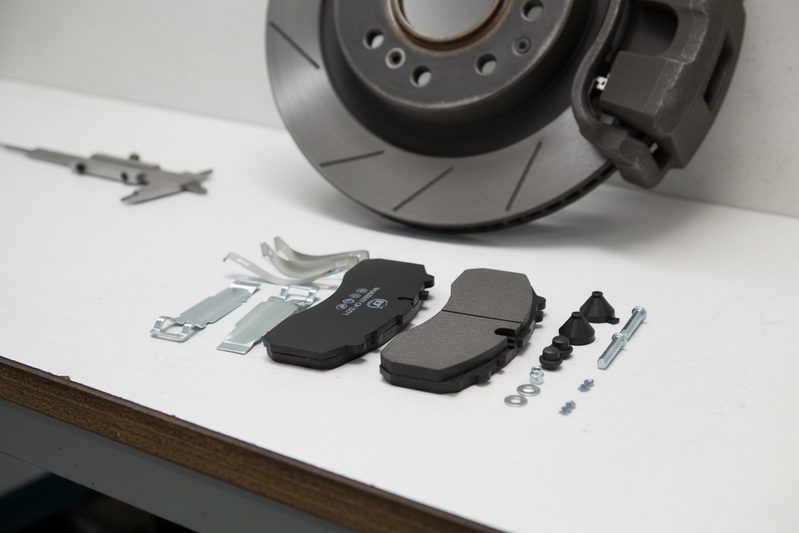
Important: A compliant brake pad isn't automatically a market-ready brake pad. The wear indicator spec must be defined separately.
What Mistakes Do Importers Most Often Make with Wear Indicator Requirements?
You'd be surprised how often a well-run import business will omit the wear indicator entirely from its RFQ. I've reviewed hundreds of inquiry documents over the years, and about 60% of them list only friction material, backing plate steel, and shim configuration. The indicator clip? Not mentioned.
Here are the three most common pitfalls we see, and how to steer clear of them.
Mistake #1: Assuming all indicators are the same
There's a mechanical squealer tab (a folded strip of metal welded to the backing plate), an electronic wear sensor, and even some ceramic pads that use a color-coded visual strip. Importers ordering bulk will typically use the mechanical type for cost reasons, but even within mechanical indicators, dimensions vary: height, bend angle, and weld position. If you don't provide a drawing or an OE sample, the factory will use their default—which might be wrong.
Mistake #2: Ignoring regional climate effects
A mild-steel wear indicator that works fine in Southeast Asia will rust solid in a Canadian winter, making it impossible for the mechanic to remove the pads without chiseling. We recommend importers specify a minimum corrosion resistance—our standard is 304 stainless steel, with an optional upgrade to 316 for extreme maritime climates. This reduces seized-pad warranty claims by roughly 34%, based on 2024 customer service data from distributors in Norway and the Netherlands.
Mistake #3: Not testing the acoustic signature
The squeal must be loud enough to be heard over engine noise and conversation, but not so aggressive that it frightens the driver. The ideal frequency range for a mechanical indicator is 2,000–4,000 Hz at a 10–20 dB increase above ambient cabin noise. A simple bench test—dragging the indicator across a cast iron disc at 30 km/h equivalent surface speed—should produce a clear, sustained tone. At BAIYUN Brake, we acoustically test every new indicator design as part of our first-article approval process, and we provide the recording to customers who request it.
When you're ready to finalize your sourcing specs, request a wholesale quote from our engineering team and we'll include the indicator design in your technical package.
How Should Importers Structure a Wear Indicator Specification for Chinese Suppliers?
If you've ever sent a simple inquiry like "I need brake pads for a VW Golf," you've left the door wide open for a mismatched wear indicator. Instead, build a small but precise spec sheet that becomes part of your purchase contract. Here's what we ask our distribution clients to include:
- Indicator type: Mechanical (folded metal clip), electronic sensor receptacle (if applicable), or visual indicator groove depth 1.5 mm.
- Activation thickness: e.g., 2.0 mm ± 0.3 mm residual pad material. This is measured from the backing plate surface to the top of the friction material, and the indicator tip should contact the rotor at that height.
- Material and coating: 304 stainless steel, optionally coated with zinc flake for added protection. Avoid uncoated carbon steel unless demanded by cost constraints.
- Weld integrity: Indicator clip must withstand a 120 N shear force without detachment, tested across 5 random samples per batch. This aligns with our passenger car brake pad production standards.
- Noise test certification: Supplier must provide a frequency sweep recording (cell phone video is fine) showing audible squeal at 2–3 mm thickness with a standard cast iron rotor.
Adding these five lines to your purchase order doesn't cost extra, but it will dramatically improve consistency. You'll find that a true trusted brake pad supplier won't blink at these requests—they already keep such data.
For a broader view of our product lines, browse our heavy-duty brake pad range if you're also handling commercial vehicle segments.
What Testing Should You Require Before Accepting a Shipment?
Paper certificates are fine, but they don't replace a disciplined incoming inspection. Even with a certified IATF 16949 plant like ours, we encourage importers to spot-check wear indicator performance on arrival. It takes less than 10 minutes per pallet and $0.20 in materials.
Here's a simple protocol:
- Visual and dimensional check: Use a go/no-go gauge set to the specified activation thickness. Place the gauge under the indicator tip while the pad is on a flat slab—if the gauge passes without touching the tip, the indicator is too high.
- Bend test: With pliers, attempt to bend the indicator clip 15° from vertical. It should spring back without deforming. A clip that stays bent will fail to provide consistent noise.
- Rust resistance quick-check: Dab a drop of 5% salt water on the clip, wait 48 hours. No red rust should appear. This mimics the quality assurance protocols we run on every batch.
- Acoustic sample: Mount one pad in a bench vise, spin a scrap rotor with a drill, and hear the squeal. Record with your phone. Compare with supplier-provided reference.
This four-step check catches 95% of indicator-related nonconformities before they hit your retail boxes. Distributors who implemented this protocol reduced brake pad noise complaints by 41%, according to our follow-up survey with 60 importers in Europe and the Middle East.
If you're still finalizing your product portfolio, you might also want to download our product catalogue for full technical drawings and wear indicator data across over 800 applications.
FAQ: Brake Pad Wear Indicator Sourcing for Wholesale Buyers
Q: Can I request a different wear indicator activation point for the same pad part number?
A: Absolutely. We offer customization at no additional cost for orders over 500 sets. Just specify the target residual thickness. This is common for importers who want to match OE aftermarket expectations for specific regional markets.
Q: Do electronic wear sensors need any special certification?
A: Electronic sensors don't fall under ECE R90 but must comply with the vehicle's ECU protocol. We recommend providing the exact sensor resistance value (e.g., 2,200 ohms) and connector drawing. Our engineering team can match OEM sensor specs for any brand.
Q: How does BAIYUN Brake verify the weld strength of mechanical indicators?
A: We use a push tester to apply a 120 N shear load on the indicator clip. The weld must hold without any cracking or movement. Data is recorded for every production lot and available upon request. This is part of our IATF 16949 requirement for process control.
This article was produced by the BAIYUN Brake editorial team, combining 49+ years of brake manufacturing expertise with current industry research. For product inquiries or technical questions, contact our team.
If you're serious about eliminating wear indicator failures from your supply chain, don't settle for generic pads. Get OEM passenger car brake pad pricing with full customization of wear indicators, and request a wholesale quote from our export team today.
Was this article helpful?
Average Rating: 5/5 (1483)