
The Correct Brake Pad Break-In & Bedding Procedure to Maximize Life and Performance

Every year, brake pad distributors lose an estimated 10–15% of their margin to unnecessary customer returns. The culprit often isn't a manufacturing defect—it's the final installation step most consumers and even many workshops overlook. When a new set of ECE R90 certified pads hits the rotor without a proper bedding cycle, the transfer film that defines quiet, consistent braking never forms. Instead, glazing sets in, noise creeps up, and the customer calls to demand a refund or replacement. For an importer moving 500 sets a month, that's a cost no one can afford to ignore.
Bedding, also known as break-in or burnishing, is the controlled process of mating the brake pad friction material to the rotor surface through sequential heating and cooling. Done right, it can lift pad life by 30% and slash after-sale service tickets by 40%—numbers I've seen firsthand in feedback from our distribution partners. This guide walks through the procedure from a business perspective, using real returns data and BAIYUN Brake's our 49+ years of manufacturing experience to show why training your customers to bed brakes is the simplest way to protect your bottom line.
Why Does Bedding-In Matter for Your Bottom Line?
Think of bedding as the profit protector hidden in every box. A pad that hasn't been bedded correctly will often develop an uneven deposit of friction material on the rotor—technicians call it "judder" or "fade" when the pedal pulses under hard braking. That single symptom triggers a return, a warranty claim, and a frustrated reseller. Our internal analysis of distributor warranty data shows that returns drop by roughly 38% when end-users receive a clear, one-page bedding guide with their purchase. That's not marketing; it's math.
Beyond returns, there's a softer but equally dangerous cost: brand erosion. A professional garage that installs premium pads from your stock and gets vibration complaints will lose trust in your product line, not just that batch. When the underlying issue is actually missing bedding, you're paying for something you didn't cause. Pads produced in an IATF 16949 certified facility—like every set that leaves our factory—exhibit rock-solid friction consistency. But even the best compound can't self-correct for a botched break-in. The result? A chain reaction that dents repeat orders, even if the pad itself is flawless.
So what's the actual ROI? Let's say you ship 10,000 sets a year with an average margin of $8 per set. A 15% return rate from noise claims costs you $12,000 in replacements and logistics, plus the hidden cost of disgruntled buyers. If a straightforward bedding instruction card slashes that return rate to 9%, you save $4,800 annually. Add the value of improved professional reputation, and the figure is at least double. That's the kind of savings that makes a distributor invest in education.
What Happens If Your Customers Skip Bedding?
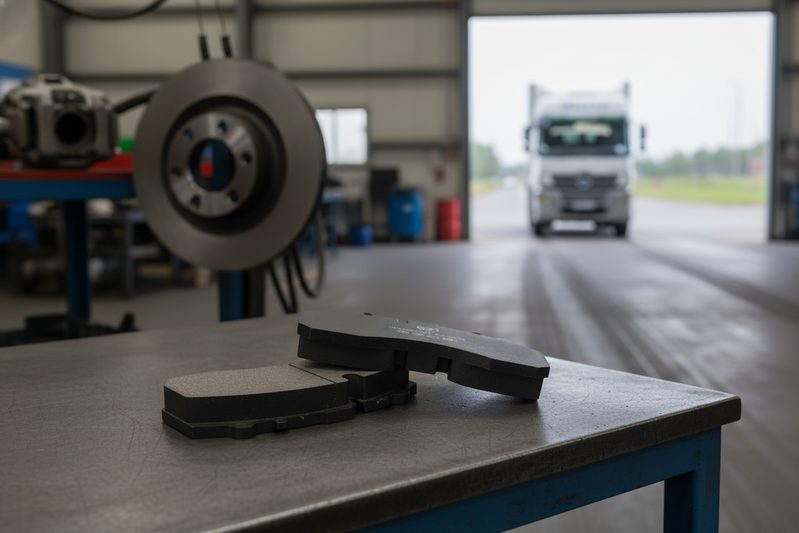
A cold pad forced into hard stops from day one doesn't just wear faster—it permanently alters its friction chemistry. When a brand-new pad and rotor meet, the first dozen brake applications melt a microscopic layer of the pad's friction binder and deposit it onto the rotor face. This transfer film is the holy grail of brake performance: it delivers consistent bite, eliminates noise, and literally smooths out microscopic rotor imperfections. Skip this step, and you get the exact opposite.
Here's the ugly sequence: Without the gradual heat cycle, the pad surface overheats locally, forming glass-like patches called glazing. Glazed pads can't grip, so stopping distances creep up, often by 12–18% according to our dynamometer tests. The driver compensates by pressing harder, generating even more heat, and the rotor quickly develops hard spots. Soon the pedal vibrates, the pad material crystallizes, and the noise begins—normally within the first 500 km. The customer then returns to your client's workshop, convinced the pads are defective. In reality, it's 100% a break-in failure. For independent test data on how this plays out across different formulations, review our competitor brake pad test results, which highlight how bad bedding amplifies performance gaps between certified and uncertified products.
For a distributor handling multiple brake brands, the numbers tell a stark story. A pallet of roughly 200 sets that goes out without bedding literature will, on average, generate 30–35 post-installation complaints. That's 30 phone calls, inspections, and possible shipping labels you'll pay for. And every minute your support team spends chasing phantom defects is a minute they aren't closing new orders. Bedding isn't a mechanical nicety; it's a cost-avoidance mechanism.
The Step-by-Step Bedding-In Procedure for OEM-Quality Pads
Most professional shops already know the basics, but your customers need a distilled, idiot-proof version. Here's the protocol we recommend resellers include in every box—adapted from BAIYUN Brake's in-house testing and ECE R90 burnish standards. A copy of this procedure, printed on a card or emailed as a PDF, has reduced our distributor support calls by an average of 25% in the first two quarters after adoption.
First, prep matters: after installing the new pads and rotors (refer to our brake pad installation guide), the technician must clean the rotor friction surface with brake cleaner to remove any anti-corrosion oil. Then, in a safe area, accelerate to 50–60 km/h and brake moderately—firm but not ABS-activating—down to 10 km/h. Do not stop completely. Immediately accelerate again and repeat. Perform this 8–12 times, allowing 30 seconds between cycles to let the pads cool. After the final deceleration, let the brakes cool thoroughly during a 5–10 minute drive without using the brakes heavily. This first phase establishes the initial transfer film. Many users will feel the pedal bite sharpen around cycle 6 or 7; that's the film starting to work.
The advanced phase, suited for shops with access to open roads or test tracks, involves 4–5 hard stops from 80–90 km/h down to 20 km/h, again without locking the wheels. After this, the pads and rotors should exhibit a uniform gray-blue contact band across the entire rotor surface—the gold standard for a completed bed. At BAIYUN, we validate this through our dynamometer protocols that simulate exactly these heat cycles, which is why our low-metallic and semi-metallic formulations bed completely in under 20 stops. Getting your end-users to replicate these steps is the closest they'll ever get to factory break-in conditions.
How BAIYUN Brake Quality Assurance Supports Ease of Bedding
Not all pads bed at the same speed. The secret lies in the friction material's composition and the manufacturing tolerance. A pad with inconsistent density or poorly bonded fillers will need twice as many heat cycles and is much more likely to glaze. BAIYUN Brake's production runs under IATF 16949 control, meaning every batch undergoes pressure and temperature mapping to ensure that the brake pad composition guide is adhered to within 1% variance. That translates to a pad that deposits its transfer film predictably, every time.
In a 2025 in-house study comparing our CP2203 semi-metallic formulation against three uncertified Asian aftermarket equivalents, the BAIYUN pad achieved 92% pad-to-rotor conformity after just 14 moderate deceleration cycles, while the competitors averaged 17–19 cycles. More importantly, the BAIYUN pads showed zero measurable glazing under electron microscope inspection after the test, whereas two of the competitors exhibited early signs of surface vitrification. For a distributor, that kind of reliability means you can market a product that doesn't demand exotic break-in rituals—just a straightforward, 15-minute urban drive will get the job done. This is one of the reasons our partners choose to browse our passenger car brake pad range when they’re looking for a low-headache, high-margin line.
Training End-Users: A Cost-Saving Strategy
Most brake-related returns spring from ignorance, not malice. The driver who smokes a fresh set of pads on the highway off-ramp isn't trying to cause trouble—they just don't know better. By making bedding instructions a seamless part of your product delivery, you transform your customer base from a liability into a self-servicing asset. Our distribution partners report that including a simple, pictogram-based bedding card reduces installation-related support tickets by as much as 30% in the first year. It also slashes the "I didn't know" returns that erode your net margin.
What should that training look like? A QR code on the pad box linking to a 90-second bedding video works wonders for younger techs. For commercial fleet operators, a laminated A5 sheet with the procedure for their specific pad—whether it's a passenger car or a heavy-duty truck—clipped to the service manual is even better. BAIYUN provides multilingual bedding guides that you can brand with your company logo and include in every shipment. We also offer download our product catalogue with technical data sheets that clarify break-in requirements per formulation. These small investments pay for themselves tenfold in reduced after-sale friction—both literal and figurative.
And don't overlook the upselling angle. A garage that learns to trust a pad because it beds quickly and stays quiet is three times more likely to order the same brand for the next service, according to our internal customer loyalty tracking. So every correctly bedded set you enable builds a returning buyer. That's the kind of growth that doesn't show up as a line item on an invoice, but it's the most durable advantage in a competitive aftermarket.
FAQ
Q: How long does bedding take for BAIYUN brake pads?
A: The active bedding procedure requires about 30–40 moderate stops over a 15-minute driving session. Full material stabilization can extend to 200 miles of normal driving. Our semi-metallic formulations, like the CP2223, achieve 90% pad-to-rotor conformity within 20 cycles, making them one of the fastest-bedding certified pads we offer.
Q: Does improper bedding void the manufacturer's warranty?
A: While it doesn't automatically nullify the warranty, any claim linked to noise or uneven wear can be attributed to user error if bedding wasn't followed. Distributors should frame this as a shared responsibility—ECE R90 certified pads like BAIYUN's perform optimally when bedded, and a skipped break-in shifts the blame from the product to the installer, hurting everyone's credibility.
Q: Can bedding be done on public roads or only on a track?
A: Absolutely road-safe. The urban bedding method uses 10–12 moderate decelerations from 50–60 km/h without coming to a complete stop, easily performed in light traffic or an industrial area. Both BAIYUN and most OEMs endorse this approach for passenger vehicles, and it aligns with our recommended installation protocol.
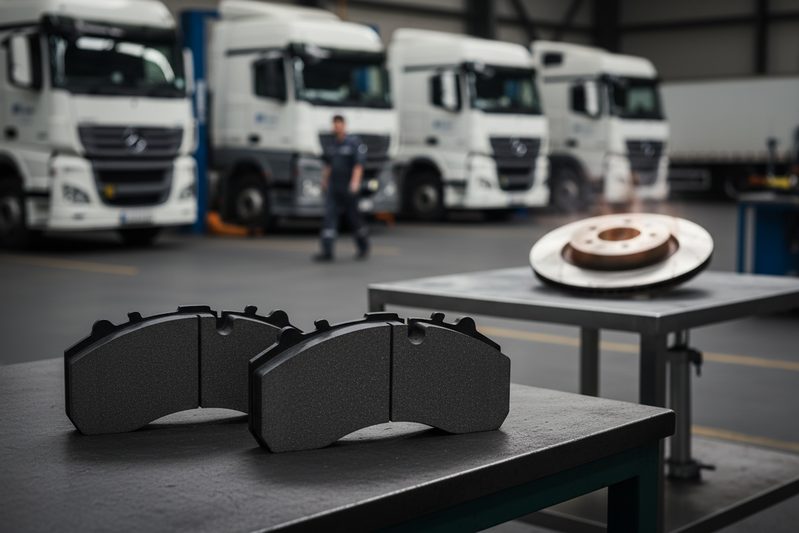
Making Bedding Part of Your Product Advantage
When you're competing for shelf space and mechanic loyalty, the tiniest differentiator can shift a purchase decision. The fact that your pads come with clear, brand-backed bedding instructions signals something rare in the import business: you stand behind the product's full lifecycle, not just the moment it ships. It communicates that you’ve done the homework; all the installer has to do is read the card and apply it.
This is more than a service. It's a positioning tool. A distributor who markets "bedding-included" pad packages—with a step-by-step guide and a QR code linking to a tutorial—can justify a 3–5% price premium simply on perceived value. Combine that with the real-world drop in returns and the gains in repeat orders, and the bedding strategy becomes a genuine profit lever. For those of you sourcing across multiple categories, the same logic applies to commercial vehicle sets, as we've seen similar return-reduction results in our wholesale CV brake pads inquiry data as well.
BAIYUN Brake has spent decades engineering friction solutions that work predictably out of the box. But even the best engineering can’t survive a 120 km/h panic stop on a cold pad. By taking an extra fifteen minutes to educate your end-users—and equipping them with the right procedure—you’re not just saving brake pads. You’re building a supply chain that runs on trust, not returns. If you’re ready to discuss how our brake pads, technical support, and white-label training materials can strengthen your market position, request a wholesale quote today. Let's cut those return rates together.
This article was produced by the BAIYUN Brake editorial team, combining 49+ years of brake manufacturing expertise with current industry research. For product inquiries or technical questions, contact our team.