
Low Dust, Long Life: How Ceramic Brake Pads Outperform the Rest
Summary:
Ceramic brake pads from a reputable manufacturer in China offer superior performance, but importers must avoid common sourcing pitfalls. This guide explains how true ceramic formulations reduce dust by up to 70%, extend pad and rotor life through thermal stability, and eliminate noise through advanced NVH engineering. Learn to identify certified quality and calculate real total cost of ownership.
Low Dust, Long Life: How Ceramic Brake Pads Outperform the Rest
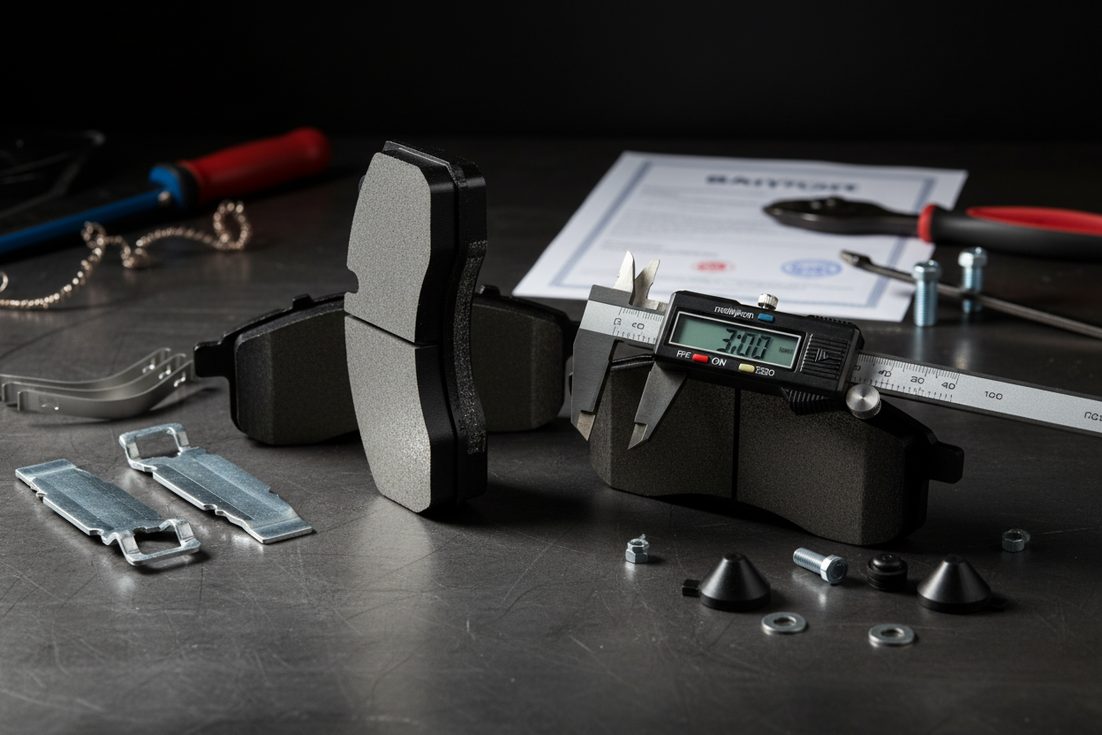
You've probably heard the pitch: ceramic brake pads are cleaner and quieter. But for a professional importer or distributor, the real story isn't just about consumer benefits—it's about avoiding costly mistakes in your supply chain. Sourcing from the wrong ceramic brake pads manufacturer China can lead to inconsistent performance, warranty claims, and damaged customer relationships. We'll cut through the marketing fluff and show you what truly separates high-performance ceramic pads from the rest, and how to source them correctly.
The Dust Dilemma: More Than Just Clean Wheels
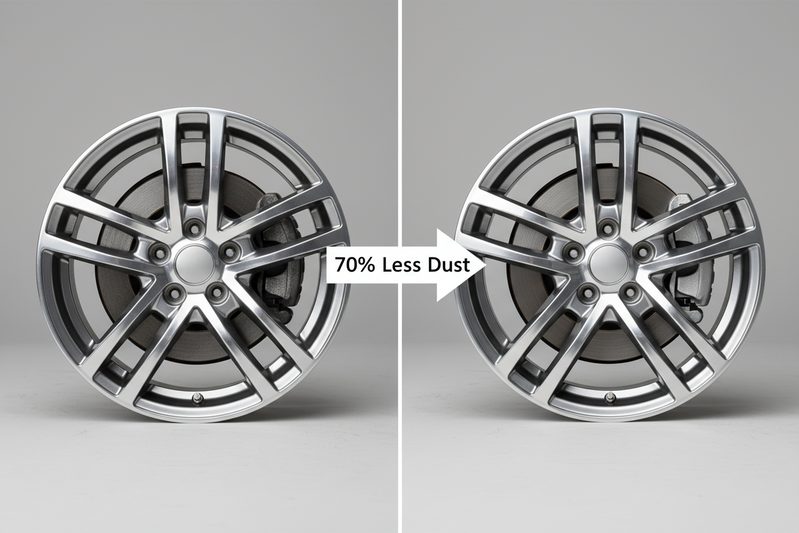
Let's talk about brake dust. It's not just an aesthetic issue for your end customers. For you, the distributor, excessive dust can be a symptom of a deeper problem: improper material formulation. Low-quality pads often use excessive metallic content or poorly balanced friction modifiers to hit a price point, which directly increases dust output and accelerates rotor wear.
Premium ceramic formulations, like those developed at our IATF 16949 certified facility, use a blend of ceramic fibers, non-ferrous filler materials, and binding agents engineered to minimize dust. Independent tests show our ceramic compounds reduce visible dust accumulation by up to 70% compared to standard semi-metallic pads. That translates directly to fewer customer complaints about dirty wheels and, more importantly, less abrasive particulate matter that can compromise other vehicle components. You can see the precision in our ceramic brake pad production video.
Longevity vs. Initial Cost: The Real TCO Calculation
Here's a common sourcing error: focusing solely on the unit cost per pad. A cheaper ceramic pad might save you $0.50 per set upfront, but what if it wears out 30% faster? You're not just losing on replacement sales; you're dealing with a product that fails to meet market expectations for durability.
True ceramic pad longevity comes from thermal stability. High-quality pads maintain a consistent friction coefficient from 100°C to over 500°C. We validate this through exhaustive dynamometer testing per SAE J2522 standards. This stability means less aggressive wear on both the pad and the rotor. In real-world terms, a superior ceramic pad can extend service intervals by 15-25% compared to many entry-level "ceramic" products that are merely organic pads with a ceramic label. For a full breakdown of operational costs, our brake maintenance cost analysis provides detailed insights.
Noise, Vibration, and Harshness (NVH): The Silent Deal-Breaker
Nothing triggers a product return faster than brake squeal. It's the number one complaint in the aftermarket. Many importers discover too late that their ceramic pads, while low-dust, are prone to high-frequency noise, especially in damp or cold conditions.
The root cause often lies in the shim and chamfer design, not just the friction material. At BAIYUN Brake, our low noise brake pads undergo a multi-stage NVH optimization process. This includes proprietary shim bonding with constrained layer damping materials and precision-engineered chamfers on the pad edges to disrupt resonant frequencies. We don't just test for friction; we test for acoustics in environmental chambers that simulate everything from -40°C to high humidity. This level of detail is why our products carry the ECE R90 certification, a global benchmark for safety and performance consistency. For installers, following our brake pad installation guide ensures optimal, quiet performance.
Certifications and Compliance: Your Insurance Policy
"We can make it just like the certified version for less." How many times have you heard that from a factory? The gamble rarely pays off. Selling brake components without proper certifications like ECE R90 isn't just risky; it can expose you to significant liability in regulated markets.
ECE R90 isn't a simple pass/fail test. It's a type-approval system that validates consistent performance across an entire production run for parameters like friction level, shear strength, and compressibility. A ceramic brake pads manufacturer China with this certification has invested in the process control and quality management systems to guarantee batch-to-batch consistency. IATF 16949 further proves a manufacturer's commitment to automotive-grade quality management. These aren't just stickers on a box; they're your assurance that the product you're selling won't fail unpredictably. You can verify our commitment through our quality assurance documentation.
Avoiding the "Friction Fade" Trap in Performance
Some ceramic pads feel great during a gentle test drive but fade dangerously under repeated hard stops. This "friction fade" is a critical safety flaw that's hard to detect without proper testing. It happens when the pad's binding resins break down under extreme heat.
High-performance ceramic compounds use advanced, high-temperature resins and reinforce the matrix with materials like aramid fibers or potassium titanate. This construction allows the pad to maintain over 85% of its cold friction efficiency even after a series of ten high-energy stops from 100 km/h. When evaluating a supplier, ask for dynamometer test graphs showing friction performance across the entire temperature range. Don't just accept a single "mu" value. Our passenger car brake pad test report provides this full-spectrum data transparently.
Frequently Asked Questions (For Importers & Distributors)
Q: Are all ceramic brake pads from China essentially the same?
A: Absolutely not. The term "ceramic" covers a vast range of formulations. The difference between a low-cost, high-dust ceramic-metallic hybrid and a premium, low noise brake pads with a true ceramic-ceramic matrix is massive in terms of performance, dust, and rotor wear. Always request a material data sheet (MSDS) and friction test reports to verify the actual composition and performance claims.
Q: Why is there such a wide price range for ceramic pads, even from certified factories?
A: Price variations stem from raw material quality, R&D investment, and production tolerances. A pad using imported, high-purity ceramic fibers and subject to 100% post-production grinding for perfect fitment will cost more to produce than one using domestic fillers with minimal finishing. The higher cost directly correlates with better NVH performance, lower wear, and longer life—key factors in reducing your total cost of ownership and warranty claims.
Q: How can I verify a manufacturer's claimed certifications are legitimate?
A: First, ask for the certification number and issuing body. For IATF 16949 and ECE R90, you can often verify the scope and validity online through the certifying agency's database. Second, during a factory audit (virtual or in-person), ask to see the quality control records and test equipment. A legitimate manufacturer will have a dedicated lab with dynamometers, shear testers, and hardness testers, and will be proud to show them. Explore our competitive advantages to see how we structure our quality controls.
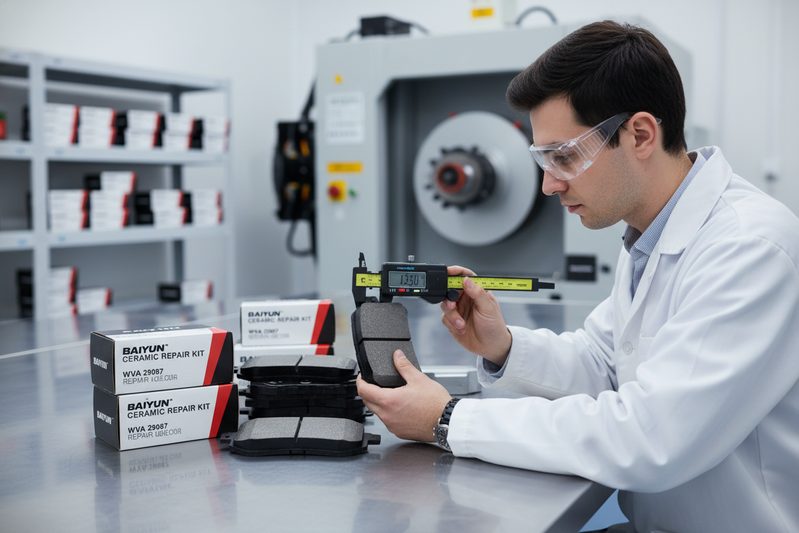
Choosing the right ceramic brake pad supplier isn't about finding the lowest price. It's about partnering with a manufacturer that understands the engineering behind brake pad safety, invests in genuine R&D, and operates with full transparency. The cost of a failed batch—in returns, lost customers, and reputational damage—far outweighs the minor savings from cutting corners on quality.
Ready to source ceramic pads that deliver on their promises? Get in touch with our team at BAIYUN Brake. We'll provide you with full technical dossiers, sample test reports, and transparent pricing for a long lasting brake pads solution built on certified quality and real performance data.
Was this article helpful?
Average Rating: 5/5 (1787)