
Iveco Brake Pad Guide: Specs, Fitment & Replacement
Summary:
Iveco brake pad guide for wholesale importers and distributors. Find out how to verify fitment, cross-reference without OE numbers, and source ECE R90‑certified pads for Daily, Eurocargo, Stralis, and Trakker models. Learn what to check before ordering a container, see our buyer verification checklist, and get proven sourcing tips from BAIYUN Brake.
Iveco Brake Pad Guide: Specs, Fitment & Replacement
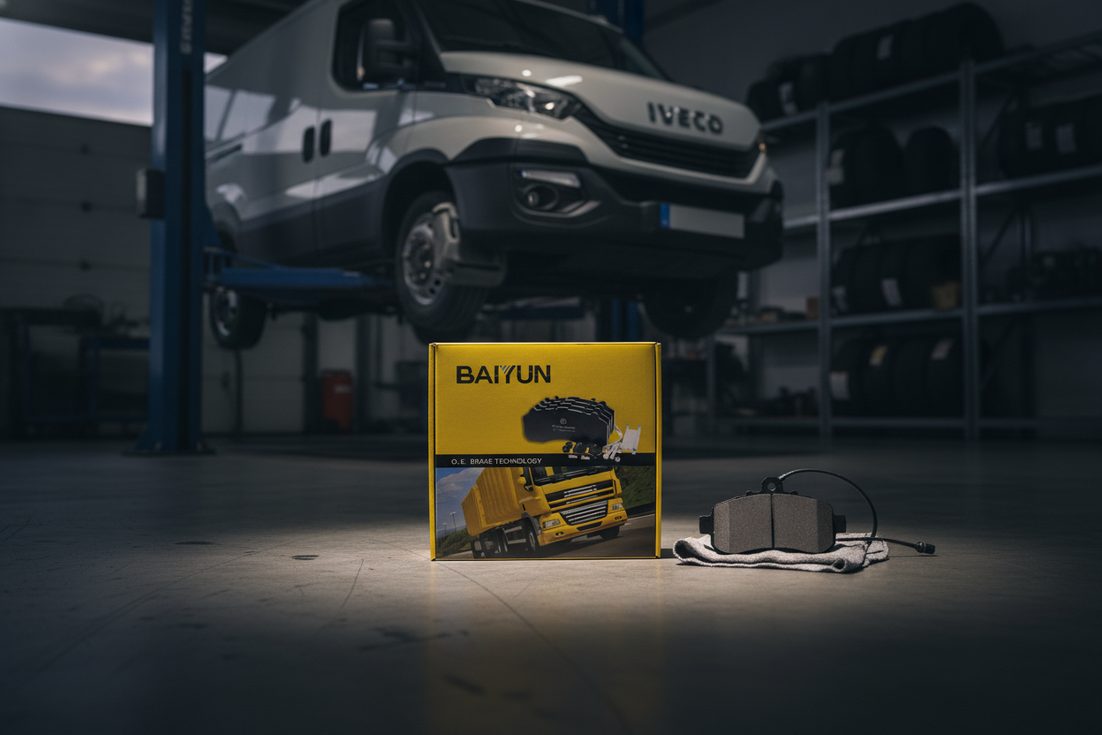
Quick answer: Sourcing the right Iveco brake pads means matching pad shape, friction material, and wear-sensor configuration to the specific model year and axle load. For importers and fleet distributors, the real challenge isn’t finding any pad—it’s getting consistent ECE R90‑certified quality at competitive price points without cross‑reference headaches. This guide maps out the Iveco application landscape, shares a verification checklist you can use before placing an order, and explains how BAIYUN Brake supports bulk buyers with technical data and cross‑reference assistance—so you don’t waste a container on pads that won’t fit.
What Iveco Models Use Disc Brake Pads and What Should You Watch for?
Iveco covers a broad swath of the commercial vehicle market—from the 3.5‑tonne Daily light‑duty van all the way up to the Stralis heavy‑duty tractor unit and the Trakker off‑road chassis. Each platform uses its own brake system architecture, and the pad specification changes with axle type, brake manufacturer (often Brembo, Knorr‑Bremse, or Wabco), and even regional market requirements.
If you’re stocking brake pads for Iveco applications, you’ll typically deal with three segments:
- Light commercial (Iveco Daily): Floating single‑piston calipers on the front axle, often with a separate wear sensor. Rear can be disc or drum, depending on GVW and model year.
- Medium‑duty (Iveco Eurocargo): Mixed disc and drum configurations. Disc pads here are larger, with higher thermal capacity. The caliper may be fixed or sliding; check the bolt spacing and carrier design carefully.
- Heavy‑duty (Iveco Stralis, Trakker): Mostly air‑over‑hydraulic or full pneumatic disc brakes. Pads are big, thick, and designed for severe‑duty cycle. Wear indicators are almost always electronic.
In every case, the pad’s backing plate shape, ear dimensions, and friction compound must align with the homologated specification. Don’t assume that “Iveco Daily pad” fits across all years—the pad profile changed in 2014 with the introduction of the Daily 7‑tonne variant, for instance.
What Should You Verify Before Buying Wholesale Iveco Brake Pads?
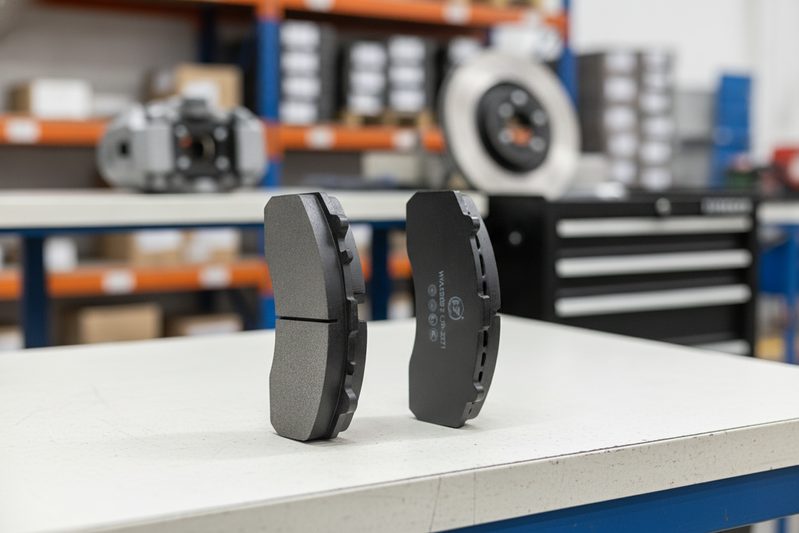
A parts catalogue is only as good as the supplier’s quality control behind it. Here’s a checklist you can run against any potential partner before you commit to a container of Iveco brake pads.
- ECE R90 approval status: Any pad you import into the European Union or EFTA countries must carry the ECE R90 homologation number stamped on the backing plate. Ask the supplier for a copy of the approval certificate, not just the marking.
- Friction material formulation: Does the pad match the original friction class? For Iveco fleet usage, you’re often looking at FF‑class friction (0.35–0.45 μ) that doesn’t fade under repeated stops. Request a dynamometer report showing friction coefficient vs. temperature.
- Wear‑sensor compatibility: Some Iveco pads have a mechanical wear indicator, some an electronic sensor, and some a sensor already integrated into the pad shim. Confirming this ahead of time avoids returns.
- Backing plate and shim quality: Check for anti‑noise shims, chamfers, and slots that match the original design. A generic pad without the proper anti‑squeal clip will drive workshop comebacks.
- Packaging and labeling: Bulk packaging must survive ocean freight. Individual boxes should show the WVA number, ECE R90 mark, and batch code for traceability. This matters when end customers inspect goods at destination.
BAIYUN Brake addresses all these points at the factory level. Their IATF 16949 certified facility runs its own dynamometer testing and can supply material data sheets on request—no guesswork for the importer.
How to Fit a New Set of Iveco Brake Pads: A Practical Overview
Iveco workshop procedures follow the same logic as most European disc brake systems, but a few specifics help your customers get the job right the first time.
Start by raising the vehicle safely on a commercial‑grade lift. On an Iveco Daily, you’ll remove the wheel, then locate the two caliper slider bolts or retaining pins. Unlike some passenger‑car designs, the caliper doesn’t always swing away; sometimes you must unbolt the entire caliper carrier. Support the caliper with a wire—never let it hang by the brake hose. The old pads slide out from the rear; a tap with a rubber mallet may be needed if they’ve corroded in place.
Before fitting new pads, clean the carrier guides and install any new hardware clips. Use a graphite‑based brake lubricant on the slider contact points, not on the friction surface. Compress the caliper piston using a proper wind‑back tool—on rear axles with an integral parking brake, the piston often needs to be rotated clockwise while being pressed. Keep an eye on the brake fluid reservoir; when you push the piston back, fluid level rises and can overflow.
Slide the new pads in and re‑secure the caliper. On Iveco models with wear sensors, route the cable away from moving parts and connect it securely. After everything is back together, pump the brake pedal several times until firm pressure returns, then road‑test the vehicle with several moderate stops to bed the pads. For a detailed walkthrough, refer to our brake pad installation guide and commercial vehicle brake service resources.
Iveco Brake Pad Cross‑Reference and Fitment Table (Typical Models)
Because Iveco sources calipers from multiple Tier‑1 suppliers, one chassis code can accept two or three different pad shapes. The table below illustrates the most common applications. Exact WVA numbers and OE cross‑references are not listed here—they must come from the supplier catalogue. BAIYUN Brake provides dedicated cross‑reference support for wholesale buyers.
| Iveco Model | Year Range | Brake Type | Pad Shape Note |
|---|---|---|---|
| Daily (2.8–7.0t) | 2006–2014 | Front Disc | Square lug, sensor optional |
| Daily (3.5–7.2t) | 2014–2024 | Front Disc | Asymmetrical ear, electronic sensor common |
| Eurocargo ML/E (7.5–18t) | 2008–2016 | Front/Rear Disc | Rail‑type pads, large surface area |
| Eurocargo Tector (12–26t) | 2016–2025 | Front Disc | Squared with wear lead |
| Stralis AS/AT/AD (18–44t) | 2002–2016 | Front/Rear Disc | Heavy‑duty; multiple wear indicators |
| Stralis NP (natural power) | 2016–2025 | Front Axle Disc | Specific to Knorr‑Bremse caliper |
| Trakker (off‑road) | 2004–2022 | All‑axle Disc | Severe‑duty, thicker plate |
When you need to confirm fitment, always provide the VIN, axle load rating, and a photo of the old pad with a ruler next to it. That’s the fastest way a supplier can cross‑reference back to the correct production mould.
Sourcing Confidence for Iveco Brake Pads: A Buyer’s Verification Checklist
Think of this as your final gate before issuing a purchase order. We’ve seen too many importers get tripped up by a sample that passed lab tests but didn’t fit the vehicle during installation.
| Verification Item | What to Ask / Check |
|---|---|
| 1. Test fitting on actual vehicle | Request a short video of the pad being installed into the specific Iveco caliper model. |
| 2. Coefficient of friction (μ) | Ask for the friction curve across 100–350°C; it should stay within the FF range. |
| 3. Hardness and compressibility | Too hard and the pad squeals; too soft and it wears fast. Confirm test values against OE specs. |
| 4. Wear sensor resistance | If electronic, the sensor must show 0 ohms when intact, open circuit when worn. |
| 5. Batch consistency | Check that the pad weight, thickness tolerance, and shim bond strength are controlled statistically. |
| 6. Packaging durability | Request a packaging drop test or certificate that the box can survive a 1‑metre fall. |
When you source from a manufacturer like BAIYUN Brake, these aren’t extra‑cost “options”—they’re built into the production routine. Our team can provide dynamometer charts and installation videos specific to your order, not just generic catalogue references.
Frequently Asked Questions for Iveco Brake Pad Importers
Q: How do I cross‑reference Iveco brake pads without an OE number?
A: Provide your supplier with clear photos of the old pad’s top, bottom, and side profiles next to a measuring tape. A good manufacturer can match the pad by ear width, overall length, and friction track shape against their mould library. At BAIYUN Brake, we often cross‑reference within 24 hours using a WVA‑based database and customer‑submitted samples.
Q: What is the typical minimum order quantity (MOQ) for Iveco brake pads from China?
A: For a single reference with custom packaging, MOQ usually starts around 200–300 sets. If you mix several Iveco references in one container, the per‑reference MOQ can drop to 100 sets. BAIYUN Brake works with you to optimise the mix so you don’t carry dead stock. Request OEM commercial vehicle brake pad quote for a tailored MOQ.
Q: Is ECE R90 certification mandatory for Iveco pads destined for Europe?
A: Yes. Since November 2016, brake pads sold for use on EU public roads must be ECE R90‑approved. The regulation requires a third‑party witnessed dynamometer test and periodic factory audits. Non‑compliant pads can be impounded at customs. Every shipment from BAIYUN Brake carries the ECE R90 mark and supporting homologation documents.
Q: Can you supply brake pads for Iveco natural‑gas‑powered Stralis NP?
A: Absolutely. The Stralis NP uses specific brake pads with high thermal resilience because the regenerative braking on gas engines can reduce pad cooling intervals. Our catalog includes pads for the entire Stralis NP line; just confirm the axle code. Wholesale CV brake lining inquiry for detailed specifications.
Q: Can I get custom packaging and my own brand on the pads?
A: Yes. BAIYUN Brake offers private‑label packaging with your logo, barcode, and technical data sheet design. For large OEM projects, we can also stamp your part number on the backing plate, provided it doesn’t conflict with existing homologation. MOQ for custom branding is typically one container per reference, but we negotiate flexibly.
Why BAIYUN Brake Is Your Reliable Partner for Iveco Brake Pads
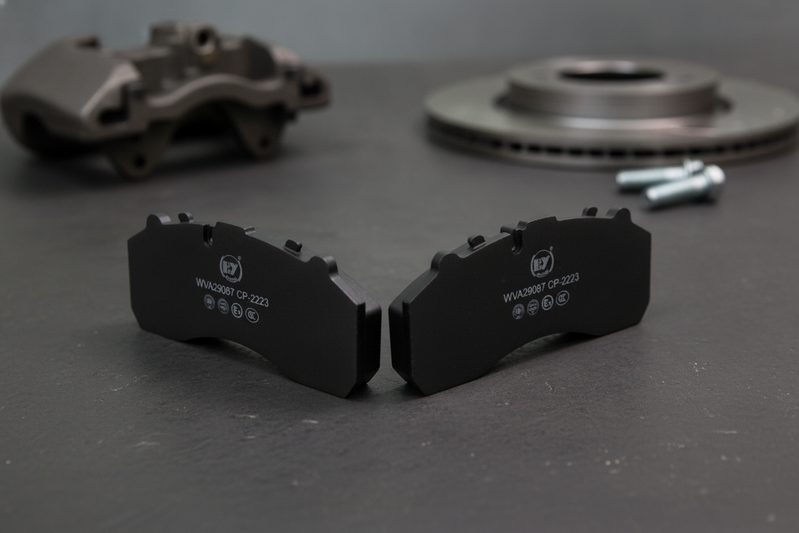
We’ve been manufacturing friction materials for nearly half a century. That experience means we don’t just copy an OE pad—we engineer a compound that matches the thermal demands of Iveco fleets, from delivery vans clocking city miles to transcontinental haulage trucks. Our IATF 16949 and ECE R90 certifications aren’t badges on a website; they’re embedded in every production run, with batch traceability from raw material to finished box.
When you request a wholesale quote, you get more than a price list. You get direct access to our technical team, sample support for first‑article inspection, and a reliable supply chain that keeps your inventory flowing. Browse our full commercial vehicle brake pad catalog or explore our wholesale CV brake lining inquiry options. We’re here to help you build a quality‑certified brake program that your Iveco customers trust.
Was this article helpful?
Average Rating: 5/5 (1317)