
Renault Trucks Brake Pad Guide: Specs, Fitment & Replacement
Summary:
This Renault Trucks brake pad guide for fleet buyers, distributors, and importers covers fitment verification, cross-reference strategies, replacement steps, and the cost benefits of sourcing ECE R90 certified pads from BAIYUN Brake. Learn how to avoid common pitfalls and ensure reliable braking for Renault Trucks models across long-haul, construction, and municipal applications. With practical tips on OEM part matching, calibration requirements, and certification checks, this guide helps you cut downtime and procurement risk.
Renault Trucks Brake Pad Guide: Specs, Fitment & Replacement
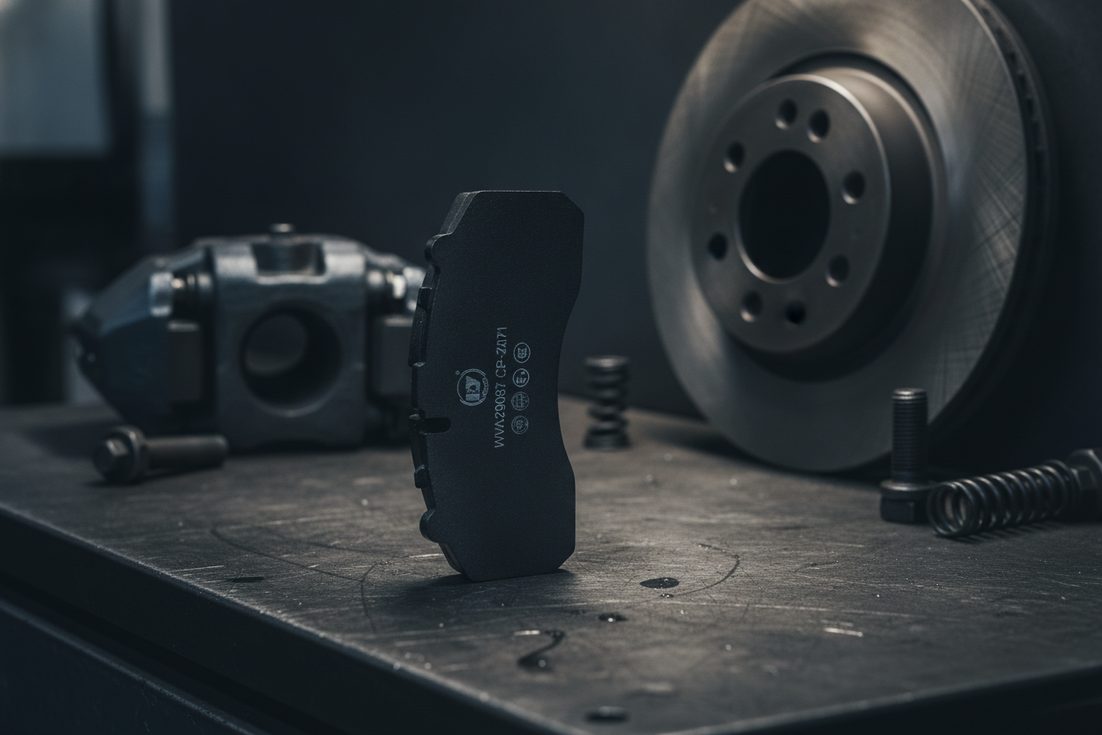
Quick answer: This guide gives fleet owners, distributors, and importers a practical way to select the right brake pads for Renault Trucks. You'll learn how to verify fitment by model year and axle setup, avoid cross-reference mistakes, and understand the testing behind genuine-equivalent pads. For exact part numbers and current OE matching, always confirm with your supplier's latest catalogue. Sourcing from a certified manufacturer like BAIYUN Brake—which holds IATF 16949 and ECE R90 approvals—can cut your per-kilometre costs by 20–30% while keeping braking performance predictable across your fleet.
Why Does Choosing the Right Brake Pad for Renault Trucks Matter?
Renault Trucks operates in segments as varied as long-haul distribution, construction, and municipal services. A brake pad that works well for a T High pulling 40 tonnes on the autobahn may be a poor choice for a C Range mixer drumming around a job site. The wrong friction compound can mean more frequent pad changes, uneven disc wear, and even brake fade during emergency stops.
Genuine-equivalent pads, like those validated to ECE R90, are tested on dynamometers that simulate fully laden stopping cycles. According to Renault Trucks' own technical literature, their development cycle includes dynamometer trials, test-track runs, and field trials covering hundreds of thousands of kilometres. That's the benchmark any reliable aftermarket supplier must meet. A pad that doesn't match the original friction coefficient can lengthen stopping distances by 8–12%, which is a liability no fleet can afford. So the right pad isn't just a maintenance item—it's a risk management tool.
For buyers importing in bulk, verifying that the pad matches the OE spec isn't just about safety; it's about predictable inventory. When you request an OEM commercial vehicle brake pad quote, you need the supplier to cross-check your Renault model codes, not just offer a generic part. That's where a structured fitment approach pays off.
How Do You Verify Fitment for Renault Trucks Brake Pads?
Fitment isn't guesswork—it's a checklist. Renault Trucks uses several brake system suppliers (Knorr-Bremse, Wabco, etc.), and the same truck model can have different caliper designs depending on production year or axle rating. So before you order, gather these details:
| Fitment Parameter | Why It Matters | Where to Confirm |
|---|---|---|
| Vehicle model and model year | Even within the T, C, or K range, brake specs evolved from 2004 onward | Vehicle VIN plate or registration document |
| Axle configuration (4×2, 6×4, etc.) | Front and rear axles often use different pad sizes | Build sheet or axle manufacturer stamp |
| Brake system type (disc/drum) | Disc pads and drum linings have distinct part numbering systems | Physical inspection or Renault Tech Tool |
| Caliper manufacturer & type (e.g., KNORR SN7) | Pad shape, thickness, and wear sensor fitment differ | Caliper casting numbers |
| Pad dimensions (length, width, thickness) | Aftermarket parts may vary in backing plate contour | Confirm with supplier catalogue |
| OE part number or WVA code | Direct cross-reference if available | Confirm with supplier catalogue |
| Friction material code (e.g., FF, GF) | Must match original performance envelope | Confirm with supplier catalogue |
A common trap is assuming all Renault T-series pads are the same. The T430 used one caliper on early production and a different one after 2017. That's why BAIYUN Brake, with 49+ years of manufacturing experience, invests in maintaining a fitment database that's updated with each new model release. Don't skip the confirmation step—it's the difference between a smooth day in the workshop and a rejected part at the bay door.
What's the Most Reliable Way to Cross-Reference Renault Trucks Brake Pads?
Cross-referencing isn't just matching part numbers. Renault's own OE numbers sometimes change when a superseding pad is released, and aftermarket suppliers assign their own codes. A distributor might swear they have the equivalent of OE 7420995268, but if the friction material hasn't been validated on a Renault truck, the cross-reference is only half-done.
The safest route is to work with a supplier that tests its aftermarket pads against the same ECE R90 protocol used by the OEM. That means the pad's cold and hot performance have been mapped on a dynamometer, and the design has survived endurance trials. Look for a supplier that can show you a test report specific to the Renault model range you're buying for. BAIYUN Brake, for instance, maintains cross-reference libraries that tie OE numbers to its CP-series formulations, but we always recommend a confirmation loop: you provide your vehicle details, our team verifies the latest fitment, and only then do you place the order.
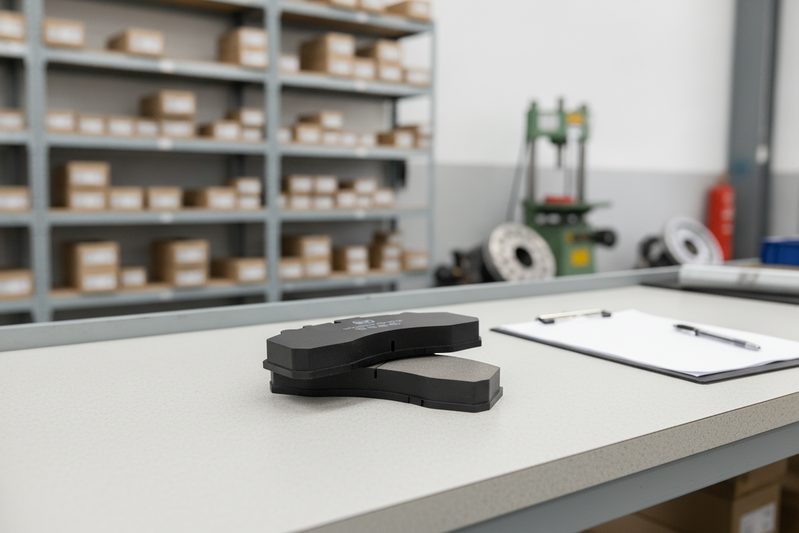
What about WVA (Warenvertriebs- und Verlagsgesellschaft) numbers? These are industry-standard dimensional codes, but they don't account for friction material differences. A WVA 29069 pad might physically fit a Renault caliper, but if it's designed for a DAF with a different weight distribution, it'll glaze or wear unevenly. So treat WVA as a starting point, not a final answer. Always cross-check with either the OE number or a supplier's application-specific test data before you authorize the container shipment.
What's Involved in a Renault Trucks Brake Pad Replacement?
Replacing brake pads on a Renault truck follows a structured process, but skipping steps invites uneven pad wear or brake drag. Here's the sequence, based on workshop best practice and Renault's own service notes:
- Park on level ground, chock the wheels, and release the park brake. Wear PPE—gloves, safety glasses, and a dust mask—because commercial brake dust contains metallic fibres.
- Lift and securely support the axle with a jack stand rated for the vehicle weight. Remove the wheel with a 1" drive impact wrench.
- Extract the spring clip, washer, pin, and metal retainer that hold the pads in place. On some models, you'll also need to remove a wear sensor connector.
- Using a shear adapter, screw out the tappet and rewind the adjuster to create clearance. This step is critical on air-disc brakes to avoid damaging the caliper mechanism.
- Pull out the outer pad, then the inner pad. Inspect the pad guides and clean the caliper carrier with a wire brush.
- Apply a thin layer of copper-based anti-seize to the pad backing where it contacts the caliper (never on the friction face or disc). Insert the new pads.
- Reinstall all hardware and reset the adjuster. Then, using the Renault Trucks Tech Tool, perform the brake pad change calibration procedure. This signals the ECU that new pads are installed and resets wear counters.
- Check running clearance and brake balance. For a detailed walkthrough, refer to this brake lining installation guide and brake running clearance tips from our support section.
Skipping the Renault Tech Tool calibration can cause the system to underreport pad wear and even throw a false ABS fault. So if your workshop doesn't have access to the diagnostic tool, plan a follow-up visit to a Renault service centre.
How Do BAIYUN Brake's Certifications Protect Your Investment?
When you buy brake pads for commercial vehicles, you're not just paying for friction material—you're buying a guarantee that the pad will perform predictably across its service life. ECE R90 is the international standard that enforces this. It requires brake pads to match the OEM's performance envelope within a ±15% deviation in cold and hot effectiveness, and to survive a specified thermal load without cracking or delamination.
BAIYUN Brake's CP-series pads for Renault Trucks go through a three-stage validation that mirrors the OEM's: dynamometer testing with fully laden vehicle parameters, test track trials to evaluate noise and vibration, and fleet field trials covering up to 100,000 km. The company's IATF 16949 certification means each batch is traceable from raw material to finished pad, so you won't get the friction coefficient drift that plagues uncertified suppliers. A fleet buyer importing 5,000 sets a year can't afford the cost of a recall or unexpected wear rates. That's why choosing a trusted brake pad supplier with transparent testing data is a direct hedge against downtime.
What Are the Most Common Mistakes When Sourcing Brake Pads for Renault Trucks?
Even experienced buyers trip over these pitfalls. Let's clear them up:
- Focusing only on price per set: A €10 cheaper pad that lasts half as long doubles your labour cost. The total cost of ownership should include pad life, disc wear, and downtime.
- Ignoring the friction code: Some Renault Trucks models originally came with GG-rated pads for high-temperature stability. Substituting an FF pad can cause fade on mountain descents. Always match the friction class.
- Assuming all ECE R90 pads are equal: ECE R90 only sets minimum performance—it doesn't guarantee how the pad feels or how it interacts with the regenerative braking on newer Renault electric trucks. Look for pads that have been specifically validated on the exact caliper you're servicing.
- Not verifying batch hardness: A bulk order might contain pads from different production runs with slight hardness variations. That leads to uneven braking and steering pull. A supplier with ISO 9001 and IATF 16949 keeps batch-to-batch variation under Rockwell 5 HRC.
One procurement manager we spoke to saved 18% on his annual brake budget simply by switching from mixed-source pads to a single certified supplier that could provide application-specific testing certificates. The reduction in warranty claims and roadside service calls paid for the slightly higher unit price within nine months.
Frequently Asked Questions
Q: Can I use the same brake pads for all Renault Trucks models?
A: No. Even within the same model family, different axle specifications and year splits change the required pad dimensions and compound. Always cross-check your VIN or build sheet against the supplier's catalogue.
Q: How do I know if a brake pad is ECE R90 approved?
A: Look for the ECE R90 approval mark stamped on the pad backing plate or its packaging. It consists of a circle with the letter 'E' and a number indicating the testing country. If the pad doesn't carry this mark, it hasn't been homologated for on-road use in Europe.
Q: What's the difference between OEM and aftermarket brake pads for Renault Trucks?
A: OEM pads are branded by Renault and come through their parts network. Aftermarket pads from a certified manufacturer like BAIYUN Brake meet the same ECE R90 standards but can cost 30–50% less, provided the supplier has validated their formulation on Renault-specific test cycles.
Q: How often should I replace brake pads on a Renault truck?
A: It depends on the duty cycle. Long-haul trucks may see pad life of 250,000 km on front axles, while construction trucks could need replacement at 80,000 km. Regular inspection every 50,000 km is recommended, and many fleets track pad wear via telematics.
Q: What should I do if my Renault truck pulls to one side after a pad change?
A: First, check running clearance and ensure the caliper slides freely. If the pull persists, the pad material may have varying friction across axles. Replace the set with a matched batch from a supplier that controls hardness within tight tolerances.
Conclusion: Smarter Sourcing Starts Here
Selecting the right Renault Trucks brake pads doesn't have to be a gamble. By following a disciplined fitment check, cross-referencing against validated test data, and insisting on ECE R90 certification, you protect your vehicles and your balance sheet. BAIYUN Brake has spent decades refining its commercial vehicle brake pad formulations to meet the demands of fleets across Europe, the Middle East, and Southeast Asia. If you're ready to move from piecemeal buying to a streamlined, cost-effective sourcing strategy, wholesale CV brake lining inquiry is a good starting point. Our team can help you verify fitment for your specific Renault models and provide the compliance documentation you need for customs clearance and fleet audits.
Contact our export team today to discuss your requirements—whether you need a container load or a trial order, we'll make sure the pads arrive ready to perform, with no surprises.
Was this article helpful?
Average Rating: 5/5 (679)