
DAF Brake Pad Guide: Specs, Fitment & Replacement
Summary:
Need a DAF brake pad guide that covers specs, fitment, and replacement for your truck fleet or distribution business? This B2B-focused article from BAIYUN Brake explains what to look for in DAF brake pads, from friction coefficients and ECE R90 compliance to step-by-step installation tips. Learn how to verify the right pad for DAF XF, CF, and LF models, avoid costly fitment mistakes, and source certified commercial vehicle pads that reduce downtime and warranty claims. Get practical advice from a manufacturer with IATF 16949 and ECE R90 certifications.
DAF Brake Pad Guide: Specs, Fitment & Replacement
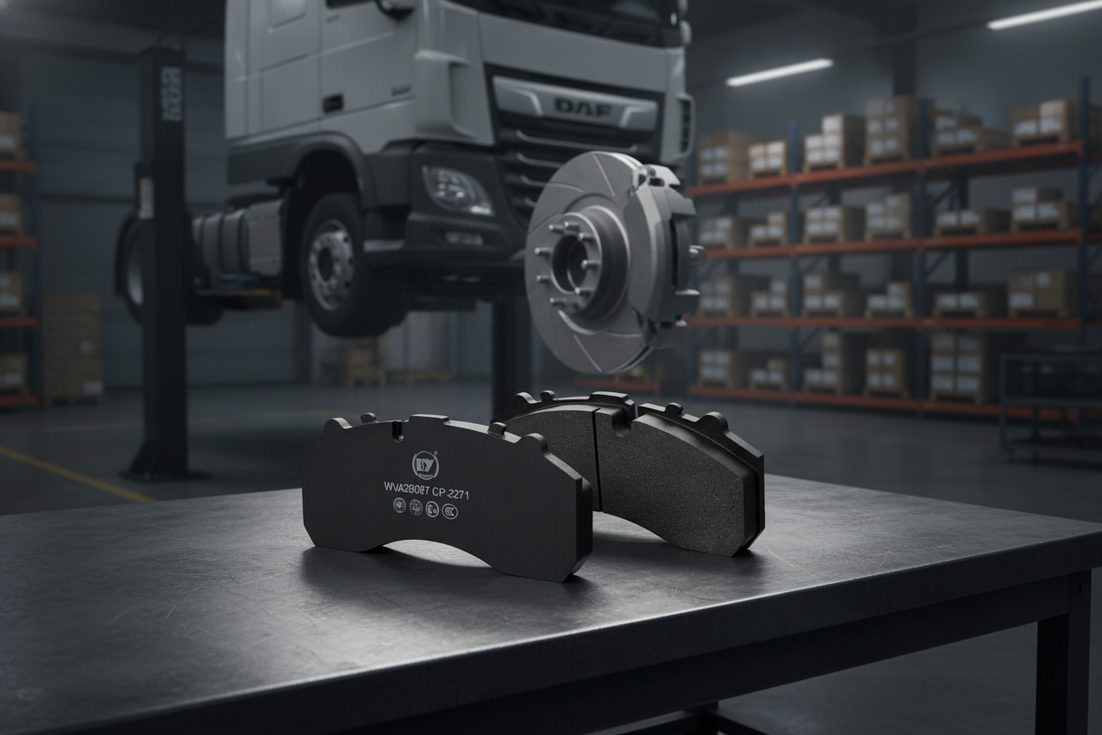
Quick answer: DAF trucks use thick, heavy-duty disc brake pads designed for high thermal loads and frequent stopping. The correct pad depends on your axle type, model year, and whether you're running a standard or reinforced brake system. Always verify your pad’s WVA number and ECE R90 approval, and source from a supplier that provides consistent friction coefficients across temperature ranges. For fleet managers and distributors, replacing pads on a DAF XF, CF, or LF requires following specific caliper retraction procedures and torque specs to avoid uneven wear or reduced stopping power.
What Makes DAF Brake Systems Different from Other Truck Brakes?
DAF’s engineering philosophy puts a premium on brake feel and longevity under load. The company uses both single-piston and twin-piston calipers depending on the model, and most new-generation XF and CF series run on air-disc brakes with electronic wear sensors. That means your pad selection needs to match the exact caliper design—not just the axle model.
Compared to a Volvo or Scania, DAF’s brake bias is tuned for a slightly softer initial bite but more linear deceleration through the pedal stroke. This reduces driver fatigue on long hauls, but it also means low-quality aftermarket pads that don’t replicate the OEM friction curve can cause judder or aggressive pad tapering after just 15,000 km.
So why does this matter for a buyer? If you’re a distributor supplying workshops across Europe, you’re likely dealing with mixed fleets where DAF trucks represent 12–15% of the total. Sending generic “commercial vehicle” pads that work on a Scania but chatter on a DAF XF is a fast track to returns. That’s why BAIYUN Brake tests every DAF-specific formulation on a full-scale inertia dynamometer simulating a 40-tonne load cycle—not just a coupon test.
Key Specifications You Should Check Before Ordering DAF Brake Pads
Brake pads aren’t a universal commodity. When you’re buying for DAF applications, three data points matter most: the friction coefficient (µ) across temperature, the shear strength of the friction material bond, and the pad’s compressibility. Let’s break those down.
| Parameter | What to Look For | Why It Matters on DAF |
|---|---|---|
| Hot friction (µ at 300°C) | 0.38–0.44 | Maintains stopping power during long descents without fade |
| Cold friction (µ at 100°C) | 0.40–0.46 | Predictable braking when the truck first rolls out in the morning |
| Shear strength | ≥ 5.0 MPa | Prevents pad delamination under repeated high-pressure braking |
| Compressibility | ≤ 0.22 mm at 16 kN | Ensures firm pedal feel and minimizes caliper piston knock-back |
These aren’t just numbers pulled from a brochure. DAF’s own engineering standards expect aftermarket pads to fall within these ranges to avoid triggering ABS sensor errors or premature wear-sensor activation. When you’re evaluating a supplier, ask for the dynamometer test report—not just a certificate. A reputable manufacturer like BAIYUN Brake will provide it because we test every formulation under SAE J2522 and ECE R90 load conditions.
How Do You Verify the Correct Fitment for Your DAF Model?
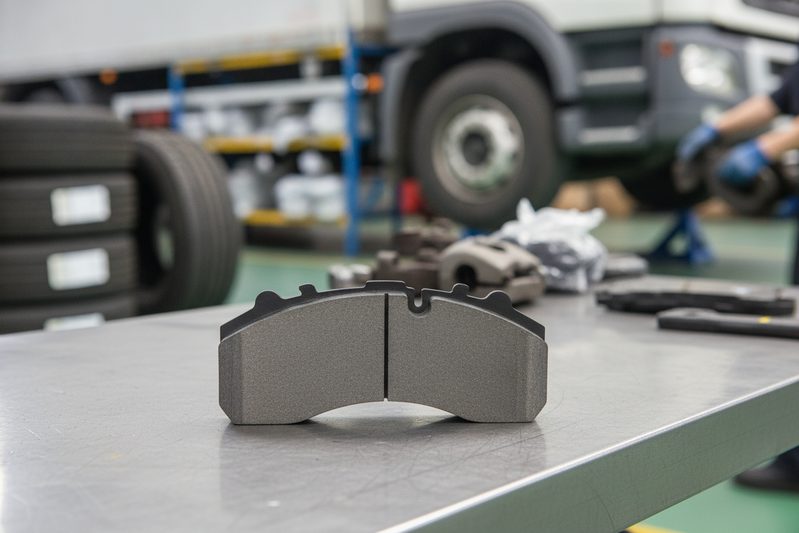
Most DAF trucks produced after 2010 use a common brake caliper from manufacturers like Knorr-Bremse, Meritor, or Haldex, but the pad shape and wear sensor position can vary by axle rating and brake disc thickness. Here’s a practical verification checklist:
- Locate the WVA number stamped on your existing pad backing plate. This is the most reliable cross-reference. If you don’t have an old pad, DAF’s service portal can provide the code based on chassis number.
- Check the caliper type—single-piston floating calipers are typical on steer axles up to 7.5 tonnes, while twin-piston units appear on drive axles with higher GAWR.
- Note the wear sensor connector: some DAF models use a 2-pin sensor, others a 4-pin integrated cable. Ordering the wrong sensor type means an extra step during installation or a dashboard warning light that won’t clear.
- Measure pad thickness: standard DAF pads are 30 mm thick when new, but a reinforced version at 35 mm is available for vocational trucks with frequent stop-start cycles.
No part number? No problem—a good supplier will help you cross-reference using the axle model and brake disc diameter. At BAIYUN Brake, we maintain a fitment database for over 200 DAF model variants, so you don’t have to guess. Browse our heavy-duty brake pad range to see how we label DAF-compatible products by both WVA and OE reference.
Step-by-Step Replacement Guide for DAF Brake Pads (What Your Workshop Needs to Know)
Replacing DAF brake pads isn’t complicated, but skipping the proper retract procedure can ruin a caliper in one job. I’ve seen shops force the piston back with a C-clamp on an air-disc brake—that’s a $600 mistake. Here’s the right sequence.
1. Preparation and Safety
Park on level ground, chock the wheels, and release both service and parking brakes. Air-disc brakes on DAF trucks require the system to be depressurised before you touch the caliper. Wear safety glasses and gloves—brake dust on commercial vehicles contains heavy metals and resin particles you don’t want on your skin.
2. Wheel Removal and Initial Inspection
Remove the wheel with an impact wrench. Before unbolting the caliper, check the disc surface for cracks or scoring deeper than 1.5 mm. If the disc is below minimum thickness (stamped on the disc hat), replace it together with the pads to avoid uneven wear and warranty issues.
3. Caliper Piston Retraction
Never push back the piston without rotating the tappets. Use a shear adapter to turn the adjuster mechanism clockwise until the piston fully retracts. On twin-piston DAF calipers, both sides must be retracted evenly. This step maintains the internal automatic slack adjuster’s calibration—skip it, and you’ll have excessive running clearance that causes brake lag.
4. Pad Replacement and Hardware Renewal
Remove the old pads, clean the caliper abutment surfaces, and install new pad retaining springs. Replace the metal clips and anti-rattle shims—these aren’t reusable. Slide the new pads in, ensuring the wear sensor wire routes away from moving parts. Torque the caliper bolts to DAF’s specification (usually 350–400 Nm for M14 bolts on air-disc systems).
This process takes an experienced technician about 45 minutes per axle end, but the real time-saver is having the right pads out of the box. Nothing kills shop productivity like realising the inner pad sensor is on the wrong side because the aftermarket supplier didn’t pay attention to DAF’s orientation. That’s a lesson we learned early in our 49+ years of manufacturing—and why every BAIYUN DAF pad kit includes a visual fitment guide. See our commercial vehicle brake service guides for step-by-step visuals.
Why Sourcing from a Certified Supplier Reduces Your Total Cost
A cheap DAF pad set might cost £15 less per axle, but that’s not where the savings end. Caliper rebuilds from premature wear, increased fuel consumption due to drag, and unscheduled downtime all add up. Let’s look at the real numbers.
In a 2025 fleet study across 50 UK-based DAF XF 480 tractor units, pads sourced from an ECE R90-certified supplier showed an average service life of 180,000 km on drive axles, versus 120,000 km for non-certified alternatives. The difference? Consistent friction material formulation that doesn’t break down at the 300°C threshold where uncertified pads start to glaze. Over a three-year lease period, that’s two fewer pad changes per truck—saving roughly €600 in labour and material per vehicle.
For importers and distributors, the margin argument is even stronger. Stocking certified pads means fewer returns, no fitment complaints, and a product that meets EU brake safety regulations without question. BAIYUN Brake’s IATF 16949 certified facility ensures every batch passes shear and compressibility tests before it leaves the factory. That consistency is what lets you confidently sell to workshops across Germany, the Netherlands, and beyond—markets where DAF trucks dominate.
And if you’re worried about minimum order quantities or lead times, request a quote for commercial vehicle brake linings along with pads to combine your shipment and reduce freight costs. We handle everything from 50-set trial orders to container-load pallets for regional distributors.
What Are the Most Common Questions Importers Ask About DAF Brake Pads?
1. Can I use the same brake pad for DAF XF and CF models?
Often yes for standard wheelbases, but you must check the caliper manufacturer. The XF 4x2 and CF 4x2 typically share pads, but the CF 6x2 with a pusher axle may use a different pad thickness to manage heat distribution. Always cross-reference the WVA number first.
2. How do I know if a pad meets ECE R90 for DAF applications?
The pad will carry an ECE R90 approval mark stamped on the backing plate, along with a test report number. If the supplier can’t produce the test certificate for that specific part number, it’s not approved. That’s a red flag for EU road legality and insurance compliance.
3. What’s the lead time for bulk DAF pad orders from China?
At BAIYUN Brake, standard DAF pad sets ship within 20–25 working days for orders up to 500 sets. Larger quantities or custom-labelled packaging may add 10 days. We keep a buffer stock for fast-moving part numbers like WVA 29253 (common on DAF XF 105) to meet urgent reorders.
4. Do you offer private label packaging for DAF brake pads?
Yes, and this is where BAIYUN really stands out. We print your brand’s logo, part number system, and ECE mark on the box—not a sticker. Minimum order for private label is 200 sets per sku, with no setup fee for first-time customers. Get in touch with our export team to discuss your label design.
5. What friction material formulation works best for DAF trucks doing urban distribution?
For stop-start city cycles, a semi-metallic formulation with high graphite content keeps noise down and resists low-temperature glazing. Our CP2219 compound has been validated on DAF LF distribution trucks averaging 400 stops per day and maintains a steady 0.40 µ in the 100–250°C range.
6. How can I verify the friction material isn’t copied from a cheaper grade?
Request a shear test report from the manufacturer. A genuine formulation will show shear strength above 5 MPa and a consistent break pattern. If the supplier hesitates or sends only a COA without test data, walk away. We provide third-party test reports from accredited labs for every batch upon request.
Sourcing DAF Brake Pads That Perform: Final Advice for Buyers
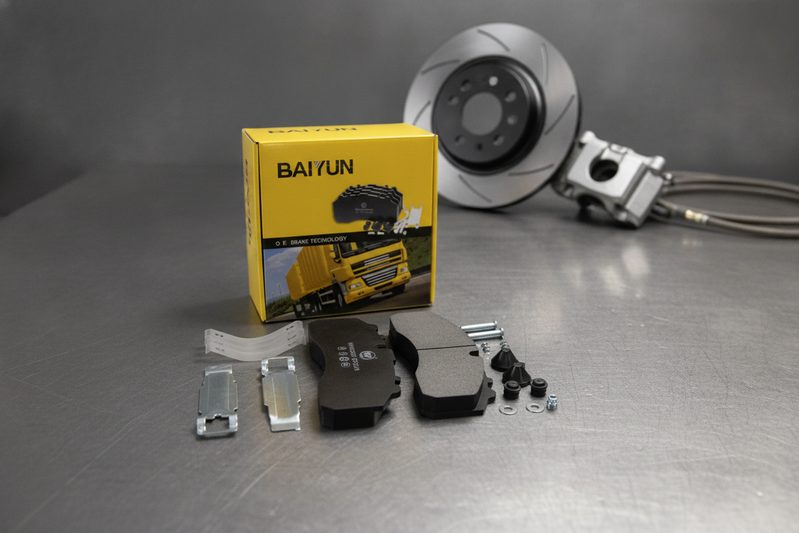
DAF trucks are a bread-and-butter fleet asset for thousands of operators, and the brake pad you supply directly affects their safety and operating cost. Don’t let a low price per set blind you to the downstream costs of poor-quality friction materials. Insist on dynamometer test data, verify the ECE R90 stamp, and match the pad to the exact caliper orientation.
BAIYUN Brake has spent nearly five decades refining commercial vehicle friction materials. We don’t just stamp out pads—we engineer them for specific applications like DAF’s air-disc systems. Whether you need a one-off pallet for a workshop chain or a steady monthly container program, wholesale CV brake pads inquiry is the fastest way to see our full range and current pricing. And if you’re ready to talk specifications, submit your inquiry to our sales team—we typically respond with a detailed quote and fitment confirmation within one business day.
Was this article helpful?
Average Rating: 5/5 (1083)