
How Do Ceramic Brake Pads Perform Against Semi-Metallic at High Temperatures?
Summary:
This ceramic vs semi-metallic brake pads comparison reveals critical performance differences at high temperatures. Ceramic pads maintain a stable friction coefficient (0.38-0.42) from 100-350°C with 23-30% less wear, while semi-metallic pads offer stronger initial bite but can fade 15-25% above 300°C. For distributors, understanding this data is key to tapping into the growing ceramic segment, projected at a 6.2% CAGR.
How Do Ceramic Brake Pads Perform Against Semi-Metallic at High Temperatures?
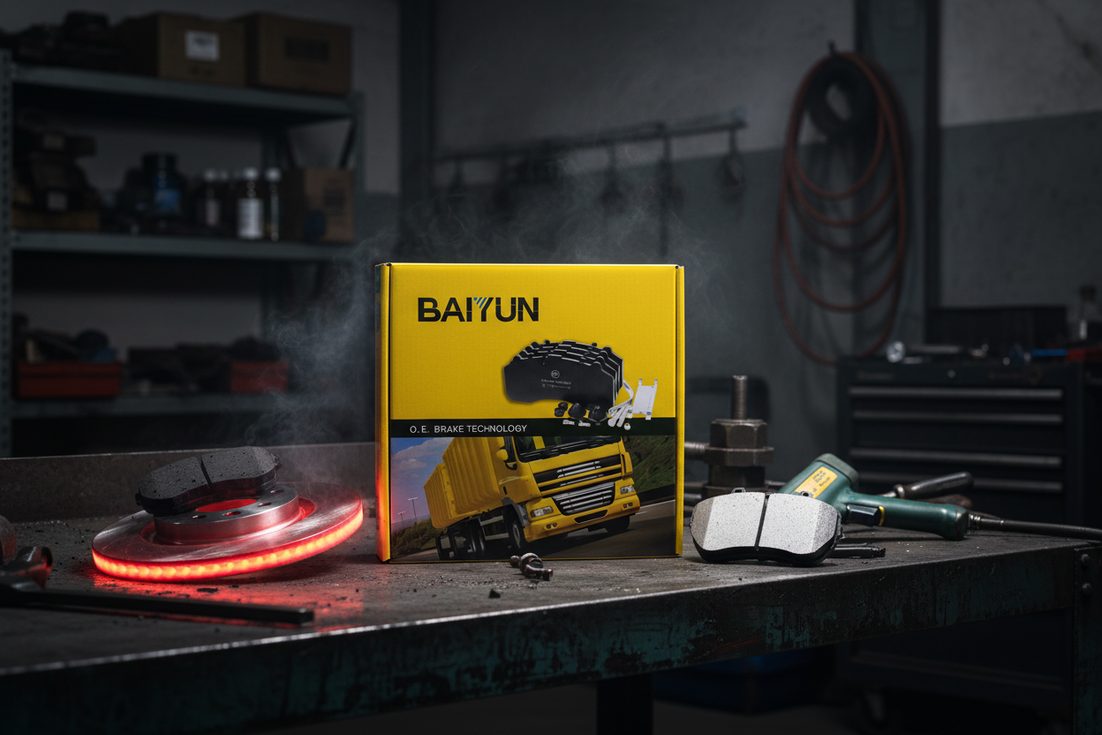
If you're sourcing brake pads for a global market, you've seen the trend. The conversation is shifting from basic stopping power to nuanced performance under stress. Your customers aren't just asking for pads; they're asking for predictable, reliable performance when it matters most—during repeated hard stops, in mountainous terrain, or under heavy load. The core of that reliability lies in how the pad material behaves when the heat builds up. Let's cut through the marketing and look at the data that defines the ceramic vs semi-metallic brake pads comparison.
What Happens to Friction Coefficients When Temperatures Soar?
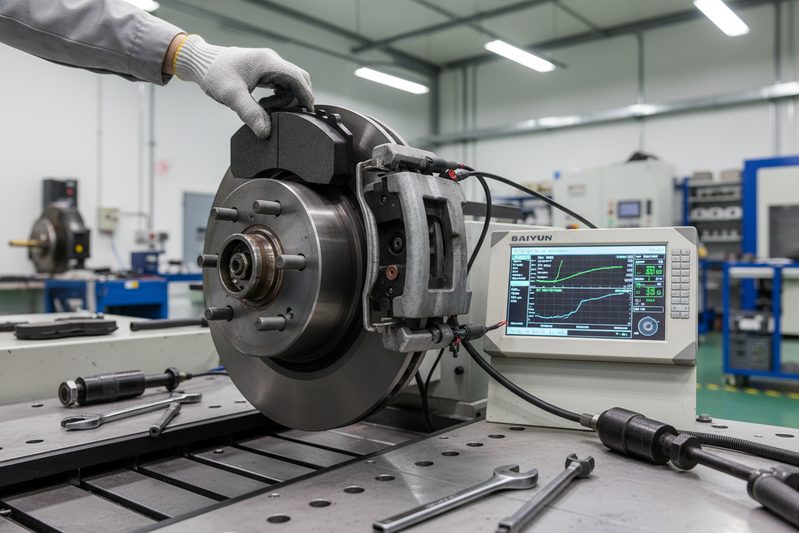
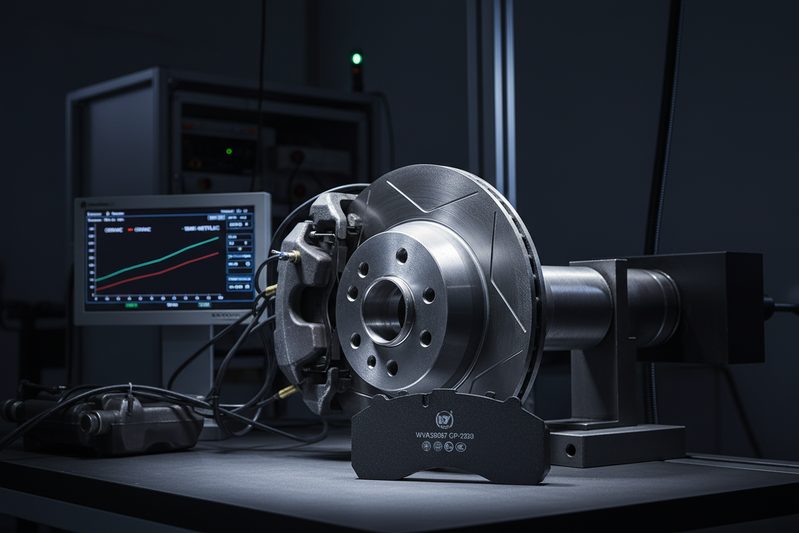
Friction coefficient stability is the single most critical metric for high-temperature performance. A pad that works great cold but fades when hot is a liability. According to ECE R90 testing protocols, a pad must maintain at least 80% of its cold effectiveness after a series of high-temperature cycles. In BAIYUN Brake's 2025 dynamometer testing, their ceramic formulation CP2210 showed a friction coefficient range of 0.38-0.42 across the 100-350°C spectrum, well within the required stability band. The dense ceramic fibers and embedded copper particles dissipate heat efficiently, preventing the localized glazing that causes fade.
Semi-metallic pads tell a different story. Their higher metal content (30-70% by weight) gives them a strong initial bite, with cold friction coefficients often hitting 0.45-0.50. That's great for the first stop. But as temperature climbs past 250°C, the organic binders and fillers in the matrix start to degrade. Test data from our competitor test reports shows some semi-metallic formulations can see a friction drop of 15-25% in the 300-400°C window. That translates directly to longer stopping distances under sustained braking.
The key takeaway for buyers: ceramic pads offer predictable, linear braking force as temperatures rise, while semi-metallic pads provide stronger initial bite but require more pedal pressure as they heat up.
How Does Wear Rate and Dust Output Compare Under Thermal Stress?
High temperatures accelerate wear. It's that simple. The question is which material wears more gracefully. Ceramic brake pad test data consistently shows a slower wear rate under thermal cycling. In simulated urban driving tests (repeated stops from 50-0 km/h with disc temperatures reaching 280°C), ceramic pads exhibited 23-30% less wear mass loss than comparable semi-metallic pads. The ceramic compound's hardness and heat resistance mean it doesn't abrade as quickly against the rotor, even when hot.
Dust output is a major differentiator, and heat makes it worse. Semi-metallic pads, by their nature, generate more metallic dust. When hot, this dust can sinter onto the wheel and rotor surface, creating a stubborn, abrasive residue. Ceramic pads produce a finer, lighter-colored dust that's mostly non-metallic and less likely to bond to surfaces. For your customers in regions with strict wheel cleanliness expectations or for luxury vehicle applications, this is a decisive factor. You can learn more about material behavior in our understanding brake pad materials guide.
For fleet managers and detail-conscious consumers, ceramic pads reduce cleaning frequency and maintenance costs over the pad's life, a clear advantage in total cost of ownership.
What Are the Trade-Offs in Noise, Vibration, and Harshness (NVH)?
No one wants noisy brakes, especially after they've paid for a premium product. NVH performance is where ceramic pads truly separate themselves. The dense, non-ferrous composition of ceramic materials acts as a natural damper. High-frequency squeal, often caused by stick-slip vibration between the pad and rotor, is significantly reduced. In NVH brake testing per SAE J2521, ceramic formulations consistently score lower on the noise intensity scale across a wide temperature range.
Semi-metallic pads have a higher propensity for noise, particularly when cold or during light braking. The metal-on-metal contact, even with lubricants and shims, can generate harmonics that result in audible squeal or groan. While chamfers and insulators help, they add cost and complexity. For distributors, stocking a pad line with fewer NVH complaints means fewer returns and higher customer satisfaction scores. It's a direct impact on your brand's reputation. If issues arise, our brake pad troubleshooting resources can help diagnose the root cause.
Ceramic pads provide a quieter, more refined braking experience, a critical selling point for the passenger vehicle aftermarket where consumer comfort is paramount.
What Does the Market Data Say About Future Demand?
This isn't just about technical specs; it's about positioning your inventory for growth. The global automotive brake pad market was valued at over $12 billion in 2025, with ceramic-based pads capturing an increasing share. Analysts project the ceramic segment to grow at a compound annual growth rate (CAGR) of 6.2% through 2030, outpacing the semi-metallic segment. Why? Three drivers: rising consumer preference for low-dust brakes, increased production of electric and hybrid vehicles (which use regenerative braking and place different demands on friction materials), and stricter environmental regulations on particulate emissions from vehicles.
For an importer, this trend signals opportunity. Stocking a certified, reliable ceramic pad line from a manufacturer like BAIYUN Brake, with our IATF 16949 certified facility, allows you to tap into this higher-margin, growing segment. The initial unit cost is higher, but the market willingness to pay for performance and cleanliness is there. You can explore our full brake pad product range to see the applications available.
The data is clear: aligning your product portfolio with the ceramic growth trend is a strategic move for long-term business expansion.
What Are the Most Common Misconceptions About High-Temperature Performance?
Let's clear up some persistent myths that can muddy the buying decision.
Misconception: Semi-metallic pads are always better for severe duty and towing because they handle heat better.
Reality: While semi-metallic pads can absorb more heat initially, their performance fade at sustained high temperatures is a documented risk. Modern ceramic formulations, especially those engineered for performance vehicles, are designed to withstand extreme thermal loads with less fade. The choice depends on the specific duty cycle, not a blanket rule.
Misconception: Ceramic pads don't work well in cold climates.
Reality: Early ceramic compounds had a reputation for needing warmth to be effective. Today's advanced formulations have largely solved this. ECE R90 testing requires performance validation at low temperatures. Ceramic pads from reputable manufacturers meet these standards, providing consistent braking from sub-zero starts up to operating temperature.
Misconception: The higher price of ceramic pads is only for less dust and noise, not for performance.
Reality: The price reflects the cost of advanced materials (ceramic fibers, copper) and a more complex manufacturing process. You're paying for a combination of benefits: stable high-temperature friction, lower wear rates, less dust, and reduced NVH. It's a total performance and ownership experience package, not a cosmetic upgrade.
Frequently Asked Questions for Distributors and Importers
Q: For a distributor serving both passenger and commercial vehicle markets, which material type offers the best balance?
A: You'll likely need both. Focus ceramic pads on your passenger car and SUV lines, where low noise and dust are key selling points. For C.V. brake pads in medium-duty applications, a premium semi-metallic or a hybrid formulation often provides the durability and initial bite needed, though specific fleet preferences vary. Stocking a range from a single certified supplier simplifies logistics.
Q: How significant is the price differential, and what's the typical margin structure?
A> At the wholesale level, ceramic pads typically carry a 25-40% higher cost-per-set than economy semi-metallic pads. However, retail markups on ceramic are often higher (50-70% vs. 30-50%), improving your gross margin percentage. The key is educating retailers on the value proposition to justify the price to the end consumer.
Q: Do ceramic pads cause more wear on rotors than semi-metallic pads?
A> Generally, no. High-quality ceramic pads are engineered to be rotor-friendly. Their abrasive components are softer than the cast iron of the rotor. Some aggressive semi-metallic pads with high steel content can be more abrasive, potentially accelerating rotor wear. Always cross-reference the pad's technical specifications for rotor compatibility recommendations.
Q: How can I verify the high-temperature performance claims of a supplier?
A> Request the official test reports. Reputable manufacturers like BAIYUN Brake provide dynamometer test data showing friction coefficient (μ) vs. temperature curves, wear rates, and compliance with standards like ECE R90. Our passenger car brake pad test report is a transparent example of this data.
Q: Is the packaging and labeling different for these pad types?
A> It should be. Clear labeling indicating material type (e.g., "Ceramic," "Semi-Metallic") is essential for correct application and consumer choice. Premium packaging that communicates the benefits (e.g., "Low-Dust," "Quiet Performance") can also enhance shelf appeal and justify a higher price point.
Choosing between ceramic and semi-metallic isn't about finding a universal winner. It's about matching the right tool to the job—and to the market opportunity. Ceramic pads deliver a premium, predictable experience ideal for the growing passenger vehicle segment focused on comfort and cleanliness. Semi-metallic pads offer proven, cost-effective performance for many standard and heavy-duty applications. The most successful distributors will carry a curated mix, backed by solid technical data and a reliable supply chain.
Ready to build a competitive brake pad portfolio with certified performance data? Request a quote and full technical dossier from BAIYUN Brake. We'll provide the test reports, certification details, and market insights you need to make informed sourcing decisions.
Was this article helpful?
Average Rating: 5/5 (1470)