
Towing, Hauling, Off-Road: How to Choose Brake Pads for SUVs and Trucks
Summary:
Choosing the right brake pads SUV pickup truck wholesale China requires understanding technical specs beyond fitment. For towing, hauling, and off-road use, pads must resist brake fade at temperatures exceeding 600°C and maintain stable friction coefficients. This guide explains key certifications like ECE R90 and how to match pad formulation to specific vehicle use cases for importers and distributors.
Towing, Hauling, Off-Road: How to Choose Brake Pads for SUVs and Trucks
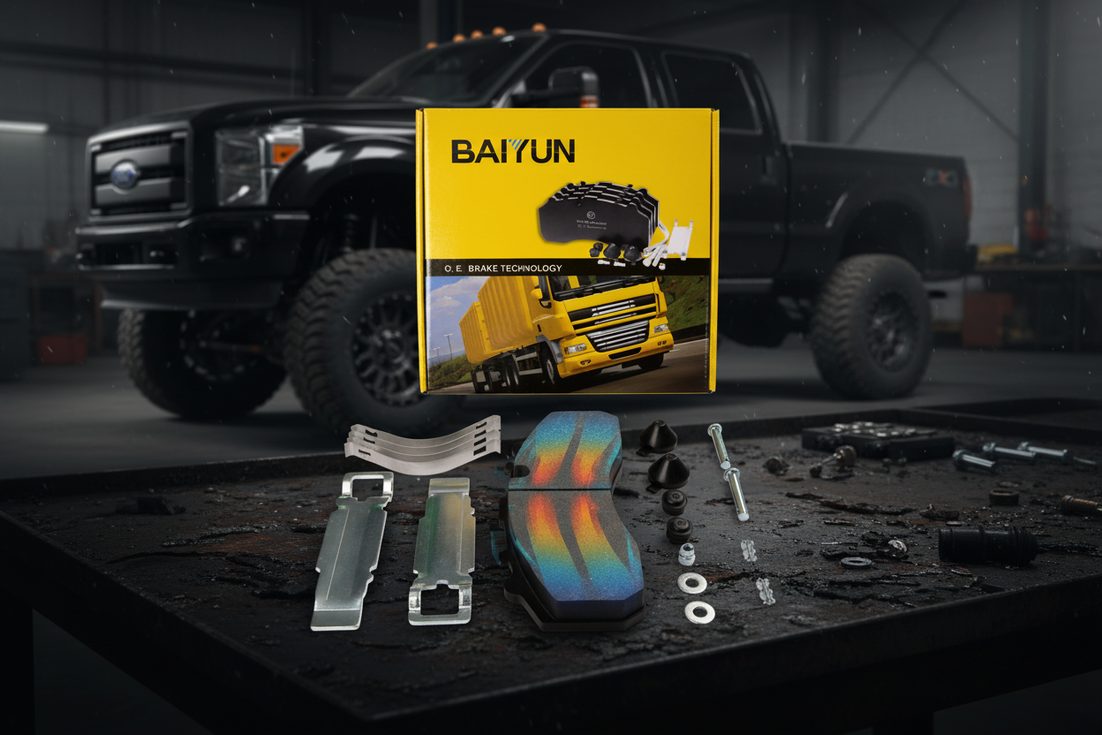
SinoBrake professional brake pads — brake pads SUV pickup truck wholesale China
You're sourcing brake pads for a market that demands more than just stopping power. An SUV or pickup truck buyer might use their vehicle for the school run on Monday and haul a 3-ton trailer on Friday. That's a massive swing in thermal load and friction demand. Standard passenger car pads simply can't handle it. Brake fade isn't just an inconvenience; it's a liability. For wholesalers and importers, the wrong specification leads to warranty claims, damaged reputations, and lost clients. So how do you identify the pads that perform under pressure, both on the road and on your balance sheet?
The answer lies in technical specifications and compliance, not marketing claims. A pad's true capability is defined by its friction material formulation, its ability to dissipate heat, and its adherence to international standards like ECE R90. We'll break down what these specs mean for real-world performance in towing, hauling, and off-road scenarios.
Why Standard Brake Pads Fail Under Heavy Loads
Brake fade is the primary enemy of heavy-duty braking. It occurs when the friction material overheats, causing a layer of gas and degraded material to form between the pad and rotor. This drastically reduces the friction coefficient. For a light sedan, fade might happen after 10-15 hard stops from highway speed. For a loaded truck descending a mountain pass, it can happen in three.
The core issue is heat capacity and dissipation. A typical mid-range sedan pad is engineered for a maximum operating temperature of around 350-400°C. Towing a heavy load or repeated off-road braking can push rotor temperatures well past 600°C. At these extremes, organic and semi-metallic pads often glaze, crack, or transfer material unevenly. You'll hear complaints of a spongy pedal, longer stopping distances, and a burning smell. That's a direct path to a customer complaint for your distributor.
It's not just about the pad material itself. The backing plate design, shim quality, and chamfering all play a role in managing noise and vibration under high stress. A pad that works silently in a commuter car might squeal terribly when cold in a heavy truck because the vibration frequency changes with the mass of the vehicle. Understanding these dynamics is key to selecting the right product from your full brake pad product range.
Decoding the Key Technical Specifications
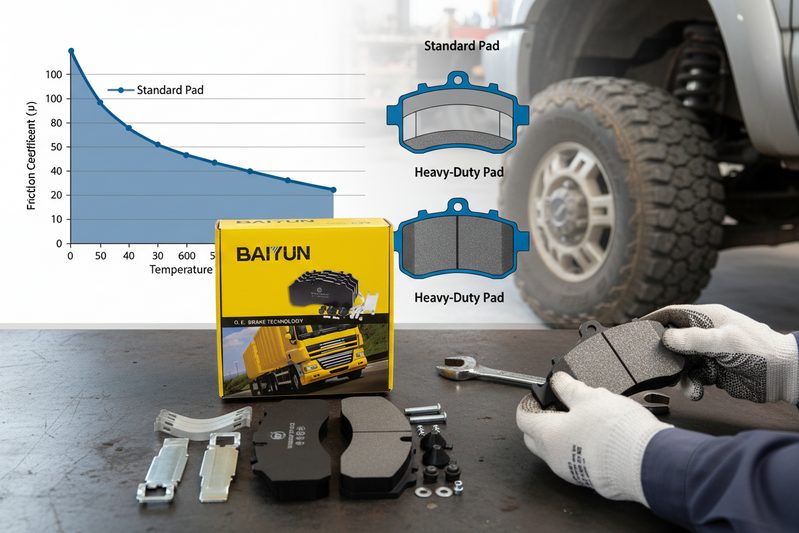
Look beyond the box. The critical specs for SUV and truck pads are the friction coefficient (μ) curve, the maximum operating temperature, and the wear rate under load. The friction coefficient isn't a single number; it's a range that should remain stable across a wide temperature spectrum. A good heavy-duty pad will maintain a μ of 0.38-0.42 from 100°C all the way up to 550°C.
High-temperature stability is non-negotiable. Pads designed for towing often use advanced ceramic or carbon-fiber ceramic formulations. These materials have a higher heat tolerance and are less prone to fade. For example, some premium formulations can withstand peak temperatures of 700°C without significant performance drop-off. The stainless-steel shims mentioned in industry references aren't just for noise; they act as a heat sink, pulling thermal energy away from the friction material.
Wear rate is another silent cost. A pad that wears out 40% faster under towing conditions increases your customer's total cost of ownership and hurts your brand's value perception. Ask your supplier for dynamometer test data that shows wear rates at both standard and high-temperature cycles. This data is often found in their material data sheets.
The Role of Certifications: ECE R90 and IATF 16949
For the European market and many others, ECE R90 certification is the baseline for safety and performance. It's not a suggestion; it's a legal requirement. What does it actually test? Regulation 90 subjects brake pads to a brutal sequence of tests, including a fade cycle where the pad is repeatedly heated to 400-500°C and then checked for effectiveness. The pad must retain at least 80% of its cold braking performance after this thermal abuse.
That's a perfect simulation of mountain descent towing. If a pad carries the ECE R90 mark (an 'E' number within a circle), you know it's passed this rigorous protocol. It also ensures the pad is type-approved to match the vehicle's original equipment performance for things like pedal feel and ABS compatibility. Selling non-certified pads for regulated markets isn't just risky; it can lead to legal and liability issues for your importing business.
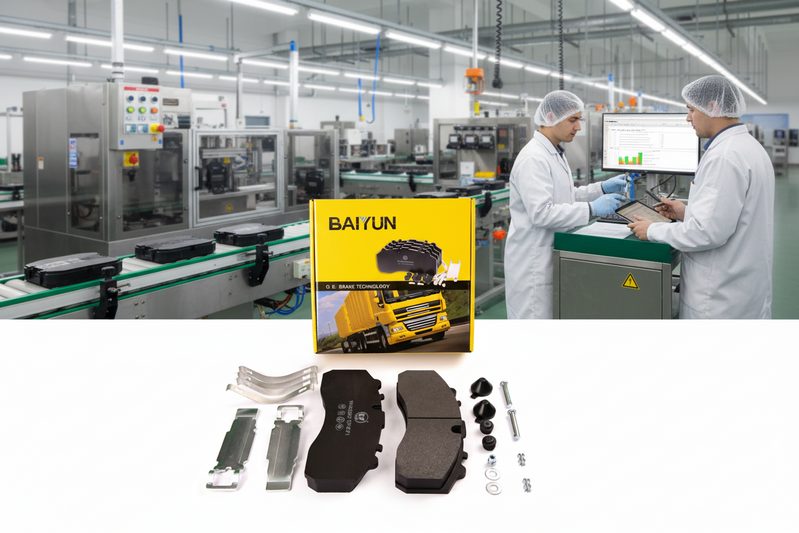
Factory certification matters just as much. IATF 16949 is the global technical specification for automotive quality management systems. A manufacturer certified to this standard, like BAIYUN Brake, has proven processes to ensure consistency in every batch. You won't get a container where the first 100 sets perform perfectly and the next 100 fade prematurely. This consistency protects your supply chain. You can learn more about our commitment to this in our quality assurance documentation.
Matching Pad Formulation to Vehicle Use Case
Not all SUVs and trucks are used the same way. You need to segment the demand. A fleet manager buying pads for city-based delivery trucks has different needs than an off-road parts specialist. Here's a quick breakdown:
- Heavy Towing & Hauling (F-250, Ram 3500, etc.): Prioritize maximum heat resistance. Look for pads specifically marketed as "Truck & Tow" or "Heavy Duty." They should have a stated maximum operating temperature above 600°C. Carbon-ceramic or severe-duty semi-metallic compounds are common. Low dust is a secondary concern here; stopping power is paramount.
- Daily-Driven SUVs & Light Trucks (F-150, Tahoe, etc.): These need a balance. The driver wants confidence when towing a boat on weekends but also low noise and dust during the workweek. Advanced ceramic formulations excel here. They offer good high-temperature performance, very low dust, and quiet operation. They're the versatile choice for a mixed-use vehicle.
- Off-Road & 4x4 Use (Wrangler, Land Cruiser, etc.): Water and mud ingress are the big concerns. Pads must recover quickly after being submerged and not glaze when wet mud gets packed in. Aggressive, bite-oriented semi-metallic pads often work well, but they can be noisy. Look for pads with robust water-recovery ratings in test data.
Having a clear understanding brake pad materials helps you advise your customers and reduce returns.
FAQ for Importers and Wholesalers
Q: What's the real cost difference between certified and non-certified heavy-duty pads?
A: The manufacturing cost difference for an ECE R90 certified pad is typically 15-25% higher, due to superior raw materials and mandatory testing. The wholesale price gap might be 20-35%. Frankly, that's a small insurance premium against the risk of non-compliance penalties or a single liability claim. It also future-proofs your inventory for stricter markets.
Q: How can I verify a supplier's performance claims?
A> Demand test reports. Reputable manufacturers like BAIYUN Brake provide dynamometer graphs showing friction coefficient vs. temperature and wear rate data. Ask for copies of their ECE R90 certificates and IATF 16949 certification. A factory tour video or audit report can also verify their process controls. Don't just take a salesperson's word for it.
Q: We see "OE Fit" everywhere. What does it mean for performance pads?
A> "OE Fit" means the physical dimensions and attachment points match the original part. It doesn't guarantee OE performance under heavy loads. Many OEM pads are designed for a balance of cost, noise, and dust. A true performance upgrade pad will have the same fit but use a different, more heat-resistant friction formula. Always check the technical specs, not just the fitment description.
Choosing the right brake pads for SUVs and trucks isn't about finding the cheapest option or the one with the flashiest packaging. It's a technical sourcing decision. The pads must be engineered to manage extreme heat, maintain stable friction, and comply with the safety standards of your target market. That requires a supplier with serious R&D and testing capabilities, not just an assembly line.
For nearly five decades, BAIYUN Brake has focused on this exact challenge. Our IATF 16949 certified facility develops and tests formulations specifically for heavy-duty applications. We understand that a pad for a Ford Super Duty needs a different material profile than one for a Toyota Land Cruiser. It's this technical focus that makes us a reliable partner for wholesalers who can't afford performance inconsistencies.
Ready to stock brake pads that handle the heat? Request a quote today and let's discuss your specific requirements for the SUV and truck market. We'll provide the technical data and compliance documentation you need to buy with confidence.
Was this article helpful?
Average Rating: 5/5 (978)