
Yutong bus brake pads factory China: Importer and Distributor Buying Guide
Summary:
Finding a reliable yutong bus brake pads factory China partner saves importers 12–25% on landed cost compared with trading-company sourcing, but only if factory verification, ECE R90 certification, and batch-level testing are locked down. This guide covers supplier qualification, wholesale pricing drivers, MOQ and lead time benchmarks, OEM and private label options, and a buyer verification checklist. BAIYUN Brake, an IATF 16949 and ECE R90 certified brake pad manufacturer since 1973, supplies commercial vehicle aftermarket distributors with disc brake pads and brake linings for Yutong bus fleets. We walk through what to inspect on a factory audit, what friction material data to request, how to compare landed cost, and how to avoid the three most common sourcing risks before you wire a deposit.
Yutong bus brake pads factory China: Importer and Distributor Buying Guide
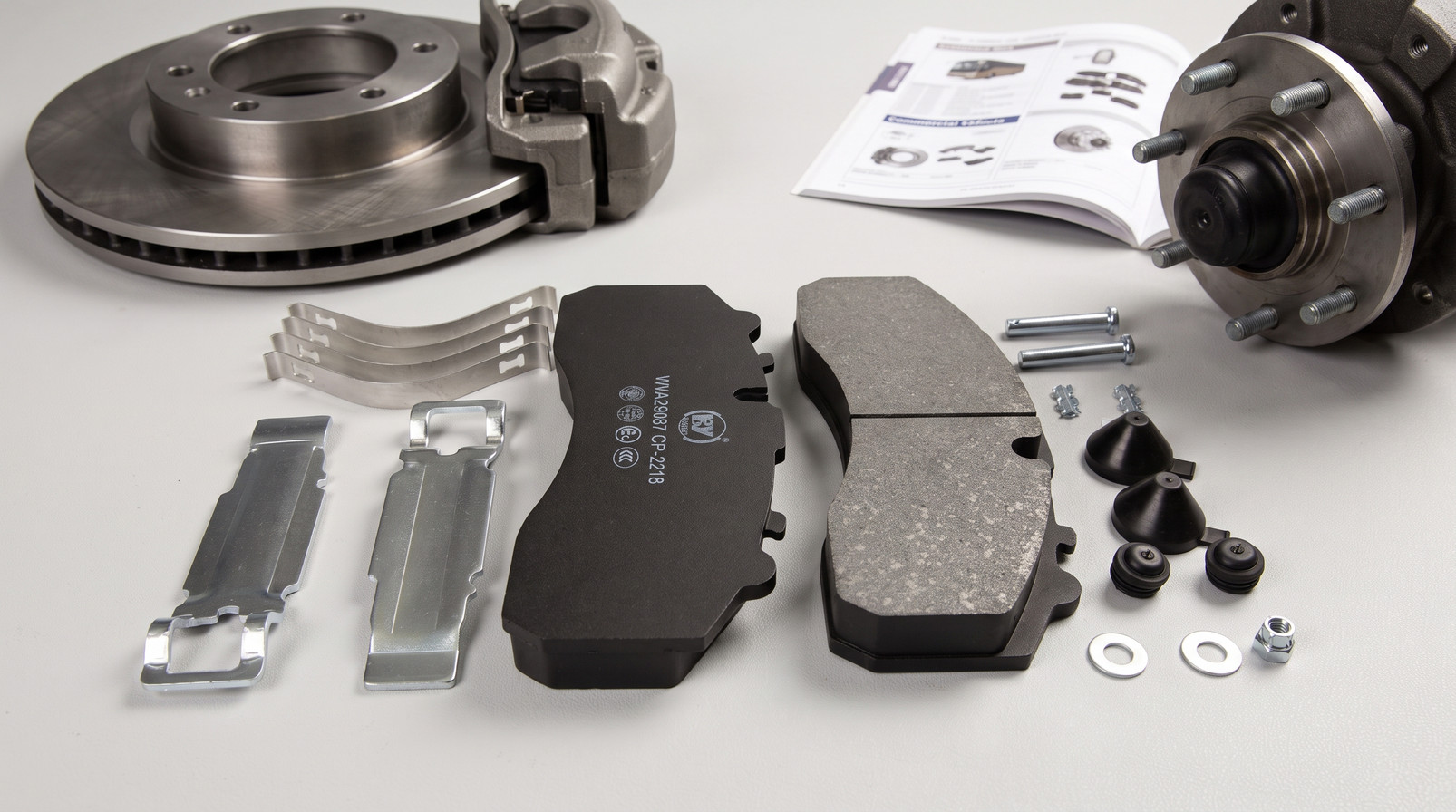
Quick answer: A direct Yutong bus brake pads factory China relationship typically cuts landed cost by 12–25% compared with trading-company sourcing, but only if you verify ECE R90 certification, IATF 16949 process controls, and batch-level friction test data before you pay. BAIYUN Brake supplies commercial vehicle disc brake pads and brake linings for Yutong bus aftermarket with MOQs from 200–500 sets, 25–35 day lead times, and OEM/private label packaging. Start with a factory audit, material data sheet, and 3-batch sample approval.
Why do importers still buy Yutong bus brake pads straight from Chinese factories?
A Yutong bus operator in Lagos or Santiago doesn't care about your container cost. They care about unscheduled downtime when a bus sits on a lift with worn pads. That's why distributors keep going back to Chinese factories that control friction formulation, backing plate stamping, and bond strength under one roof.
China still accounts for more than 60% of global brake friction production by volume, and commercial vehicle friction makes up about 40% of brake pad export value. Yutong bus pads sit in that commercial slice. The sourcing logic is simple: factory-direct pricing removes 15–20 points of trading-company margin, but it also shifts the verification burden onto you.
If you're moving 500–2,000 sets a month, a 3% batch failure from an unverified plant costs more than the savings. That's why the first question isn't price. It's process control. Start with our wholesale CV brake pads inquiry page to see what a factory-direct commercial brake pad supplier should document.
What should a distributor inspect during a Yutong bus brake pad factory audit?
Before you wire a deposit, you need eyes on the mixing room, not just the final product. BAIYUN Brake has run factory audits for international commercial vehicle buyers for decades, and the same red flags show up repeatedly: hand-written batch cards, open-air backing plate storage, and no daily calibration on mixers.
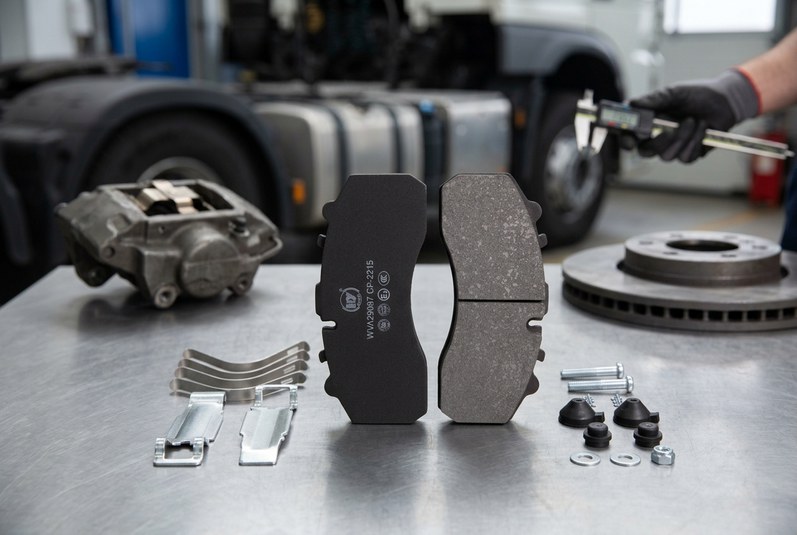
A practical audit for Yutong bus brake pads covers five areas. First, raw material intake: check whether the factory logs each friction material lot and quarantines incoming steel backing plates. Second, mixing and granulation: ask for the batch record for the exact Yutong pad compound, not a generic bus formulation. Third, pressing and curing: confirm cure time and pressure match the material data sheet. Fourth, scorching and grinding: look for automatic thickness sorting rather than manual shimming. Fifth, packaging and traceability: every box should carry a date code that links back to the batch record.
Don't accept a polished showroom video. Ask for a live walkthrough or hire a third-party inspection firm. Frankly, the price gap between certified and uncertified pads rarely justifies the warranty risk. What exactly are you buying when you skip the audit?
Which certifications and test data actually matter for Yutong bus brake pads?
ECE R90 isn't a piece of paper; it means the pad passed braking performance, speed sensitivity, and cold performance tests across a prescribed temperature cycle. For a Yutong bus, you want a factory that can show ECE R90 approval for the specific pad family, not just a generic company certificate.
IATF 16949 and ISO 9001 tell you the quality management system is designed for serial production and defect prevention, not a one-off sample. SAE J2522 or GB5763 test data gives you a friction coefficient curve across temperature, wear rate, and shear strength. Ask for the actual test report, not just a summary slide.
At BAIYUN Brake, our IATF 16949 certified facility tests batches on both dynamometer and bench shear equipment before export. If a factory can't produce a shear strength number for the Yutong backing plate bond, stop the conversation. A heavy bus pad with bond shear strength under 2.5 MPa is a red flag.
What drives wholesale pricing from a Chinese Yutong bus brake pad factory?
Wholesale pricing for Yutong bus brake pads moves with four variables: friction material grade, backing plate thickness and coating, order quantity, and packaging requirements. A low-metallic or organic formulation will sit at a different price point than a semi-metallic heavy-duty pad, and a 10-mm backing plate with e-coat costs more than an 8-mm painted plate.
Below is what to compare when two factories quote the same Yutong part number.
| Sourcing parameter | What to request | Red flag | Good signal |
|---|---|---|---|
| Friction material | Exact formulation code and SAE J2522 test curve | 'Standard material' with no data sheet | Batch-specific coefficient of friction curve |
| Backing plate | Thickness, hardness, e-coat thickness | No measurement report | Dimensional report for each lot |
| MOQ | Per part number and per container | 500 sets for a new private label part | 200–300 sets for existing tooling |
| Lead time | From deposit to ex-works | 90 days with no order tracking | 25–35 days for repeat orders |
| Packaging | Neutral box, single set box, private label print | Reused boxes or missing date codes | Pre-printed date code and batch trace |
One more thing: landed cost, not ex-works price, is your real number. A USD 0.30 per set lower FOB quote disappears after higher inland freight, customs inspection delays, or rework from poor packaging. Use the table to normalize quotes before you compare. If you're comparing pad and lining options, OEM brake lining solutions often share the same Yutong application, so request both quotes.
How do OEM and private label programs work for Yutong bus brake pads?
Most Chinese brake pad factories offer three routes: factory brand, neutral packaging, and full private label. For Yutong bus pads, distributors usually start with neutral boxes and move to their own brand once monthly volume passes 1,000–2,000 sets per part number.
Private label isn't just printing a logo. You'll need to approve box dimensions, friction edge codes, anti-rust paper, and sometimes a bilingual technical insert. The factory should hold your artwork on file and keep printing plates for repeat runs. Expect a plate or setup fee of USD 50–150 per part number, usually waived above 500 sets.
Logistics sit upstream from packaging. Yutong bus pads are heavy; a 40 HQ container can hold roughly 18–22 tonnes of boxed pads, depending on pallet height and whether you ship disc pads, linings, or a mix. Ask the factory for load plans before you commit to a freight forwarder.
Buyer verification checklist for Yutong bus brake pads from China
Use this checklist before you release the deposit. It won't guarantee zero defects, but it removes most first-order failures.
- Request a current ECE R90 approval letter for the exact Yutong bus pad part number, not a generic company certificate.
- Ask for an IATF 16949 or ISO 9001 certificate with the factory address and scope that covers brake pad production.
- Obtain a three-batch sample report: coefficient of friction, wear rate, shear strength, hardness, and dimensional inspection.
- Confirm backing plate material, thickness, and anti-corrosion coating against your target market standard.
- Review MOQ, lead time, payment terms, and packaging specifications in writing.
- Ask for a live factory walkthrough or third-party audit report from within the last 12 months.
- Check traceability: request a sample date code and ask how the factory links it to the batch record.
- Compare landed cost, not just FOB price, including inland freight, customs, port charges, and potential rework.
You can browse our full brake pad product range to see how a factory catalog should be organized for distributors.
Frequently Asked Questions for Yutong Bus Brake Pad Importers
What is the minimum order quantity for Yutong bus brake pads from Chinese factories?
Most factories quote 300–500 sets per part number for existing Yutong bus tooling. For private label or new part numbers, expect 500–1,000 sets to cover setup and printing. BAIYUN Brake typically supports 200–300 sets per part number on repeat neutral-box programs.
Do I really need ECE R90 for Yutong bus aftermarket pads?
Yes. ECE R90 proves the pad passed braking performance, speed sensitivity, and cold performance tests under Regulation 90. A pad that loses more than 20% effectiveness after thermal cycling fails approval. Always ask for the homologation number and confirm it matches the Yutong pad family.
What lead time should I plan for from a Yutong bus brake pad factory in China?
Repeat Yutong bus pad orders typically ship 25–35 days after deposit. New tooling or private label artwork can push that to 45–60 days. Add 30–40 days ocean transit to Lagos, Mombasa, or Callao depending on routing.
How does private label packaging work for Yutong bus brake pads?
You provide artwork files, and the factory prints boxes, labels, and inserts under your brand. Setup costs range from USD 50–150 per part number and are often waived above 500 sets. Confirm the factory holds printing plates and keeps batch trace codes on every box before production starts.
Can I verify a Chinese brake pad factory without flying to China?
Yes. A third-party audit costs USD 800–2,500 depending on depth and covers raw material, mixing, pressing, and packaging. Request a recent audit report plus live video of the mixing room and curing press. BAIYUN Brake accepts approved third-party audits and provides batch-level test data before shipment.
Your next sourcing step for Yutong bus brake pads
If you're ready to compare factory-direct Yutong bus brake pad pricing, send us the part number, target annual volume, and preferred packaging. Our export team will return a landed-cost breakdown, material data sheet, and lead time within two working days. Start with the CV brake pad catalog for distributors and then request a wholesale quote.
Was this article helpful?
Average Rating: 5/5 (131)