
Rane Brake Lining shares extend gains for 4th straight day on strong Q4 results – Upstox
Summary:
Rane Brake Lining shares extend gains for 4th straight day on strong Q4 results, according to Upstox. The company reported Q4 FY24 net profit of ₹15.39 crore, up 28% YoY, revenue of ₹186.7 crore, up 12.6%, and EBITDA margin of 15.3%. The stock hit a 20% upper circuit and a 2.5-year high. This article examines what those numbers mean for fleet buyers, distributors, and maintenance teams sourcing commercial vehicle brake pads, brake linings, and aftermarket brake parts. It covers supplier qualification, IATF 16949 and ECE R90 certifications, WVA reference checks, MOQ and lead time planning, and OEM/private label options. It also includes a buyer verification checklist and FAQs for importers comparing Indian and Chinese brake pad manufacturers. Use this as a practical sourcing reference when evaluating certified CV brake suppliers.
Rane Brake Lining shares extend gains for 4th straight day on strong Q4 results - Upstox
Quick answer: Rane Brake Lining's Q4 FY24 net profit jumped 28% YoY to ₹15.39 crore, revenue climbed 12.6% to ₹186.7 crore, and EBITDA margin widened to 15.3%. That drove a 20% upper circuit and a 2.5-year high for the stock. For fleet buyers and importers, the real takeaway is not the stock ticker. It is confirmation that commercial vehicle brake linings and disc pads are moving through replacement and OEM channels at a stronger pace. We'll unpack what this means for sourcing, certification, and supplier checks.
Rane Brake Lining's Q4 Shows Tightening CV Brake Demand
When a brake lining manufacturer posts Q4 revenue of ₹186.7 crore against ₹165.8 crore a year earlier, fleet managers should pay attention. That 12.6% growth didn't come from a single export order. It came from sustained movement in commercial vehicle production and aftermarket replacement. Rane Brake Lining reported full-year FY24 revenue of ₹663 crore, up 9.2% from ₹607 crore in FY23. EBITDA for the quarter hit ₹28.6 crore, 36.3% higher than the ₹21.0 crore in Q4 FY23.
The stock hitting a 20% upper circuit and a 2.5-year high of ₹1,021.40 tells you something else. Investors are pricing in stronger demand for brake linings, disc pads, and clutch facings across trucks, buses, and trailers. That's the same demand fleet buyers feel when lead times stretch and quality complaints rise.
Here's the point most procurement teams miss. A supplier's margin expansion isn't just good for shareholders. It often indicates better raw material contracts, consistent production volumes, and the ability to hold pricing on high-volume orders. That's exactly what you want from a long-term commercial vehicle brake pad manufacturer.
Why a Stock Rally Should Matter to Fleet Buyers and Distributors
Frankly, a 20% upper circuit can look like market noise if you're managing 500 trucks. But stock movement backed by Q4 fundamentals can be a leading indicator for replacement part availability. Rane's EBITDA margin of 15.3% in Q4 FY24, up from 12.7% a year earlier, suggests the company managed input costs well. For distributors importing from India or comparing suppliers in Asia, that's a signal of operational discipline.
So what does that mean for your bottom line? If a major brake lining maker is seeing stronger order books, you can expect OEM and aftermarket demand to flow down to tier-two suppliers. That can tighten capacity for aftermarket brake parts. If you're sourcing commercial vehicle brake pads for your own brand or for fleet contracts, locking in supplier capacity early matters.
We've seen this pattern before. When OEM demand rises, some manufacturers prioritize large OE contracts and push aftermarket orders to longer lead times. A distributor sourcing 500 sets monthly can't afford inconsistent friction coefficients batch to batch. That's why supplier diversification and certified alternatives are not optional.
Check your brake maintenance cost analysis before you assume local pricing is protected. If base material costs move up, cheap uncertified pads become an expensive gamble.
What Supplier Qualification Checks Should You Run on CV Brake Linings?
Rane Brake Lining's stock rally doesn't automatically make them your supplier. It's a cue to benchmark any brake lining vendor against the same operational and quality standards. For commercial vehicle brake pads and linings, you need proof, not promises.
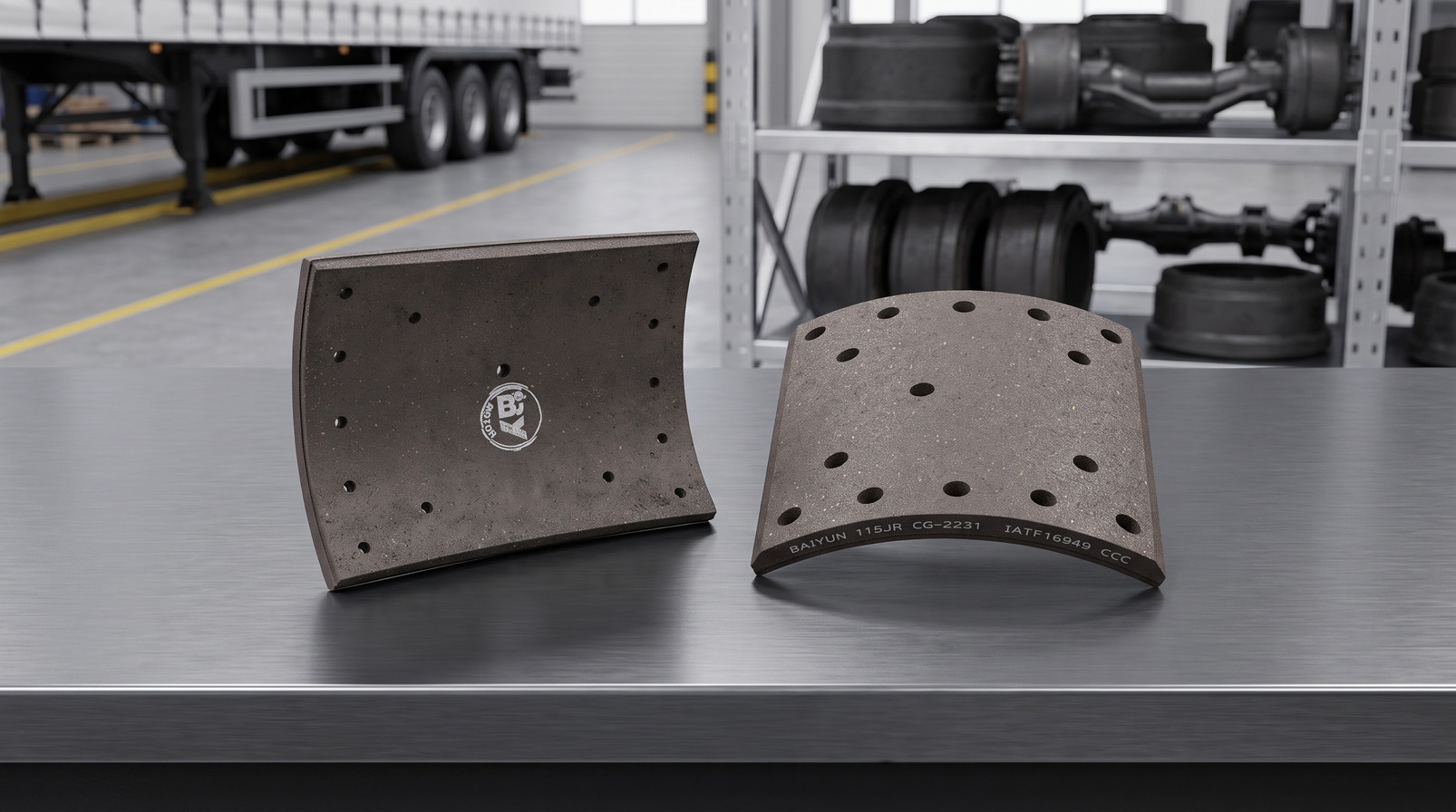
Start with certifications. BAIYUN Brake, for example, operates under IATF 16949 and ISO 9001 quality systems. That's not a marketing line. IATF 16949 requires process control, traceability, and defect prevention across the entire production chain. If your truck brake pad supplier can't show an IATF 16949 certificate, you're accepting higher audit risk.
ECE R90 is another non-negotiable for brake linings sold into many markets. It verifies that replacement pads perform within a defined window of the original equipment. For fleet buyers in Europe, the Middle East, and parts of Asia, ECE R90 approval is often a legal requirement. Without it, customs clearance and warranty claims become messy.
You'll also want test reports. Ask for SAE J2522 or equivalent dynamometer data for commercial vehicle formulations. Look for friction coefficient stability across the 100°C to 350°C range and low wear under repeated braking. BAIYUN Brake provides commercial vehicle brake pad test reports that show actual performance curves, not just pass/fail results.
Finally, visit the factory or request video. A quality assurance program that only exists on paper won't protect your fleet from pad delamination or noise complaints.
MOQ, Lead Time, and Logistics for Imported Commercial Vehicle Brake Parts
Here's where Rane's Q4 margin story connects to your import program. When domestic demand strengthens, Indian suppliers may prioritize local OEM schedules. If you're an importer in Africa, Southeast Asia, or South America, that can mean longer confirmed lead times.
Typical MOQs for commercial vehicle brake pads and linings vary by SKU. For a direct factory order, expect MOQs in the 200 to 500 set range per friction code, depending on tooling and packaging. BAIYUN Brake supports wholesale and OEM orders with flexible MOQ discussions after certification and application review. Don't assume every manufacturer will hold a 300-set MOQ when raw material queues are full.
Lead time planning should include raw material procurement, pressing, curing, scorching, grinding, and packaging. A realistic production window is 25 to 40 days for repeat commercial vehicle brake pad orders. Add ocean freight or land transport. If you're replacing Rane or another Indian supplier with a Chinese manufacturer, compare total landed cost, not just ex-works price.
For fleet maintenance teams, ask your supplier about private label options and packaging formats. Bulk packing, branded boxes, and bilingual instruction inserts affect your warehouse handling and customer perception. You can request a quote for commercial vehicle brake linings with your application list and annual volume.
OEM and Private Label Options for Brake Lining Distributors
Many distributors start by importing under the factory's brand. But the real margin comes when you build your own label. Rane Brake Lining's Q4 results show that branded OEM suppliers command pricing power. You can capture some of that by developing private label commercial vehicle brake pads with your own logo, box design, and part numbering.
That's not as complicated as it sounds. A qualified brake pad manufacturer can offer private label programs that include custom friction formulations, backing plate coatings, shims, and packaging. What you need first is a complete application list with WVA references, axle specifications, and vehicle models. If some WVA numbers are missing, confirm with supplier catalogue before quoting.
BAIYUN Brake has worked with distributors and fleet groups across multiple markets. Their IATF 16949 and ECE R90 certified production lines support OEM and private label programs for trucks, buses, and trailers. The factory's 49+ years of manufacturing experience means they've seen the failure modes that new suppliers are still discovering.
For buyers evaluating Indian suppliers like Rane against Chinese manufacturers like BAIYUN Brake, don't fall into the trap of comparing only price per set. Compare friction consistency, warranty support, test documentation, and the supplier's willingness to share process data. A trusted brake pad supplier will hand you dynamometer reports and production batch records before you ask.
Why WVA Reference Numbers Decide Whether Your Pads Fit
If you're importing brake linings for mixed fleets, you already know the pain of a wrong friction code. A WVA reference isn't a brand-specific part number. It's a standardized identifier that ties a friction material shape and size to a specific brake application. Mixing up WVA codes on a truck or trailer axle can change brake balance and increase stopping distance. For commercial vehicles, that's a compliance and safety problem, not just a return.
Always send your supplier the axle model, brake type, drum or disc dimensions, and existing WVA reference. If the supplier can't map that to a test report, keep looking. BAIYUN Brake's commercial vehicle brake pad catalogue includes WVA references and application notes, but some niche codes may require confirmation with supplier catalogue before you commit to tooling.
This step is where many distributor orders go wrong. A pad that fits the caliper but uses the wrong friction code will wear quickly, overheat the disc, and trigger driver complaints. For a fleet running 50 buses, that's a maintenance wave you don't want. Once the correct WVA reference is confirmed, follow the brake lining installation guide to avoid bedding-in issues.
Comparison Table: Rane Q4 FY24 vs. Sourcing Benchmarks
| Metric | Rane Brake Lining Q4 FY24 | What It Means for CV Brake Buyers |
|---|---|---|
| Net profit | ₹15.39 crore, up 28% YoY | Healthy supplier margins reduce risk of sudden price shocks |
| Revenue | ₹186.7 crore, up 12.6% YoY | Higher demand signals possible lead time pressure |
| EBITDA margin | 15.3%, up from 12.7% | Operational efficiency supports stable pricing |
| Stock movement | 20% upper circuit, 2.5-year high | Investors expect sustained CV brake demand |
| Dividend | ₹30 per share recommended | Cash generation supports capacity investment |
Use this table as a conversation starter with any brake lining supplier. If they can't explain their own margin and capacity position, they're not ready for long-term fleet supply.
Buyer Verification Checklist for CV Brake Lining Suppliers
Before you place a container order for truck brake pads or linings, run through this checklist. It's built from what we ask our own sourcing team when comparing supplier capabilities.
- Certifications: IATF 16949 and ISO 9001 current certificates. ECE R90 where applicable. Confirm validity dates.
- Test data: SAE J2522 or GB 5763 dynamometer reports showing friction coefficient and wear rate. Confirm with supplier catalogue if any WVA reference is missing.
- Raw material traceability: Can the supplier trace each batch to raw material lots? This matters for warranty and recalls.
- Production capacity: Ask for monthly capacity for commercial vehicle brake pads and linings. High OEM demand can squeeze aftermarket slots.
- MOQ and lead time: Get written MOQ per SKU and confirmed production lead time. Include packaging and shipping terms.
- Factory audit: Request a video tour or third-party audit report. Look for pressing, curing, scorching, and grinding equipment.
- Warranty terms: Define noise, wear, and delamination warranty. Certified suppliers should offer clear claim windows.
This isn't bureaucracy. It's the difference between a profitable brake program and a container of pads you can't sell because the friction code doesn't match the WVA reference.
FAQ: Rane Brake Lining Q4 Results and CV Brake Sourcing
Q: Why did Rane Brake Lining shares hit a 20% upper circuit?
A: Rane Brake Lining reported Q4 FY24 net profit of ₹15.39 crore, up 28% YoY, and revenue of ₹186.7 crore, up 12.6%. EBITDA margin improved to 15.3%, which triggered the upper circuit and pushed the stock to a 2.5-year high.
Q: Does Rane Brake Lining's stock rally affect aftermarket brake pad prices?
A: Not directly, but strong OEM and aftermarket demand can tighten capacity. When lead times stretch, some manufacturers prioritize large orders, so importers should lock in supplier capacity and compare certified alternatives early.
Q: Should fleet buyers switch from Indian suppliers to Chinese brake pad manufacturers?
A: Not automatically. Fleet buyers should benchmark on certifications, test data, MOQ, lead time, and total landed cost. A Chinese supplier like BAIYUN Brake with IATF 16949 and ECE R90 can be competitive, but verify friction code and WVA reference first.
Q: What certifications are required for commercial vehicle brake pads and linings?
A: IATF 16949 and ISO 9001 are core quality system certifications. ECE R90 approval is needed for many markets. Buyers should also request SAE J2522 or GB 5763 test reports for friction and wear performance.
Q: What MOQ should a distributor expect for CV brake linings?
A: Typical factory MOQs range from 200 to 500 sets per friction code, depending on tooling and packaging. BAIYUN Brake offers flexible MOQ discussions after application review and certification checks.
Final Word for Fleet Buyers and Importers
Rane Brake Lining's four-day gain wasn't just a stock story. It's a reminder that commercial vehicle brake demand doesn't stand still. Fleet managers and distributors who treat brake pads as a commodity purchase eventually pay for it in warranty claims, roadside failures, and missed delivery schedules.
If you're reviewing your brake linings supplier for 2026 and beyond, start with the certifications and test data. Then compare MOQ, lead time, and private label support. BAIYUN Brake's IATF 16949 and ECE R90 certified program covers truck and bus applications, and their team responds to technical questions with actual engineering data.
You can browse our heavy-duty brake pad range or submit your inquiry to our sales team with your application list. We'll confirm fitment, WVA references, and pricing without the guesswork.
Was this article helpful?
Average Rating: 5/5 (112)