
Foton Truck Brake Pad Factory China: Importer and Distributor Buying Guide
Summary:
Sourcing a foton truck brake pad factory china requires more than a low unit price. Importers and distributors need verified IATF 16949 process control, ECE R90 compliance, and documented dynamometer test data before placing a container order. This buying guide covers supplier audits, wholesale pricing comparisons, MOQ and lead time planning, and OEM private label options for Foton commercial vehicle brake pads. Direct factory sourcing can cut 18–25% off trading company quotes, but only when you verify the facility and test reports. BAIYUN Brake has manufactured commercial vehicle brake pads and linings for 49+ years and supports distributors with private label programs. Use the buyer verification checklist and FAQ to avoid counterfeit or low-quality Foton pads. Request an OEM quote with your specific Foton application list, annual volume, and target market. For wholesale pricing, ask for FOB China terms and lead time in writing.
Foton Truck Brake Pad Factory China: Importer and Distributor Buying Guide
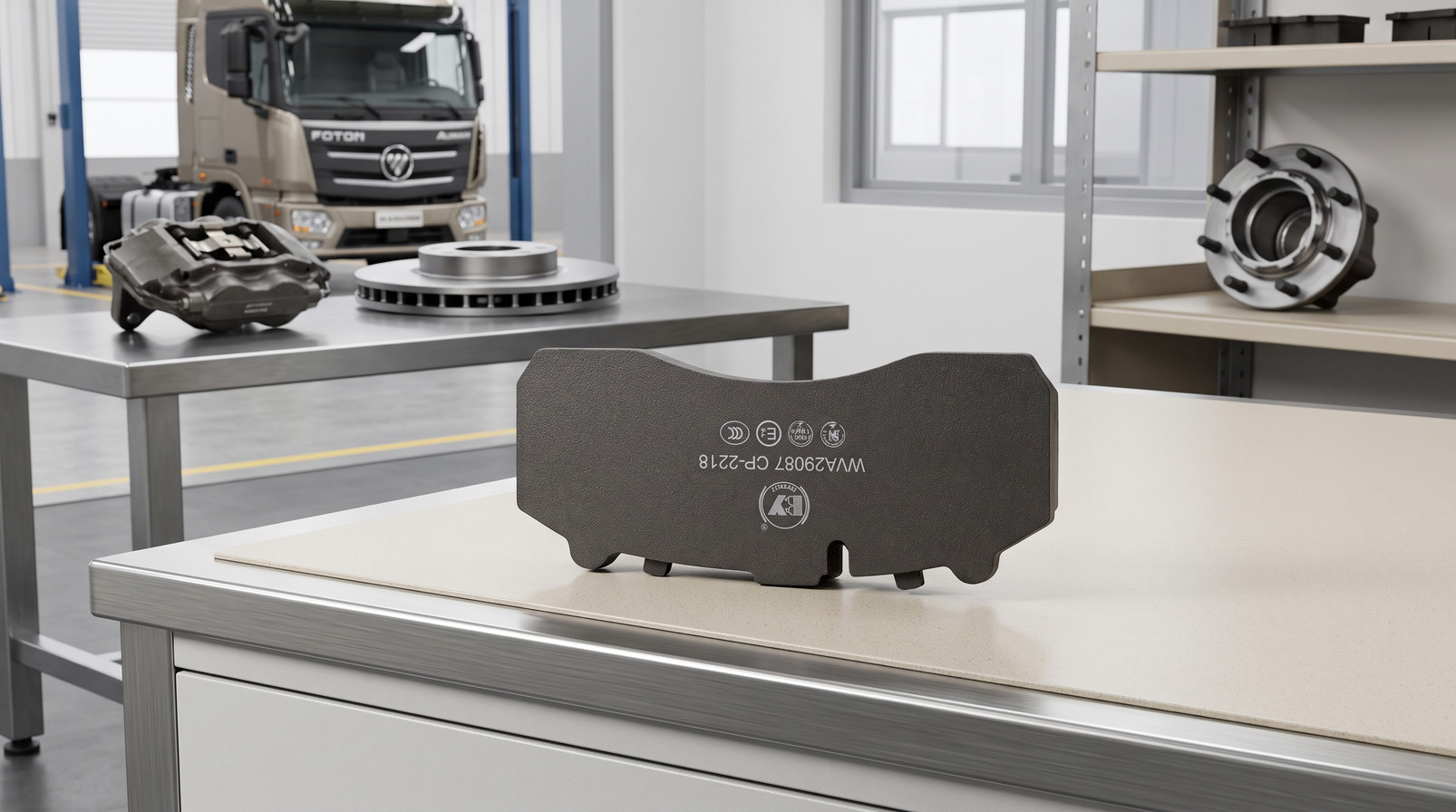
Quick answer: A credible Foton truck brake pad factory in China should combine IATF 16949 process control, ECE R90 compliance for the European aftermarket, and documented friction test data for commercial vehicle duty cycles. Buying direct from a certified factory typically cuts 18–25% off trading company quotes, but only if you verify the facility, not just the certificate. BAIYUN Brake has supplied Foton-compatible commercial vehicle brake pads and linings for 49+ years. Demand a factory audit or video inspection, request the WVA cross-reference—confirm with supplier catalogue—and lock pricing, MOQ, and lead time in writing before your first order.
Why Foton Truck Brake Pads Deserve a Sourcing Strategy, Not Just a Price Check
Foton heavy trucks, light trucks, and buses dominate high-mileage commercial fleets across Africa, Southeast Asia, Latin America, and the Middle East. Those vehicles stop thousands of times per week, often with full loads. That makes brake pad replacement a recurring revenue stream for importers and distributors.
If you're importing 300 sets a month, a $2 per-set price difference adds up to $7,200 a year. But the real cost shows up when pads wear unevenly, generate noise, or fade under heavy braking. Your customers remember the failure, not the invoice price.
So what does that mean for your bottom line? You need a supplier who treats Foton brake pads as a controlled industrial product, not a commodity. That starts with factory verification.
Supplier Verification: What Should a Foton Brake Pad Factory Prove Before You Pay?
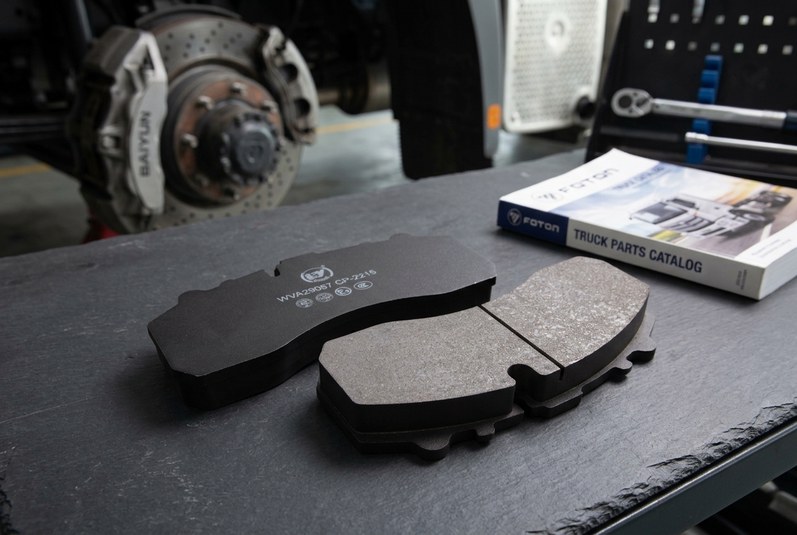
Any factory can claim "Foton compatible." Few will show you the process control behind that claim. I'd ask for three things first: an IATF 16949 audit summary, ECE R90 approval for the specific pad part numbers you'll import, and a recent dynamometer test report. Certificates without test data are just wallpaper.
- IATF 16949: process-based quality management that reduces batch-to-batch variation. Ask for the audit summary, not just the certificate. IATF 16949 certified facility
- ECE R90: mandatory for many EU, Middle Eastern, and African markets. It verifies aftermarket pads perform within 15% of OE cold and hot stopping performance.
- ISO 9001: a baseline quality system, but not enough alone for commercial vehicle friction material.
- Factory audit: in-person, third-party, or live video. Check mixing, pressing, curing, and grinding lines. If a supplier hesitates, that's a red flag.
Buyer Verification Checklist for Foton Brake Pad Imports
Before you sign a proforma invoice, run through this checklist. It's built for importers and distributors, not retail buyers.
- Request current IATF 16949 and ECE R90 certificates; verify validity and scope with the issuing body.
- Ask for WVA numbers and Foton application mapping. If they won't share or say "we'll check later," walk away. Confirm with supplier catalogue.
- Require a dynamometer test summary for cold and hot friction, not just a material data sheet.
- Get two or three reference importers in your region. Call them and ask about batch consistency, packaging, and claim handling.
- Confirm production capacity and maximum monthly output for your specific pad profile.
- Ask about packaging, private label marking, barcode support, and labeling for your target market.
Start with a focused shortlist. Browse our heavy-duty brake pad range to see what a certified commercial vehicle pad program should include.
Wholesale Pricing: How to Compare Foton Pad Quotes Without Getting Burned
Price per set matters, but it's not the whole story. A $4.80 pad that lasts 80,000 km costs more per kilometer than a $5.60 pad that lasts 120,000 km. When you're selling into the commercial vehicle aftermarket, your customers run cost per kilometer, not purchase price.
That's why you compare friction consistency and wear data, not just unit price. One batch with 10% lower friction coefficient can trigger a warranty claim that wipes out your margin for the year.
| Comparison Factor | What to Request | Red Flag |
|---|---|---|
| Friction coefficient stability | SAE J2522 or GB5763 test summary across 100–350°C | Large drops at high temperature |
| Wear rate | Dynamometer wear data or field trial report | No data or refuses to share |
| Shear strength | Test report vs agreed commercial vehicle spec | Test missing or from unknown lab |
| Batch consistency | IATF 16949 process audit summary | Certificate but no audit trail |
| Price | FOB China, per set, by volume | Price 30%+ below factory average |
If your Foton fleet includes drum-brake rear axles, request a quote for commercial vehicle brake linings as part of the same shipment. Mixing disc pads and linings from one supplier simplifies quality control and logistics.
MOQ, Lead Time, and Logistics: Building a Profitable First Order
Most established Chinese brake pad factories set MOQs between 200 and 500 sets for a single Foton pad reference. Combining two or three fast-moving Foton part numbers can get you better pricing without tripling inventory. Lead times normally run 25–40 days after sample approval, depending on raw material availability. During peak freight seasons, add 10–15 days of buffer.
Don't forget packaging and shipping details. Sea freight pallets should be fumigated and labeled for your target market. If you import into East Africa or Latin America, confirm the supplier's export documentation experience. Our 49+ years of manufacturing experience includes handling those exact paperwork and logistics challenges.
OEM and Private Label Options for Foton Aftermarket Distributors
If you're building your own brand, a Foton truck brake pad factory should offer private label packaging with your logo, part number, and barcode. BAIYUN Brake supports private label programs for distributors, including branded boxes, technical data sheets, and consistent pad marking. You'll also want to agree on co-branding or neutral packaging for markets where your brand is still gaining traction.
Ask about pad marking. In many commercial vehicle markets, fleet managers and mechanics read the edge code to confirm friction material and production date. A supplier that can't control that marking isn't ready for private label work.
Frequently Asked Questions About Foton Truck Brake Pad Sourcing
Q: How do I confirm a Chinese factory actually makes Foton truck brake pads?
A: Ask for current IATF 16949 and ECE R90 certificates, then request a live video walk-through of the pressing and grinding line. A real manufacturer will show production for your specific pad profile. If they quote through a trading company, expect 18–25% higher pricing.
Q: What is ECE R90, and why does it matter for Foton truck brake pad imports?
A: ECE R90 is a European regulation requiring aftermarket brake pads to perform within 15% of OE cold and hot stopping performance. Many Middle Eastern, African, and Latin American importers now ask for it because it signals consistent friction behavior. Without ECE R90-approved pad part numbers, you risk customs delays or rejected shipments in regulated markets.
Q: Should I buy from a Foton brake pad factory or a trading company?
A: A factory gives you direct access to process control, private labeling, and wholesale pricing that's typically 18–25% lower than trading company quotes. Trading companies can be useful for small mixed orders, but you lose audit transparency. For repeat commercial vehicle brake pad imports, factory-direct sourcing wins.
Q: What MOQ should I expect for Foton truck brake pad orders from China?
A: Most established factories set MOQs between 200 and 500 sets per reference. Combining two or three fast-moving Foton part numbers usually unlocks better pricing. Confirm exact MOQ and lead time with the supplier catalogue before issuing a purchase order.
Q: How do I avoid importing counterfeit or low-quality Foton brake pads?
A: Require a test report from an independent lab or factory dynamometer, not just a certificate. Check friction coefficient stability across 100–350°C and verify shear strength against the agreed commercial vehicle spec. If the price is 30% below the factory average, that's a warning sign, not a bargain.
Ready to Lock in a Reliable Foton Brake Pad Supply Line?
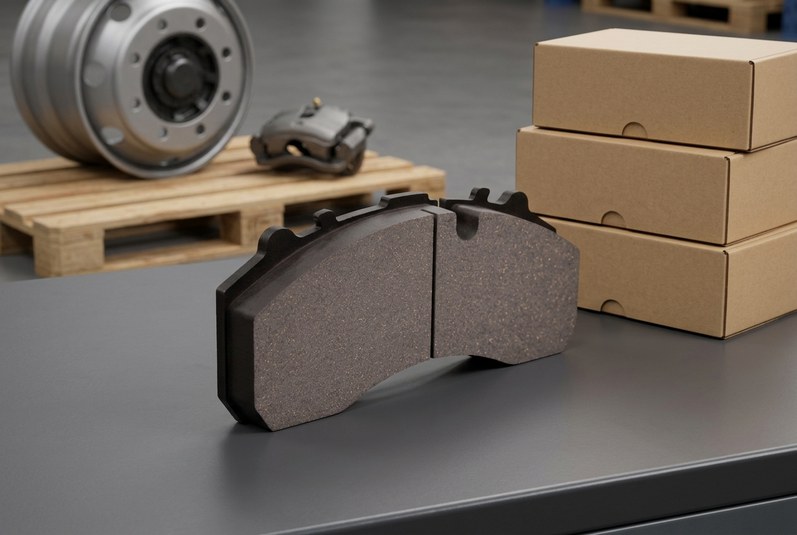
Sourcing Foton truck brake pads from China isn't complicated if you treat it as a process, not a single purchase. Verify the factory, compare test data, lock logistics, and build a private label program that protects your margin. BAIYUN Brake has spent 49+ years making commercial vehicle brake pads and linings that fleets trust in harsh operating conditions. Request an OEM commercial vehicle brake pad quote or contact our export team with your Foton application list and annual volume. We'll give you a straight answer on price, lead time, and private label options.
Was this article helpful?
Average Rating: 5/5 (130)