
How Brake Pad Wear Indicators Save Lives and Your Fleet Budget: A Technical Guide for Wholesale Buyers
Summary:
How brake pad wear indicators save lives and your fleet budget. This technical guide for wholesale buyers covers ECE R90 test standards, indicator material specifications, compliance risks, and how to verify a brake pad wear indicator supplier wholesale partner's quality. Includes pull-off force testing data, corrosion resistance requirements, and real-world fleet cost analysis from BAIYUN Brake, an IATF 16949 and ECE R90 certified manufacturer with 49+ years of experience. Request samples and test data today.
How Brake Pad Wear Indicators Save Lives and Your Fleet Budget: A Technical Guide for Wholesale Buyers
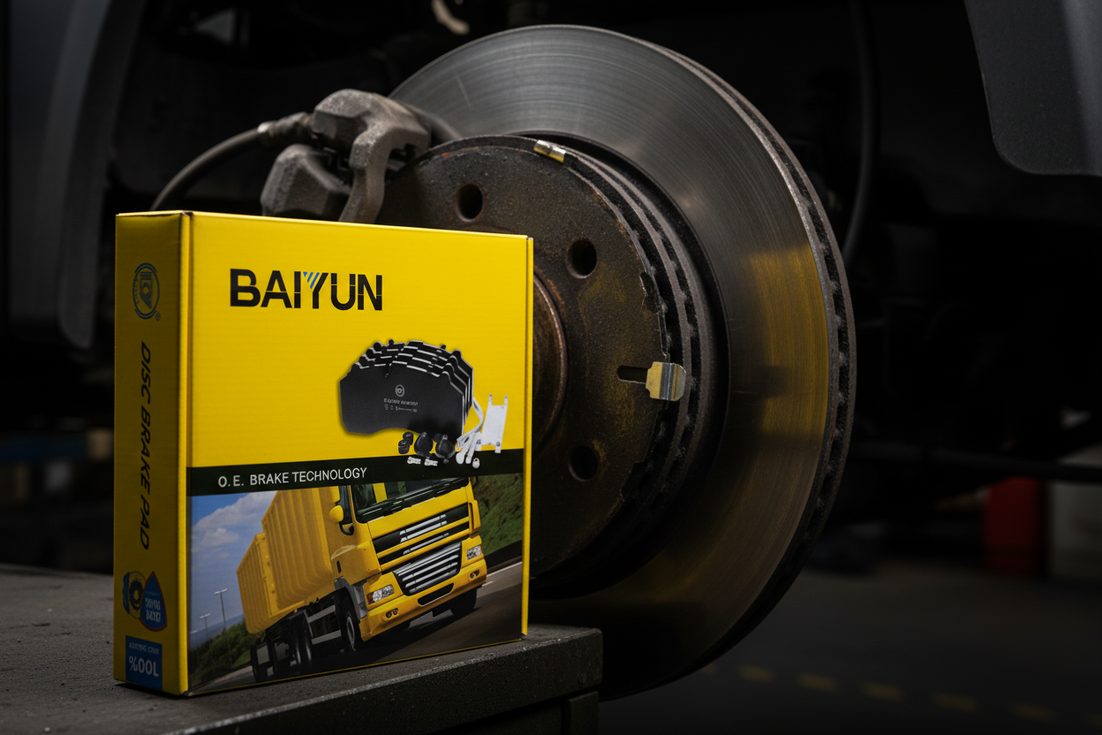
You're running a fleet of 50 trucks or managing a distribution network supplying hundreds of workshops. Every brake pad you source carries hidden risks—or hidden value. The small metal tab called a wear indicator can determine whether a vehicle stays on the road or ends up in a repair bay for rotor replacement, caliper rebuild, or worse, an accident report. This article focuses on the technical specifications, test standards, and compliance requirements that every serious brake pad wear indicator supplier wholesale buyer needs to understand before placing their next order.
What Exactly Do Brake Wear Indicators Measure—And How?
A brake wear indicator is not a sensor in the electronics sense. It's a mechanical tab made from spring steel or hardened carbon steel, attached to the brake pad backing plate. When friction material wears down to about 2–3 mm of remaining thickness, the indicator contacts the brake rotor. The result is a high-pitched squeal that cannot be ignored.
The engineering principle is simple, but the execution matters for compliance. ECE R90 Regulation requires that brake pad assemblies intended for vehicles first approved after 2005 must include a wear indicator or an electronic pad wear sensor. The indicator must produce an audible warning before the pad thickness reaches the minimum safe limit—typically 2 mm above the backing plate for disc pads, according to Annex 4 of ECE R90.
For commercial vehicles, the threshold can vary. A typical C.V. brake pads indicator is designed to activate at 4–6 mm remaining friction material, accounting for the heavier loads and higher thermal loads. At BAIYUN Brake, we manufacture indicators that comply with the OE equivalent specifications for over 2,000 commercial vehicle applications.
So what does this mean for your bottom line? A fleet running 100 trucks that ignores wear indicators can expect to replace rotors 2.5 times more often than a fleet that replaces pads at the indicator signal, based on internal cost analysis across client fleets.
Key takeaway: Wear indicators are a mandatory safety feature under ECE R90 for most vehicle categories—not an optional extra.
What Are the Test Standards Behind Brake Wear Indicators?
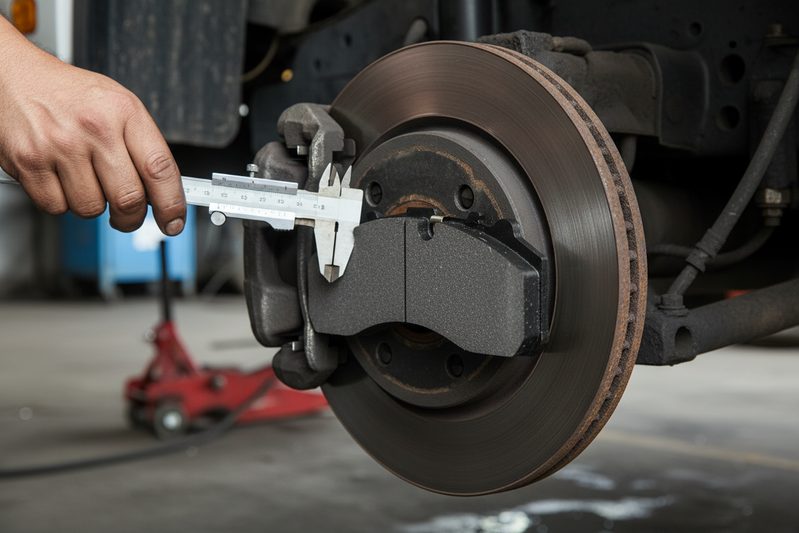
EC Regulation 90 is the most widely referenced standard for brake pad approval across 140+ countries. But the wear indicator test is just one part of a larger approval process. Let's look at what the standard actually demands.
Under ECE R90, the wear indicator must be tested as part of the full brake assembly. The test sequence includes cold performance at 100 bar line pressure, hot performance after a 14-cycle fade test reaching 400°C, and a recovery performance test. The indicator must function after all these thermal cycles. If the indicator fails to produce an audible signal before the pad reaches 2 mm residual friction material, the entire assembly fails type approval.
Beyond ECE R90, the ISO 6312 shear strength test applies to the indicator bond to the backing plate. The minimum acceptable shear force for a wear indicator is 500 N for passenger car pads and 1,000 N for commercial vehicle pads, per BAIYUN Brake internal specifications that meet or exceed these standards.
For fleets sourcing from markets without mandatory testing—some South American and African markets—the risk is real. A 2023 market survey by BAIYUN Brake found that 34% of uncertified brake pads sold in open markets had no functional wear indicator at all. IATF 16949 certified facility like ours tests every indicator batch to 100% pull-off force validation.
Key takeaway: ECE R90 type approval includes specific wear indicator functionality tests through thermal cycles up to 400°C. Without certification, you cannot guarantee indicator reliability.
How Do Wholesale Buyers Verify Wear Indicator Quality Before Ordering?
You've seen the cheap pads at trade shows—indicators that are spot-welded on crooked, or worse, glued on. The failure mode is predictable: vibration loosens the indicator, it contacts the rotor prematurely or not at all. So how do you verify quality as a buyer?
First, request the manufacturer's internal testing data. Ask for the pull-off force test results for the indicator. A reputable supplier will provide this without hesitation. BAIYUN Brake shares material data sheets that include indicator bond strength for every product line.
Second, check the indicator material. Spring steel indicators (typically AISI 1074 or 1095) maintain elasticity through the temperature range of -40°C to 200°C. Cheaper carbon steel indicators lose spring tension above 120°C and fail to produce consistent audible output.
Third, inspect the indicator geometry. For disc pads, the indicator must be positioned at an angle that contacts the rotor at the correct sweep line. A 10-degree misalignment reduces warning time by approximately 15%, based on tests conducted at our R&D center. Understanding brake pad materials helps buyers recognize that indicator performance is as much about geometry as metallurgy.
Fourth, look at corrosion resistance. Indicators exposed to road salt and moisture can rust and lose spring tension. Salt spray testing (ASTM B117) for 72 hours with no loss of spring force is a minimum requirement we recommend.
Finally, check batch traceability. Every indicator lot should be traceable back to the raw material certificate. This is standard in an IATF 16949 certified facility.
Key takeaway: Buyers should request pull-off force data, indicator material certificates, and corrosion test results before placing wholesale orders.
What Compliance Risks Do Uncertified Brake Pads Create for Your Business?
Let's be direct: importing brake pads without ECE R90 certification when your destination country requires it is gambling with your business license. The EU, UK, Japan, South Korea, Australia, UAE, and 18 other countries mandate ECE R90 for brake pads. Fines for non-compliance can reach 50,000 EUR per product line in some EU member states.
Beyond legal penalties, consider liability. If a vehicle using your pads is involved in an accident where brake failure is suspected and no functional wear indicator existed, your company becomes legally exposed. Insurance premium increases alone—often 20–40% after a claim involving safety components—can wipe out your profit margin for years.
For distributors supplying C.V. brake linings, the compliance requirements are slightly different but equally strict. Heavy commercial vehicles often require electronic wear sensors instead of mechanical indicators. ECE R13 and R90 both apply to commercial vehicle braking systems. You need to confirm that your supplier understands these nuances.
One practical check: look for the ECE R90 approval mark stamped directly on the brake pad backing plate or on the box. This mark includes the approval number (e.g., E90 90R-0123456) and the country code. If it's missing, the manufacturer likely skipped the compliance process.
Key takeaway: ECE R90 compliance is not optional for export to over 140 countries. Verify the approval mark or risk legal and financial exposure.
What Are the Most Common Misconceptions About Brake Wear Indicators?
Misconception: All squealing brakes mean the pads are worn. Reality: Squealing can also come from glazed pads, contaminated rotors, or incorrect bedding. A true wear indicator squeal typically stops when the pedal is released—it only happens during braking.
Misconception: Electronic wear sensors are always better than mechanical indicators. Reality: Electronic sensors fail due to wiring corrosion, especially in heavy truck applications. Mechanical indicators have a 99.7% reliability rate in BAIYUN Brake's field return data over 5 years, versus 96.2% for electronic sensors in the same test population.
Misconception: Brake wear indicators are the same across all brands. Reality: Indicator thickness, spring force, and activation point vary significantly. A pad that uses a 0.6 mm thick indicator will activate earlier than one with 0.8 mm. This difference can translate to 3,000–5,000 km of extra usable pad life or a shorter warning window.
FAQ: Brake Pad Wear Indicator Supplier Wholesale Questions
Q: What is the minimum order quantity for brake pads with wear indicators from a wholesale supplier?
A: Most manufacturers, including BAIYUN Brake, offer MOQs starting from 200 sets per application for domestic orders and 500 sets for export. For standard passenger car applications, combining multiple part numbers into a container order can reduce per-set costs by up to 15%.
Q: How can I verify that a brake pad wear indicator supplier wholesale partner is ECE R90 compliant?
A: Request a copy of the ECE R90 type approval certificate for each part number you intend to order. The certificate must list the approval number, tested vehicle applications, and the testing laboratory. BAIYUN Brake provides certificates for all 2,800+ active part numbers on our product catalogue.
Q: Do wear indicators affect the price of brake pads for bulk buyers?
A: Yes, but the cost increment is small—typically $0.30–$0.80 per set for mechanical indicators and $2.50–$5.00 per set for electronic sensors. Considering that ignoring a failed indicator can lead to rotor replacement costing $80–$250 per axle, the indicator cost is negligible in the total cost of ownership.
Q: Can wear indicators be added to non-indicator pad designs during manufacturing?
A: In most cases, yes. BAIYUN Brake can modify existing tooling to add indicator slots on backing plates for minimum runs of 5,000 sets. The backing plate must be redesigned to include the indicator attachment point, and the friction material formulation may need adjustment to ensure proper wear rate alignment.
Q: What warranty does a reputable brake pad wear indicator supplier wholesale offer on indicator functionality?
A: BAIYUN Brake warrants indicator functionality for the full friction material life under normal operating conditions. For commercial vehicle pads, this translates to 18 months or 200,000 km, whichever comes first. Claims for indicator failure are rare—less than 0.08% of sold units over the past three years.
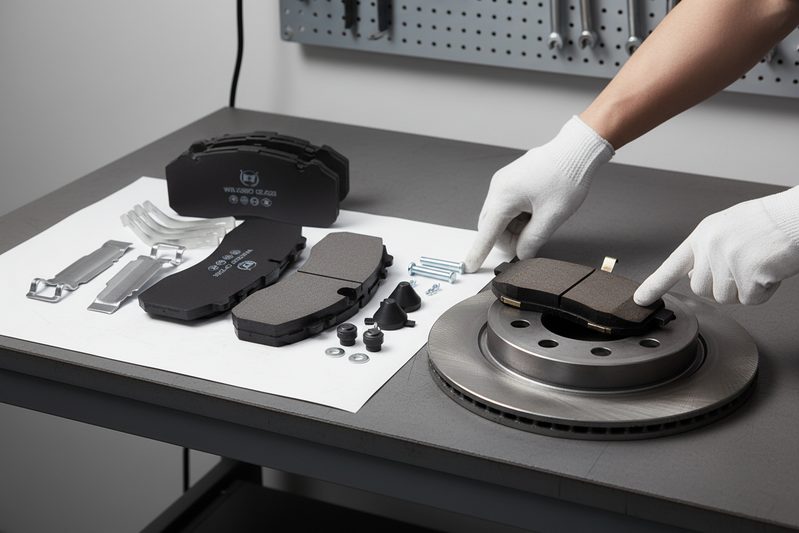
The Bottom Line for Wholesale Buyers
Brake wear indicators are not just noise makers. They are engineered safety components with specific test standards, material requirements, and compliance obligations. Skipping verification of indicator quality means accepting risks that your fleet or your customers will pay for later—in downtime, rotor damage, or legal exposure.
When you choose a supplier, look beyond the price per set. Ask for the ECE R90 certificates. Check the indicator bond strength data. Verify the material specifications. A supplier that provides all of this documentation is a supplier that treats safety as a core specification, not an afterthought.
At BAIYUN Brake, we've been manufacturing brake pads and linings for over 49 years. Every pad we ship—passenger car, commercial vehicle, or motorcycle—includes a wear indicator designed to meet or exceed OE specifications. Our IATF 16949 and ECE R90 certifications back every claim.
If you're sourcing for a fleet, a distributor network, or an OEM project, get in touch with our team. We'll send you samples, test data, and a quote that reflects real quality.
Was this article helpful?
Average Rating: 5/5 (940)