
Why Truck Brake Pads Wear Out Fast: Causes and Supplier Selection Tips
Summary:
Truck brake pads wear out fast when commercial vehicles operate under heavy loads, high temperatures, and frequent stop-and-go cycles. Buyers sourcing replacement pads need to look beyond price and into friction material test data, ECE R90 compliance, and supplier production certifications. This article explains why wear accelerates, what to verify before you import, and how wholesale purchasers can secure longer-lasting brake pads from a certified China brake manufacturer like BAIYUN Brake.
Why Truck Brake Pads Wear Out Fast: Causes and Supplier Selection Tips
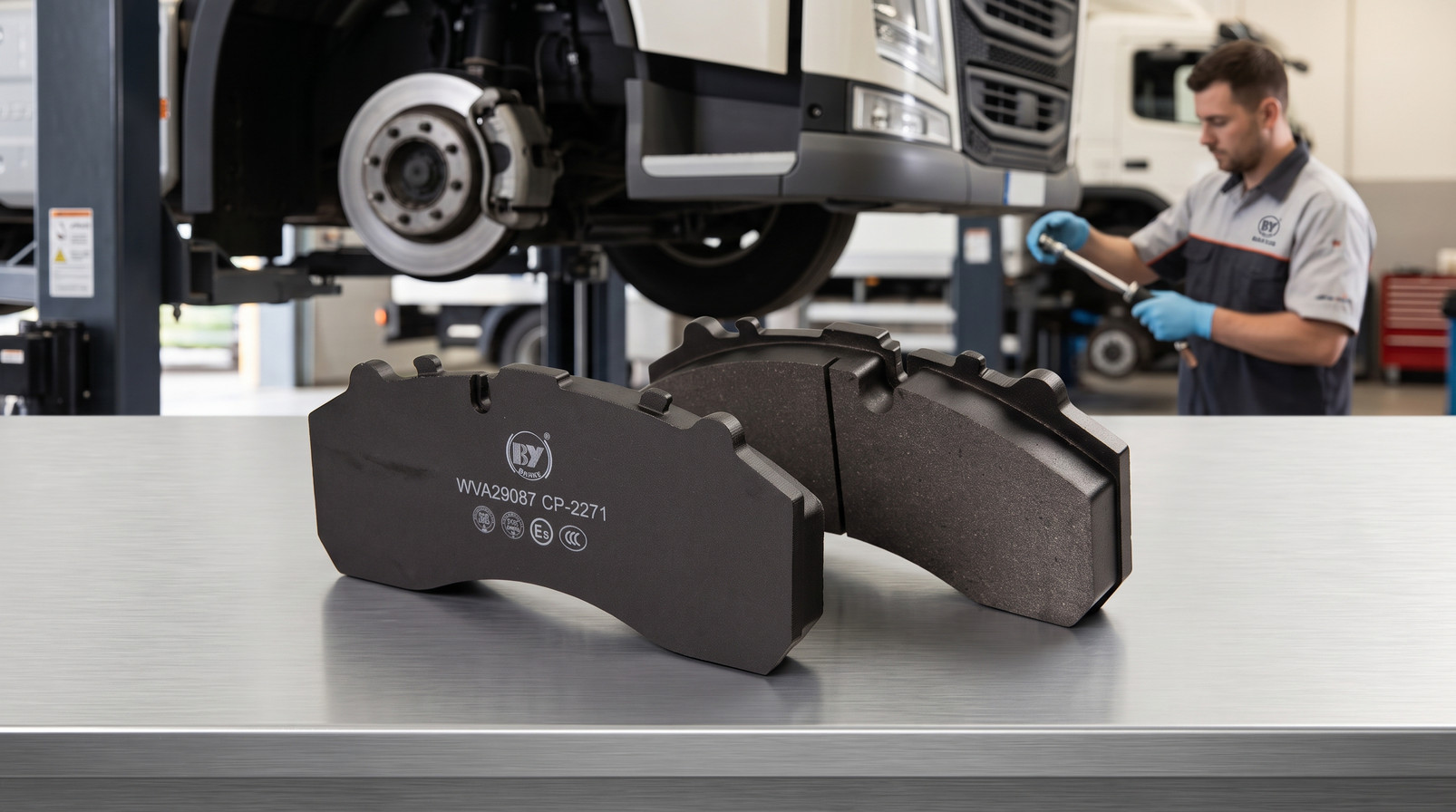
Quick answer: Truck brake pads wear out fast because heavy commercial vehicles, fully loaded, routinely exert 3–5 times the braking energy of a passenger car. Add high operating temperatures, constant stop-and-go in logistics, and aggressive driving patterns, and you get replacement cycles as short as 30,000–50,000 km. But choosing the right friction material, verifying a supplier’s testing capabilities, and insisting on ECE R90 or SAE J2522 compliance can double pad life and cut fleet downtime. This article gives you a buyer-focused breakdown of what drives wear, what to check before you import, and how to source brake pads that actually hold up.
What Causes Commercial Truck Brake Pads to Wear Out So Fast?
Fleet managers I’ve spoken with consistently ask the same thing: they replace pads on some trucks four times a year, yet others last 18 months. The friction material matters, sure. But the biggest variable isn’t just the pad — it’s the operating context. A 40-tonne tractor-trailer descending a 6% grade will push brake rotor temperatures past 600°C within seconds. That’s where most generic pads start to fade and lose material rapidly.
Without getting too academic, here are the three main wear accelerators to keep an eye on:
- Load and kinetic energy conversion. According to the Tuoba inspection guide, commercial trucks convert far higher kinetic energy into heat at every stop. This thermal cycling micro-cracks the pad surface if the material isn’t formulated for heavy-duty temperature swings.
- Axle configuration and brake bias. On a 6×4 tractor, the front axle pads may wear 20–25% faster because the front brakes handle a disproportionate share of the stopping load, especially when trailers aren’t perfectly balanced.
- Driving terrain and duty cycle. Trucks in port logistics or inner-city delivery routes will see pad wear spike by up to 40% compared to long-haul highway rigs, simply because braking events per kilometer are 5–8 times more frequent.
That’s why the raw mileage number on a pad spec sheet is almost useless without understanding the testing standard behind it. I’ll come back to that.
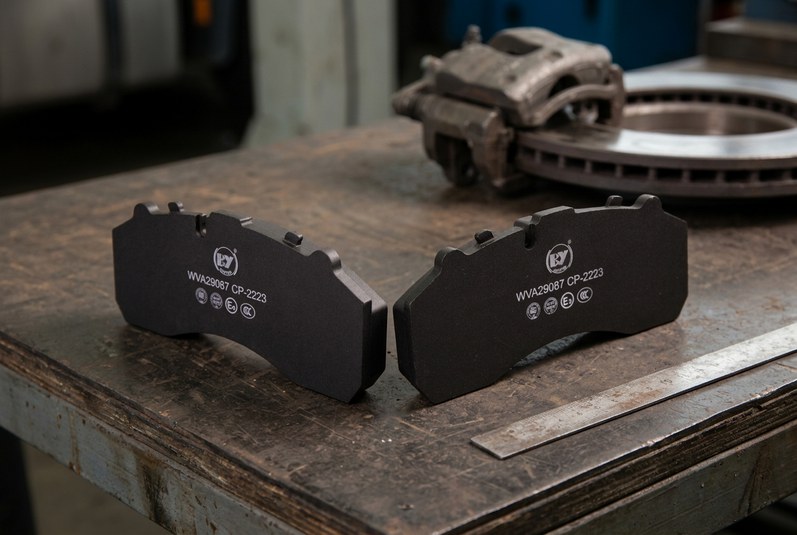
Which Friction Materials Actually Last in Heavy-Duty Applications?
Standard passenger car semi-metallic formulas fall apart fast on an 18-wheeler. The pad compound needs a high thermal threshold and stable friction coefficient (mu) over a wide temperature window. Most commercial vehicle brake pads on the market today fall into one of two camps: semi-metallic high-copper blends or low-steel ceramic-reinforced compounds.
Semi-metallic truck pads — with 30–40% steel fiber content — deliver consistent mu around 0.38–0.45 and resist fade up to 650°C. They’re the go-to for long-haul tractors and dump trucks. The trade-off? They tend to wear the rotor faster and produce more noise. Low-steel ceramic pads, meanwhile, bring a flatter mu curve and less disc wear. Bosch recently claimed up to 25% less disc wear with their latest commercial truck pads — a number that matches what some independent field tests have shown for advanced low-steel formulations. So if your fleet is heavily disc-wear-limited, shifting material chemistry might be more cost-effective than chasing longer pad life alone.
In my experience, a mixed fleet does well with a semi-metallic pad for the tractor drive axle and a low-steel pad for the steer axle, balancing wear patterns. But that’s a tuning decision you’d want to make after checking axle-specific wear data from your own maintenance records.
How Can a Buyer Check a Supplier’s Quality Claims Before Ordering?
You’ll hear plenty of suppliers promise “long life” or “OEM quality.” The only way to verify is through hard, replicable test data. Ask the supplier directly: “Can you share a dynamometer test report per SAE J2522 for this pad formulation?” That standard — the AK Master test — defines a sequence of braking events simulating everything from an Autobahn stop to a mountain descent. A serious manufacturer will have test reports for every major compound in their catalog.
If the supplier resists or can only provide a GB5763 (Chinese national standard) report, that’s not necessarily a dealbreaker, but you’ll want to run your own pilot testing. GB5763 tests basic friction and wear, but it doesn’t replicate the high-energy fade sections that the AK Master test covers. For heavy-truck applications, I’d only proceed with a GB5763-only supplier after I’ve physically seen the pads perform on a loaded vehicle over a known route.
Also demand batch-level consistency metrics. A supplier who can show you that the friction coefficient CV (coefficient of variation) stays under 6% across 10 consecutive production batches is operating at a completely different level from one who just ships “good enough” pads. BAIYUN Brake, for instance, publishes commercial vehicle pad test reports from its in-house dynamometer lab, giving you a direct window into the numbers that matter.
What Certifications Should a Truck Brake Pad Manufacturer Hold?
This one is non-negotiable if you’re importing into Europe, Australia, the Middle East, or Africa. ECE R90 approval means the pad has undergone controlled bench tests and the manufacturer’s production quality system has been audited. Without that certification, your shipment risks a regulatory hold at customs and, more critically, a potential liability chain if a brake failure leads to an incident.
IATF 16949 is the global quality management standard for automotive production. A brake pad factory holding IATF 16949 runs statistical process control on the mixing, pressing, and curing lines — not just final inspection. That directly impacts wear life, because a poorly mixed friction material batch can lose 15–20% of its expected lifespan without ever being flagged by a simple visual check.
When you’re sourcing from China, look for both the IATF 16949 certificate and the ECE R90 marking on the pad itself. Our own facility carries both: IATF 16949 certified production and ECE R90 approval on the vast majority of our commercial vehicle pads. This combination gives importers the documentation they need for both customs clearance and fleet safety auditing.
What Are the Typical MOQ, Lead Times, and Logistics for Bulk Brake Pad Orders?
Buying brake pads in volume is a different ballgame from small-box retail. For a dedicated commercial vehicle pad, expect a minimum order quantity between 200 and 500 sets per SKU, depending on whether the compound is a stock formula or a custom development. Custom blends, like a fleet-specific friction tuning, can push MOQs to 2,000–3,000 sets.
Standard lead time from a Chinese brake manufacturer: 25–35 days for regular production, plus 15–25 days ocean freight to a major European or North American port. Air freight can shrink total delivery to 10 days, but the cost jumps 4–6 times, making it viable only for urgent pilot runs. BAIYUN Brake’s export team handles commercial vehicle bulk inquiries regularly; you can request a wholesale quote with full incoterms and shipping estimates based on your port.
One logistics tip: if you’re importing semi-metallic truck pads by container, watch the total weight. A 40-foot container of heavy-duty pads can max out weight limits before you fill the volume, so you may need to consolidate with lighter goods or negotiate split-container loads with your freight forwarder.
Can I Get OEM or Private Label Packaging for My Truck Brake Pad Brand?
Absolutely. Many distributors and regional chains want to sell under their own brand while benefiting from a proven pad formulation. Reputable China-based brake pad suppliers offer private label services that include custom printing on the backing plate, bespoke box design, and even trademark-molded logos in the shim or pad ear — all with color codes matching your brand identity.
The real barrier isn’t printing; it’s making sure the pad shape and friction material are correct for the commercial vehicles you serve. That’s where a commercial vehicle brake pad catalog with accurate WVA numbers, OEM cross-references, and dimensional drawings becomes essential. At BAIYUN Brake, we’ve helped dozens of international brands launch their own lines by providing all technical data sheets and ECE R90 approval documentation under the private label, so the end customer sees your brand with full regulatory compliance. For lining products, you can also request a quote for commercial vehicle brake linings in your custom packaging spec.
Buyer’s Verification Checklist for Long-Lasting Truck Brake Pads
Run through this checklist before placing a purchase order. Each point ties back to wear life — miss one, and you might end up with pads that burn out in half the expected interval.
| Verification Item | Why It Matters for Wear Life | What to Request from Supplier |
|---|---|---|
| 1. Friction material batch certificates | Inconsistent friction coefficient leads to uneven pad-to-pad wear | Batch test reports showing mu (min, max, average) for last 5 runs |
| 2. Dynamometer wear test data | Verifies that lab-rated wear translates to real-world durability | Full SAE J2522 or J2707 dyno report, not just summary slide |
| 3. Thermal fade test profile | Predicts material loss under repeated high-temperature stops | Temperature vs. mu curve, minimum mu after cold and hot sections |
| 4. ECE R90 approval mark | Mandatory for legal import into many markets; indicates minimum quality | Certificate number and mark location photo on actual pad |
| 5. IATF 16949 certification | Ensures process control that catches defects before batch release | Current certificate with scope including brake pad production |
| 6. In-field wear study from similar fleet application | Lab numbers don’t capture mountain passes or overloading reality | Supplier case study or reference customer contact |
If a supplier can’t provide at least four of these six items, you’re essentially beta-testing their product with your fleet’s money.
Frequently Asked Questions About Truck Brake Pad Wear
Q: How many kilometers should heavy-duty truck brake pads last?
A: In well-maintained line-haul operations with proper material selection, pads typically last 80,000–120,000 km. For severe-duty trucks in mining or refuse collection, expect 30,000–60,000 km. Always benchmark against your own fleet’s average, not generic claims.
Q: Does a higher price always mean longer brake pad life?
A: Not necessarily. Price often reflects raw material cost and manufacturing precision, not wear life. A $45 semi-metallic pad from a certified high-volume plant can outlast a $90 boutique ceramic pad in high-load applications if the friction coefficient drifts less under heat. Check test data, not price tags.
Q: Can I mix different pad brands on the same truck axle?
A: Avoid it. Different friction materials will have different thermal expansion rates and mu values, causing uneven braking and abnormal pad wear. Always replace pads in axle sets with the same compound batch where possible.
Q: How does disc condition affect pad wear rate?
A: A worn or grooved disc acts like sandpaper on the new pad, increasing initial wear by 15–20% and potentially causing material transfer and judder. Always inspect and, if necessary, machine or replace discs when installing new pads.
Q: Is it cost-effective to import truck brake pads directly from a China brake manufacturer?
A: For volumes above 2,000 sets per year, direct import typically saves 30–45% over buying from local distributors, even after shipping and duties. You also gain direct access to the manufacturer’s engineering support for fleet-specific wear problems. Just make sure the supplier has the certifications and testing transparency we covered above.
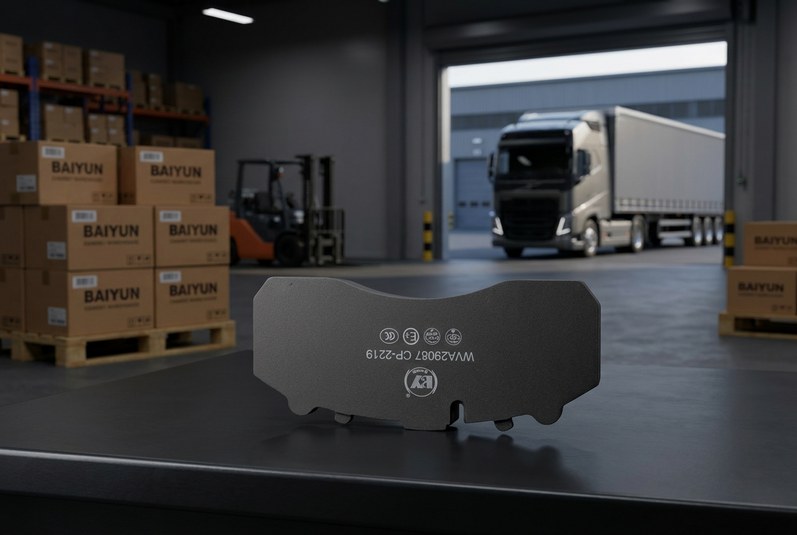
Picking brake pads that don’t wear out prematurely isn’t about chasing the lowest cost. It’s about matching the pad’s friction curve, thermal capacity, and batch consistency to your actual fleet operation. When you’ve found a supplier that can document every one of those factors — from the dynamometer report to the ECE R90 marking — you’ve solved 90% of premature wear before the pads even ship.
If you’re currently evaluating brake pad suppliers and need hard technical data to make the call, our team can share test reports for the specific commercial vehicle applications you’re running. Start with our wholesale CV brake pads inquiry page or submit your inquiry to our sales team — we’ll reply with the exact documentation you need to move forward confidently.
Was this article helpful?
Average Rating: 5/5 (810)