
Mevotech Unveils TTX Brakes for Fleets: What Commercial Vehicle Buyers Need to Know – The BRAKE Report
Summary:
Mevotech Unveils TTX Brakes for Fleets marks a turning point for commercial vehicle brake pad technology. This technical guide breaks down the five purpose-designed TTX formulations, what certifications fleet buyers must demand, and how distributors can source equivalent aftermarket pads from global manufacturers like BAIYUN Brake—an IATF 16949 and ECE R90 certified supplier with 49+ years of experience.
Mevotech Unveils TTX Brakes for Fleets: What Commercial Vehicle Buyers Need to Know – The BRAKE Report
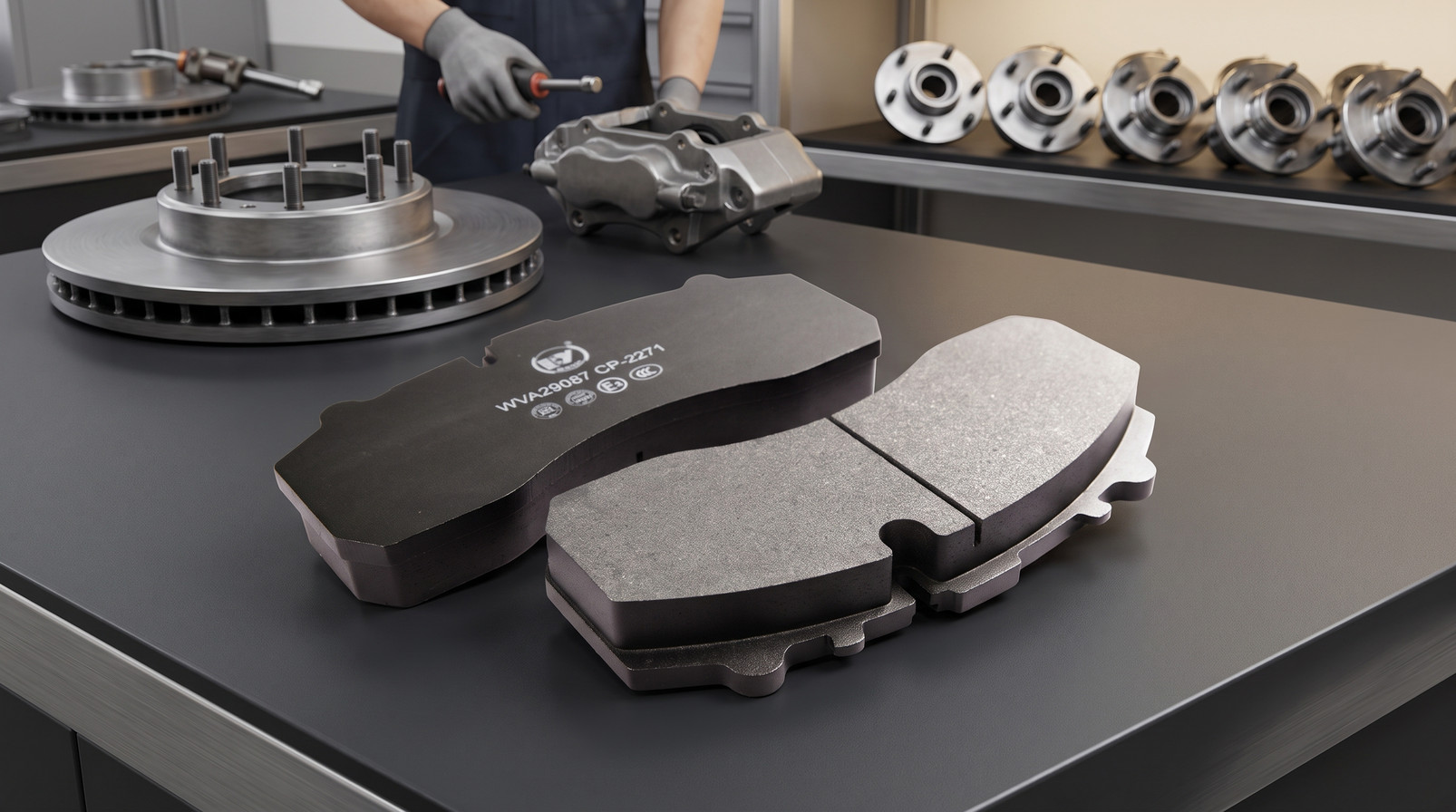
Quick answer: Mevotech's launch of TTX Brakes brings purpose-designed brake pads with five advanced friction formulations—including CeraPhite™ and SuperMet™—to the commercial vehicle aftermarket. For fleet buyers and distributors, this signals a shift toward application-specific braking solutions that prioritize performance, durability, and reduced noise. At BAIYUN Brake, we’ve been engineering heavy-duty brake pads to similar exacting standards under IATF 16949 and ECE R90 certifications for nearly five decades, offering competitive alternatives for global sourcing.
How Are TTX Brakes Engineered for Commercial Fleets?
The commercial vehicle aftermarket has long been an afterthought for many brake pad manufacturers. Most products were generic, one-size-fits-all compounds that didn't account for the wildly different duty cycles of a delivery van versus a fully loaded mining truck. Mevotech's TTX line finally acknowledges reality: a brake pad that works for a city bus won't cut it on a long-haul tractor-trailer.
TTX brakes feature five distinct friction formulations, each engineered for specific vehicle usage profiles. Two formulations have grabbed the spotlight: CeraPhite™, a first-to-market graphite-ceramic hybrid designed for quiet, low-dust performance in commercial applications; and SuperMet™, a high-metal-content compound built for extreme loads and frequent stops. The other three—Premium Met, Fleet Duty, and HD Ceramic—cover the middle ground, offering tailored solutions for everything from refrigerated vans to refuse trucks.
What sets these apart isn't just the friction chemistry. Every TTX pad includes a corrosion-resistant backing plate, a burnishing layer that accelerates the bed-in process, and multi-layer shims that dampen vibration. Mevotech also throws in a comprehensive hardware kit, so technicians don't have to scramble for missing clips. For fleet maintenance managers, that means less downtime and more predictable service intervals.
| TTX Formulation | Key Feature | Ideal Vehicle Application | Performance Priority |
|---|---|---|---|
| CeraPhite™ | Graphite-ceramic hybrid, ultra-quiet, low dust | City buses, shuttle vans, last-mile delivery | NVH reduction |
| SuperMet™ | High metal content, extreme heat resistance | Construction trucks, logging trailers, heavy tow | Max stopping power |
| Premium Met | Semi-metallic, balanced road performance | Regional haul trucks, dump trucks | Durability vs. comfort |
| Fleet Duty | Long-life semi-metallic, reduced wear | High-mileage highway tractors | Extended service intervals |
| HD Ceramic | Ceramic-enhanced, stable friction across temps | School buses, emergency vehicles | Consistent pedal feel |
Note: Exact formulation names and specifications are based on Mevotech's announcement. For cross-references to equivalent BAIYUN Brake compounds, contact our engineering team.
Bottom line: The TTX range proves that commercial brake pads can be as nuanced as passenger car pads, and fleet buyers should demand the same level of application engineering.
What Certifications Should Fleet Buyers Demand for Brake Pads?
Mevotech's TTX line will inevitably carry the usual North American aftermarket certifications, but smart international buyers know that paper matters. If you're sourcing container loads of brake pads for distribution across Europe, Africa, or the Middle East, you need to see an ECE R90 approval stamp on every set. Without it, your shipments won't clear customs in most regulated markets.
At BAIYUN Brake, every commercial vehicle pad we export is ECE R90 tested and marked—not as an afterthought, but baked into our production quality system. We hold IATF 16949 certification, which means our entire manufacturing process, from raw material batching to final audit, meets the automotive industry's toughest quality management standard. That's the kind of transparency fleet buyers should demand from any supplier, whether they're buying TTX or a private-label alternative.
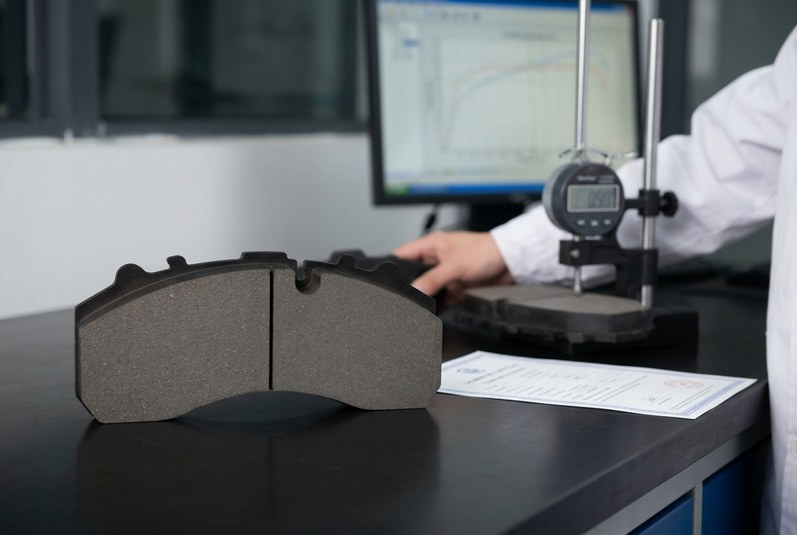
So when evaluating a new product launch like Mevotech's, don't just read the marketing bullet points. Ask the hard questions: Are the pads tested on an inertia dynamometer per SAE J2522? Can the supplier provide batch-level friction coefficient reports? Do they offer traceability back to the steel mill and friction material lot? These aren't theoretical concerns; they directly affect warranty claims and liability. Our IATF 16949 certified facility makes that data readily available to partners.
Certification checklist: ECE R90, IATF 16949, ISO 9001, SAE J2522 dynamometer reports, and full material traceability—these separate genuine commercial-grade pads from uncertified commoditized friction.
How Can Distributors Source Equivalent Aftermarket Brake Pads from Global Suppliers?
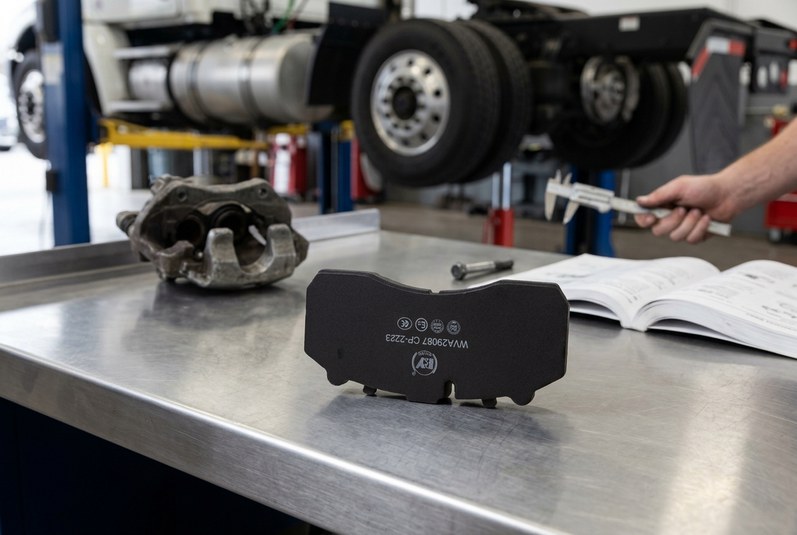
The TTX launch is exciting for North American fleets tied to Mevotech's distribution channels, but for buyers in Latin America, Southeast Asia, or the CIS, availability will be spotty for months—maybe years. That's where a manufacturer like BAIYUN Brake becomes a strategic alternative. We don't just sell brake pads; we build long-term supply partnerships for distributors who need consistent quality, competitive pricing, and flexible delivery.
Say you run a commercial vehicle parts distribution network in Kenya. You need a range of brake pads covering the most common truck and bus applications—Mercedes Axor, Hino 500, Isuzu NPR, Volvo FM. You don't need a specific brand name on the box; you need friction material that lasts 60,000 km under dusty, high-temperature conditions. We can supply exactly that, with your packaging, your part numbers, and shipped from our Qingdao warehouse in 25 days. MOQ starts as low as 200 sets per reference, and we handle all export documentation so you don't swim in paperwork. For more details, browse our commercial vehicle brake pad range or request a quote for brake linings.
Private label is another angle. If you've seen the TTX prices and realized the margin is razor-thin for offshore importers, you're not alone. BAIYUN Brake offers full OEM/private label programs with your choice of friction formulation—yes, including ceramic-enhanced compounds akin to CeraPhite™, and high-metal SuperMet™ equivalents—under your brand name. We provide custom blister cards, color boxes, and master cartons. Lead times average 45–60 days for custom orders, and we keep buffer stock on 200+ fast-moving references. Why choose us? Because we treat every container order as a partnership, not a transaction.
Sourcing insight: The global brake pad market for commercial vehicles is worth over $8 billion, and certification gaps create opportunities. A distributor who partners directly with an IATF/ECE R90 manufacturer can offer a TTX-competitive product at 15–25% lower landed cost—that's pure margin advantage.
Buyer Verification Checklist for Commercial Vehicle Brake Pads
Whether you're evaluating TTX brakes or any other commercial vehicle brake pad, this checklist keeps you grounded:
- Certification evidence: Ask for a scanned ECE R90 certificate for the specific part number you're buying. Generic certificates don't count.
- Friction material test report: Insist on a dynamometer test report showing friction coefficient (μ) across cold, hot, and recovery phases per SAE J2522.
- Backing plate spec: Verify the steel grade and corrosion coating—salt spray test hours matter in marine environments.
- Shim and chamfer design: Look for multi-layer rubber-steel shims and OE-style chamfers; they directly influence noise and thermal cracking.
- Hardware inclusion: Confirm the kit includes all necessary abutment clips, wear sensors, and bolt boots. Incomplete kits cost mechanics 15–20 minutes per axle.
- Burnishing/bed-in instructions: A proper burnishing layer shortens the bed-in procedure from 200 stop cycles to 30–50. Ask for the procedure.
- Minimum order quantity (MOQ): Clarify MOQ, mixability (can you mix part numbers in one container), and lead time.
- Logistics transparency: Can the supplier provide FOB, CIF, or DAP pricing? Do they handle fumigation and ISPM 15 for wooden pallets?
- After-sales support: What's the warranty? Who handles returns? A manufacturer with an overseas technical team is gold.
Download our product catalogue to cross-check technical specifications for popular truck references.
What Are the Most Common Misconceptions About Mevotech TTX Brakes?
Misconception: "TTX is just a marketing rebrand of an existing passenger car pad."
Reality: TTX uses entirely new compound formulations and a dedicated commercial vehicle validation program. The backing plate dimensions and hardware kits are purpose-designed, not simply resized from a passenger model.
Misconception: "All five formulations are available for every vehicle model."
Reality: Each reference within the TTX line is matched to specific vehicle applications based on fleet usage data. A SuperMet pad won't be listed for a light shuttle van any more than CeraPhite will be recommended for a mining truck.
Misconception: "CeraPhite is exactly the same as a passenger car ceramic pad."
Reality: CeraPhite incorporates graphite to manage heat transfer in heavy commercial axles, something you don't need on a sedan. It's engineered for sustained high-temperature stops, not just low dust.
Frequently Asked Questions
Q: How do I cross-reference Mevotech TTX part numbers to BAIYUN Brake equivalents?
A: While there's no direct one-click cross-reference, BAIYUN Brake maintains a database of over 2,000 commercial vehicle brake pad references with WVA numbers. Simply submit the TTX part number or OE number to our export team, and we'll provide a specification match within 24 hours. Because we manufacture to ECE R90 standards, dimensional and friction characteristics are documented for every reference.
Q: Can I private-label a brake pad with CeraPhite-type formulation from BAIYUN Brake?
A: Absolutely. Our R&D department has developed ceramic-graphite hybrid compounds specifically for commercial vehicle NVH reduction. During your OEM inquiry, mention the target friction coefficient and operating temperature range, and we'll propose a formulation that matches your fleet's needs. Minimum order quantity for custom friction compounds is 500 sets per reference.
Q: Do TTX brakes meet European ECE R90 requirements?
A: Mevotech has not explicitly confirmed ECE R90 certification for all TTX references, as their primary market is North America. If you need ECE R90 compliance for export to Europe or UN-regulated markets, BAIYUN Brake's entire commercial vehicle brake pad range carries the approval mark. This is a non-negotiable for many distributors—ask any supplier to show the certificate for the specific part number, not a generic one.
Q: What's the typical lead time for a container order of commercial brake pads?
A: From BAIYUN Brake, standard orders ship in 25–30 days once payment terms are finalized. Custom private-label orders with printed packaging take 45–60 days. We offer FOB Qingdao, CIF to main ports, or DAP to your warehouse. Bulk orders over 20 pallets can negotiate faster turnaround. For comparison, North American aftermarket brands often average 8–12 weeks for container orders shipped from Asia anyway.
Q: How do I verify that a brake pad will last in severe fleet conditions?
A: Request a dynamometer test report showing fade resistance and recovery at temperatures above 500°C. Also, ask for field trial data or references from fleets in similar usage environments. BAIYUN Brake provides full test documentation, including the lining wear rate per 1,000 km in real-world fleet tests—typically 0.15–0.22 mm per 1,000 km on highway tractors. If a supplier can't produce this data, treat their "long-life" claim with skepticism.
Looking for a partner who understands the commercial vehicle brake market as deeply as you do? Whether you're importing a mixed container or developing a private-label program, BAIYUN Brake brings certified quality and decades of experience to your supply chain. Explore our heavy-duty brake pad catalog or submit your inquiry to our sales team today. We'll respond with a detailed quote within one business day.
Was this article helpful?
Average Rating: 5/5 (643)