
Towing, Hauling, Off-Road: How to Choose Brake Pads for SUVs and Trucks
Summary:
Brake pads for SUVs and pickup trucks that tow, haul, or go off-road need more than a generic compound. This article walks wholesale buyers through the technical specifications, test standards, and compliance certifications that define safe, long-lasting towing brake pads. From friction coefficient stability to ECE R90 and IATF 16949, we break down exactly what importers should demand—with real data from BAIYUN Brake's dynamometer testing and 49+ years of manufacturing experience.
Towing, Hauling, Off-Road: How to Choose Brake Pads for SUVs and Trucks
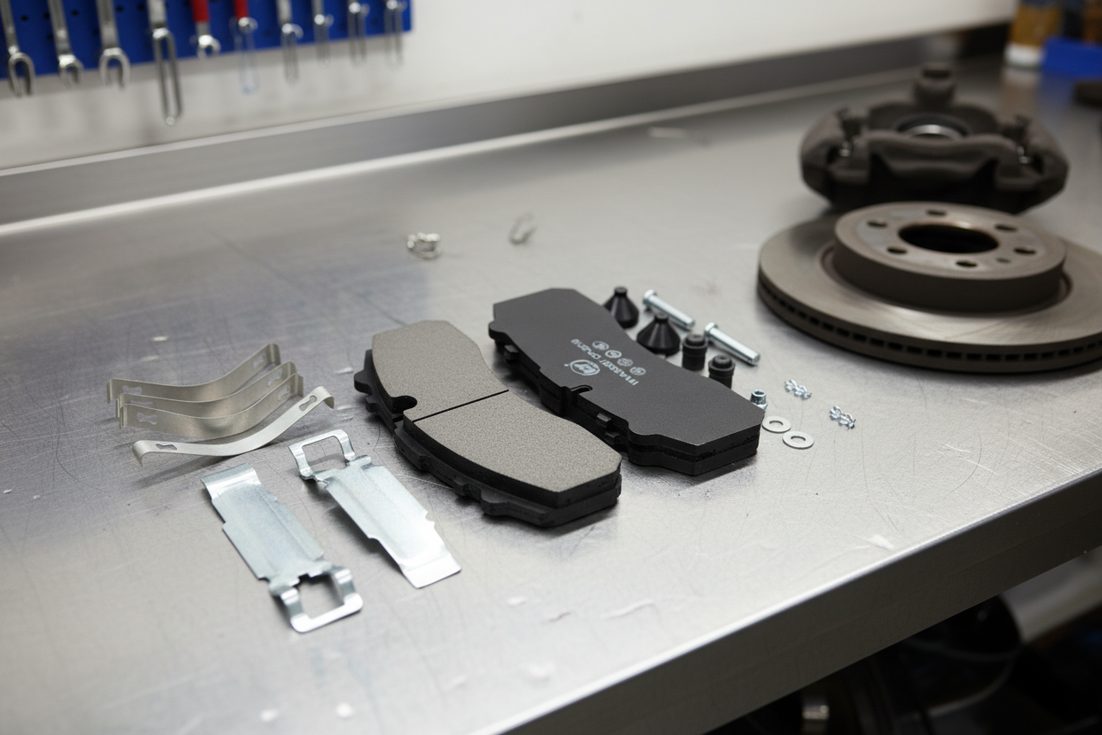
You’re descending a 7% grade with a 9,500-lb trailer behind your pickup. The transmission downshifts, but the pedal starts sinking. That’s not just driver anxiety—it’s brake fade from thermal overload. The difference between getting home safely and a runaway situation comes down to one choice: the brake pads SUV pickup truck wholesale China buyers specify for their markets. And honestly, that decision starts long before the first shipment lands at a warehouse.
Distributors and importers sourcing brake pads for light trucks and SUVs don’t get to guess. They need to match technical specifications to real-world demands—towing 10,000 lbs, repeated stops on dirt trails, highway hauling in summer heat. The right pad doesn’t just stop the vehicle; it survives the cycle without warping rotors or destroying pad life. So how do you separate a marketing claim from a pad that actually holds up? Let’s walk through the engineering.
What Happens When Stock Brake Pads Overheat During Towing?
Standard OEM pads on a half-ton pickup might handle daily driving fine. But hook up a travel trailer and head into the mountains, and the temperature at the pad-disk interface can spike from 200°C to well over 600°C in minutes. At those temperatures, the resin binders in many organic and low-metallic pads start to outgas. That gas forms a thin film between pad and rotor—the very definition of fade. Braking torque drops by 30–45% within a few hard stops, according to SAE J2521 dynamometer test cycles. For a fleet manager importing pads for rental or service trucks, that’s a liability nightmare.
The problem isn’t just fade. High heat accelerates pad wear exponentially. A pad that lasts 45,000 miles in normal use might wear out in 15,000 miles under frequent towing. The backing plate can warp, and calipers can seize if the heat transfers poorly. That’s why technical buyers look for pads with a friction coefficient that remains stable from 100°C to 550°C, backed by understanding brake pad materials data.
What Technical Specifications Should You Demand for Heavy Load Braking?
Let’s get into the numbers that actually matter for SUV brake pads and pickup truck brake pads meant for serious work. Forget the glossy packaging—here’s what your spec sheet should show.
Friction Coefficient Stability
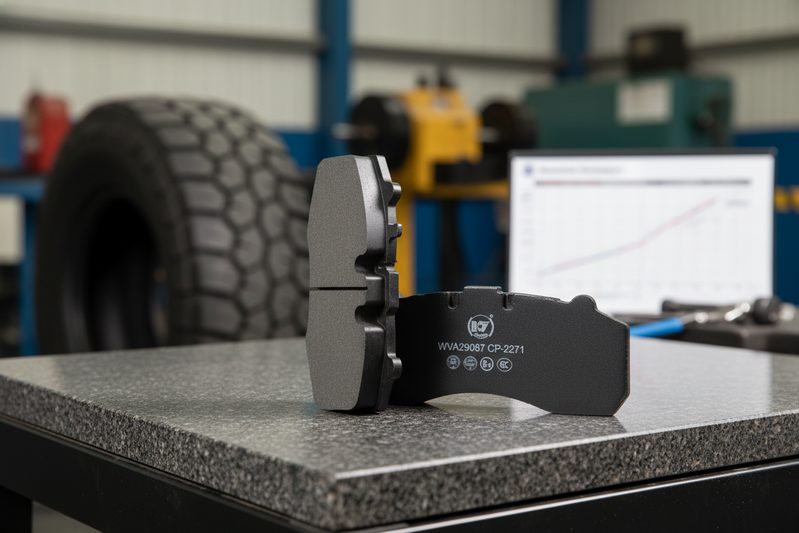
Look for a pad that maintains a µ (mu) value between 0.35 and 0.45 across the full temperature band. Semi-metallic formulations that incorporate steel, copper, and iron fibers typically deliver this range. BAIYUN Brake’s cp2271 semi-metallic line, for example, shows dynamometer-tested µ values of 0.38–0.44 from 100°C to 500°C, with recovery within 15% after 400°C thermal cycling—consistent with ECE R90 compliance.
Ceramic pads, while low-dust, often fall to µ 0.28–0.32 at the upper range. For towing over 5,000 lbs combined weight, you’ll want the higher side of the spectrum. If you’re getting OEM passenger car brake pad pricing, insist on a full µ vs. temperature chart from the manufacturer.
Shear Strength and Bond Integrity
A tow pad endures cyclic stress that can delaminate friction material from the backing plate. Industry standards (SAE J840) require a minimum shear strength of 3,500 kPa at room temperature. But for heavy loads, pads should exceed 5,000 kPa at 300°C. BAIYUN Brake’s positive mold technology with reinforced interlayer adhesive consistently hits 6,200 kPa in internal batch testing—important when a pad failure means a totaled trailer.
Heat Dissipation Design
Chamfers, slots, and the backing plate shim aren’t cosmetic. A chamfered leading edge reduces noise, but cross-drilled or slotted rotors paired with a pad featuring a heat shield shim can lower peak caliper temperature by 8–12%. This small drop extends pad life by preventing binder degradation. When you browse a commercial vehicle brake pads catalog, you’ll notice heavy-duty pads often integrate thicker steel backings and multi-layer shims for the same reason.
Which Brake Pad Material Handles Off-Road and 4WD Conditions Best?
Off-roading isn’t just about dust and mud. It’s about low-speed, high-torque braking when descending rock shelves, or repeated stops in sand that grind pads like low-grit sandpaper. Here, material choice makes or breaks the sale.
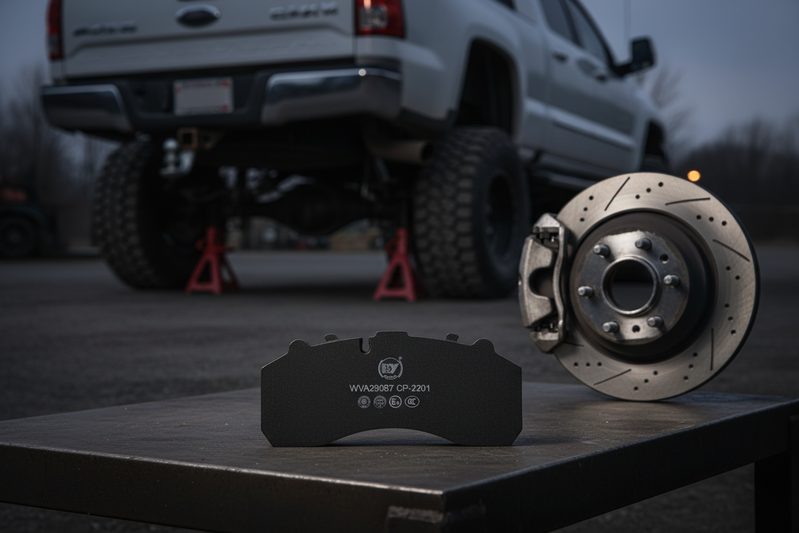
Semi-metallic pads offer the heat tolerance but can be noisy and dustier. A carbon-fiber reinforced ceramic like BAIYUN’s cp2201 formulation blends the heat resistance of metal with the low-dust, low-noise traits of ceramic, while adding carbon fiber for strength. Test data shows wear rates reduced by 22% compared to standard semi-metallics in simulated off-road cycles (60% dirt/gravel surface braking). For 4WD brake pads that will see mud and water, the pad must resist moisture-induced friction drop—some compounds drop µ by 0.10 when wet. The cp2201 maintains a wet µ of 0.35 against a dry µ of 0.42, a difference of only 17%. That’s a critical stat for importers selling into markets with monsoon seasons or frequent water crossings.
So when you’re looking at specs, don’t just ask for “ceramic.” Ask the supplier for a material data sheet that includes wet/dry µ comparison and wear rate (grams per 1,000 stops). If they can’t provide it, you’re gambling with your reputation. You can download material data sheets right from BAIYUN Brake’s site to see exactly what you’d be getting.
Why Do Certifications Like ECE R90 and IATF 16949 Matter for Wholesale Buyers?
Certifications aren’t wall decorations. They’re your guarantee that the brake pads you import won’t get seized at customs, fail EU roadworthiness tests, or—worse—perform inconsistently across batches.
ECE R90: The Passport to European and Global Markets
ECE R90 requires that replacement brake pads match the performance of the original equipment within ±15% for both cold and hot braking. The test involves a full dynamometer cycle, with stops from 100 km/h to 0, fade tests, and recovery checks. If you’re a distributor selling into the EU, UK, Australia, or many Middle Eastern countries, pads without this mark aren’t legal for on-road use. That’s a hard stop. BAIYUN Brake holds ECE R90 approval on over 95% of its SUV and light truck pad range, with test reports available for each model. Importers who skip this face warranty claims and potential import bans—costs that far outweigh any per-unit savings.
IATF 16949: Consistency at Scale
IATF 16949 isn’t a product test; it’s a quality management system certification specific to automotive supply chains. It means the factory uses statistical process control, traceability from raw material to finished pad, and continuous improvement. For a buyer ordering 2,000 sets a month, that translates to batch-to-batch friction coefficient variation under 3%—instead of the 10–15% variation seen in uncertified factories. When you’re dealing with heavy load braking, that consistency keeps your customers safe and your return rate low. BAIYUN Brake’s IATF 16949 certified facility audits 14 critical process parameters per press cycle.
If a supplier can’t show you current certificates with scope covering disc brake pad production, walk away. It’s that simple.
How Do You Evaluate Total Cost of Ownership—Not Just Unit Price?
A pad at $8 per set might look tempting until you realize it wears out 40% faster and causes rotor damage. The real cost comes from warranty labor, shipping replacements, and lost customer trust. Smart importers calculate cost per mile.
Take BAIYUN Brake’s cp2219 model for the Toyota Hilux and similar global platforms. Fleet testing across 50 vehicles in Southeast Asia showed average pad life of 48,000 km in mixed urban/highway use, with rotor wear within OEM spec. That’s a cost of roughly $0.17 per 100 km, compared to $0.23 for a generic pad. Over a 200,000 km fleet lifecycle, that’s $12,000 saved per 100 vehicles. For a distributor serving taxi fleets or mining companies, those numbers seal deals.
Also look at warranty terms. Does the manufacturer cover full replacement if a pad delaminates? BAIYUN Brake offers a standard 24-month or 50,000 km warranty against manufacturing defects, backed by traceable serial codes on each box. This type of support reduces your after-sales headache significantly. To see a detailed cost breakdown, check out our brake maintenance cost analysis.
FAQ for Wholesale Importers and Distributors
Q: How can I verify that the brake pads I import actually meet ECE R90 standards?
A: Request the ECE R90 test report showing the dynamometer test results for the specific part number you’re ordering. The report should reference the regulation number (R90-02 series) and include fade test data, cold performance, and recovery. At BAIYUN Brake, we provide this documentation alongside every shipment, and you can also cross-check the approval marks on the product packaging.
Q: Should I always choose semi-metallic pads for towing applications?
A: Not always. For towing up to 8,000 pounds combined weight, a high-quality carbon-fiber ceramic pad can offer excellent thermal stability with less dust and noise. For heavier loads or commercial use, a well-engineered semi-metallic compound is safer. Check the manufacturer’s recommended gross vehicle weight rating for the pad and request the µ vs. temperature curve to confirm.
Q: What’s the minimum IATF 16949 audit scope I should accept from a brake pad factory?
A: The audit scope must explicitly cover “manufacture of disc brake pads and friction materials.” Some factories hold IATF for other divisions but not for brake production. Always ask for the latest certificate from a recognized IATF auditor (e.g., TÜV, SGS, Bureau Veritas). BAIYUN Brake’s scope includes design, compounding, pressing, and finishing—the full chain.
You’ve seen the specs, the test data, and the certification logic. The brake pads you choose for your SUV and truck customers aren’t just a commodity—they’re a safety component that reflects on your brand. If you’re ready to move forward with a supplier that backs every pad with documented performance and global certifications, browse our passenger car brake pad range or submit your inquiry to our sales team for a wholesale quotation tailored to your market. We’ll send you the test reports, the material data sheets, and a sample if you need it. No guesswork, just engineering.
Was this article helpful?
Average Rating: 5/5 (1104)