
Why Semi-Metallic Brake Pads Dominate the Commercial Vehicle Market
Summary:
Semi-metallic brake pads dominate the commercial vehicle market because their 30-70% metal content provides unmatched heat dissipation and fade resistance under extreme loads. As a leading semi-metallic brake pads wholesale manufacturer, BAIYUN Brake designs formulations that meet rigorous standards like ECE R90, ensuring safety and durability for fleet operators. This technical guide explores the specifications, compliance, and cost-per-mile advantages that make semi-metallic the default choice for trucks and heavy-duty vehicles.
Why Semi-Metallic Brake Pads Dominate the Commercial Vehicle Market
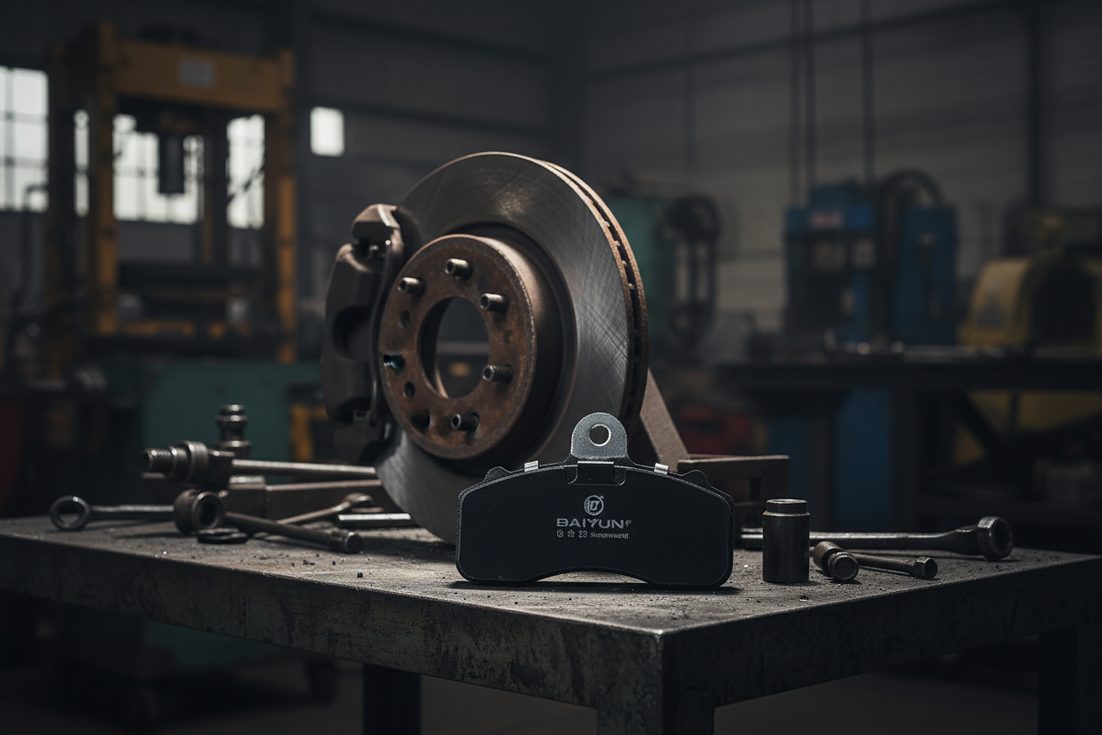
If you're sourcing brake components for trucks, buses, or heavy-duty fleets, you've likely noticed a clear preference. Over 75% of the commercial vehicle aftermarket relies on semi-metallic formulations. It's not a coincidence or a legacy choice. The dominance stems from a harsh reality: commercial braking is about managing extreme energy, not just stopping a car. The metal content in these pads—typically 30% to 70% by weight—provides a physical solution to thermal challenges that organic or even some ceramic compounds can't match.
For a commercial vehicle brake pads wholesaler, the decision isn't just about performance. It's about total cost of ownership, warranty claims, and fleet reliability. A single brake failure on a loaded tractor-trailer has consequences far beyond replacing a pad. That's why the technical specifications and compliance standards behind semi-metallic pads aren't just paperwork; they're the blueprint for safety and profitability.
The Physics of Heat Management in Heavy-Duty Braking
Every brake pad converts kinetic energy into thermal energy. For a 40-ton truck descending a 6% grade, that energy transfer is monumental. Brake fade—the loss of friction coefficient as temperatures soar—is the primary enemy. Semi-metallic pads combat this through superior thermal conductivity. The embedded steel, copper, and iron fibers act like a network of microscopic heat pipes, pulling heat away from the friction surface and into the pad backing plate and caliper.
This isn't a minor improvement. In dynamometer tests simulating repeated heavy stops, a quality semi-metallic formulation can maintain a stable friction coefficient (μ) between 0.35 and 0.45 across a temperature range from 100°C to over 500°C. Organic pads often see a μ drop of 25-40% past 300°C. That difference translates directly to increased stopping distances and driver panic. The metal content also gives the pad structural integrity at high heat, preventing the binding resin from breaking down prematurely, a common failure mode known as 'green fade'.
Decoding the Compliance Landscape: ECE R90 and Beyond
You can't sell brake pads in most global markets without meeting specific type-approval standards. For commercial vehicles, ECE Regulation 90 is the benchmark. It's not a simple pass/fail test; it's a brutal validation of performance consistency. The regulation mandates a battery of tests, including effectiveness, fade and recovery, and wear rate assessments. Crucially, a pad must retain at least 80% of its cold effectiveness after undergoing severe thermal cycling.
This is where semi-metallic compositions shine. Their inherent heat tolerance makes passing the ECE R90 'Type I' fade test (simulating downhill braking) and 'Type II' test (simulating a loaded vehicle on a mountain pass) more achievable. Manufacturers like BAIYUN Brake design their semi-metallic compounds with these exact test parameters in mind. Our IATF 16949 certified facility ensures every batch, whether for a C.V. brake linings order or disc pad sets, delivers the documented friction curve submitted for homologation. Buying uncertified pads might save a few dollars per set, but it exposes you to liability and brand damage that far outweighs the initial cost.
Technical Specifications That Matter for Wholesale Buyers
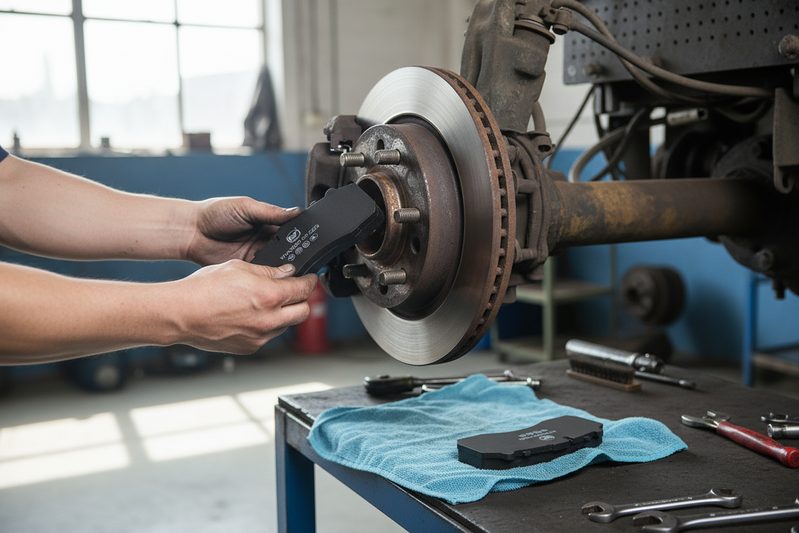
When evaluating a semi-metallic brake pads wholesale manufacturer, look beyond the marketing. Demand the technical data sheet. Key specs include the friction coefficient grading (FF, GG, etc., per SAE J866), compressibility (typically 2-5% for semi-metallic), and specific wear rate (measured in cm³/MJ). A high-quality semi-metallic pad will have a wear rate 15-30% lower than a basic organic pad under identical duty cycles, directly impacting your customers' maintenance schedules.
Another critical spec is the maximum continuous operating temperature (MCOT). For severe-duty semi-metallic pads, this should be 550°C or higher. Compare this to the rotor temperatures commonly seen in fleet telemetry data. You'll find they align. Also, pay attention to the formulation's composition. Pads with a higher percentage of copper (though increasingly regulated) or specialized steel fibers offer better thermal conductivity and noise damping. The goal is a pad that performs predictably from the first stop to the ten-thousandth.
The Cost-Per-Mile Equation for Fleet Operators
Fleet managers think in cost-per-mile. A cheaper pad that wears out 20% faster or causes accelerated rotor wear is a false economy. Semi-metallic pads, with their durable metallic matrix, often provide the best balance. They resist wear better than organics under high stress and are less prone to the cracking or chamfer loss that can plague some ceramic formulations under extreme thermal shock.
Let's put numbers to it. Assume a set of premium semi-metallic pads costs 25% more than economy organic pads but lasts 50% longer and reduces rotor scoring. The total brake job cost—including labor and rotor life—can be 10-15% lower with the semi-metallic option. That's a compelling argument for a fleet running hundreds of vehicles. It's also why distributors who provide this brake maintenance cost analysis build stronger, more consultative relationships with their clients.
Addressing Common Concerns: Noise, Dust, and Rotor Wear
It's true that early semi-metallic pads earned a reputation for being noisy and dusty. Modern formulations have largely solved this. Through sophisticated compounding—using lubricants like graphite and cashew particles—and precise chamfering and slotting, NVH (Noise, Vibration, Harshness) is controlled to OE levels. The dust produced is often a lighter color and less sticky than metallic dust from decades ago.
Rotor wear is a valid consideration. The abrasive nature of metal fibers means semi-metallic pads can be harder on rotors than ceramic pads. However, this is managed through pad formulation. The right balance of abrasive and lubricative materials ensures effective braking without excessive aggression. For most commercial applications, the slightly higher rotor wear is an acceptable trade-off for the unparalleled fade resistance and durability. For specific noise or wear issues, our brake lining crack troubleshooting guide can help diagnose root causes.
Frequently Asked Questions for Importers & Distributors
Q: Are semi-metallic brake pads suitable for all commercial vehicles?
A: They are the default choice for most medium- and heavy-duty applications—trucks, buses, delivery vans. However, for very light commercial vehicles in stop-start urban delivery, a premium non-asbestos organic (NAO) pad might suffice. Always cross-reference the OE specification or consult the vehicle manufacturer's recommendations.
Q: How do I verify a manufacturer's ECE R90 certification is legitimate?
A: Request the official test report from the approved laboratory. It should list the specific pad type, the assigned E-mark number (e.g., E9 90R-02A1234), and show passing results for all required tests. A reputable manufacturer like BAIYUN Brake will provide these documents transparently as part of the material data sheets.
Q: What's the lead time for large wholesale orders of semi-metallic pads?
A: This depends on the formulation and whether it's a stock item. For common formulations produced in high volume, lead times can be 4-6 weeks for container loads. For custom formulations or rare applications, it may take 8-12 weeks for tooling and production. Clear communication with your supplier about forecast needs is key to maintaining inventory.

The commercial vehicle market's reliance on semi-metallic brake pads is a testament to physics and pragmatism. When payloads are measured in tons and operating conditions range from freezing highways to desert mountain passes, you need a component built to absorb and dissipate immense energy consistently. The metal isn't just filler; it's the functional backbone that delivers the fade resistance, structural integrity, and longevity that fleets depend on.
Choosing the right supplier means partnering with a manufacturer that understands these technical demands at a molecular level. It means sourcing from a facility where quality control is governed by IATF 16949 and every batch is traceable back to its raw materials. The goal isn't just to sell brake pads; it's to provide a safety-critical component that protects your customers' assets, drivers, and reputation.
Ready to source reliable, compliant semi-metallic brake pads for your market? Contact us today to discuss your requirements, request samples, or download our product catalogue to see our full range of ECE R90-certified commercial vehicle solutions.
Was this article helpful?
Average Rating: 5/5 (1780)