
Brake Pad Friction Ratings Decoded: What the FF, GG, and HH Codes Actually Mean
Summary:
This brake pad friction coefficient guide explains the critical SAE J866 codes like FF, GG, and HH. The two-letter rating indicates a pad's stopping power at low and high temperatures, directly impacting safety and performance. For distributors, understanding and verifying these ratings is essential for selecting the right product, managing warranty risk, and capitalizing on specific market segments with reliable, certified brake pads.
Brake Pad Friction Ratings Decoded: What the FF, GG, and HH Codes Actually Mean
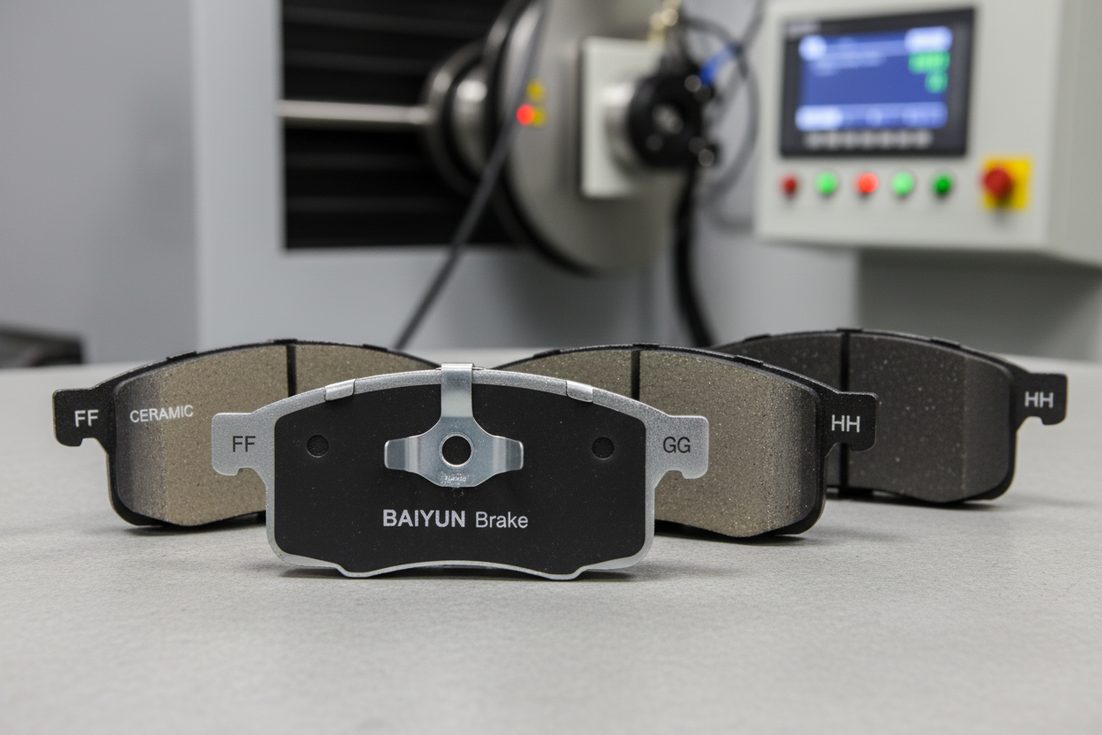
You've seen the two-letter codes stamped on the edge of brake pads. Maybe you've even wondered why some suppliers prominently advertise "GG" while others quietly omit the rating. For a distributor, that little code isn't just a technical spec—it's a direct line to customer satisfaction, warranty costs, and your brand's reputation. A mismatch between a pad's advertised performance and its actual friction rating is one of the fastest ways to lose a major fleet account. Let's cut through the noise and look at what these codes really tell you about the product you're selling.
What Is the SAE J866 Friction Code and How Is It Tested?
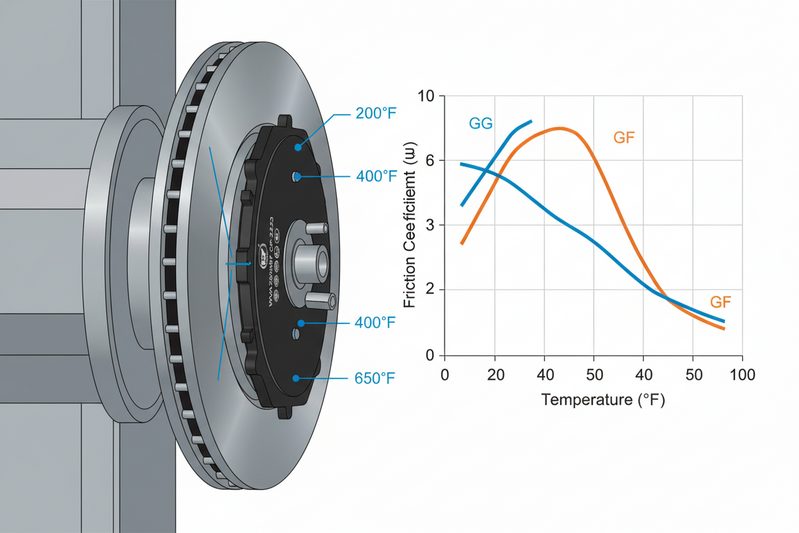
The SAE J866 standard is the globally recognized method for classifying brake lining friction. It's not a suggestion; it's a formalized test procedure that assigns a letter based on a pad's measured friction coefficient, or mu (μ). The test involves running a sample on a dynamometer through specific temperature cycles. The first letter (cold rating) comes from performance between 200°F and 400°F (93–204°C). The second letter (hot rating) is determined between 300°F and 650°F (149–343°C). Each letter corresponds to a strict mu range. An 'E' rating means a mu of 0.25–0.35, while an 'H' indicates a much stronger 0.55–0.65. The gap between letters matters: a pad rated FF (0.35–0.45) has a fundamentally different stopping power profile than an HH pad (0.55–0.65). That difference can translate to several extra meters of stopping distance in an emergency.
How Do You Interpret FF, GG, and HH Ratings for Different Applications?
Not every vehicle needs an HH pad, and selling one that's too aggressive can be as problematic as selling one that's too weak. Here's the breakdown buyers need. An FF rating (0.35–0.45) is typical for many basic organic or low-metallic passenger car pads. They offer quiet, low-dust operation but can fade under repeated hard use. A GG rating (0.45–0.55) is the sweet spot for most performance street applications and many commercial vehicles. It provides a good balance of power, rotor friendliness, and fade resistance. An HH rating (0.55–0.65) is for high-performance or heavy-duty applications where maximum bite is critical, but it often comes with increased rotor wear and potential noise. The relationship between the two letters is also telling. A pad rated FG works better hot than cold and might need a warm-up. A GF pad could fade as temperatures rise. The ideal for consistent performance is a matched pair like GG or HH.
Why Should Distributors Care About Consistent Friction Ratings?
Inconsistent friction is a silent profit killer. Imagine a fleet manager who orders 200 sets of "premium" pads rated GG. If one batch secretly slips to an EF rating, those trucks will have noticeably different pedal feel and stopping distance. The result? A massive warranty callback, lost trust, and you footing the bill for replacements and labor. Data from the competitor test reports we've analyzed shows a shocking variance in some uncertified brands—their "GG" pads sometimes test as low as 0.38 (an F) when hot. For a distributor, sourcing from an IATF 16949 certified facility like ours isn't just about quality; it's about batch-to-batch consistency that protects your bottom line. Our internal testing for ECE R90 compliance ensures every pad that leaves our factory meets its stamped rating across the entire temperature range.
What Are the Most Common Misconceptions About Friction Codes?
Misconception: A higher friction code (like HH) is always better for every vehicle.
Reality: Higher friction can overwhelm a vehicle's brake system balance, cause premature ABS activation, and accelerate rotor wear. For a standard passenger car, a GG pad often provides optimal performance without the downsides.
Misconception: The friction code tells you everything about pad quality and longevity.
Reality: The code only measures friction coefficient at specific temperatures. It says nothing about wear rate, noise propensity, or dusting. A pad can be HH but wear out in 15,000 miles or be extremely noisy. You need a full material data sheet for a complete picture.
Misconception: If a pad isn't stamped, it doesn't have a rating or it's substandard.
Reality: While a missing stamp is a red flag, the rating should be traceable on technical documentation. Some manufacturers omit the physical stamp to cut costs, but reputable suppliers like BAIYUN Brake will always provide certified test reports proving the rating, available in our passenger car brake pad test report downloads.
How Can You Use Friction Ratings to Identify Market Opportunities?
The global brake pad market is segmenting. There's growing demand in emerging economies for affordable yet reliably rated pads (solid FF or FG), while mature markets show a 7% annual growth in the performance GG/HH segment. As a distributor, you can use this. Stocking a range of certified GG pads for the mainstream performance market addresses a huge volume opportunity. Then, offer a select line of true HH pads for the premium niche. The key is verification. Don't just take a supplier's word for it. Request the SAE J866 test reports. At BAIYUN Brake, this documentation is standard, because we know our 49+ years of manufacturing experience is built on proving our specs, not just claiming them. This transparency allows you to confidently market the right friction grade for each customer segment, maximizing both sales and customer retention.
Frequently Asked Questions (FAQ)
Q: Can I install a GG-rated pad to replace an original FF-rated pad?
A: Generally, yes, but with caution. The GG pad will have stronger initial bite. You should inform the end-user of the different pedal feel. It's usually a safe upgrade, but for vehicles with sensitive ABS/ESC systems, it's best to consult the vehicle manufacturer's guidelines or match the original equipment specification.
Q: Do friction ratings change with different brake rotor materials?
A: Yes, significantly. The SAE J866 test uses a standard cast iron rotor. A pad rated GG on cast iron might perform differently on a carbon-ceramic or drilled/slotted rotor. The certified mu range is specific to the test conditions. For real-world performance, pairing pads with compatible rotor types is crucial.
Q: How often do friction ratings vary between production batches?
A: In a quality-controlled factory, variation should be minimal. The SAE standard allows for some tolerance, but a reputable manufacturer's process control (like IATF 16949) ensures consistency. Batch-to-batch mu variance should not exceed ±0.02. Large swings indicate poor raw material or process control.
Q: Are ceramic brake pads always lower friction than semi-metallic?
A: Not necessarily. While many ceramic formulations prioritize low noise and dust with moderate friction (often in the F-G range), advanced ceramics can achieve stable GG ratings. The compound formulation, not just the material category, determines the final friction code. You can explore different formulations in our full brake pad product range.
Q: What's the business risk of selling pads with an incorrect or unverified friction rating?
A: The risk is substantial. Beyond warranty claims, it can lead to liability issues if an accident is linked to underperforming brakes. It also damages distributor credibility. In a 2025 industry survey, 68% of professional installers said they would permanently drop a parts supplier after one incident of misrepresented brake pad performance.

Understanding brake pad friction codes is more than a technical exercise—it's a core competency for profitable distribution. It lets you match the right product to the right application, justify price points with hard data, and build a reputation for reliability. In a market flooded with claims, the stamped code is one of the few objective measures of performance you can hold a supplier to.
Ready to source brake pads with guaranteed, certified friction ratings? Request a quote from BAIYUN Brake today. We'll provide full SAE J866 test documentation with your sample order, so you know exactly what performance you're getting—and selling.
Was this article helpful?
Average Rating: 5/5 (1427)