
Why IATF 16949 Matters When Choosing a Brake Pad Factory
Summary:
An IATF 16949 brake pad factory brings process discipline to commercial vehicle brake sourcing. Importers use the certificate to pre-qualify suppliers before price comparison because it verifies traceability, statistical process control, supplier management, and defect prevention. The IATF 16949 brake pad factory checklist in this guide explains how to check certificate numbers, audit status, ECE R90 approval, PPAP documents, and material test data. We break down the difference between ISO 9001, IATF 16949 and ECE R90, and show why mixing certifications creates sourcing risk. BAIYUN Brake's export team shares practical verification steps for truck, bus, and trailer brake buyers. Use the table, buyer verification checklist, and FAQ to reduce incoming inspection failures and field failures. Request a wholesale quote after confirming the factory's IATF 16949 scope covers commercial vehicle brake pads.
Why IATF 16949 Matters When Choosing a Brake Pad Factory
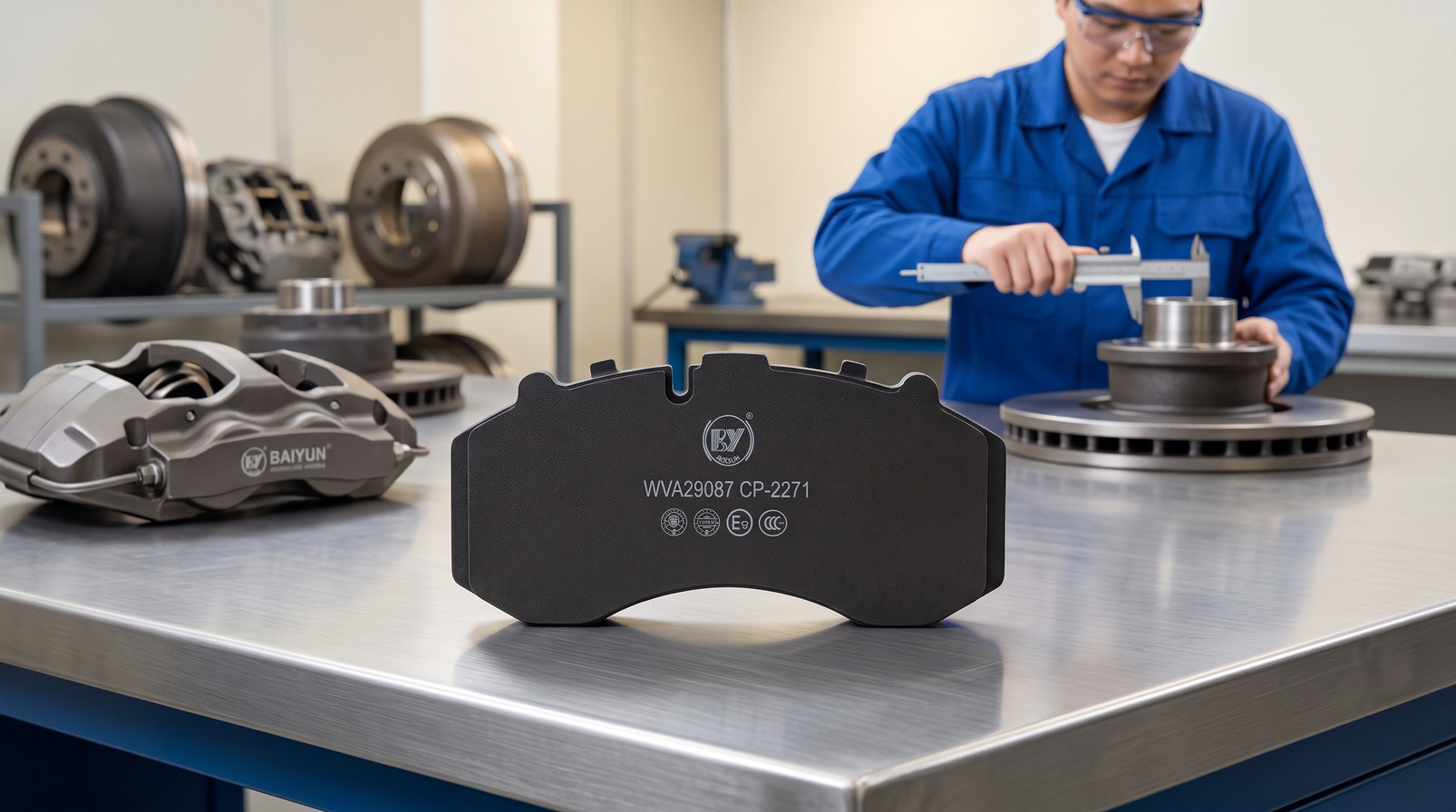
Quick answer: IATF 16949 matters because it's the clearest way to filter out brake pad factories that can pass a one-time inspection but can't sustain quality across production batches. For commercial vehicle brakes, inconsistent friction or shear strength creates real fleet risk. A certified IATF 16949 brake pad factory must prove process capability, traceability, and ongoing audits, not just a sample test.
That's the difference between a supplier and a liability.
What Does IATF 16949 Actually Verify at a Brake Pad Factory?
IATF 16949:2016 replaced ISO/TS 16949 as the automotive sector quality management standard. It goes beyond ISO 9001 by requiring failure mode analysis, statistical process control, measurement system analysis, and product traceability from raw material batch to finished set. For brake pads, that means a factory must prove it controls raw friction material ratios, pressing pressure, curing time, and scorching temperature. Those variables directly affect stopping power, wear rate, and noise.
An auditor checks whether the production line can hold dimensions, friction coefficients, and shear strength within defined limits across a full run. If a factory can't show this, price becomes a trap. BAIYUN Brake maintains an IATF 16949 certified facility with documented control plans for every commercial vehicle brake pad reference. We don't rely on a single homogenized certificate. We map each SKU to its process flow and inspection points.
Summary: IATF 16949 verifies process capability and traceability at the factory level, not just one approved sample.
Why Do Importers Ask for IATF 16949 Before Sending an RFQ?
Based on BAIYUN Brake's 2025 export inquiries, 7 out of 10 new distributor requests ask for IATF 16949 and ECE R90 in the first email. Importers use the certificate as a pre-qualification filter before they compare prices. A factory without IATF 16949 has no documented obligation to run statistical process control or supplier quality audits. That shifts all receiving inspection burden onto the buyer.
One batch of undersized truck pads can generate 15–25% return rates and stop a fleet contract. So what does that mean for a distributor holding 3,000 sets in a warehouse? It means every container is a bet on process stability. An IATF 16949 brake pad factory reduces that bet because auditors check the process, not just the paperwork.
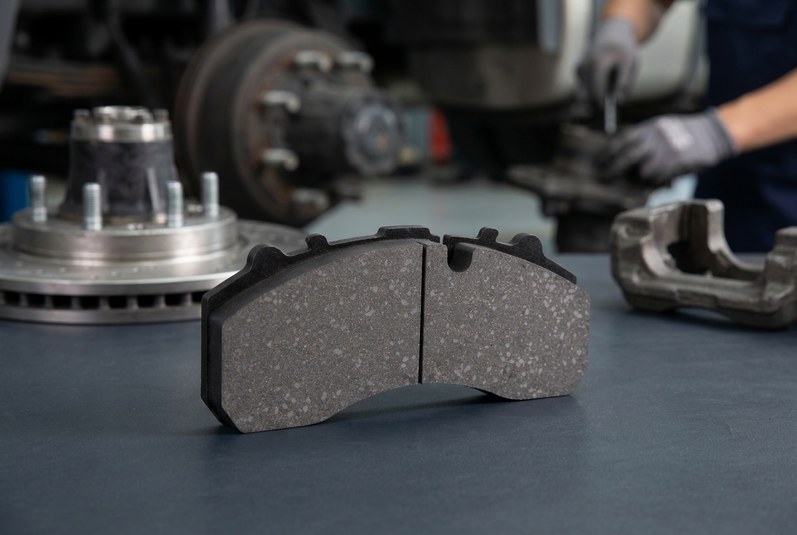
I know some buyers treat certifications as a box-ticking exercise. That's a mistake. The certificate number, audit status, and scope matter as much as the logo. A brake pad factory with IATF 16949 for metal stamping only doesn't help your commercial vehicle brake sourcing.
Summary: Importers ask for IATF 16949 first because it filters out factories that cannot prove repeatable production control.
How Does IATF 16949 Affect Commercial Vehicle Brake Pads Specifically?
Commercial vehicle brakes run hotter and carry higher axle loads than passenger car brakes. An IATF 16949 brake pad factory must identify special characteristics for compressibility, hot friction, and shear strength. For example, IATF 16949 requires process capability of Cpk ≥ 1.33 for critical brake pad dimensions and friction performance indicators. That means the factory can't just hit the spec once. It has to stay within tolerance run after run.
For truck, bus, and trailer buyers, IATF 16949 also cascades to raw material suppliers. Friction material batches, steel backing plates, and shims all come with incoming inspection records. This matters because a cheap backing plate can rust, deform, or crack under repeated thermal cycling. If you want to compare heavy-duty references, request OEM commercial vehicle brake pad quote with test data included.
Summary: IATF 16949 control plans force brake pad factories to manage hot friction, compressibility, and shear strength as production variables, not lucky outcomes.
Which Certifications Should You Check Alongside IATF 16949?
ECE R90 requires brake pads to maintain at least 80% of their cold performance after high-temperature fade testing. That's a product approval for European market access. But ECE R90 alone doesn't prove the factory can repeat that performance next year. IATF 16949 covers the process side. The two work together. ISO 9001 is a baseline quality management system but has no automotive-specific SPC or PPAP requirements.
Use the table below when reviewing a brake pad factory's documentation package.
| Certification or Check | What It Actually Verifies | Why Buyers Care |
|---|---|---|
| IATF 16949 | Process stability, traceability, defect prevention, supplier control | Predictable friction coefficients and lower batch variation |
| ISO 9001 | Generic quality management system | Minimum management baseline, not automotive-specific |
| ECE R90 | Product performance conformity for Europe | Legal market access and independent approval |
| PPAP / Control Plan | Pre-production approval and process controls | Reduces receiving inspection time and return risk |
| SAE J2522 / GB 5763 | Friction, wear, and shear test methods | Comparable bench data across supplier offers |
If your operation also stocks brake linings, the same process logic applies. Wholesale CV brake lining inquiry requests should include IATF 16949 scope confirmation. For specific WVA numbers or cross-reference data, confirm with supplier catalogue before placing a production order.
Summary: Always pair IATF 16949 with ECE R90 and check that the certificate scope covers commercial vehicle brake pads or brake linings.
What Is the Fastest Buyer Verification Checklist for a Brake Pad Factory?
You don't need a six-week audit to spot warning signs. Run this checklist before you pay for tooling or place a deposit.
- Verify the current IATF 16949 certificate number against the official IATF database and confirm the scope includes brake pads or brake linings for commercial vehicles.
- Request the latest ECE R90 approval number and confirm it matches the exact product references you plan to import.
- Ask for PPAP Level 3 documents for one commercial vehicle brake pad reference, including dimensional reports, material certificates, and process capability studies.
- Review 12 months of incoming batch test data for friction coefficient, shear strength, and compressibility. Look for trends, not just single results.
- Confirm raw material traceability from friction powder batch to finished set. If the factory can't trace it, walk away.
- Ask for a sample order of 10–20 sets for first article inspection and dynamometer testing at your own lab.
- Check download our product catalogue to see if the product range aligns with your truck, bus, and trailer references.
BAIYUN Brake's export team also recommends checking factory photos for batch coding, calibration labels, and clean material separation. Those small details tell you more than a glossy brochure.
Summary: Seven quick verification steps reduce the risk of ordering from a brake pad factory that has a certificate but no real process control.
What Are the Most Common Misconceptions About IATF 16949 Brake Pad Factories?
Misconception: IATF 16949 is just ISO 9001 with an automotive badge.
Reality: IATF 16949 requires SPC, MSA, PPAP, and full process traceability. An ISO 9001-only brake pad factory has no obligation to run the same statistical control. That's a meaningful difference for commercial vehicle fleets.
Misconception: ECE R90 approval proves the factory is reliable.
Reality: ECE R90 tests a product sample. It doesn't prove the production line can repeat that result every month. A factory can outsource a passing sample and still ship inconsistent batches.
Misconception: Certified brake pad factories are always 20–30% more expensive.
Reality: The real price gap is usually 5–15%. When you factor in incoming inspection time, rejected containers, and field claims, uncertified supply often costs more over 12 months. Frankly, the price gap rarely justifies the warranty risk on commercial vehicle brakes.
FAQ: IATF 16949 Brake Pad Factory Sourcing Questions
Q: Can I verify an IATF 16949 brake pad factory certificate online?
A: Yes. Request the certificate number and check it against the official IATF global oversight database. The certificate scope should explicitly list brake pads or brake linings, not just automotive components. If the factory hesitates to share the number, treat that as a red flag.
Q: What is the typical MOQ for commercial vehicle brake pads from an IATF 16949 factory?
A: Most IATF 16949-certified Chinese brake pad factories set MOQs between 300 and 1,000 sets per reference for commercial vehicle pads. Sample lots for first article inspection often run below 100 sets. BAIYUN Brake confirms MOQ by reference, so request a quote with your target axle and vehicle mix.
Q: How long does a factory audit take for a new brake pad supplier?
A: A focused on-site audit usually takes 1–2 days, with a report issued within 3–5 working days. You don't need to audit every SKU. Pick one high-volume commercial vehicle brake pad reference and follow the process from raw material to finished set.
Q: Does IATF 16949 cover raw material suppliers too?
A: Yes. IATF 16949 cascades quality requirements to sub-suppliers through incoming inspection, supplier audits, and PPAP documentation. That matters for brake pads because friction material batch variation is one of the biggest causes of field complaints.
Q: What documents should I request with a brake pad quotation?
A: Request the valid IATF 16949 certificate, ECE R90 approval number, PPAP Level 3 sample documents, batch test data for friction and shear, and a clear warranty statement. Also ask for factory photos showing current production lines. For exact WVA numbers, confirm with supplier catalogue.
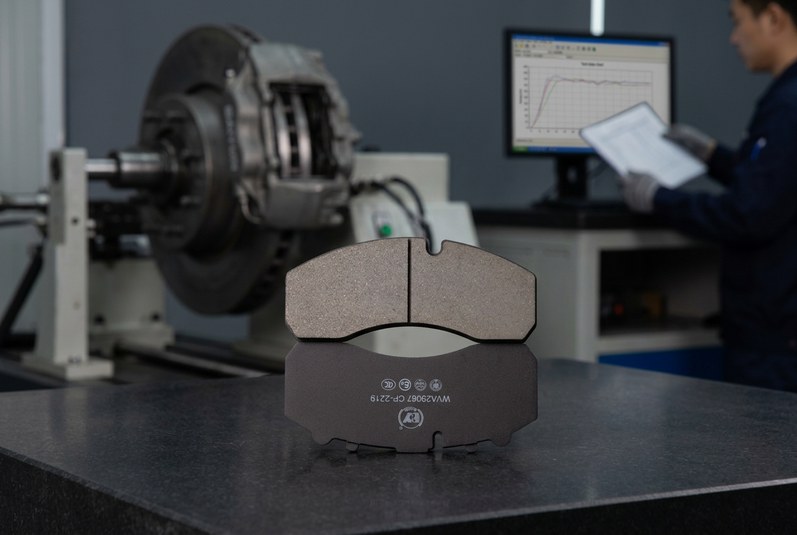
Bottom line: If you're sourcing commercial vehicle brake pads, make IATF 16949 your first filter. Then verify ECE R90, PPAP data, and factory scope. That combination eliminates most sourcing risk before you commit. Browse our heavy-duty brake pad range and submit your inquiry to our sales team. We'll review your vehicle mix, target references, and export terms without the usual runaround.
Was this article helpful?
Average Rating: 5/5 (293)