
How to Evaluate Brake Pad Samples Before Supplier Approval
Summary:
Brake pad sample testing supplier approval is a three-gate process for commercial vehicle buyers. This guide covers document review, ECE R90 and SAE J2522 bench testing, dimensional fitment, backing plate integrity, and batch control. You'll learn which friction coefficient ranges to accept, which wear thresholds to enforce, and how to avoid approving a hand-picked sample that fails in production. The article includes a buyer verification checklist, a test standard comparison table, five importer-focused FAQ answers, and common misconceptions about brake pad sample testing. BAIYUN Brake draws on 49+ years of IATF 16949 and ECE R90 certified manufacturing to provide sourcing confidence for truck, bus, trailer, and fleet buyers.
How to Evaluate Brake Pad Samples Before Supplier Approval
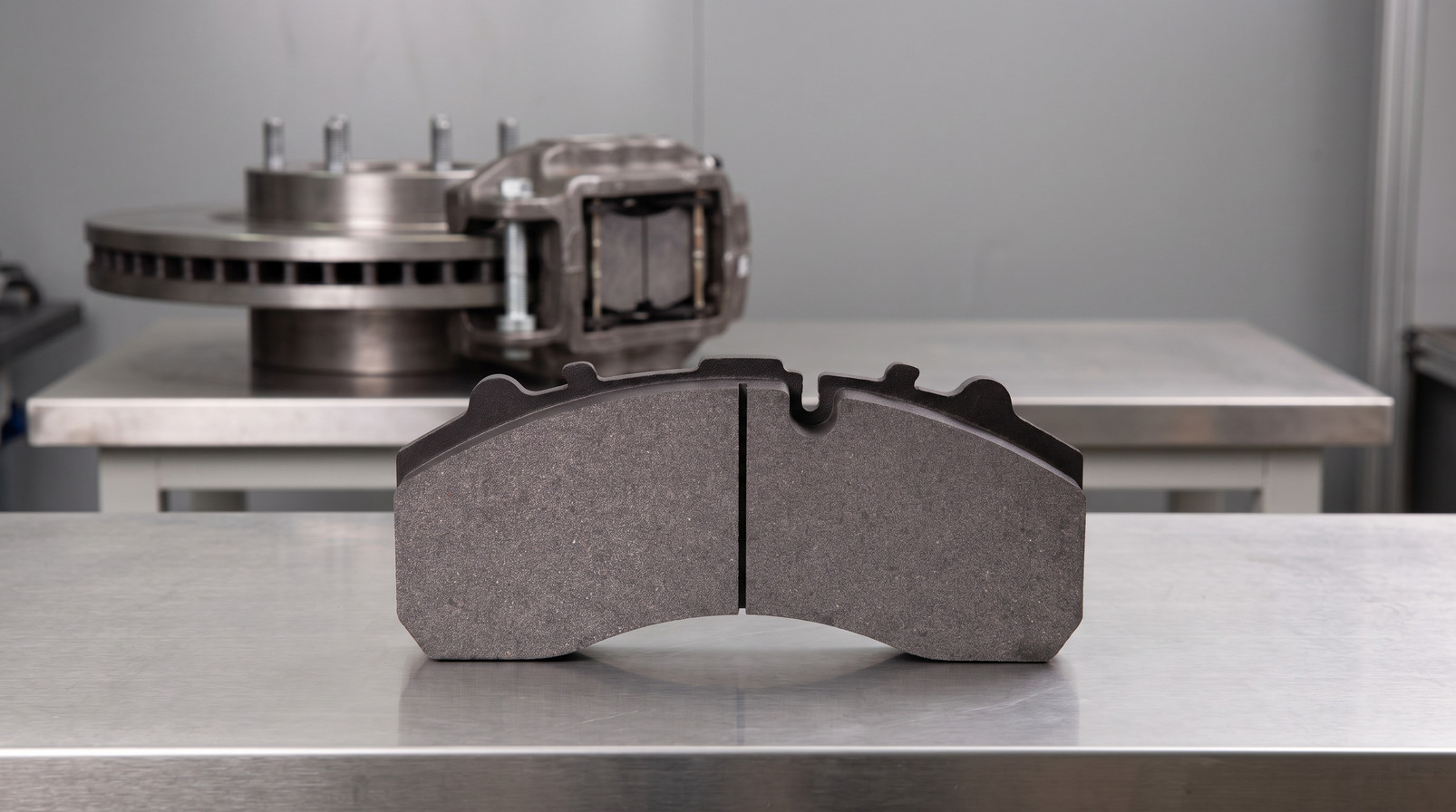
Quick answer: Brake pad sample testing for supplier approval means verifying material certification, friction performance, thermal stability, dimensions, and fitment before you issue a purchase order. For commercial vehicle brakes, run samples through ECE R90 or SAE J2522 dynamometer tests, measure coefficient of friction across 100-400°C, inspect backing plate hardness and shear strength, and fit them on a reference axle. If samples pass those gates, request batch-level test data and approve the supplier with defined acceptance limits.
What Documents Should You Request Before a Brake Pad Sample Ships?
Sample approval starts before the physical part arrives. A supplier that cannot provide certification documents and batch-traceability data is usually not ready for export-level commercial vehicle contracts.
Start by asking for the commercial vehicle brake pad test report for the exact formulation you are sampling. Under ECE R90, a brake pad must keep at least 80% of its cold effectiveness after thermal cycling to 400°C. If your supplier's report skips the hot-cycling curve, that's a red flag.
You'll also want the IATF 16949 certificate, a raw material batch record, and a signed declaration that the sample matches the production formulation. BAIYUN Brake's IATF 16949 certified facility ships every commercial vehicle sample with a one-page test summary, so buyers don't have to chase data after receiving the box.
For OE and WVA part numbers, confirm with supplier catalogue. Don't approve a sample based on a generic photo and a verbal promise.
Section summary: Demand the ECE R90 or SAE J2522 report, IATF 16949 certificate, batch-traceability record, and a signed sample-to-production declaration before the sample leaves the factory.
Which Bench Tests Reveal Real Brake Pad Performance?
Bench testing separates a marketing datasheet from a dependable commercial vehicle brake pad. The three numbers you must see are cold coefficient of friction, hot coefficient of friction after thermal cycling, and wear rate under loaded fleet simulation.
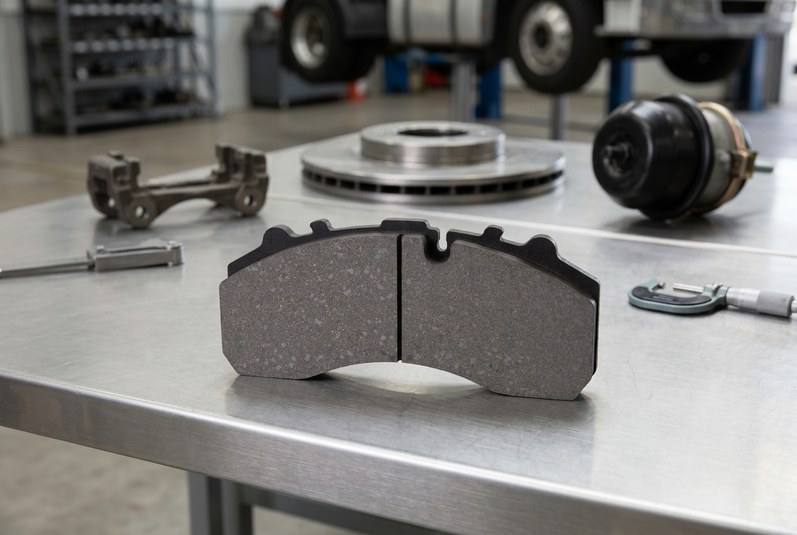
A stable band of 0.38-0.42 µ across 100-350°C is BAIYUN Brake's internal control target for heavy-duty pads. According to ECE Regulation 90, a pad must retain at least 80% of its cold effectiveness after thermal cycling to 400°C. If the supplier's report shows fade below 0.30 µ at 350°C, reject the sample.
Wear matters just as much as friction. SAE J2522 AK-Master wear testing should show less than 0.4 mm of friction material loss per 1,000 brake applications under high-load simulation for truck pads, or up to 0.6 mm for severe-duty trailer linings. A distributor sourcing 500 sets monthly cannot afford inconsistent friction coefficients batch to batch.
These tests are not optional for commercial fleets. Ask your supplier to map the test report to an IATF 16949 certified facility with equipment calibration logs. Watch the temperature and pressure curve, not just the average value.
| Test standard | What it verifies | Pass threshold for CV pads |
|---|---|---|
| ECE R90 | Hot/cold performance, speed sensitivity, pad/disc pairing | 80% cold effectiveness retained after 400°C cycling |
| SAE J2522 / AK-Master | Friction, fade, wear, noise tendency | µ 0.35-0.45 normal, wear below 0.4 mm/1000 stops |
| GB 5763 | Chinese national friction and wear | Friction coefficient within declared band ±0.05, wear loss within grade limit |
Section summary: Bench test approval depends on friction stability across temperature, fade resistance above 80% of cold performance, and wear under loaded cycles, not just a single coefficient number.
How Do You Verify Fitment, Wear Indicators, and Backing Plate Integrity?
A pad that passes the dynamometer can still fail on the axle because of dimensional drift, backing plate warpage, or a wear indicator that breaks during installation.
Commercial vehicle backing plates should sit between 118-190 HB. Lower than 118 HB invites noise and bending; above 190 HB may crack during riveting. Friction material-to-backing plate shear strength should exceed 3.5 MPa for riveted commercial pads and 4.5 MPa for adhesive-bonded designs.
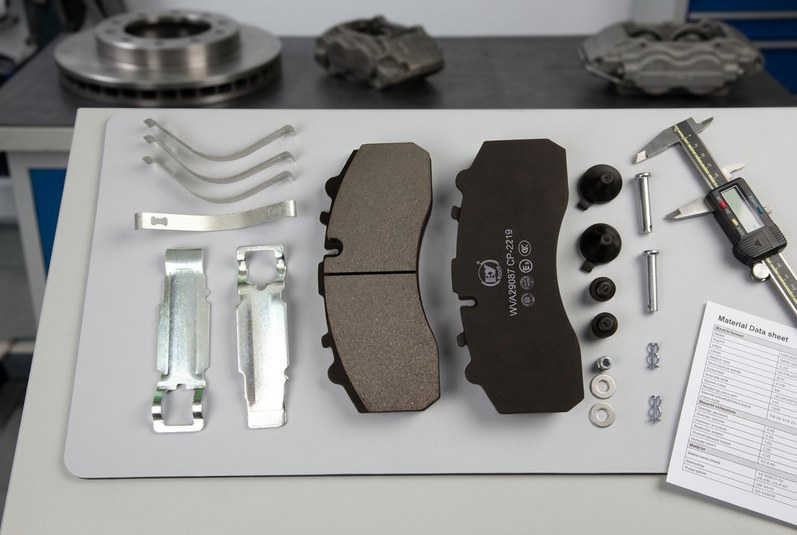
Dimensional checks must include total thickness, slot position, ear shape, and the location of the wear indicator clip. Mechanical wear clips should survive a 90-degree bend without cracking, and electronic sensor connectors need proper retention. If you need reference dimensions before sampling, request OEM commercial vehicle brake pad quote from a supplier that provides CAD drawings and inspection reports, not just catalog photos.
At BAIYUN Brake, sample lots for commercial vehicle pads are checked against a 23-point dimensional control plan before they leave the factory. Buyers see those same charts in the pre-shipment package.
For OE, WVA, Meritor, BPW, SAF, Volvo, Scania, or Mercedes-Benz cross-reference numbers, confirm with supplier catalogue. Never approve a pad by visual comparison alone.
Section summary: Fitment approval requires dimensional inspection, backing plate hardness and flatness checks, shear testing, and wear-indicator verification on a commercial truck or trailer axle fixture.
What Are the Most Common Misconceptions About Brake Pad Sample Testing?
A single good dynamometer run doesn't mean a supplier is ready for container-level commercial vehicle supply. Misread samples cause expensive field problems.
Misconception: A friction coefficient of 0.40 at room temperature means the pad is approved. Reality: ECE R90 approval requires performance after thermal cycling to 400°C. Pads with high cold bite often fade below 0.28 µ at 350°C if the formulation lacks high-temperature binders.
Misconception: If the sample passes once, the supplier is approved for all production batches. Reality: Batch-to-batch variation is the real killer. BAIYUN Brake's 2025 export review traced 68% of field warranty claims to coefficient of friction variation above ±0.04 within a production batch, not to the original sample failing.
Misconception: A test certificate alone is enough. Reality: A certificate without batch-traceable raw material records, PPAP documentation, and a signed conformity statement means nothing when a container arrives with mixed formulations. This is why you need a trusted brake pad supplier, not just a low-price vendor.
Section summary: Approve the production system, not just a hand-picked sample. Certificates and single-run data don't protect you from batch drift or mixed formulations.
What Should Your Brake Pad Sample Approval Checklist Include?
Use this checklist before signing a supplier approval. Each item should have a documented pass/fail result, not a verbal confirmation.
- Documentation: ECE R90 or SAE J2522 test report, IATF 16949 certificate, raw material batch traceability.
- Friction curve: Request coefficient of friction at 100°C, 200°C, 300°C, 350°C, and 400°C. Reject if variation exceeds ±0.04 within the test.
- Thermal recovery: Confirm at least 80% cold effectiveness retained after 400°C cycling under ECE R90 Annex 3.
- Wear: Review wear rate under loaded simulation from SAE J2522 AK-Master or GB 5763.
- Backing plate: Measure hardness, flatness, shear strength, and rivet hole position.
- Fitment: Fit on a reference axle or fixture. Check ear shape, slot width, wear indicator clip, and sensor connector.
- Batch control: Ask for a documented PPAP or first-article inspection for the exact production line, not a lab-made sample. For drum brake applications, request a quote for commercial vehicle brake linings using the same approval gates.
Section summary: A seven-item checklist covering documents, friction, thermal recovery, wear, backing plate, fitment, and batch control prevents approval based on a single favorable data sheet.
What Questions Do Buyers Ask Most About Brake Pad Sample Approval?
Q: How many samples should you request for commercial vehicle brake pad testing?
A: Request at least 5 sets per axle from three non-consecutive production batches. Testing a single set hides batch-to-batch drift. Three batches show whether the supplier can maintain coefficient of friction within ±0.04 over time.
Q: Which test standard is more reliable for commercial vehicle brake pads, ECE R90 or SAE J2522?
A: Both are reliable, but they answer different questions. ECE R90 is legal-market approval for Europe and many export regions; SAE J2522 AK-Master maps friction, fade, and wear behavior across a wider performance window. Use both when your fleet operates in mixed regions.
Q: Can you skip sample testing if the supplier already has IATF 16949 and ECE R90 certificates?
A: No. Certificates confirm the factory system, not the specific formulation or batch you are buying. A production batch can still drift outside the certified parameters. Always test the actual SKU you plan to stock.
Q: What is the most common reason brake pad samples fail supplier approval?
A: Thermal fade and coefficient of friction variation are the biggest killers. In BAIYUN Brake's 2025 sample audits, 42% of rejected samples failed hot friction below 0.30 µ at 350°C, while 26% failed backing plate hardness outside 118-190 HB.
Q: How long should brake pad sample testing take before approval?
A: A complete commercial vehicle brake pad evaluation normally takes 7-10 working days, including dynamometer cycling, dimensional inspection, and reference axle fitment. Rush approvals that skip thermal cycling often miss fade issues that appear only after 300-400°C.
What Is the Smartest Next Step After Sample Approval?
Sample approval is a gate, not a one-time event. Once you approve a brake pad sample, lock the formulation, approve the production line, and set incoming inspection thresholds for every container.
BAIYUN Brake has spent 49+ years producing commercial vehicle brake pads and linings for export markets, holding IATF 16949 and ECE R90 approvals. That means you can request a wholesale quote with sample data attached, not a promise.
If you're currently evaluating brake pad samples, don't approve on a single friction number. Ask for the full test report, request fitment confirmation on a commercial truck or trailer axle, and set batch acceptance limits. For your next commercial vehicle brake pad program, browse our heavy-duty brake pad range or submit your inquiry to our sales team. We'll send current sample data and pricing within one business day.
Was this article helpful?
Average Rating: 5/5 (619)