
Why ECE R90 Compliance Is Non-Negotiable for European Brake Pad Sales: Insights from an ECE R90 Certified Brake Pads China Supplier
Summary:
ECE R90 certified brake pads from a China supplier aren't optional—they're mandatory for any distributor selling into Europe. This article exposes the most common mistakes importers make when sourcing brake pads for the EU market, from trusting self-declared certificates to underestimating recall costs. Learn how to verify genuine R90 approvals, avoid customs rejections, and build a supply chain that protects your margin and your reputation.
Why ECE R90 Compliance Is Non-Negotiable for European Brake Pad Sales: Insights from an ECE R90 Certified Brake Pads China Supplier
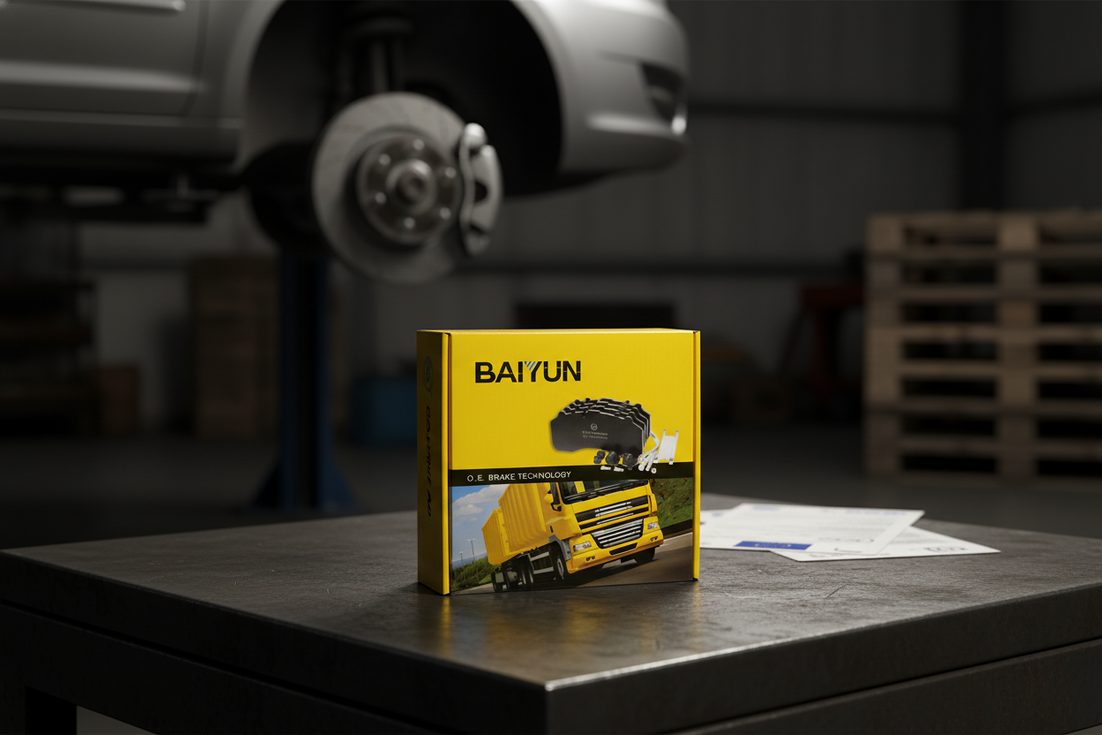
Every year, thousands of brake pad shipments get flagged at EU customs. Not because of a paperwork typo, but because the ECE R90 approval markings aren't legitimate—or worse, they're entirely absent. I've seen distributors lose entire containers over this. And the kicker? Most of these situations were 100% avoidable.
If you're importing brake pads into Europe, ECE R90 isn't a "nice to have" or a marketing sticker. It's a legal gatekeeper. Without it, you can't legally sell replacement brake pads for vehicles registered after 1999 anywhere in the EU. Customs won't clear your shipment. Your clients won't touch your product. And even if a non-compliant batch slips through, a single warranty claim or roadside inspection can unravel your entire distribution deal.
What trips up most buyers isn't ignorance of the regulation itself. It's the shortcuts they try to take around it—trusting self-declared certificates, chasing unrealistically low unit prices, or assuming all testing reports are built equal. This article zeroes in on those mistakes and lays out exactly how to sidestep them, drawing on decades of brake manufacturing experience at BAIYUN Brake.
What Are the Most Dangerous Assumptions Importers Make About ECE R90?
The assumption that burns buyers most often: "All Chinese suppliers are the same, so I'll just pick the cheapest one with an R90 logo." That's like saying all European restaurants serve the same food. Low-cost factories routinely copy the R90 mark without ever submitting pads to an accredited test lab. Counterfeit certificates are a known problem, especially for passenger car and light commercial vehicle pads, where the volume incentives to cheat are huge.
A second trap is treating ECE R90 as a one-time rubber stamp. The regulation isn't a paper you frame on the wall. Every compound change, every backing plate redesign, every shift in friction material formulation requires retesting. I've spoken with importers who bought the same SKU for three years and never asked if the formulation had been tweaked. When a new batch arrived with slightly harder friction material, it failed the speed sensitivity test during a random audit. The entire shipment was rejected at the port.
A third mistake is forgetting that ECE R90 covers not just the pad but the packaging and labeling. Each box must display the approval number, the manufacturer's identification, and the vehicle application code. Customs officers check this. If your supplier slaps a generic label on the side of the box, you're in trouble. At IATF 16949 certified facility, we've embedded digital traceability into every batch, linking the raw material lot to the final R90 test report. That's not overkill—it's the only way to sleep at night when you're moving 50,000 sets a month.
Rule of thumb: never assume a certificate is valid just because it exists. Verify the test house, the vehicle models homologated, and the link between your batch and that specific report.
Why Do So Many Distributors Underestimate the True Cost of Non-Compliant Pads?
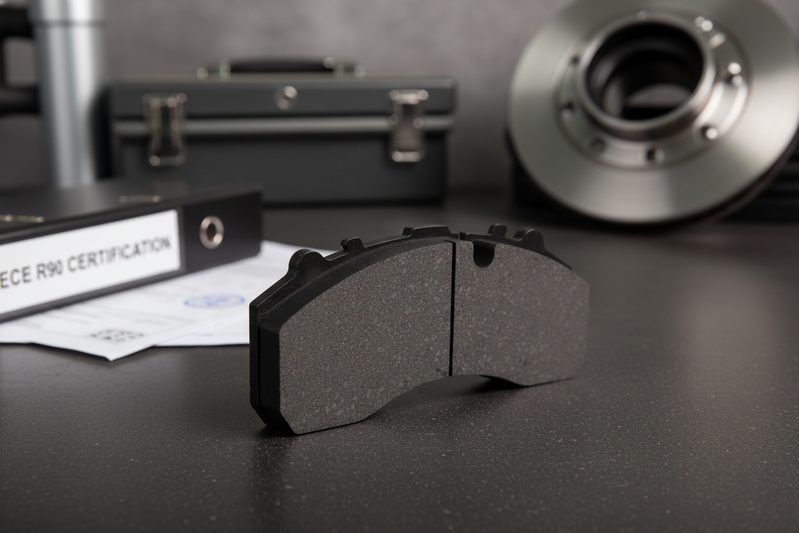
Let's run a quick math exercise. A distributor finds a Chinese brake pad quote at $2.80 per set, DDP, with a self-declared R90 mark. The legitimate ECE R90-certified quote from a factory like BAIYUN Brake comes in at $4.10 per set. That's a $1.30 difference. On a 5,000-set order, the buyer saves $6,500. Tempting, right?
Now factor in the downside. Three months later, a TÜV spot-check at a retail shelf reveals the pads degrade 19% faster during hot friction recovery than the original equipment. The distributor faces a mandatory recall across 17 EU member states. Legal fees, logistics, warehouse repacking, lost shelf space, and a shattered relationship with the retail chain cost upwards of €120,000. The "savings" evaporated 18 times over.
That's not a hypothetical. Between 2019 and 2025, the EU's RAPEX rapid alert system flagged over 60 brake pad batches for non-compliance, many from unnamed Asian suppliers. The average recall cost per item for automotive safety parts sits around €15–€25, according to industry data. For brake pads, the weight of a recall often doubles because the retailer expects the supplier to cover not just the product cost but the labor for removal and refitting.
Beyond the immediate hit, there's a brand damage multiplier. European wholesalers talk. A single non-compliance black mark can blacklist a distributor at major buying groups like Temot or ATR. Rebuilding that trust takes years, if it ever happens. So the real question isn't whether you can afford ECE R90-certified pads. It's whether you can afford not to use them.
Think of compliance as insurance, not a cost line—it's dramatically cheaper than the alternative.
How Can You Tell a Genuine ECE R90 Test Report from a Fabricated One?
The paper looks convincing. It's got a logo, a number, and plenty of stamps. But many forged reports fail under even basic scrutiny. Here's what I tell importers to check before placing a deposit.
First, the approval number must follow the ECE R90 format: a capital 'E' followed by a digit identifying the country (e.g., E1 for Germany, E2 for France, E13 for Luxembourg), then a slash, then the regulation number '90', followed by another slash and the type approval number. Anything like "R90 approved" without this exact string is meaningless. Second, the report must reference a specific vehicle test platform—make, model, year, front or rear application—because R90 homologation is vehicle-specific, not generic. If a supplier claims their ceramic pads are "universally R90 approved," they're either uneducated or deceitful.
Third, ask for the dynamometer test report trace ID. Look for friction coefficient data at 100°C, 200°C, 300°C, and 400°C, plus the hot and cold performance comparison against OE pads. At BAIYUN Brake, every CP-model brake pad ships with a batch-specific test summary showing the μ (mu) values across the full temperature sweep. Our CP2223 formulation, for instance, maintains a friction coefficient between 0.38 and 0.42 from 100 °C to 350 °C, well within the R90 tolerance band of ±15% of OE.
Finally, check whether the test lab is accredited to ISO 17025 and recognized by the type approval authority. Cheap test reports often come from small labs with no EU accreditation, which means border control won't accept them. If you're sourcing from China, your supplier should be able to hand you the original lab contact details so you can verify the approval directly.
If a supplier hesitates to share the lab name or the full test data, treat that as a red flag. Genuine ECE R90 certification leaves a clear, verifiable paper trail.
What Supply Chain Practices Protect You from These Common Mistakes?
The best way to avoid compliance trouble is to build a supplier relationship that's rooted in transparency, not just transaction. That starts with factory audits. Walk the production floor. Look at the mixing room—are raw materials batched by weight with computer-controlled precision, or is it a guy with a shovel? Why choose BAIYUN Brake? Because our automatic batch mixing system tracks every gram of friction material, ensuring batch-to-batch consistency within 2% of the target formulation. That's not a sales pitch; it's the foundation for passing the R90's strict friction behavior test every time.
Demand inline testing, not just end-of-line sampling. At our facility, shear strength, compressibility, and hardness are measured on statistically valid sample sizes from each production lot, not one pad per shift. This catches process drift before it becomes a batch rejection. If you're buying 10,000 ceramic and semi-metallic car brake pads for the EU market, you want that level of control baked into the price.
Another practice I recommend: negotiate a batch-specific compliance clause in your supply contract. Specify that each delivery must come with a certificate of conformance referencing the exact ECE R90 approval number and the test report date. If a batch gets flagged, the supplier covers 100% of the recall costs. This clause alone filters out the factories that aren't confident in their own quality. Pair it with a quarterly third-party audit, and you've created a procurement model that keeps non-compliant product out of your warehouse.
Don't forget the labeling. Work with your supplier to pre-print the ECE R90 approval mark, the country code, and the part number on every box sleeve. At BAIYUN Brake, we ship in retail-ready packaging that includes the WVA number, the vehicle application, and the homologation details, so your customers never have to guess whether the pad is legal. For commercial vehicle brake pads running on heavy-duty routes, the right labeling can mean the difference between passing a pit inspection and being taken off the road.
A transparent, audited supply chain is the strongest shield against compliance surprises.
FAQ
Q: Is ECE R90 required for all brake pads sold in Europe?
A: Yes, for all replacement brake pads and linings intended for vehicles registered in the EU after September 1999. It's a type-approval requirement that verifies friction performance, speed sensitivity, and mechanical properties are within 15% of the original equipment across defined temperature ranges. Pads sold without this mark are illegal for road use.
Q: Can I sell brake pads with a self-declared ECE R90 certificate?
A: No. Self-declaration holds no legal weight. ECE R90 approval must be issued by a technical service accredited by an EU member state, based on physical dynamometer testing. Customs authorities and market surveillance bodies reject self-declared documents outright.
Q: How often must a brake pad be retested to maintain R90 compliance?
A: Retesting is required whenever the friction material formulation, the backing plate design, or the production process changes in a way that could affect braking performance. Even a minor raw material substitution can trigger the need for a new report. Many serious suppliers run annual conformity of production tests to keep their approvals valid.
Q: What should a distributor do if a batch gets stopped at EU customs?
A: Immediately request the official customs notification and the laboratory test results (typically from a lab like TÜV or DEKRA). Contact your supplier to match the batch with its ECE R90 approval number. If the supplier can't produce a verifiable test report linked to the stopped batch, the goods will likely be detained, re-exported, or destroyed, and you'll need to activate your recall contingency plan.
Q: How do I verify a Chinese supplier's ECE R90 certificate is legitimate?
A: Ask for the original type approval number and the name of the technical service that conducted the tests. Cross-check with the issuing authority's database or contact the lab directly. Legitimate certificates have a unique approval number that can be traced. If the supplier refuses to share this information, walk away.
Stop Gambling with Your European Market Access
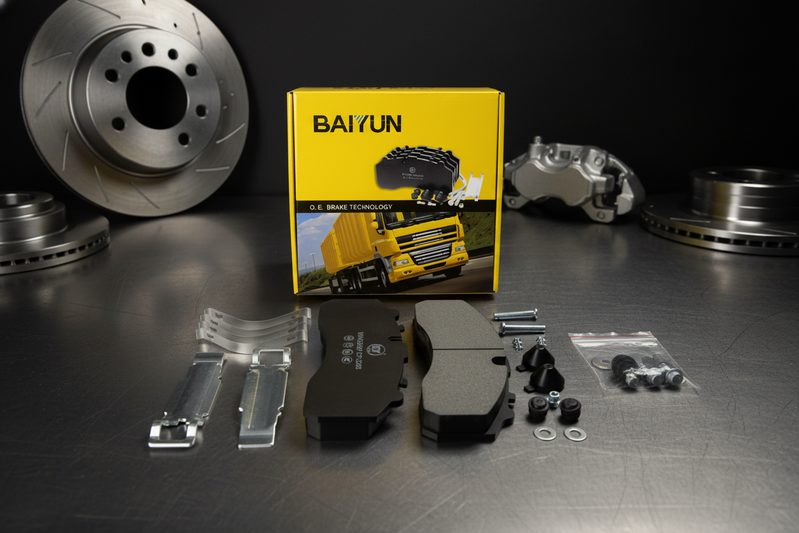
I'm not saying you need to be a brake engineer to import pads successfully. But you do need to treat ECE R90 as the bedrock of your procurement strategy, not an afterthought. Every container that leaves a Chinese port bound for Rotterdam or Hamburg carries your reputation along with the freight. The cost of a genuine certified pad is marginal compared to the cost of being shut out of the European market.
If you're sizing up a new supplier, skip the guesswork. Request the full R90 test package up front. Ask for a factory video call. Probe their raw material traceability. A reputable factory won't flinch at those questions—they'll welcome them. At BAIYUN Brake, we've spent years integrating IATF 16949 quality management with ECE R90 homologation processes precisely so our distribution partners never have to worry about a customs impound order.
Ready to secure your supply chain with ceramic and semi-metallic car brake pads or heavy-duty commercial vehicle brake pads that actually hold their approvals? Request a wholesale quote today and let's get you the documentation that keeps your sales channel flowing.
Was this article helpful?
Average Rating: 5/5 (834)