
Why ECE R90 Certified Brake Pads from a China Supplier Are Non-Negotiable for European Brake Pad Sales
Summary:
ECE R90 certified brake pads China supplier compliance is not optional if you want to sell replacement brake pads in the European Union. Importers and distributors often make costly mistakes—confusing E-marks with R90, trusting fake certificates, or overlooking vehicle-specific approvals. This article breaks down the five most common compliance errors and how to avoid them when sourcing from a manufacturer with IATF 16949 and ECE R90 certifications like BAIYUN Brake, so you can keep your shipments moving and your customers safe.
Why ECE R90 Certified Brake Pads from a China Supplier Are Non-Negotiable for European Brake Pad Sales
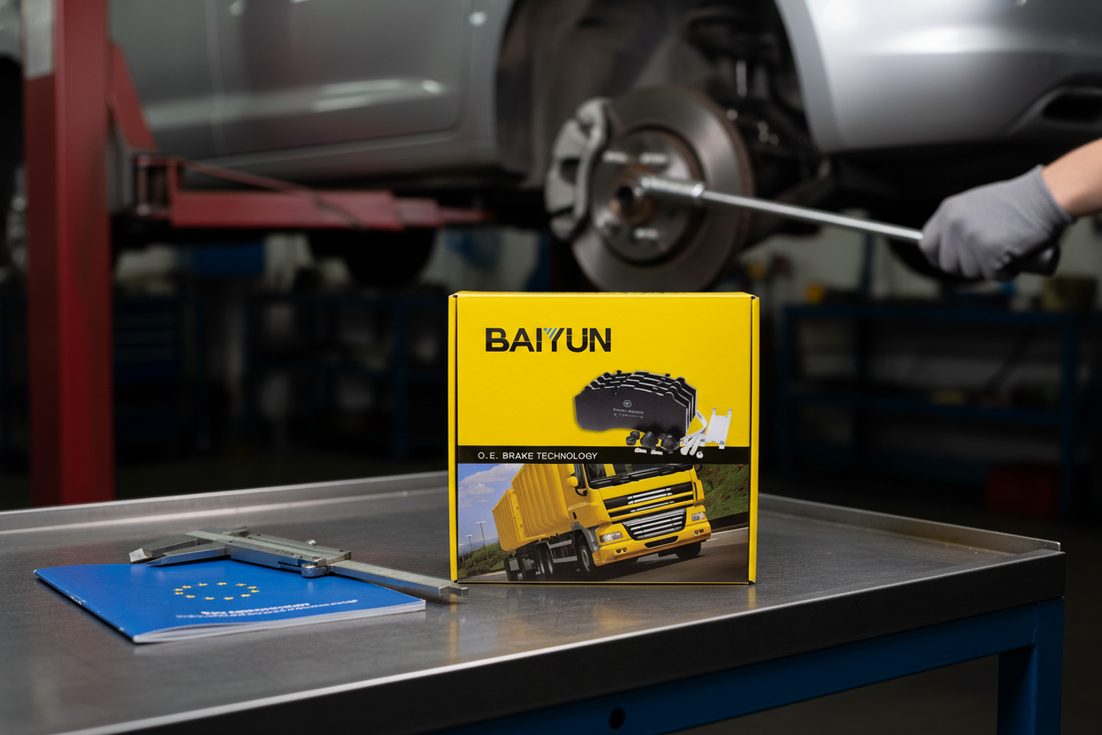
A container of brake pads held at Rotterdam customs because the paperwork shows the wrong approval mark. It happens more often than you'd think. European distributors importing brake pads from Asia assume a CE or E-mark is enough. It's not. ECE R90 is the mandatory certification for replacement brake pads and linings sold in the EU. And not all suppliers claiming compliance actually meet the standard.
That's why we're breaking down the five most costly mistakes importers make—and exactly how to avoid them.
Mistake 1: Confusing ECE R90 with an E-Mark or General CE Mark
The E-mark on a box isn't the same as ECE R90 approval. An E-mark simply shows the product meets an EU directive—often for electromagnetic compatibility or safety. Brake pads under ECE Regulation 90 require a specific approval number, performance testing, and conformity of production audits. If you see a product bearing "E13 90R-023456," that's the real deal. Anything else? Red flag.
Distributors get burned here because they trust a glossy certificate without checking the technical details. A proper ECE R90 certified brake pads China supplier like BAIYUN Brake will provide you the approval data sheet and allow you to cross-check the number against the United Nations database. Don't just scan it—verify it.
The fix: Insist on seeing the original test report from an accredited technical service (like TÜV or IDIADA). IATF 16949 certified facility quality systems make this verification straightforward because batch records and approval documents are always accessible.
Mistake 2: Buying on Price Alone Without Checking Approval Authenticity
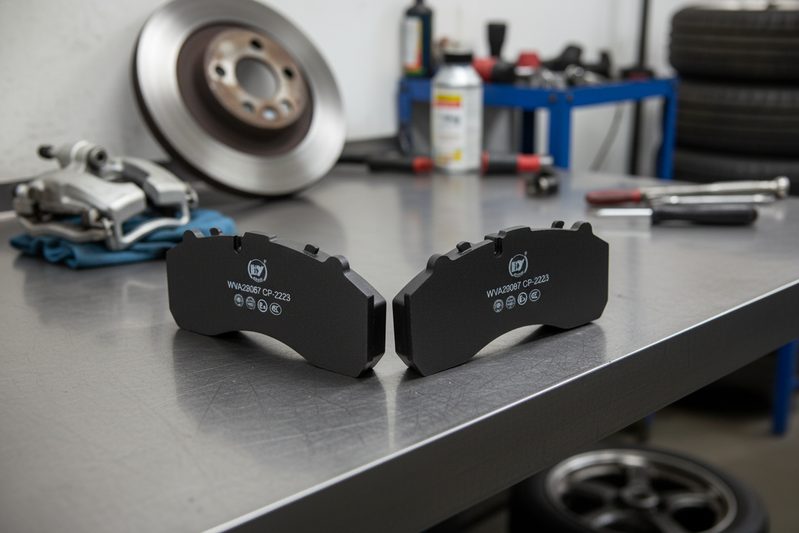
Price wars in the aftermarket are brutal. So it's tempting to grab the cheapest FOB quote and run. But here's the problem: some factories fake ECE R90 certificates. They copy the approval number from a competitor's test report, stamp it on a box, and hope no one notices. Customs in Germany or France will notice. They'll test your shipment. If the friction coefficient or material composition doesn't match the homologated sample, the entire batch gets quarantined—or destroyed.
We've seen a distributor lose two months of sales because they trusted a trader with no factory audit rights. The pads arrived, but the approval number belonged to a different manufacturer. The cost of that mistake was €28,000 in penalties, storage fees, and lost customer trust.
How to avoid this: Ask the supplier for a copy of the ECE R90 test report that matches the EXACT product part number. BAIYUN Brake, for instance, openly shares passenger car brake pad test report data, and you can cross-reference the approval number with the vehicle model in the regulation's annex. Authentic approvals can't be faked if you do the 10-minute check.
Mistake 3: Assuming All Batches Perform the Same as the Tested Sample
ECE R90 isn't a one-time test. Regulation 90, Annex 4, requires the manufacturer to maintain "conformity of production"—meaning every batch leaving the factory must stay within ±15% of the homologated friction curve. A supplier without a solid quality management system can't guarantee that. One batch might stop 3 meters shorter; the next might cause brake judder after 5,000 km.
In BAIYUN Brake's own production, every batch undergoes dynamometer spot checks. The friction coefficient of our CP2223 ceramic formulation, for example, stays between 0.38 and 0.42 from 100°C to 350°C—exactly what the R90 approval demands. Without an IATF 16949 backbone, that consistency slips.
The takeaway: When you browse our passenger car brake pad range, notice that every SKU map comes with a documented friction history. That's not marketing fluff—that's R90 compliance working in the background.
Mistake 4: Ignoring Vehicle-Specific Approvals—One Size Doesn't Fit All
A common trap: You think that if a pad physically fits a caliper, it must be legal. ECE R90 approval is per braking system, not per pad shape. The regulation ties the pad to the vehicle model's original equipment braking curve. So a pad that fits both a VW Golf and a Skoda Octavia might only be R90 approved for the Octavia if the test was done on the Octavia's system. Using it on the Golf? That's illegal and a safety liability.
European distributors need to match part numbers to the specific approval list. BAIYUN Brake provides an approval matrix that cross-references every CP number with the approved vehicle models. For heavy-duty applications, the same rule applies. If you're stocking for trucks, request OEM commercial vehicle brake pad quote and ask for the vehicle homologation list before confirming the order.
Bottom line: Never assume interchangeability. Ask for the approval scope in writing.
Mistake 5: Overlooking the Supplier's Manufacturing Maturity
Not every ECE R90 supplier is created equal. The regulation sets a performance floor, but it doesn't control raw material sourcing, supplier management, or process stability. A factory that passed R90 with a carefully hand-picked sample may struggle to repeat it when production volumes hit 5,000 sets a month. That's where IATF 16949 becomes non-negotiable. This automotive quality management standard forces rigorous process control, from incoming steel to final lubrication.
BAIYUN Brake has held IATF 16949 certification for years alongside ECE R90. That combination means fewer field failures and lower warranty costs for you. We've been manufacturing friction materials since 1975—long enough to know that R90 isn't a one-off achievement; it's embedded in how the plant operates. When you why choose BAIYUN Brake as your long-term partner, you're choosing the kind of manufacturing maturity that prevents the mistakes above from ever reaching your warehouse.
Frequently Asked Questions
Q: How do I verify that my brake pad supplier's ECE R90 certification is genuine?
A: Ask for the exact approval number (format: Exx 90R-XXXXXX), then look it up on the UNECE database or on the authority's website that issued the approval (e.g., Kraftfahrt-Bundesamt in Germany). Compare the approval holder's name with the supplier's legal entity. A genuine supplier like BAIYUN Brake will also provide a copy of the test report from an accredited lab, matching the SKU you're buying.
Q: What happens if I import non-ECE R90 brake pads into the EU?
A: The goods get stopped at customs. They may be destroyed at your cost, and you face fines up to €250,000 depending on the member state. Your importer record gets flagged, making future Clearance tougher. There's no grace period—since September 1999, this has been mandatory for all passenger and commercial vehicle replacement pads.
Q: Does ECE R90 apply to commercial vehicle brake pads too?
A: Yes, vehicles in categories M2, M3, N2, N3 (buses, trucks, trailers) are covered. The testing is even stricter for heavy-duty applications because of the higher kinetic energy. BAIYUN Brake tests its CV pads on inertia dynamometers simulating up to 30-ton gross vehicle weight to secure R90 approval.
Q: Can a brake pad be ECE R90 approved but still cause noise or dust complaints?
A: Absolutely. ECE R90 focuses on stopping performance and mechanical integrity; it does not address NVH or dust generation. That's why you need to select friction material grades suited to your market's driver expectations. We help importers pair the right formulation (ceramic, semi-metallic) with the R90 certification to minimize those complaints.
Q: How often do ECE R90 approvals need to be renewed?
A: Approvals don't expire, but they must be maintained through annual conformity of production audits and must cover any changes to the pad material or vehicle application. If a supplier changes a raw material supplier, the approval may need to be re-validated. Working with an IATF 16949 supplier ensures these changes are managed correctly.
Look, selling brake pads in Europe without solid ECE R90 compliance is like driving with the handbrake half on—you'll move, but you'll burn out fast. The mistakes we've outlined cost real time and money, but they're all preventable when you partner with a manufacturer that treats compliance as a process, not a piece of paper.
Ready to avoid these pitfalls? Browse our complete catalog of ECE R90 certified pads, then submit your inquiry to our sales team for wholesale pricing and approval documentation.
Was this article helpful?
Average Rating: 5/5 (1225)