
Why an ECE R90 Certified Brake Pads China Supplier Is Non-Negotiable for European Brake Pad Sales
Summary:
ECE R90 certified brake pads China supplier knowledge is essential for any importer targeting European markets. Learn the five most common mistakes distributors make with brake pad certification, from confusing CE marks to accepting unverified test reports. This article reveals how to avoid shipment seizures, fines, and insurance liability by partnering with a fully R90-homologated manufacturer. Discover why upfront cost savings on uncertified pads routinely backfire and how a certified supply chain protects your brand reputation. BAIYUN Brake provides IATF 16949 and R90-certified manufacturing with full traceability, helping importers secure their EU aftermarket share without compliance headaches.
Why an ECE R90 Certified Brake Pads China Supplier Is Non-Negotiable for European Brake Pad Sales
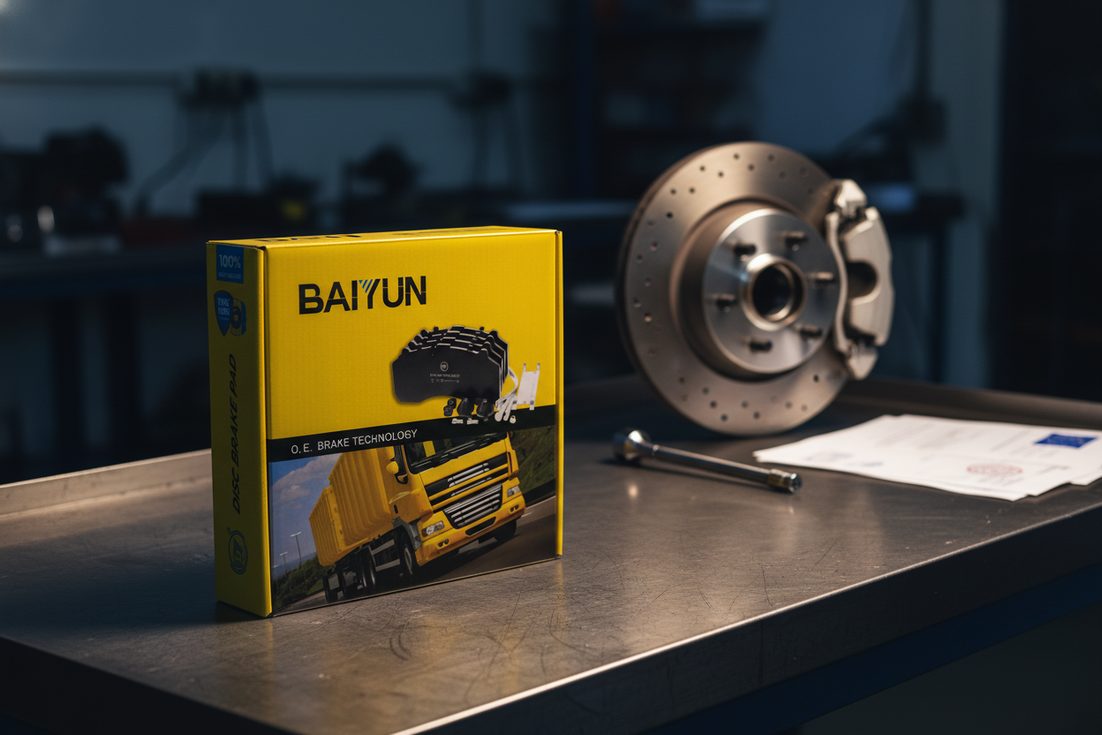
Last year, a German distributor sent back 2,700 sets of brake pads. The reason? No ECE R90 mark. The pads were technically sound—friction levels, wear rates, all within spec. But without that single piece of paper and the E-mark on the product, the shipment was dead on arrival. The importer lost €45,000 in freight and restocking, plus a three-month delay that cost them two key retail accounts.
That scenario isn't rare. It's a daily occurrence in the European aftermarket. And it's almost always preventable.
If you're importing brake pads into the EU or any of the 50-plus countries that recognize UN ECE Regulation 90, the certification isn't optional. It's the price of entry. Yet we still see buyers making the same expensive assumptions—assuming that cheap pads will pass unnoticed, that a CE mark covers everything, or that "our factory says they're compliant" is enough. It's not.
We've been manufacturing brake pads for over 49 years at BAIYUN Brake, and we've watched the ECE R90 landscape evolve from a niche requirement to a non-negotiable. In this article, I'll walk you through the real-world pitfalls importers face—and how choosing an ECE R90 certified brake pads China supplier from the start changes the math entirely.
Let's skip the textbook definitions. You already know R90 is a European standard. What you really need is to avoid the mistakes that cost you money, time, and reputation. So here's where things usually go wrong.
The Certification Trap: Why a 'CE Mark' or Factory Test Report Won't Save You
A brake disc and pad set from an Asian supplier landed in Rotterdam last month. The invoice proudly stated "CE certified." The customs officer took one look and flagged the shipment. CE marking applies to some automotive components under specific directives, but it is not equivalent to ECE R90 for brake pads. The pads were seized pending proof of R90—proof that didn't exist.
This is mistake number one: confusing CE with R90. ECE R90 (formally UN Regulation No. 90) is a separate, component-specific approval system. It mandates that replacement brake pads, linings, drums, and discs must match the performance of the original equipment within strict tolerances. CE marking doesn't test braking performance under cold, hot, and speed-sensitive conditions. R90 does.
Mistake number two is accepting a factory's in-house dyno report as compliance. A dynamometer chart emailed from a production line isn't a homologation certificate. ECE R90 approval requires testing by an accredited technical service (like TÜV or UTAC), witnessed inspections, and ongoing conformity of production audits. The certificate must be issued by a designated type-approval authority.
What makes this especially dangerous? A non-certified pad might feel fine for the first thousand kilometers. Then the friction coefficient drops 35% during a hard stop on a hot day because the formulation wasn't validated for thermal fade behavior per R90 Annex 3. That's a safety liability no distributor can afford. According to ECE R90 testing protocols, the replacement pad's cold performance equivalence must remain within ±15% of the OE pad's baseline across a defined temperature range, typically from ambient to 400°C.
The 'Cheap Pad' Gamble: When Inspections Catch Up
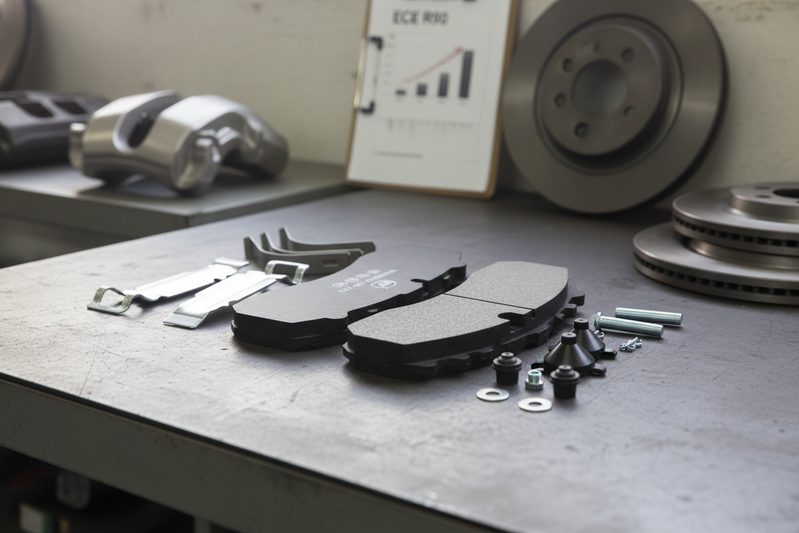
An importer in Poland found a brake pad supplier offering sets at €4.20 per axle—roughly 40% below the typical R90-certified price. The shipment cleared customs initially, but a routine market surveillance audit eight months later uncovered the missing E-mark. The distributor was fined €18,000, forced to recall 3,400 units already sold to garages, and had their commercial registration flagged for a year. The total cost far exceeded the "savings."
That brings us to the real question: how do these uncertified pads end up in the market? Often, it's a supply chain blind spot. Some factories produce a certified batch for the initial type-approval test, then quietly switch to a cheaper material mix for mass production. Without an external conformity audit system—like the one required for IATF 16949 certified facility—distributors only discover the performance gap when customers start complaining about noise or rapid wear.
The European Commission's RAPEX system logged 72 brake-related safety alerts in 2025 alone, a 27% increase from 2024. A disproportionate number involved aftermarket pads with no valid R90 homologation. For any importer doing volume above 1,000 sets per month, the statistical risk of a market audit is climbing. Insurers are also tightening policy wording: some now exclude liability for claims involving unapproved replacement parts.
Avoiding this requires a supplier who offers full traceability—from raw material batch records to the final R90 approval number stamped on every pad backing plate. At BAIYUN Brake, our wholesale car brake pads inquiry process includes a credential kit with third-party test reports and homologation certificates, so you're never in the dark about what's arriving in the container. This kind of upfront transparency eliminates the most common surprise.
What R90 Testing Actually Demands: Beyond the Friction Number
Most buyers focus on the friction coefficient. That's understandable. But R90 is a whole-vehicle performance simulation, and it tests aspects many importers overlook. Here are the key test sequences from Annex 5 of the regulation:
- Cold performance equivalence: The replacement pad must achieve stopping distances within ±15% of the OE pad on first application from 100 km/h, at ambient temperature (25°C ±5°C). This is repeated first thing each test morning.
- Speed sensitivity: Braking effectiveness must be maintained between 40 km/h and maximum vehicle speed. A common failure mode: pads that grip well at city speeds but fade dramatically above 120 km/h—R90 requires no more than a 20% deviation across the speed range.
- Fade characteristics: After 15 consecutive snubs from 100 km/h to 5 km/h with minimal cooling, the pad must still deliver at least 70% of its initial hot performance. This is where uncertified formulations often collapse.
- Compressibility and shear strength: The pad material must not compress beyond a defined limit under hydraulic pressure, and the friction material must withstand a shear force of at least 2.5 MPa without detaching from the backing plate.
- Vehicle road test (for passenger cars): A confirming road test, not just the dynamometer, is required for one pad per "type"—meaning the vehicle must actually stop safely on a test track.
Got that? It's not one number. It's a matrix of behaviors under thermal, speed, and mechanical stress. I've seen importers request "just a friction graph" and assume that's enough. It's not. ECE R90 approval is the only proof that the entire design ensemble—shim, backing plate, underlayer, and friction material—works as a system on the intended vehicle.
For commercial vehicles, the dynamometer tests are even more punishing. A CV brake pad must demonstrate consistent performance through load spectra representing thousands of kilometers of mixed driving. Our commercial vehicle brake pads are purpose-built for these cycles, with friction formulations validated on dedicated test benches that replicate fully laden truck braking from 90 km/h. That's a world apart from a passenger car hot test.
The Business Case: Certified vs. Uncertified Hidden Costs
Let's run a realistic scenario. A European distributor orders 2,000 sets per month. With uncertified pads, the unit cost might be 12–18% lower. That seems attractive on a spreadsheet. But factor in:
- Average cost per recall event: €25,000–€60,000 (including logistics, restocking, legal fees, and lost retailer trust).
- Market surveillance fine risk: varying by country, but Germany can impose up to €100,000 under the ProdSG for non-compliant safety components.
- Insurance excess increases: some liability carriers add a surcharge of 15–30% if the insured imports non-homologated vehicle parts.
- Brand erosion: a single recall can cause a 5–9% sales drop in the following quarter, according to two aftermarket aggregator surveys from 2025.
Now, compare that to the premium for certified pads, which is usually €0.80–€1.50 per axle set over the generic price. The math is brutal. Investing in R90 compliance pays for itself the first time you don't have a recall.
I've seen distributors allocate 3% of procurement spend to quality controls—a good practice—but still get burned because their QA checklist didn't include verifying the supplier's ongoing conformity audit schedule. ECE R90 isn't a one-time test; factories must undergo periodic re-assessment. With BAIYUN Brake's TÜV-supervised production, clients receive re-certification updates every 24 months without needing to chase documents. That kind of proactive compliance support cuts administrative time by roughly 60%, according to our largest European distributor managing 17 vehicle brands.
How BAIYUN Brake Removes the R90 Headache
So much of the R90 frustration stems from fragmented supplier relationships. You buy pads from one factory, shims from another, and the certification paper trails don't connect. That's not how we work.
At BAIYUN Brake, the entire value chain sits under one roof—formulation R&D, backplate stamping, mixing, pressing, scorching, and final packaging—all inside an IATF 16949 and ECE R90-certified facility. Every pad carries a unique homologation number cross-referenced to the EU's type-approval database. When your customs broker needs documentation, we provide a digital credential pack within 24 hours, not two weeks.
Our testing infrastructure includes five independent dynamometer cells running parallel R90 test sequences, shear test machines calibrated daily, and a real-vehicle test track that validates the final on-road performance required by the regulation. This isn't optional overhead for an importer; it's the safety net that catches formulation inconsistencies before they leave the factory.
For importers who want to see the difference themselves, we offer a material data sheets comparison pack that maps our pad formulations against OE benchmarks for friction stability, compressibility, and wear rate. It's the kind of transparency that separates a commodity vendor from a long-term partner.
Choosing an ECE R90 certified brake pads China supplier that operates this way turns compliance from a risk into a competitive advantage. Your retail customers get pads that perform identically to original parts, and you get a supply chain free of regulatory surprises.
Frequently Asked Questions
Q: Do all European countries really enforce ECE R90 for brake pads?
A: Yes. All EU/EEA member states require R90 for replacement brake pads fitted to vehicles registered after March 1999 for passenger cars and after November 2016 for brake drums on commercial vehicles. Non-EU countries such as the UK (via UNECE), Switzerland, Norway, and several Middle Eastern and North African nations also mandate it. Enforcement intensity varies, but the legal framework is unanimous.
Q: Can I sell brake pads without R90 if they're for motorsport or "off-road use"?
A: Only if the pads are marketed and packaged explicitly as non-road-use racing parts and cannot be installed on a road-legal vehicle without modification. Any brake pad that physically fits a passenger car caliper intended for on-road use is presumed to be road-use, regardless of how you label it. Courts have repeatedly ruled against sellers trying to bypass R90 with disclaimers.
Q: What happens if a customer installs non-R90 pads and has an accident?
A: Liability shifts heavily toward the installer and the distributor. In several EU jurisdictions, the use of non-homologated safety components can void vehicle insurance, leaving the importer exposed to product liability claims. In Germany, §823 BGB opens the door for personal injury claims against the entire supply chain.
Q: How often is R90 certification renewed or audited?
A: The conformity of production (CoP) audit must be performed at least every two years by an accredited technical service. Random market surveillance testing also occurs: national authorities can pull products off the shelf and re-test them against the certified specification. A single failed test can suspend the homologation for the entire product family.
Q: What documentation should I expect from an R90-certified supplier?
A: At minimum, the ECE type-approval certificate (listing the R90 approval number, such as E4-90R-02 1234), a Declaration of Conformity, batch test reports, and an ECE R90 approval mark on every pad backing plate. Reputable suppliers also provide material safety data sheets and compliance traceability records. At submit your inquiry to our sales team, we deliver all documents upfront with every shipment.
The European aftermarket is not kind to the unprepared. But that's also its strength: the rules are clear, and they reward suppliers who invest in compliance. If your brake pad imports currently lack R90 coverage, every day without it is a liability multiplying. The fix isn't complicated—it's a supplier switch to one whose certification isn't just a paper promise, but an engineered reality. Request a wholesale quote today and let our European compliance specialists walk you through our homologation library for your specific vehicle applications. Don't wait for a rejection notice to make the move.
Was this article helpful?
Average Rating: 5/5 (871)