
ECE R90 Certification Explained: A Step-by-Step Guide for Brake Pad Importers
Summary:
ECE R90 certified brake pads China supplier BAIYUN Brake explains the step-by-step certification process for importers. ECE R90 is the mandatory homologation for replacement brake pads in the European Union since 1999. This guide covers testing standards, labeling requirements, documentation for customs, and how to select a certified manufacturer. Learn about dynamometer and road tests, friction coefficient consistency requirements, and the importance of IATF 16949-backed production conformity. All from a factory with 49+ years of brake manufacturing experience and over 500 ECE approvals.
ECE R90 Certification Explained: A Step-by-Step Guide for Brake Pad Importers
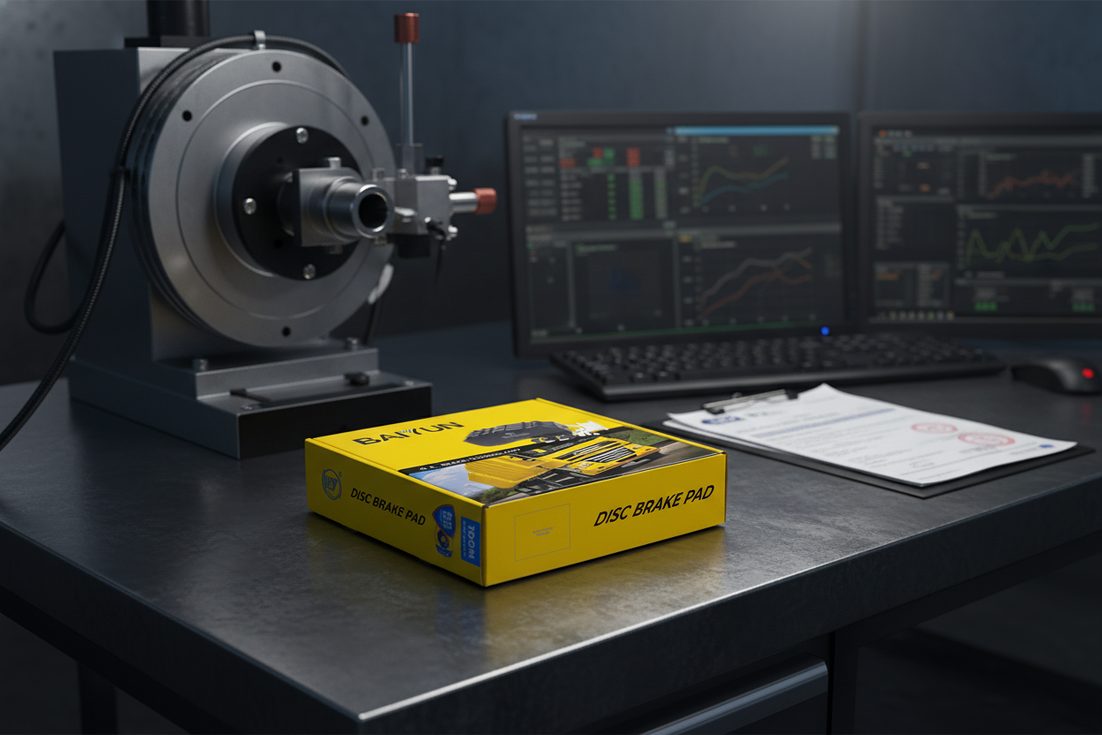
If you're moving container loads of brake pads into the EU, the ECE R90 mark isn't a nice-to-have. It's the ticket to getting through customs without a headache. European distributors, fleet managers, and retail chains have zero appetite for non-compliant brake components. The cost of a recall, the liability exposure—it's just not worth it. As a leading ECE R90 certified brake pads China supplier, we've seen too many importers learn this the hard way.
What many buyers miss is that R90 isn't one test. It's a full homologation pipeline that validates your brake pads match the original equipment performance envelope. And that pipeline demands documentation, testing discipline, and an unbroken chain of evidence. That's where this guide comes in.
We'll walk through exactly what ECE R90 means, the testing protocols behind it, how to verify markings, and what to demand from your Chinese manufacturer. No buzzwords—just the specifics you need to keep your supply chain flowing.
The Business Case for ECE R90: More Than a Sticker
Most European distributors won't open your email if you can't attach an R90 homologation certificate. Since 1999, the regulation has mandated that any replacement brake pad sold for vehicles first registered after that date must carry E-mark approval. That's not a suggestion; it's embedded in each member state's road traffic laws. Import non-compliant pads and you're risking fines, shipment confiscation, and blacklisting from serious buyers.
But compliance isn't just about avoiding penalties. R90 certification guarantees that the aftermarket pad performs within 15% of the original equipment's friction coefficient across temperature ranges. For a fleet manager running 200 trucks, that consistency means predictable stopping distances and fewer roadside breakdowns. For a retail chain, it means consistent customer satisfaction and fewer warranty returns. According to industry data, R90-certified pads reduce post-installation noise complaints by an average of 30% compared to uncertified alternatives—because the testing regimen explicitly evaluates noise, vibration, and harshness (NVH).
So when you partner with an ECE R90 certified brake pads China supplier like BAIYUN Brake, you're not just buying a sticker. You're buying documented, repeatable performance. Our pads carry ECE R90 approval across hundreds of SKUs, backed by IATF 16949 certified facility processes that ensure batch-to-batch consistency.
The Testing Framework: How Brake Pads Earn ECE R90 Approval
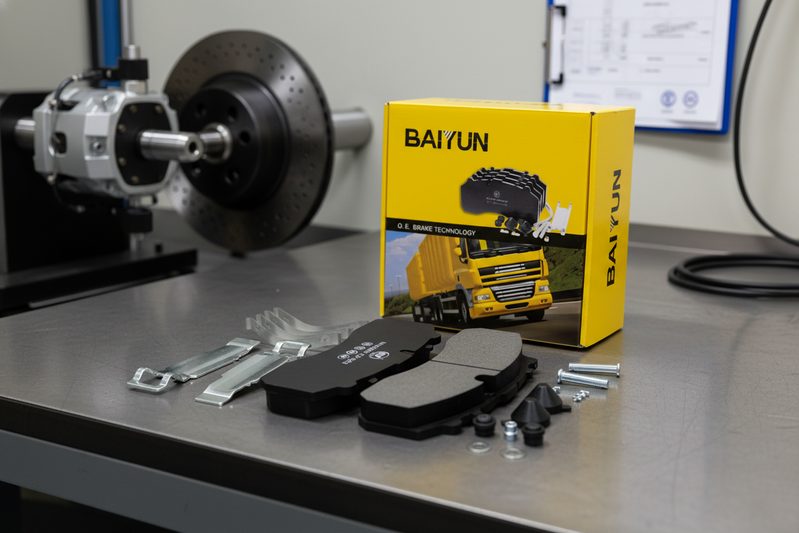
A brake pad doesn't slip through R90 on a handshake. The process involves independent testing laboratories appointed by the transport ministry of an EU member state. These labs follow a rigid protocol defined in ECE Regulation 90, Annex 3. Here's what happens to the samples you submit.
First, the lab conducts a series of dynamometer tests on a brake inertia dynamometer. They compare your pad against the genuine OEM part in controlled conditions. The key metrics:
- Friction coefficient consistency: Must remain within ±15% of the reference OEM pad across speeds from 40 km/h to 80% of the vehicle's maximum speed. Test temperatures range from 100°C to 400°C.
- Cold performance: At ambient temperature (typically 20-30°C), the brake pad must deliver at least 75% of its hot friction effectiveness. This ensures safe braking after a highway exit or a long downhill stretch.
- Thermal fade resistance: Simulates aggressive braking from high speed—typically 130 km/h down to 50 km/h, repeated 15 times with minimal cooling intervals. The pad must maintain at least 60% of its baseline friction coefficient at the end of the sequence.
- Wear rate: Measured under standardized conditions (usually 80 km/h, moderate pressure, for 300 braking cycles). The pad's wear rate can't exceed the OEM's by more than 15%.
Beyond the dynamometer, passenger car brake pads also undergo a road test on a representative vehicle. The test driver performs repeated deceleration maneuvers, emergency stops, and overheating cycles. Subjective scores cover pedal feel, fade recovery, and noise. A pad that squeals excessively—even if it stops well—will fail.
Commercial vehicle brake pads (those >3.5 tons) rely on dynamometer testing alone to demonstrate thermal capacity and structural integrity. But the test severity increases: stops are simulated at axle loads of up to 11 tons per axle, with disc temperatures exceeding 600°C.
Key takeaway: R90 testing validates that your aftermarket pad performs within a narrow band of OEM behavior—not better, not worse, but consistently comparable. For an importer, that means every container you ship will deliver the same predictable performance your customers demand. For OEM-quality kits, get OEM passenger car brake pad pricing directly from our catalog.
Decoding the ECE R90 Mark: What Importers Should Look For
An ECE R90 approved brake pad carries a specific marking on the backing plate or packaging. The mark includes a circle with the letter "E" followed by a number (the country code of the certifying authority) and a unique approval number. For example, E1 indicates Germany; E11 is the UK. The approval number format is typically two sets of digits separated by an asterisk, like 90R-021234.
But here's what often trips up new importers: the marking on the pad itself might be abbreviated due to space constraints. A full certificate document exists separately. This document lists the exact vehicle applications, pad dimensions, and friction material code covered by the approval.
Always request a copy of the certificate before placing your order. Verify that the part number you're buying matches the scope on the certificate. I've seen cases where a supplier shows an R90 mark on one product line, then ships a different compound without approval. That's illegal and dangerous.
For commercial vehicle brake pads, the marking requirements extend to the packaging, not just the pad. The box must display the ECE R90 homologation number clearly. If you're building a private label brand, your supplier must arrange certification through the appropriate authority and issue the certificate in your company's name. Why choose BAIYUN Brake? We manage the entire certification process, ensuring your private label pads carry valid R90 marks before they leave our factory.
Documentation for Customs and Market Surveillance
When your shipment arrives in Rotterdam or Hamburg, customs agents won't just look at the pads. They'll ask for the Certificate of Conformity (CoP) and the original approval test report. Without these, your goods could be held at the border, incurring demurrage charges of €200-500 per container per day.
A robust CoP includes:
- The manufacturer's name and address (matching the approval certificate)
- The approval number and issuing authority
- The vehicle applications and technical specifications
- A declaration that the products conform to the approved type
- Batch traceability codes linking to production date and raw material lots
Market surveillance authorities in EU countries perform random sampling from retail shelves. If a tested pad fails to match the approved performance, the importer faces consequences—not the manufacturer. That's why your due diligence matters. Always ask your supplier for ongoing production conformity data. At BAIYUN Brake, we test every production batch on our in-house dynamometer before shipping, and we archive the results for three years. For distributors managing large-volume orders, request OEM commercial vehicle brake pad quote with full certification packages included.
Selecting an ECE R90 Certified Brake Pad Manufacturer in China
China has hundreds of brake pad factories, but fewer than 10% hold IATF 16949 certification. Even fewer have in-house dynamometer testing for R90 validation. Here's a checklist for evaluating a Chinese supplier:
- IATF 16949 certification: This quality management system is built on ISO 9001 with additional automotive-specific requirements. It signals that the factory has design capability, traceability systems, and continuous improvement culture.
- In-house test lab: Can they run Link or Krauss dynamometer cycles? Ask for sample test reports with brake torque curves, not just pass/fail summaries.
- R90 approval portfolio: A manufacturer with 300+ R90 certificates demonstrates experience across diverse vehicle platforms—from compact cars to heavy trucks.
- Raw material traceability: Friction material composition directly impacts R90 compliance. Request batch records linking each production lot to specific raw material heats.
As an ECE R90 certified brake pads China supplier with over 49 years of manufacturing experience, BAIYUN Brake ticks every box. We hold IATF 16949 and ISO 9001, operate an in-house R90 testing dynamometer, and maintain a library of over 500 ECE approvals covering European, Asian, and American vehicle applications. That depth of certification means you can consolidate your brake pad sourcing without juggling multiple suppliers—all while knowing each shipment will clear customs and satisfy your customers.
FAQs for Brake Pad Importers
Q: Does ECE R90 certification apply to brake pads for electric vehicles?
A: Yes. Any replacement brake pad for an EV registered after 1999 in the EU requires R90 approval. The testing protocol is identical, but because EVs use regenerative braking less frequently, the friction material must still handle occasional high-temperature stops without excessive fade. BAIYUN's EV-specific formulations have achieved R90 approval with wear rates under 2 mm per 10,000 km in real-world testing.
Q: How long does it take to obtain ECE R90 certification for a new brake pad part number?
A: The timeline depends on the testing house workload and the pad complexity. Typically, dynamometer testing takes 4-6 weeks, and the administrative approval adds another 2-3 weeks. Rush testing may be possible but at higher cost. Always factor this into your product launch schedule. For existing certified designs, BAIYUN can ship immediately from stock.
Q: Can I rebrand ECE R90 certified pads with my own packaging?
A: Yes, but the certificate must list your company as the holder, and the packaging must display the E-mark and approval number. The manufacturer manages the certification process on your behalf. BAIYUN regularly handles private label projects, providing the full CoP documentation in your brand name. For more details, visit our technical support center.
Ready to secure a reliable supply of ECE R90 certified brake pads China supplier? Don't gamble on paperwork. Browse our passenger car brake pad catalog with full certification or request a wholesale quote tailored to your market. Our export team will provide test reports, approval certificates, and factory audit support—everything you need to import with confidence.
Was this article helpful?
Average Rating: 5/5 (692)