
Who else does there own maintenance on their trucks and trailers? Current situation, new calipers,rotors, brake pads and: Practical B2B Guide
Summary:
Who else does there own maintenance on their trucks and trailers? Current situation, new calipers,rotors, brake pads and wheel seals on drive axles is a recurring B2B buyer question. Fleet owners and distributors facing $2,000–$3,000 labor quotes for brake overhauls are weighing in-house replacement against outsourced service. This guide compares OEM and aftermarket commercial vehicle brake pads, rotors, and calipers, explains ECE R90 and IATF 16949 supplier qualifications, and provides a parts-and-labor cost table for drive axle brake jobs. BAIYUN Brake, a China-based brake pad manufacturer with 49+ years of experience, helps fleet maintenance teams and importers source certified CV brake pads and linings with consistent WVA references. The article covers MOQ, lead time, private label options, and a practical installation checklist to avoid warranty issues.
Who else does there own maintenance on their trucks and trailers? Current situation, new calipers,rotors, brake pads and: Practical B2B Guide
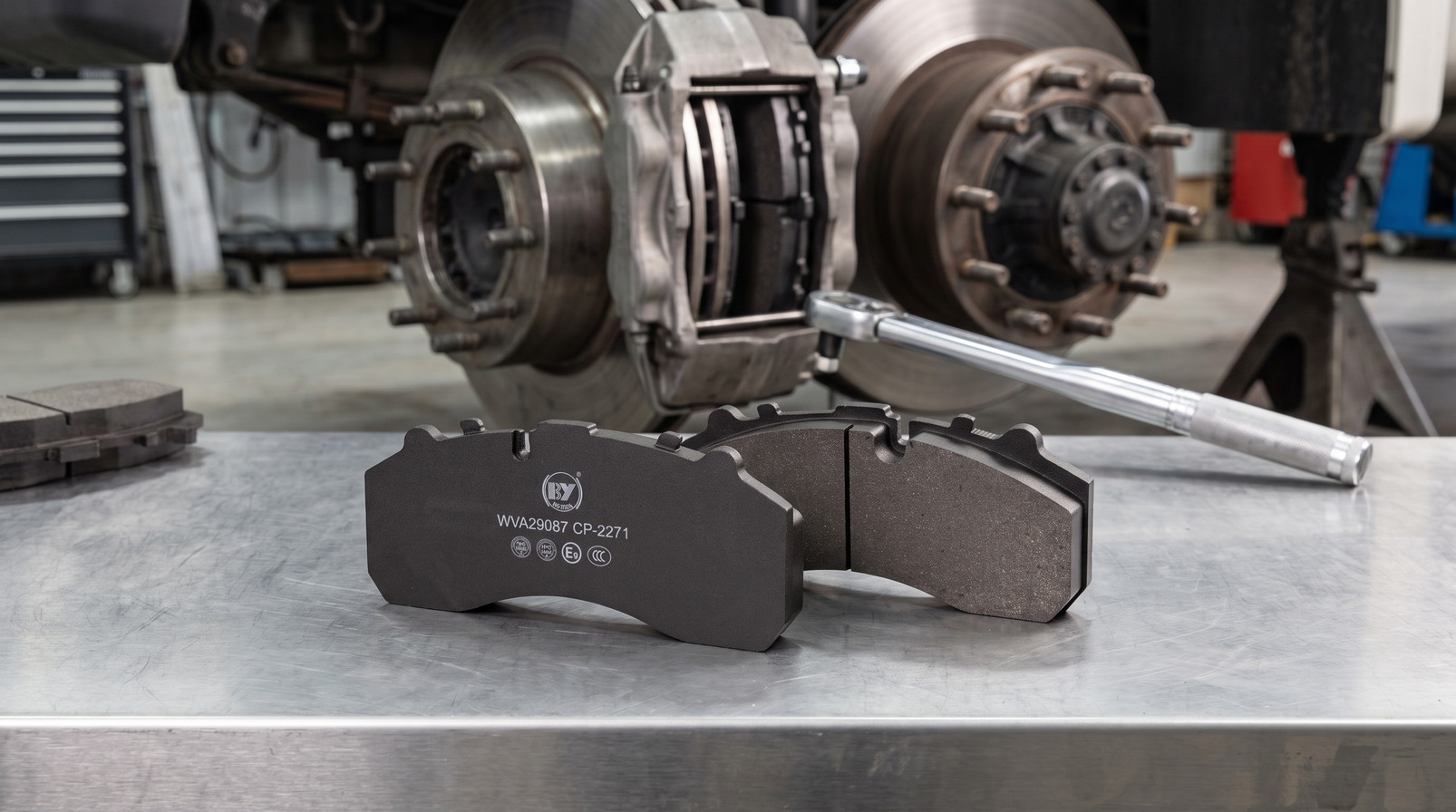
Quick answer: Who else does there own maintenance on their trucks and trailers? Current situation, new calipers, rotors, brake pads and wheel seals on drive axles is a common B2B question because outsourced brake jobs now run $2,000–$3,000 in labor alone. For fleet owners and distributors, in-house replacement using ECE R90 certified commercial vehicle brake pads, matched rotors, and calipers can cut total service cost by 30–45%, but only if you source from a brake pad manufacturer with consistent WVA references and batch-level test data. We'll break down the sourcing and installation logic.
What's Actually Driving the Shift to In-House Drive Axle Brake Maintenance?
Labor quotes for a full drive axle brake overhaul have climbed to $165–$220 per hour across many North American and European fleet markets. A shop billing 10–14 hours for calipers, rotors, pads, and wheel seals easily reaches that $2,000–$3,000 range fleet owners complain about. Parts aren't cheap either: two reman calipers can run $500–$900, rotors $800–$1,800, and a quality pad set another $80–$160. Add hub seals, hardware, and shop supplies, and you're looking at $3,500–$5,000 per drive axle.
The in-house alternative isn't just about saving the labor line. It's about controlling parts quality. A distributor or fleet maintenance manager who buys direct from a brake pad manufacturer can lock in one friction formulation across the whole fleet, instead of whatever brand the local parts counter happens to have. Request an OEM commercial vehicle brake pad quote and compare batch-to-batch friction data. BAIYUN Brake has supplied CV brake pads under private label for more than 49 years, and that consistency matters when you're doing 40–60 brake jobs a year.
There's another angle here. Commercial vehicle air disc brakes have become standard on many new trucks and trailers, especially in Europe and increasingly in North America. That means maintenance teams now handle floating calipers, guide pins, and pad wear sensors instead of the older S-cam drum brakes. The parts may be more precise, but the inspection logic is similar: if a caliper binds or a pad wears unevenly, you need to find out why before the rotor gets scored. That's one reason in-house maintenance works better when the buyer understands brake system behavior, not just part numbers.
How Do You Qualify a Truck Brake Pad Supplier for Drive Axle Maintenance?
Certifications are not wallpaper. ECE R90 approval means the brake pad has been tested against the original equipment reference pad and must stay within ±15% of its braking performance across cold and hot operating conditions. IATF 16949 goes further: it requires production traceability, PPAP documentation, and control plans that most unbranded workshops never maintain. When a fleet buyer asks for a commercial vehicle brake pad supplier, those two documents should be the first filter.
Ask for the WVA reference number. That's the industry-standard interchange code that helps you match pad shape, friction material, and backing plate across brands. If the supplier cannot provide a WVA reference, or if they hesitate on OE cross-reference data, that's a red flag. For specific WVA dimensions, OE numbers, and Meritor, BPW, SAF, Volvo, Scania, or Mercedes-Benz references, always confirm with supplier catalogue. Our IATF 16949 certified facility includes batch-level test reports with every export order, so you don't have to guess what's in the box.
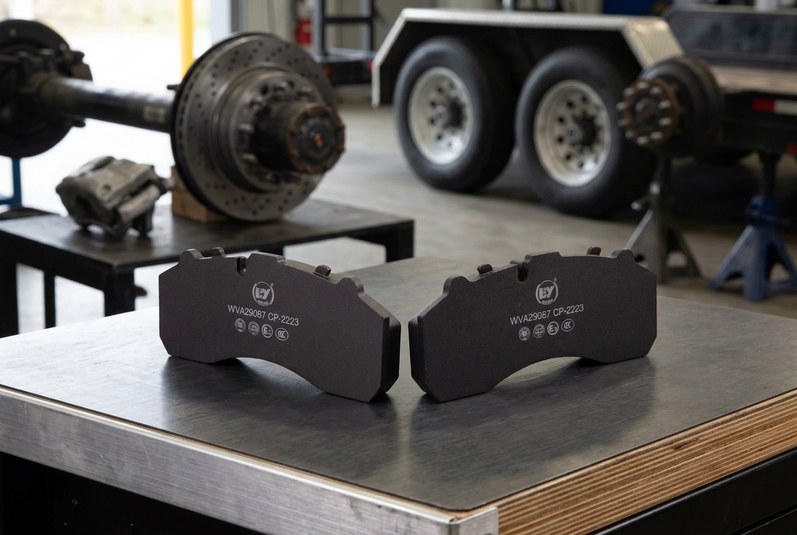
BAIYUN Brake has been manufacturing commercial vehicle brake pads and linings since 1979, long before air disc brakes became the default in European trailer markets. That history matters because it means we've seen the transition from drum to disc and we still support legacy drum brake linings for older fleet vehicles. Why choose BAIYUN Brake as your supply partner? For distributors, it usually comes down to three things: consistent friction coefficient, stable backing plate stamping, and reliable private label packaging.
What Should a Commercial Vehicle Brake Pad Replacement Checklist Include?
A drive axle brake job is not a pad slap. If you're doing new calipers, rotors, brake pads, and wheel seals, the sequence matters. Here's the checklist BAIYUN Brake recommends to its fleet and distributor clients:
- Confirm caliper slides move freely on pins or guide sleeves. If a caliper binds, the new pads will wear unevenly and overheat the rotor.
- Check both pads for even wear on the old set. Uneven clearance or pad wear is a sign the caliper needs service or replacement.
- Inspect rotor friction surfaces for scoring, heat checking, and rust bands. Rust on the contact surface indicates no pad contact, so determine why the caliper is not functioning.
- Replace wheel seals and hub gaskets every time the hub is pulled. A leaking seal will contaminate the new pads within a few thousand miles.
- Torque caliper bracket bolts and guide bolts to OEM specification. Never reuse one-time hardware on a commercial vehicle brake system.
- Record the pad WVA reference and batch number for warranty traceability.
- Bed new pads according to manufacturer procedure before returning the truck to revenue service.
For a deeper look at the financial side, our brake maintenance cost analysis breaks down total cost of ownership by vehicle class and duty cycle. The short version: an hour of inspection now usually saves 8–10 hours of reactive repair later.
How Do OEM and Private Label Options Work for Commercial Vehicle Brake Pads?
Private label and OEM supply are not the same as off-the-shelf redistribution. When a brake pad manufacturer quotes an MOQ, they're often quoting a specific SKU with a dedicated backing plate, friction compound, and print. BAIYUN Brake's export team typically asks for your annual volume, target friction code, and WVA reference before confirming lead time. If you're unsure of the WVA reference, confirm with supplier catalogue.
Logistics matter too. Sea freight from Chinese ports to Rotterdam, Houston, or Jebel Ali usually runs 28–40 days, but crating and pallet density affect the landed cost. A mixed container with brake pads, linings, and hardware can improve freight efficiency. Wholesale CV brake lining inquiry often combines with disc pad orders for better cube utilization. That's where a supplier with IATF 16949 process control helps: fewer batch rejects, fewer inspection hassles at the port, and fewer warranty claims from your own fleet customers.
One more point on packaging. If you're building a distributor brand, the pad set should include the right hardware clips, a clear WVA label, and a box that survives container shipping. BAIYUN Brake runs humidity-controlled packing and palletizing for CV brake pads, which reduces rust claims in humid destination ports. It's a small detail until you receive a container with 15% surface corrosion.
What Does the Parts and Labor Math Look Like for a Drive Axle Brake Job?
Let's put real numbers on the table for a typical dual-axle truck or trailer drive axle overhaul. These are planning ranges based on common market prices, not a quote from any single supplier:
| Item | Outsourced Dealer Cost (USD) | In-House Aftermarket Cost (USD) | Notes |
|---|---|---|---|
| Calipers (2 drive axle) | $500–$900 | $350–$700 | Choose reman or new; check piston boot condition. |
| Rotors (2) | $800–$1,800 | $600–$1,400 | Thick ventilated commercial discs; match minimum thickness. |
| Brake pad wheel set | $80–$160 | $50–$110 | ECE R90 pads with WVA reference; confirm with supplier catalogue. |
| Wheel seals & hub kits | $200–$400 | $150–$300 | Replace any time hub is removed. |
| Labor | $2,000–$3,000 | $0–$600 internal | In-house tech time at loaded wage. |
| Total range | $3,580–$6,260 | $1,150–$3,110 | Savings typically 30–50%. |
The spread depends on whether you run pricier OE-branded rotors or a quality aftermarket equivalent. For imported commercial vehicle brake pads, the landed cost per wheel set often drops 20–35% compared with dealer-only pads, while maintaining ECE R90 performance. That's the number that matters for a fleet running 100 trailers.
What Are the Most Common Installation Mistakes That Void Brake Pad Warranty?
Warranty claims rarely come from a single part failure. They come from installation shortcuts that transfer stress to the new pad or rotor. The most frequent issues we see in distributor feedback:
- Reusing old caliper guide bolts that have stretched threads or worn plating.
- Not cleaning the hub face and rotor mounting surface, causing lateral runout and pedal pulsation.
- Installing pads with the wear indicator facing the wrong direction, so the warning tab never contacts the disc.
- Skipping the bedding procedure and putting the truck straight back into heavy stop-and-go service.
- Mixing friction formulations on the same axle, which creates uneven brake balance and premature pad taper.
If your team is new to air disc brakes, spend 45 minutes on caliper slide and guide pin lubrication. It's boring, but it prevents the most expensive warranty returns. BAIYUN Brake includes installation notes with every CV pad shipment, and our technical team can review your torque sequence if you're shifting from drum to disc.
Frequently Asked Questions About In-House Truck and Trailer Brake Maintenance
Q: What certifications should I require from a truck brake pad supplier?
A: Ask for ECE R90 compliance for pads sold in ECE markets and IATF 16949 for manufacturing quality. ECE R90 requires braking performance within ±15% of the original equipment reference pad, with cold and hot friction stability testing. This weeds out many low-cost unbranded options.
Q: What is a WVA reference and why does it matter for fleet buyers?
A: The WVA reference is the industry-standard interchange code that identifies pad shape, friction material, and backing plate. Fleet buyers use it to match pads across multiple truck and trailer makes without relying on a single OE part number. If a supplier cannot provide the WVA reference, confirm with supplier catalogue before ordering.
Q: How do I avoid counterfeit or mixed-quality commercial vehicle brake pads?
A: Buy direct from a manufacturer with full traceability, not from anonymous marketplace sellers. BAIYUN Brake assigns batch numbers and provides test reports with every export order. Counterfeit pads often skip the backing plate coating and use inconsistent friction material, which shows up as uneven wear within the first 10,000 miles.
Q: What is a realistic MOQ for private label CV brake pads?
A: MOQ varies by SKU, backing plate complexity, and packaging requirements. Many export manufacturers quote per SKU rather than per container, so a distributor with 20 active WVA references can often split the order across mixed pallets. Contact our export team with your target WVA list for a precise quote.
Q: How long does it take to ship commercial vehicle brake pads from China?
A: Standard sea freight from Chinese ports to Rotterdam, Houston, or Jebel Ali runs 28–40 days, depending on routing and customs clearance. Air freight is faster but typically only makes sense for urgent prototype or small-batch orders. BAIYUN Brake's logistics team can provide port-to-door options with insurance.
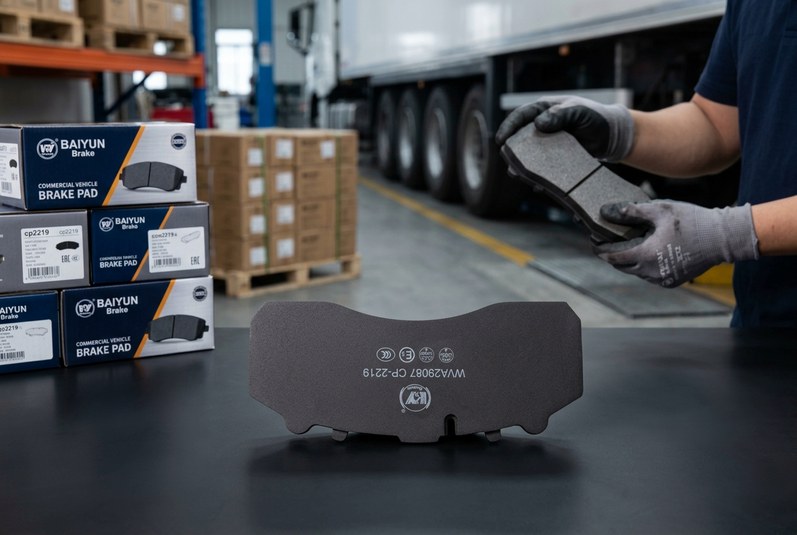
If you're already doing your own truck and trailer brake work — or if you're a distributor supplying the fleets that do — the real question isn't whether to go aftermarket. It's whether your brake pad supplier can give you the same formulation, batch after batch, with ECE R90 and IATF 16949 paperwork. Frankly, the price gap between certified and uncertified pads rarely justifies the warranty risk on a commercial vehicle. Get pricing for commercial vehicle brake pads and compare the landed cost against your current local supplier. Then submit your inquiry to our sales team with your WVA reference or application list.
Was this article helpful?
Average Rating: 5/5 (183)