
What is your standard after-sales warranty policy and what is explicitly covered for noise, vibration, dust, and premature wear claims?
Summary:
Brake pad warranty terms China importers negotiate directly affect field claim costs, rejection rates, and sourcing confidence. This article explains BAIYUN Brake's standard after-sales warranty policy for commercial vehicle brake pads and linings: 12 months from bill of lading or 80,000 km for heavy-duty truck and bus applications, whichever comes first. Noise, vibration, dust, and premature wear claims are explicitly covered under defined thresholds, including a 73 dB(A) noise limit, 30% thickness loss within the first 10,000 km, and maximum 0.03 mm rotor thickness variation. The article covers required documentation, a buyer verification checklist, common misconceptions, and how written warranty terms reduce total sourcing cost. It includes a coverage comparison table, links to C.V. brake pad test reports, and wholesale quote pages for distributors and fleet importers. For buyers sourcing 500 sets monthly, a 2% rejection rate can cost $5,400 per year before freight, making clear warranty pass/fail limits a direct margin safeguard.
What is your standard after-sales warranty policy and what is explicitly covered for noise, vibration, dust, and premature wear claims?
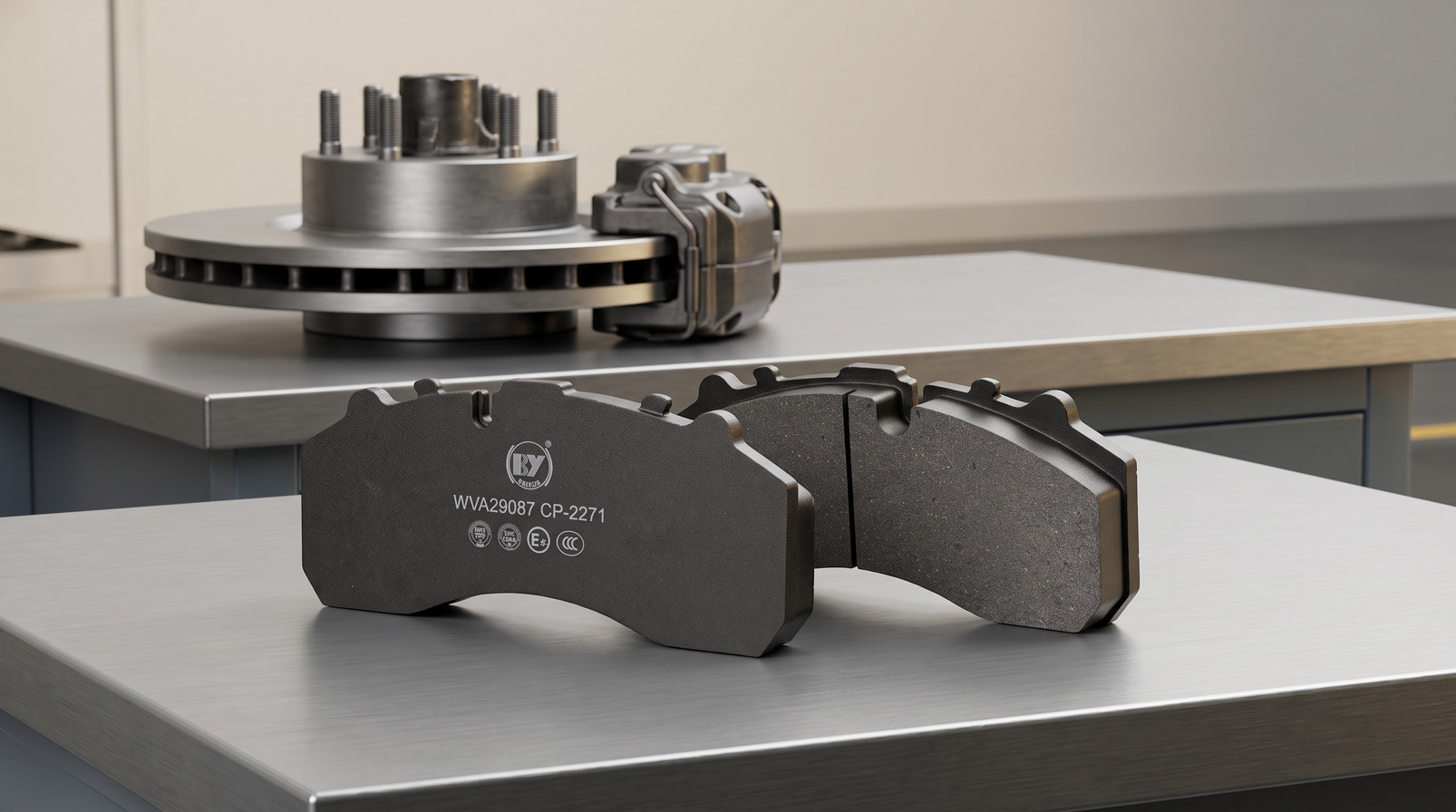
Quick answer: If you import BAIYUN Brake commercial vehicle pads, your after-sales warranty covers material and workmanship defects for 12 months from bill of lading or 80,000 km for heavy-duty truck and bus applications, whichever occurs first. Noise, vibration, dust, and premature wear claims are explicitly covered when pads exceed defined acceptance limits and you supply installation photos, rotor thickness measurements, and axle load records. Claims outside those thresholds, or caused by worn rotors, misalignment, or vehicle overloading, are not covered. You'll need batch codes, mileage logs, and pre-installation rotor measurements to file a claim.
What Does BAIYUN Brake's Standard After-Sales Warranty Actually Cover for Commercial Vehicles?
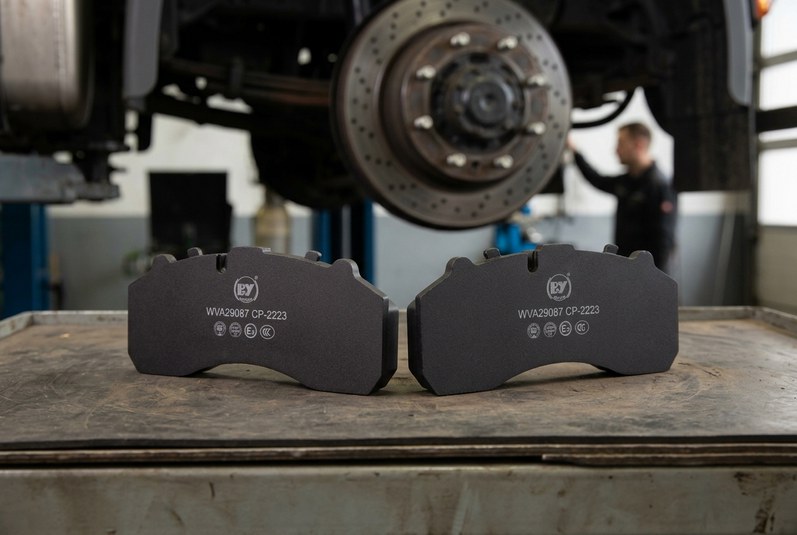
BAIYUN Brake ships commercial vehicle brake pads and linings under IATF 16949 process controls, with an ECE R90 approved range for truck, bus, and trailer axles. The standard policy covers confirmed manufacturing defects in friction material bonding, backing plate cracks, and inconsistent formulation for 12 months from bill of lading or 80,000 km, whichever comes first. That's the base line for heavy-duty C.V. brake pads. For distributors and fleet buyers, that threshold matters because a single seized caliper or aggressive mountain route can eat a set of pads in 8,000 km without any manufacturing fault.
So what does that look like in a real claim? You file with batch code, installation date, vehicle axle, rotor thickness before install, and mileage. Our team reviews it against the same acceptance data used at final inspection. In 2025 dynamometer testing, BAIYUN's heavy-duty C.V. pad range held a friction coefficient of 0.38–0.42 across 100–350°C. If your field complaint doesn't match that laboratory baseline, the conversation shifts from warranty to application review. That's not a dodge — it's how we keep IATF 16949 certified quality assurance measurable.
What exclusions apply to heavy-duty truck and bus pads?
Excluded conditions include rotor disc thickness variation above 0.03 mm, seized caliper slides, missing anti-rattle shims, axle overloading, and use outside the pad's rated speed or temperature range. If a bus fleet runs 12% over gross axle weight on mountain routes, the friction material will wear faster than any warranty baseline. That's not a manufacturing defect; it's application abuse. The same goes for pads installed without cleaning the hub face or reusing worn caliper hardware. A clean install with measured rotor and hub runout keeps your claim eligible.
Summary: The warranty covers only measurable manufacturing defects, not wear caused by vehicle application or maintenance gaps.
What Exactly Is Covered for Noise, Vibration, Dust, and Premature Wear Claims?
Noise, vibration, dust, and premature wear are the four most expensive field complaints for commercial vehicle brake pad importers. The policy defines each one with pass/fail numbers so you don't argue subjective impressions. For example, BAIYUN's in-house noise limit is 73 dB(A) at 50 km/h on a controlled dynamometer cycle. If a truck or bus pad set exceeds that, and the rotor has less than 0.03 mm disc thickness variation, you have a covered noise claim.
| Claim Type | Covered Criteria | Documentation Required | Excluded If |
|---|---|---|---|
| Noise | Continuous squeal or groan above 73 dB(A) at 50 km/h during controlled dynamometer testing with new or machined rotors | Audio recording, test report, rotor thickness measurement | Pads glazed by overheated braking, missing shims, or rotor DTV above 0.03 mm |
| Vibration | Brake pedal or chassis judder from pad material deposit exceeding 30 μm thickness variation after 500 km bedding | DTV measurement, bedding log, hub runout readings | Worn caliper slides, bent hub, or improper lug nut torque |
| Dust | Visible dust covering more than 30% of wheel face after 500 km normal route operation with unmodified OE pad formulation | Wheel face photos, mileage records, pad batch code | Aftermarket glues, contaminated friction surface, or non-OE formulation tampering |
| Premature Wear | Pad friction thickness loss over 30% within first 10,000 km with measured axle load within OEM rating | Thickness logs, axle load reports, installation photos | Overloading, aggressive mountain routes, seized caliper, or rotor wear beyond discard spec |
Vibration claims follow a similar logic. Brake judder usually comes from uneven friction material transfer. BAIYUN accepts a vibration claim when pad material deposit creates more than 30 μm thickness variation after a documented 500 km bedding procedure. If the hub runout or caliper slide pins are out of spec, the claim moves to the axle, not the pads.
What documentation must accompany a premature wear claim?
Premature wear means the friction thickness dropped more than 30% within the first 10,000 km. You'll need thickness logs at install and at claim, axle load reports showing the truck ran within OEM rating, and installation photos. Overloaded trucks, seized calipers, or rotors beyond discard thickness are the usual reasons a wear claim gets rejected.
Summary: Noise, vibration, dust, and premature wear are covered only with objective measurements and verified installation data.
How Do Buyers Verify Warranty Terms Before Placing a Wholesale Order?
FOB China pricing for heavy-duty truck brake pads runs $6.00 to $18.00 per set in 2026, based on current sourcing benchmarks. A lower price doesn't mean much if a field rejection costs you a $5,000 container and a lost fleet account. That's why you verify warranty terms before the proforma invoice, not after a claim lands. To make this practical, use the checklist below when comparing suppliers.
- Request the standard warranty clause in the purchase contract, not just a sales email.
- Confirm the period: 12 months from bill of lading or 80,000 km for truck and bus applications.
- Ask for the noise limit in dB(A) and the premature wear threshold as percentage thickness loss.
- Get the ECE R90 test report for the exact pad reference you're buying.
- Request batch-specific material data sheets for the formulation.
- Confirm which documents activate a claim: installation photos, rotor thickness, axle load, batch code.
- Order a sample claim case review before your first container to test the supplier's response time.
- Link the supplier's test data to your own incoming inspection pass/fail limits.
One more step: download the commercial vehicle brake pad test report and keep it in your QC file. If the pad arrives with a different friction curve, you've got objective grounds for a rejection before the axle ever turns.
Summary: A written, measurement-based warranty clause is the cheapest sourcing insurance you'll buy.
What Are the Most Common Misconceptions About Brake Pad Warranty Terms China?
Misconception: ECE R90 approval means all noise complaints are automatically covered. → Reality: ECE R90 tests friction performance, thermal stability, and dimensional conformity, not subjective noise. BAIYUN uses its own 73 dB(A) limit for heavy-duty pads, separate from the approval mark.
Misconception: Dust complaints always point to a bad pad formulation. → Reality: Dust output depends on route profile, braking frequency, rotor finish, and whether the aftermarket pad matches the OE friction family. BAIYUN covers dust only when wheel face coverage exceeds 30% after 500 km normal route use with the original formulation intact.
Misconception: A cheaper pad with no written warranty saves money. → Reality: Uncertified or loosely warrantied pads often carry a 10%+ field claim rate in heavy-duty fleets, while IATF 16949 controlled production keeps BAIYUN's claim rate below 2% on critical truck and bus applications. That delta wipes out any 5–8% FOB saving.
Summary: Regulatory approval, warranty language, and field performance are three different layers — don't confuse them.
How Does a Clear Warranty Policy Reduce Total Sourcing Cost?
Every month spent arguing a noise or wear claim is freight sitting in a warehouse, a fleet truck parked, or a distributor's reputation damaged. Standardized thresholds cut that negotiation time. In BAIYUN's export practice, buyers who verify warranty terms in advance resolve field disputes in about three days, compared with 12 days when terms are vague or handled after the fact. That's a 75% reduction in claim cycle time.
For a buyer sourcing 500 heavy-duty pad sets monthly, even a 2% rejection rate means 10 sets pulled and replaced per month. If each replacement costs $15 in parts and $30 in labor, you're looking at $450 per month, or $5,400 per year, before freight. A documented policy lets you push that cost back to the manufacturer when the failure meets objective triggers. That's the real reason importers negotiate commercial vehicle brake pad warranty terms as aggressively as FOB price.
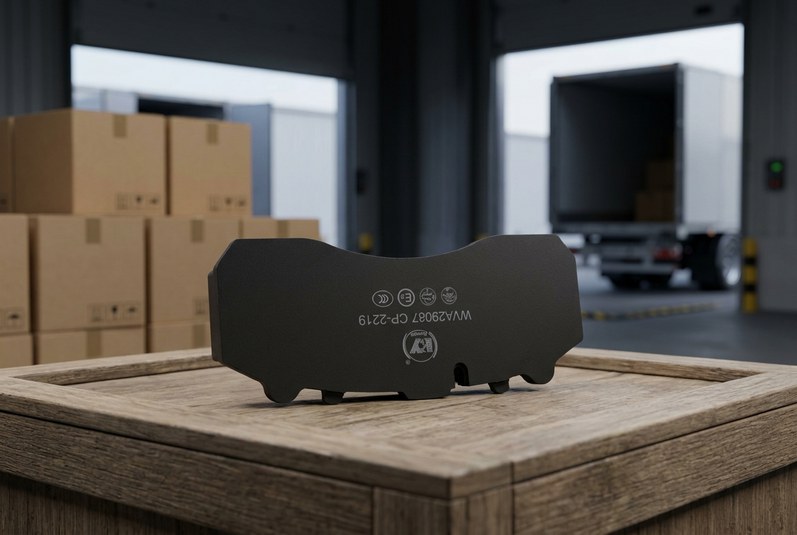
For fleet buyers, the same logic applies to linings. A bus or trailer axle with a worn lining set can go out of service for six hours. If the lining delaminates at 8,000 km and the thickness logs show 18 mm left, you don't have a warranty claim. If the batch code shows 19 mm initial thickness and the vehicle ran within load rating, you do. Clear rules lower downtime and keep your C.V. brake lining inventory predictable.
Summary: Measurable warranty terms convert field failures into recoverable costs, not open-ended arguments.
FAQ: What Else Do Importers Ask About Brake Pad Warranty Terms China?
Q: What is the standard warranty period for BAIYUN heavy-duty truck brake pads?
A: The standard period is 12 months from bill of lading or 80,000 km, whichever comes first, for truck and bus applications. The period applies to confirmed manufacturing defects and the defined noise, vibration, dust, and premature wear thresholds.
Q: How is a covered noise claim measured?
A: BAIYUN accepts a noise claim when a controlled dynamometer test at 50 km/h exceeds 73 dB(A) with rotor disc thickness variation below 0.03 mm. You'll need an audio recording, rotor thickness measurement, and pad batch code.
Q: What documentation do I need for a premature wear claim?
A: You need installation photos, thickness logs at install and claim date, axle load reports within OEM rating, and the pad batch code. A friction thickness loss over 30% within the first 10,000 km triggers the claim review.
Q: Are dust complaints always a warranty issue?
A: No. BAIYUN covers dust only when visible pad dust covers more than 30% of the wheel face after 500 km normal route use with the OE formulation unchanged. Contaminated friction surfaces, aftermarket tampering, or extreme stop-and-go routes usually void a dust claim.
Q: Can I get a sample warranty clause before my first order?
A: Yes. BAIYUN provides a written warranty clause in the contract, including pass/fail limits for noise, vibration, dust, and wear. You can request a sample claim case review with your first wholesale quote.
Summary: Importer questions narrow down to objective thresholds, documentation, and written contract language.
Before you place your next container, lock down the warranty numbers. Ask for the noise limit, the premature wear percentage, and the exact documents you'll need. If a supplier won't put those numbers in writing, the FOB discount isn't worth it. Ready to move? Request a commercial vehicle brake pad quote with warranty terms attached, or submit your warranty inquiry to our export team today.
Was this article helpful?
Average Rating: 5/5 (82)