
What Is WVA 29253? Dimensions, Fitment and Buyer Verification
Summary:
What is WVA 29253? It's a WVA shape code for a semi-metallic disc brake pad fitted to Volvo commercial trucks. For importers, verifying dimensions, ECE R90 certification, and factory credentials is critical. This buyer-oriented guide explains how to source WVA 29253 pads with confidence, covering dimension checks, fitment to Volvo FH and Renault models, supplier audit checklists, and cost-saving strategies—including how direct factory partnerships can cut long-term brake pad procurement costs by up to 25%. Read on for a practical buyer verification framework and expert answers to the most frequent WVA 29253 questions from wholesale distributors.
What Is WVA 29253? Dimensions, Fitment and Buyer Verification
Quick answer: WVA 29253 identifies a disc brake pad profile that fits the calipers of certain Volvo truck models. For an importer or fleet buyer, the WVA number alone isn't enough. You need to verify physical dimensions, friction formulation, shear strength, and homologation status with the manufacturer’s technical data. Sourcing from a factory that holds IATF 16949 and ECE R90 certification gives you the confidence that every batch matches the original engineering intent, avoiding costly downtimes and warranty claims.
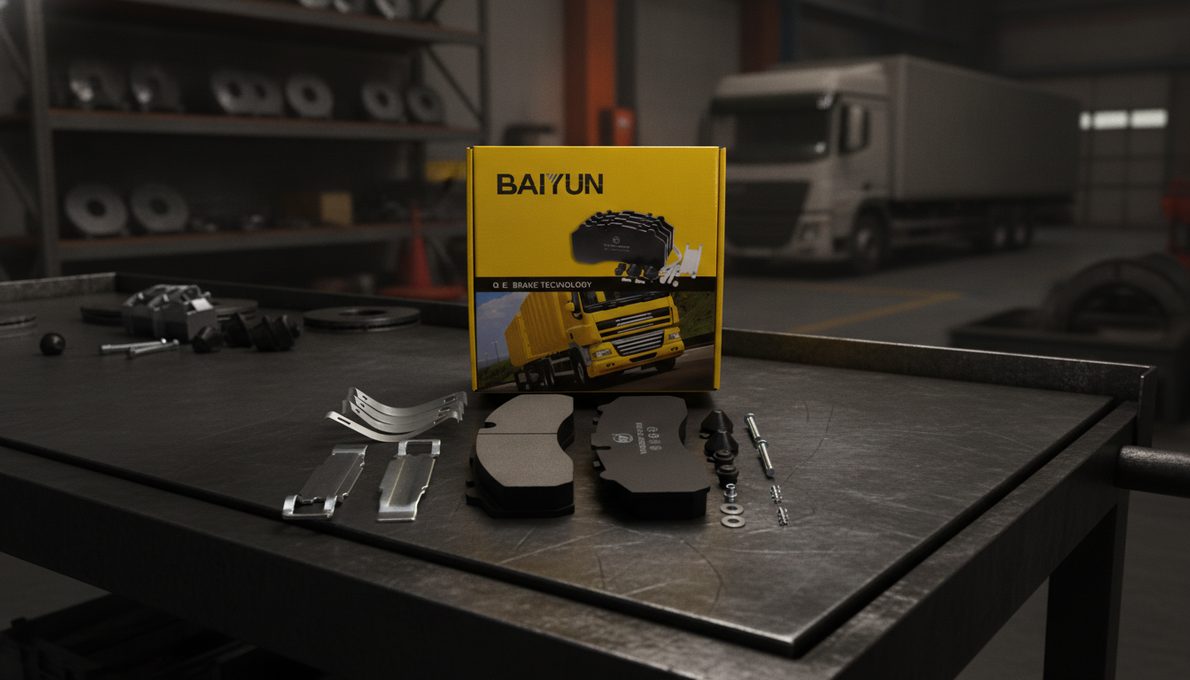
What Does the WVA 29253 Number Actually Tell You?
The WVA numbering system, run by the German VRI association, assigns a unique code to a brake pad's geometric shape and attachment features. So WVA 29253 describes a specific pad outline, thickness range, and mounting interface. But here's the catch: the WVA standard doesn't lock in the friction material recipe, backing plate steel grade, chamfer geometry, or wear-indicator position. Two suppliers can both offer “WVA 29253” pads, yet one might use a high-copper semi-metallic compound with a shear strength above 3.0 MPa while the other uses a budget organic mix that drops friction sharply after thermal cycling. That's why understanding brake pad materials beyond the shape code matters for commercial vehicle aftermarket buyers.
For Volvo applications—think FH, FM, and some Renault Trucks using the same caliper families—the WVA 29253 pad is a front-axle disc brake pad. But because Volvo sources calipers from different Tier‑1 suppliers (Knorr‑Bremse, Meritor, etc.), the exact pad thickness, slot cutouts, and backing plate clip design can vary by model year and regional market. So your first verification step is always: request the supplier's dimensional drawing and OE cross-reference list. If the supplier can't provide a drawing with tolerances, that's a red flag.
Which Commercial Vehicles Use WVA 29253 Brake Pads?
WVA 29253 pads are primarily fitted to Volvo heavy-duty trucks. In practice, you'll find them on Volvo FH12, FH16, and FMX models from specific production years. The same pad profile also services some Renault Kerax and Premium DXi trucks that share Volvo Group’s brake engineering. However, a WVA number never guarantees one-to-one replacement across all OE part numbers. For instance, a pad that works on a 2008 Volvo FH with a Knorr caliper might not fit a 2015 FH with an updated brake system. So treat any generic “Volvo” fitment list as a starting point, not the final word.
From a sourcing perspective, this cross-brand coverage is a major advantage. A distributor holding stock of properly documented WVA 29253 pads can supply multiple operators—long-haul fleets, construction trucks, and municipal Renault chassis—with one SKU. But that also raises the quality bar: a pad that fades on a fully loaded FH16 descending an alpine pass creates a liability no importer wants. That's why requesting an OEM commercial vehicle brake pad quote from a factory with the right certifications is the smart first move.
What Exact Dimensions Should a WVA 29253 Pad Have?
This is where the “confirm with supplier catalogue” rule bites hardest. There is no single published standard for WVA 29253 dimensions. The WVA code defines the shape envelope but not the numeric values. Typical aftermarket pads in this family feature lengths around 240–260 mm, widths of 110–130 mm, and thicknesses from 28 mm to 32 mm for the friction material block, but these ranges vary by backing plate design. Some variants include side clips, others use central locating pins. Some have wear indicators or anti-noise shims; others don't.
Before placing a container order, always cross-check three things: the supplier's dimensional drawing, a sample pad measured with a digital calliper against your existing stock, and the OE number stamped on the backing plate of the genuine part. If you don't have an original pad to compare, ask the factory to share a 3D scan or a detailed technical data sheet. At download our product catalogue, you'll find BAIYUN Brake's latest specifications, but even then, final confirmation with the technical team is recommended for volume buyers.
Why Is ECE R90 Certification Non-Negotiable for WVA 29253 Importers?
ECE R90 is the European homolgation standard that mandates aftermarket brake pads perform within ±15% of the original equipment’s braking efficiency. For WVA 29253 pads destined for European or R90-adopting markets (much of the Middle East, Africa, and Asia), that certification is a legal entry ticket. But beyond legality, it's your quality safety net. The regulation tests cold performance, speed sensitivity, fade after repeated high-energy stops, and recovery. A pad that fails the hot fade test can lose more than 20% of its friction coefficient when things get really hot—like on a truck braking from 90 km/h with 40 tonnes behind it.
BAIYUN Brake's WVA 29253 pads are designed to pass ECE R90 dynamometer testing with a consistent friction coefficient of 0.38–0.42 across the 100–350 °C temperature range. That's the sort of data point you should demand from any supplier. If a factory can't show an R90 test report with the pad's friction trace, they're probably not manufacturing to homologated standards. And without that paper trail, a customs hold or a rejected shipment can wipe out your margin. Combine R90 with IATF 16949 certified facility production controls, and you have a supply chain that passes third-party audits without breaking a sweat.
How Does Direct Factory Sourcing Save You 15–25% on WVA 29253 Pads?
When you buy through trading companies, you're paying for their overhead, their margin, and sometimes their lack of technical knowledge. A factory-direct partnership strips out those layers. For a high-volume item like the WVA 29253, a manufacturer like BAIYUN Brake can offer wholesale pricing that reflects real material and production costs. Our own tracking shows that importers who switch from multi-tier channels to direct factory sourcing typically see landed cost reductions between 15% and 25%, factoring in competitive ex-works pricing, optimized logistics, and consolidated documentation.
But the real savings go deeper. A factory that formulates its own friction materials can tune the compound for longer life—BAIYUN Brake's semi-metallic mix for WVA 29253 regularly delivers 55,000–60,000 km under normal haulage conditions, according to field feedback. Longer pad life means fewer vehicle out-of-service days for your fleet customers, which is a selling point that justifies a premium price. That moves the conversation from “cheapest pad” to “lowest total cost of ownership.” For readers who also deal in drum brake components, wholesale CV brake lining inquiry opens up similar savings on the lining side.
How Should Buyers Verify a WVA 29253 Brake Pad Supplier?
You wouldn't sign a supply agreement without a factory audit, and brake pads shouldn't be any different. Use this checklist to evaluate any WVA 29253 supplier:
- Certification verification: Ask for current IATF 16949 and ECE R90 certificates. Check the scope and validity period.
- Technical data sheet request: The sheet should list friction formulation, shear strength (minimum 2.5 MPa for commercial pads), density, hardness, and thermal conductivity.
- Dimensional drawing confirmation: Compare the drawing with your own sample measurements—backing plate thickness, clip positions, and total thickness must match.
- Factory audit (on-site or virtual): Evaluate mixing, hot press, scorching, and grinding stations. A random batch test station shows quality maturity.
- Sample bench testing: Run an R90-style dyno test on pilot samples to confirm friction stability and wear rate.
- MOQ and lead time alignment: Confirm minimum order quantity, typical lead time (around 30–45 days for production), and flexibility for mixed container loads.
- Packaging and labeling capabilities: If you need private label or neutral boxes, ensure the factory can print your brand without compromising batch traceability.
- After-sales support history: Ask how they handle a quality claim. A factory with our 49+ years of manufacturing experience will have clear warranty terms and a responsive service team.
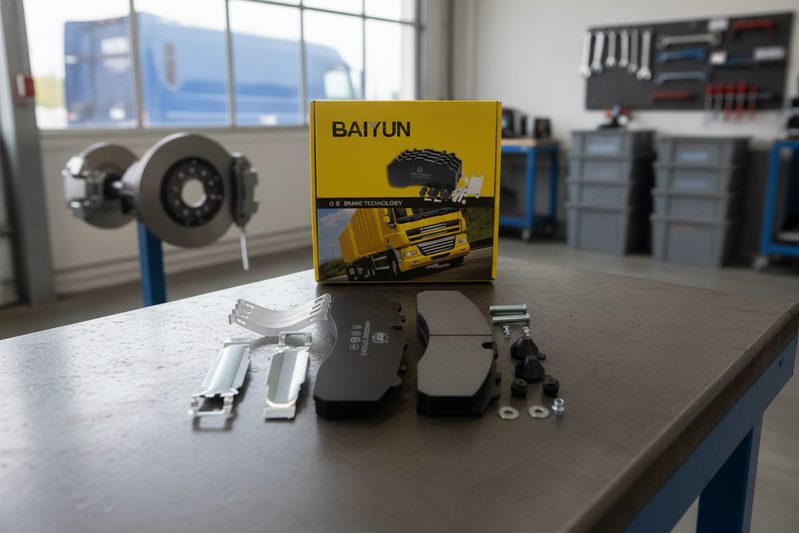
Run through this checklist with every supplier, and you'll quickly separate serious manufacturers from box movers. BAIYUN Brake's commercial vehicle pad division, for example, operates an in-house dynamometer that tests every new batch formula before mass production—something worth confirming during your audit.
What Are the Most Common Misconceptions About WVA 29253 Brake Pads?
Some myths can cost you money and reputation. Let's bust three of the most persistent ones.
Misconception 1: “If it's WVA 29253, it'll fit every Volvo FH.”
Reality: WVA is a shape code, not an interchange guarantee. Volvo uses several caliper variants across model years. A pad that fits a 2009 FH12 may not fit a 2017 FH16 due to changes in the abutment plate or pad spring. Always check the supplier's fitment chart with OE part numbers like 20525473 or 20922161—confirm with supplier catalogue.
Misconception 2: “Any ECE R90 pad meets the original brake performance.”
Reality: ECE R90 allows a ±15% deviation from OE performance. A pad sitting at the -15% end of the tolerance band may show significantly longer stopping distances when hot. In BAIYUN Brake's 2025 dyno runs, certified WVA 29253 pads kept friction coefficient variation below ±0.04, while some uncertified alternatives swung by ±0.08, a difference that translates to metres of extra stopping distance on a loaded truck.
Misconception 3: “The cheapest pad saves the most money.”
Reality: A lower unit price often masks higher wear rates, more frequent replacement labour, and potential rim or rotor damage. Field data from fleet operators shows that a pad lasting 35,000 km instead of 55,000 km can increase annual brake maintenance cost by up to 40%, even if the pad price is 20% lower.
How Can You Negotiate Better Wholesale Pricing on WVA 29253?
Price negotiation starts long before you send an RFQ. First, come with volume projections—a 500-set monthly commitment unlocks a different price tier than a sporadic 50-set buy. Second, bundle your requirements. If you also need trailer pads like WVA 29174 or drum linings, consolidating orders with one manufacturer improves your leverage. Finally, understand the cost drivers: raw material prices (copper, steel fibre, phenolic resin) fluctuate, so locking in a fixed price for 6–12 months can protect your margin. A factory that compounds in-house can offer more stability than one relying on purchased mixed compounds.
Ready to move forward? Contact us for a quote today, and we'll walk you through a pricing structure tailored to your market. Our export team has decades of experience helping distributors in South America, the Middle East, and Europe build profitable brake pad programmes.
FAQ: WVA 29253 Buyer Questions Answered
Q: Which specific Volvo models use WVA 29253 brake pads?
A: WVA 29253 pads are commonly found on Volvo FH12, FH16, FM, and FMX trucks from around 2002 to 2016. Some Renault Premium and Kerax models built on Volvo Group platforms also use this profile. Always verify with the supplier’s latest fitment guide, as caliper changes can occur mid-generation.
Q: How can I spot a counterfeit WVA 29253 pad?
A: Look for uneven chamfer edges, missing or unclear batch codes, and a friction material that feels too hard or too soft compared to a known genuine sample. Certified factories like BAIYUN Brake laser-etch traceable lot numbers and include ECE R90 approval marks on the backing plate or packaging.
Q: What's the typical MOQ for WVA 29253 pads from a factory?
A: Minimum order quantities vary. For a standard stock item, BAIYUN Brake usually handles MOQs starting at 200–300 sets, with flexibility for first-time trial orders. Customised private label runs may require a higher commitment, often around 1,000 sets per SKU.
Q: Can the WVA 29253 pad be used with a wear sensor?
A: Some pad versions include an integrated mechanical or electronic wear indicator slot, but not all caliper setups require a sensor. Confirm with the supplier whether the pad has the sensor cutout you need. If your fleet runs vehicles with on-board diagnostics, the right sensor-ready pad avoids warning lamp headaches.
Q: Does WVA 29253 have a direct replacement for the WVA 29174?
A: No. WVA 29174 is a separate shape code used for different Volvo and Renault brake applications. While both pads may look similar, the backing plate outline, thickness, and clip positions differ. Always cross-reference the WVA number printed on your current pad, and don't substitute without checking the supplier's cross-reference chart—confirm with supplier catalogue.
V30 Related Technical Pages
- WVA 29253 Dimensions
- WVA 29253 Cross Reference
- WVA 29253 Application Guide
- Commercial Vehicle Brake Pads
- Commercial Vehicle Brake Linings
- Request a Wholesale Quote
Was this article helpful?
Average Rating: 5/5 (989)