
Why Truck Brake Pads Wear Out Fast: Causes and Selection Tips
Summary:
Truck brake pads wear fast due to heavy loads, extreme heat, and mismatched friction materials. This guide for fleet buyers and importers explains the root causes of premature wear, shows how to verify a commercial vehicle brake pad manufacturer’s quality using certifications like ECE R90 and IATF 16949, and provides a practical selection checklist. Including material comparison data and supplier evaluation tips, it helps you choose brake pads that consistently exceed 100,000 km even under severe duty cycles.
Why Truck Brake Pads Wear Out Fast: Causes and Selection Tips
Quick answer: Heavy loads, constant heat cycling, mismatched friction materials, and poor driving habits cause truck brake pads to wear much faster than those in lighter vehicles. Without the right formulation, pads can fail in as little as 50,000 km, costing fleets up to 40% more in annual maintenance. Choosing ECE R90 certified pads with a high thermal ceiling from a manufacturer that understands commercial vehicle dynamics can extend pad life to 120,000 km or more — and reduce your cost per kilometer significantly.
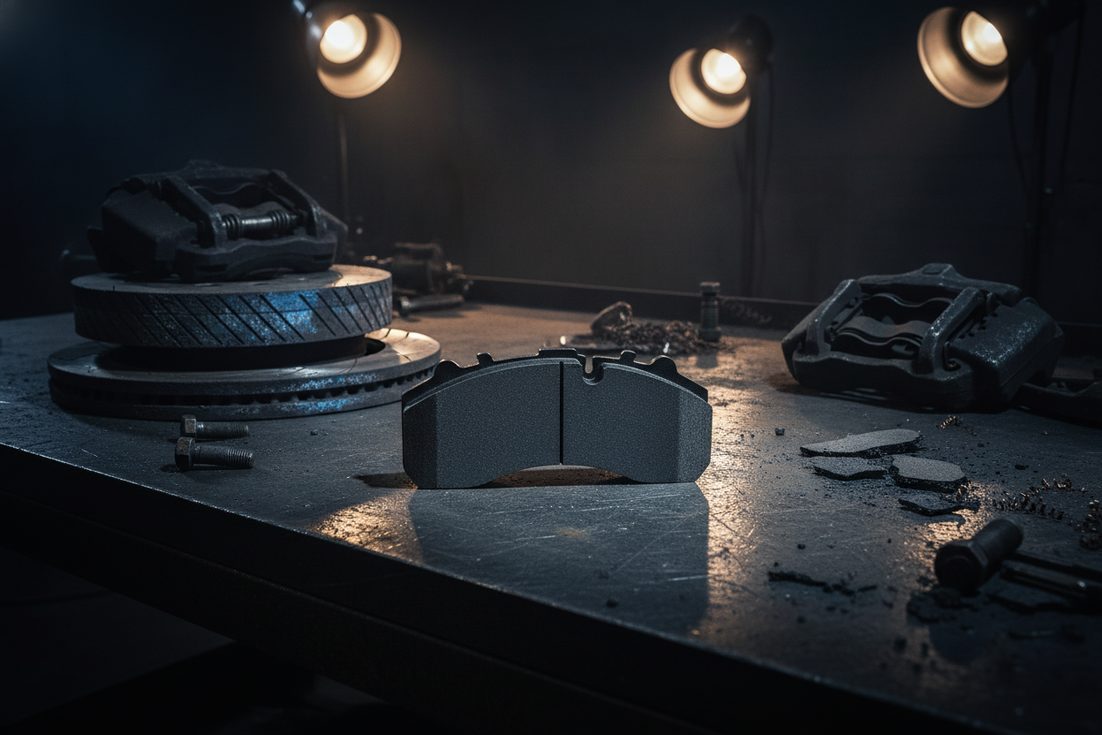
What’s Really Behind Accelerated Brake Pad Wear in Heavy-Duty Trucks?
A fully loaded 40-ton truck carries about 30 times the kinetic energy of a passenger car at the same speed. That energy has to go somewhere — and most of it gets converted to heat inside the brake system. On a long downhill grade, disc temperatures can spike past 600°C, well beyond what a standard organic pad can handle. The resin binder starts to degrade, the friction coefficient drops, and the pad material wears away at an accelerated rate.
Heat isn’t the only culprit. Fleet operators in dusty or muddy environments—construction sites, mining roads, agricultural routes—see abrasive contamination eat into pad and rotor surfaces. Oil leaks from hub seals or brake fluid contamination create glazing that reduces friction, forcing drivers to brake harder and longer, which in turn accelerates wear. And let’s not overlook driving style: drivers who ride the brakes, late-brake at intersections, or over-rely on friction braking rather than engine braking and retarders can cut pad life by half.
From a component perspective, using the wrong friction material for the application is a silent killer. A pad with a high metallic content might offer great initial bite but will chew through rotors if the formulation isn’t balanced. A pad designed for urban delivery won’t survive the thermal shock of mountain logging routes. So fast wear isn’t just about the pad itself—it’s a system-level problem.
How Can Fleet Managers Spot Premature Wear Before It Becomes a Problem?
The typical visual inspection—waiting until the pad is down to 2 mm—isn’t enough to catch the early signs of abnormal wear. You need to look for uneven pad thickness across the same axle, deep scoring on the disc surface, and discoloration that indicates overheating. A pad that’s wearing unevenly on one side often points to a sticking caliper slide pin or a misaligned brake chamber, not a material defect. That distinction matters because replacing the pad without fixing the caliper just guarantees the same problem in 20,000 km.
Wear sensors, whether mechanical clip-on indicators or electronic monitoring, are a huge help but only if your fleet actually reacts to the warnings. We’ve seen too many workshops ignore a ‘brake service’ dashboard alert because “there’s still a few weeks left.” By the time the metal-on-metal screech starts, the rotor is already scored beyond resurfacing tolerance. A smarter approach: use telematics data to track braking intensity per driver and per route. If a certain mining haul road coincides with a 30% increase in pad replacement frequency, you know it’s time to spec a different friction material, not just a different driver.
What Should a Bulk Buyer Look for in a Truck Brake Pad Supplier?
When you’re sourcing thousands of sets a year for a mixed fleet, the spec sheet becomes your best friend. Don’t settle for a one-line “semi-metallic” description. The supplier should provide the SAE J2522 friction code (e.g., GG, GF), the minimum and maximum service temperatures, and the expected pad life under standard test cycles. A high-quality commercial vehicle pad should show a hot friction coefficient that stays above 0.35 even at 500°C. If the data sheet doesn’t mention that, move on.
Material consistency from batch to batch is where many low-cost suppliers fail. You can’t have set A wearing at 3.5 mm³/kWh and set B at 5.2 mm³/kWh—fleet maintenance schedules rely on predictability. A credible supplier will share in-house dynamometer test reports per production lot, not just a one-time certificate. And they’ll have a clearly defined process for backing up their performance claims: IATF 16949 certification isn’t a nice-to-have; it’s the baseline for any manufacturer that expects to supply OEMs or serious aftermarket distributors. You’ll want to browse our heavy-duty brake pad range to see how these standards translate into real-world durability.
Why Do Certifications Like ECE R90 and IATF 16949 Matter for Fleet Brake Purchasing?
ECE R90 isn’t just a sticker on the box. It mandates that replacement brake pads perform within ±15% of the original equipment’s braking coefficient across a defined temperature sweep—typically from 100°C to 400°C—and survive a specified thermal cracking test. For a fleet buyer, that means the pad you install won’t suddenly drop off in performance when the truck descends a 7% grade with 25 tons of cargo. IATF 16949, meanwhile, governs the entire manufacturing quality management system: raw material traceability, process control, and defect prevention. A pad produced in an IATF 16949 certified facility has statistically lower variation in density, porosity, and shear strength—all factors that directly affect wear rate and noise generation.
So when a supplier claims “we meet ECE R90 standards,” ask for the test report number and the testing laboratory. If they can’t produce it, you’re gambling. A properly certified pad might cost 10-15% more upfront, but the reduction in premature replacements, rotor damage, and vehicle downtime delivers a far better total cost of ownership.
How to Verify a Brake Pad Manufacturer Before Placing a Bulk Order
Here’s a quick checklist that’s saved our own clients from expensive mistakes:
- Request a factory audit report or schedule a video walkthrough. Look at the mixing room—is the raw material batching automated? Manual weighing creates inconsistency.
- Ask for the WVA reference number and original test data. A legitimate manufacturer can link any product code to a full dynamometer report.
- Check for in-house friction material development. If they buy pre-made friction sheets from a third party, you’re at the mercy of another link in the chain.
- Request 3-5 random production samples from your first order for third-party testing. If the supplier hesitates, that’s a red flag.
- Verify aftermarket packaging capabilities. Private labeling, neutral boxes, and multilingual instructions are essential if you’re rebranding.
These steps separate a commodity supplier from a partner who understands that your fleet’s uptime is your business. BAIYUN Brake, with our 49+ years of manufacturing experience, regularly welcomes customer audits and provides full test documentation with every order—something many factories won’t do.
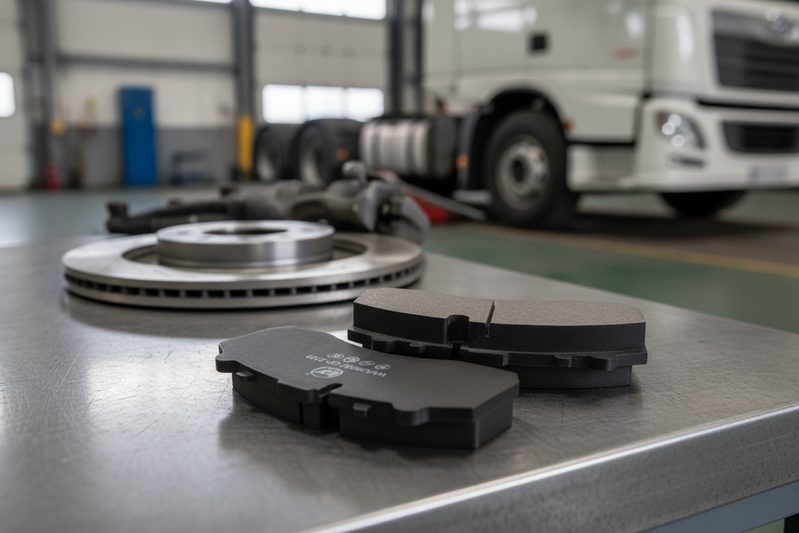
What Are Common Mistakes When Selecting Replacement Brake Pads for Commercial Vehicles?
Mistake one: choosing by price alone. A pad that’s 30% cheaper often uses a binder that breaks down at 80°C lower than a certified pad, turning a small upfront saving into a 100% increase in replacement frequency. Mistake two: ignoring the WVA reference. The WVA number isn’t just a shape code; it’s linked to specific friction formulations validated for particular axle loads. Fitment is not the same as specification. Mistake three: assuming “ceramic” is always better. Ceramic formulations work well in light-duty applications but struggle to handle the 700+ kg/cm² contact pressures typical in heavy truck braking. For most 40-ton trucks, a properly engineered semi-metallic or low-metallic pad delivers far more stable hot friction and longer life.
How Does BAIYUN Brake Address Fast Wear Through Material Science?
We don’t sell a single “long-life” pad because no single formula fits all duty cycles. Instead, our R&D team develops application-specific blends. For mining trucks, we increase the copper and graphite content to improve thermal conductivity while adding molybdenum disulfide as a solid lubricant to prevent micro-welding at high temperatures. For intercity buses, the formulation prioritizes low dust generation and noise reduction without sacrificing wear resistance. In-house dynamometer testing shows that our commercial vehicle pads can maintain a friction coefficient of 0.36–0.44 across the 200–550°C range—exceeding the ECE R90 requirement for post-fade recovery. That’s the kind of data that makes a fleet’s maintenance budget predictable.
If you’re evaluating suppliers, why choose BAIYUN Brake comes down to this: we control the entire process from raw material sourcing to hot press molding, and we test every batch. That vertical integration means when we promise a certain wear rate, we’re not guessing—we’ve got 49 years of brake pad engineering backing it.
What Logistics and Customization Options Matter for International Distributors?
This is where many brake pad purchases stumble. A perfectly good product becomes a headache if the MOQ doesn’t match your inventory turnover, or if lead times balloon during peak shipping seasons. We typically work with MOQs starting at 200 sets for common WVA references, but we can adjust for long-term partners. Standard sea freight lead time is 4–6 weeks to most international ports, with air freight available for urgent orders. Customization options include private label packaging, customer-specific part numbers printed on the shim, and branded technical sheets for your market. If your fleet runs both disc and drum setups, you can consolidate with our wholesale CV brake lining inquiry, saving on logistics and simplifying your supply chain.
| Material Type | Friction Coefficient (µ) | Max Operating Temp (°C) | Wear Rate (mm³/kWh) | Typical Service Life (km) | Recommended Load |
|---|---|---|---|---|---|
| Semi-Metallic | 0.36 - 0.44 | 550 - 600 | 3.0 - 4.5 | 80,000 - 120,000 | Up to 50 tons |
| Low-Metallic | 0.32 - 0.40 | 450 - 550 | 2.5 - 3.5 | 100,000 - 140,000 | Up to 35 tons |
| Ceramic (HD) | 0.28 - 0.38 | 400 - 480 | 1.5 - 2.5 | 120,000 - 160,000 | Up to 25 tons (light commercial) |
| Organic | 0.25 - 0.35 | 300 - 350 | 1.0 - 2.0 | 40,000 - 60,000 | Not recommended for heavy trucks |
Values are approximate and depend on driving conditions and vehicle load. Consult supplier test data for precise specification.
Frequently Asked Questions
Q: What is the typical MOQ for custom brake pads for trucks?
A: For most WVA references, MOQ starts around 200 sets per order. This can increase if the formulation is entirely new and requires a dedicated production run. Request a wholesale quote with your annual volume estimate to discuss flexible arrangements.
Q: How can I verify that a brake pad will last longer than the one I currently use?
A: Ask for the SAE J2522 dynamometer report, which measures wear rate under standardized conditions. Compare the reported material loss (in mm³/kWh) with your current pad’s data. A lower number indicates better wear resistance. Also commercial vehicle brake service guides often highlight proper bedding-in procedures that maximize pad life.
Q: Do heavy-duty truck brake pads need a break-in period?
A: Yes, a proper bedding-in cycle is critical. Without it, glazing can occur on the pad surface, reducing friction and causing overheating. Typically, 15–20 moderate stops from 50 km/h to 10 km/h, without coming to a complete stop, is sufficient to transfer an even layer of friction material onto the disc.
Q: Can I mix brake pad brands on the same axle?
A: No. Even pads with the same WVA reference can have different friction characteristics if they come from different manufacturers. Mismatched pads cause uneven braking, increased stopping distances, and irregular wear. Always replace axle sets using pads from a single batch.
Q: What packaging options do you offer for resellers?
A: We provide neutral white boxes, custom branded packaging, and full private label solutions. You can specify your own part number, barcode format, and safety marks. Our export team can walk you through the artwork approval process; simply submit your inquiry to our sales team.
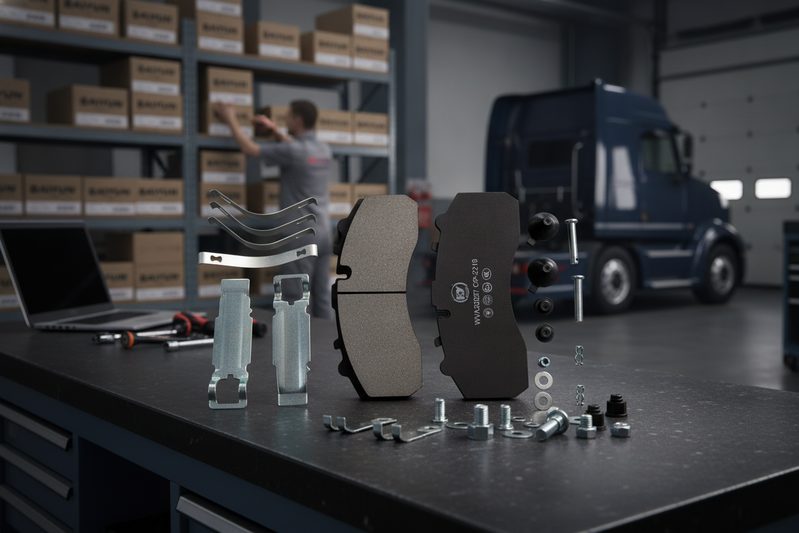
Putting It All Together: A Smarter Approach to Brake Pad Sourcing
Fast brake pad wear isn’t inevitable, even in the toughest fleet operations. It’s the result of mismatched materials, overlooked maintenance, and supply chains that value price over performance. By choosing a supplier that backs its products with IATF 16949 and ECE R90 certifications, shares honest friction data, and offers the customization flexibility your market demands, you’re not just buying pads—you’re buying predictability. And in fleet management, predictability directly hits your bottom line.
If you’re ready to stop chasing failures and start building a reliable brake component program, get in touch with our export team for a detailed quotation. We’ll help you match the right material to your vehicle types, configure packaging for your regional market, and set up a supply schedule that works for your warehouse.
Was this article helpful?
Average Rating: 5/5 (564)