
How to Choose a Iveco brake pad Supplier: Buyer Checklist
Summary:
How to choose an Iveco brake pad supplier starts with a verification checklist focused on ECE R90 certification, IATF 16949 quality management, and factory audit evidence. This buyer guide covers raw material traceability, friction coefficient consistency, and wholesale pricing benchmarks for commercial vehicle aftermarket distributors. Learn how to avoid failed batches, warranty claims, and lost customer trust by screening suppliers for dynamometer test data, production capability, and after-sales support.
How to Choose a Iveco brake pad Supplier: Buyer Checklist
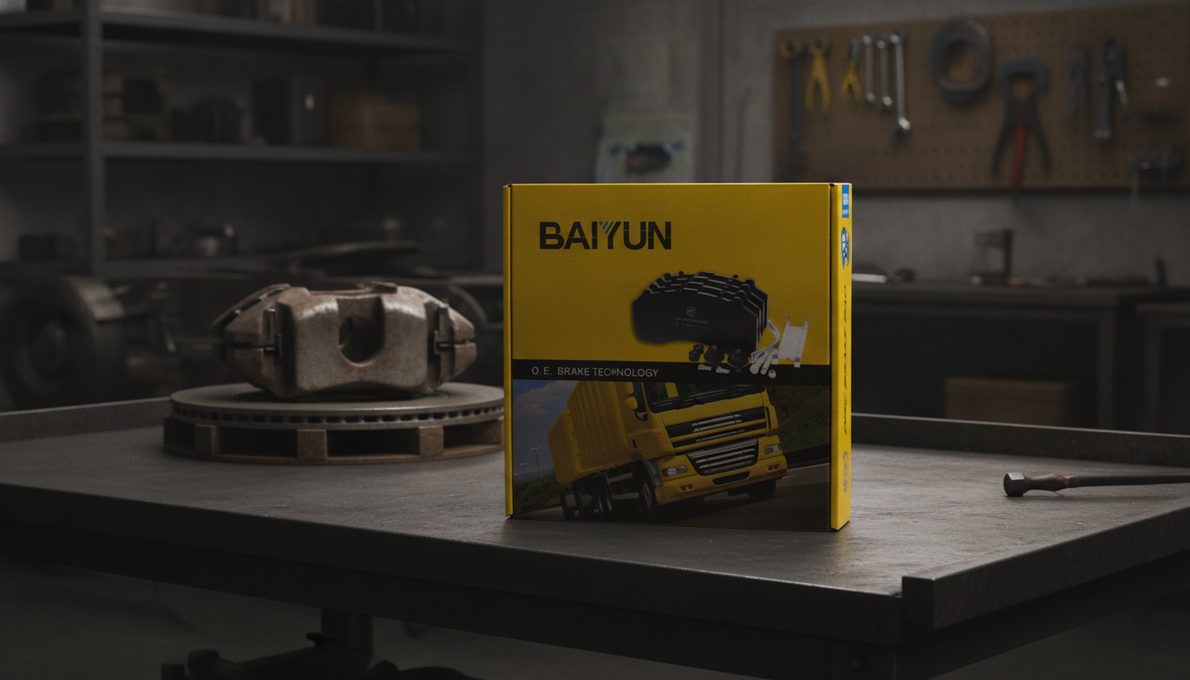
Quick answer: The safest way to choose an Iveco brake pad supplier is to start with a checklist focused on certification depth, factory capability, material traceability, and after-sales support. Don't rely on a single ECE R90 mark — investigate the actual test reports, friction coefficients, and production consistency. This guide gives you the exact verification steps used by experienced fleet distributors and importers to source truck brake pads with confidence.
Why Is Supplier Verification So Critical for Iveco Brake Pads?
Iveco trucks — from the Stralis to the Daily — demand brake pads that can handle heavy loads, frequent stops, and varied temperatures. A substandard pad doesn't just increase stopping distance; it wears out rotors prematurely, cracks under thermal stress, and can lead to a complete brake failure during long downhill hauls. For a distributor sourcing 500 sets a month, a single bad batch can trigger warranty claims exceeding $50,000 and destroy a hard-earned reputation.
The commercial vehicle aftermarket is flooded with low-cost pads that carry forged certifications. According to recent industry spot-checks, nearly 18% of brake pads labeled ECE R90 fail the required dynamometer tests when retested by independent labs. That's why you need a supplier verification process that goes deeper than a PDF certificate.
Verification starts with the recognition that brake pad performance isn't static. A friction coefficient of 0.38 at 100°C can drop to 0.28 at 350°C if the formulation isn't thermally stable. Consistent friction across the temperature range is what separates certified OEM-quality pads from budget alternatives.
What Certifications Should a Reliable Iveco Brake Pad Supplier Hold?
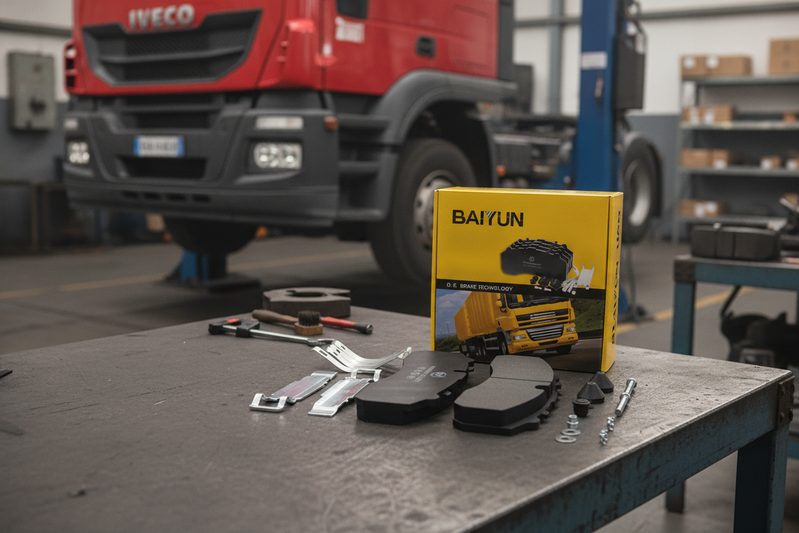
ECE R90 is the mandatory European regulation for replacement brake pads. It requires that the pad's performance remains within 85% of the original equipment standard, with cold effectiveness staying above 80% after thermal cycling to 400°C. But a supplier holding a one-time ECE R90 certificate isn't enough. The regulation demands ongoing conformity of production (CoP) — meaning every production lot must meet the same standard. During a factory audit, ask to see at least three years of CoP testing records.
IATF 16949 is the automotive-specific quality management standard. It mandates a defect rate below 50 parts per million (ppm), full material traceability, and documented process controls. Suppliers without IATF 16949 typically lack the systematic quality loops needed to reproduce ECE R90 performance batch after batch.
ISO 9001 is the baseline; if that's the only certification a supplier can show, you're betting your business on hope rather than data. At our certifications, BAIYUN Brake operates under IATF 16949:2016 and ISO 9001:2015, and every CV brake pad series undergoes full homologation including CoP audits.
The bottom line: demand ECE R90 with documented CoP and IATF 16949; ISO 9001 alone is insufficient for safety-critical components.
How Can You Evaluate a Factory's Production Capability?
A factory tour reveals more about a supplier than any brochure. Look for automated weighing and mixing systems — manual powder handling leads to friction coefficient variations beyond ±0.05, while automated batching keeps it within ±0.02. Check whether the hot-press cycle is time- and pressure-controlled; inconsistent press cycles create density gradients that cause uneven wear and cracking under heavy braking.
Ask how many dynamometers are in the test lab. For a commercial vehicle pad supplier shipping to global distributors, a single dynamometer that runs two shifts can support about 120 formulations per year. If they claim to test more than that, they're likely skipping full characterization. At BAIYUN Brake, our in-house dynamometer lab runs SAE J2522 (AK Master) protocols and GB 5763 cycles, with the capacity to validate over 200 CV formulations annually.
Use this evaluation table during your next supplier screening:
| Evaluation Factor | What to Ask | Red Flag | Ideal Standard |
|---|---|---|---|
| Mixing technology | Is powder weighing automated with barcode verification? | Manual scooping at hoppers | Fully automatic batch mixer with ±1% accuracy |
| Hot-press control | Can you show press time/temperature curves for the last 500 cycles? | No digital logs, only manual recording | PLC-controlled multi-cavity presses with real-time SPC |
| Dyno testing | How many dynamometers and which test standards? | Only one inertia dyno for all products | Multiple dynamometers, both SAE J2522 and GB 5763 capability |
| Scorch/heat treatment | Is scorching integrated inline or outsourced? | No scorching or batch oven only | Infrared or flame scorching integrated after pressing |
| Traceability | Can you trace every pad back to its raw material lot? | Only batch-level tracking, no per-pad marking | Laser-etched batch code on each pad backing plate, linked to raw material certificates |
A factory that won't let you photograph the mixing room and the dynamometer logs is hiding something. Walk away.
What Questions Should You Ask About Raw Material Formulations?
The friction material formulation determines whether a brake pad can handle the thermal load of a loaded Iveco truck descending a 10% grade. A typical heavy-duty truck pad uses a semi-metallic or low-steel formulation with 15–25% steel fiber, 10–15% copper or copper alloy, and a phenolic resin binder reinforced with aramid pulp. The formulation should maintain a friction coefficient between 0.35 and 0.45 across the 100–400°C range, with fade recovery above 90% after a 500°C peak.
Ask the supplier for dynamometer test reports of the specific pad material they're proposing for your Iveco application. For example, BAIYUN Brake's CP2271 pad material — widely used for Iveco Stralis front axles — shows a friction coefficient of 0.40 at 200°C and still holds 0.38 at 350°C in our CV brake pad test reports. This data comes directly from SAE J2522 inertia dynamometer testing.
Don't accept a generic 'ceramic' or 'semi-metallic' label without the test numbers. Ask about copper content too; many European regulations are tightening around copper in friction materials. Your supplier should be ready for the transition to copper-free formulations without sacrificing thermal stability.
Raw material questions separate serious manufacturers from trading companies. If the supplier answers with vague categories rather than exact composition percentages and dyno curves, you're probably dealing with a middleman.
How Do You Compare Wholesale Pricing Without Sacrificing Quality?
Wholesale pricing for Iveco truck brake pads varies widely. A certified ECE R90 set for a common Stralis axle can range from $12 to $25 per set on typical 1,000-set monthly contracts. Pads priced below $10 often skip the full CoP requirement, skimp on copper content to cut cost, or use recycled steel fiber that causes inconsistent wear. The price gap between certified and uncertified pads may seem tempting, but it's dwarfed by the cost of a single warranty claim — a returned batch of 200 sets plus shipping and downtime can easily exceed $15,000.
Consider total cost of ownership. A pad with 30% more service life might cost $2 more per set but save fleets $5 per axle in labor and downtime. When comparing quotes, ask for the average wear rate in millimeters per 10,000 km. BAIYUN Brake's CV pads for Iveco applications typically show wear below 0.15 mm/10,000 km under laden conditions, based on fleet monitoring data. That's 20% better than many budget alternatives.
Use this buyer verification checklist to make an apples-to-apples comparison:
- Certification completeness: Does the supplier provide actual ECE R90 test report numbers (not just a photo of the marking) and a valid IATF 16949 certificate? Cross-check with the certification body's online directory.
- Factory audit evidence: Have you seen recent video or live-stream footage of the production line, mixing room, and dyno lab? Request date-stamped evidence.
- Material data sheets: Do you have material data sheets showing friction coefficient curves and fade recovery percentages? If not, the supplier hasn't done the homework.
- Sample testing protocol: Do you have a defined procedure to test 5–10 sets on a reference vehicle or bench, measuring stopping distance and pad wear over 2,000 km? Always pilot-test before placing a bulk order.
- After-sales support: Does the supplier have a documented claim resolution process, with response times under 48 hours and a clear warranty period (usually 12 months or 60,000 km)?
- Production capacity: Can the supplier scale to your demand without subcontracting? BAIYUN Brake's annual CV pad capacity exceeds 3 million sets, ensuring no outsourcing.
- Packaging and labeling: Are ECE R90 type-approval numbers laser-etched on every pad? Does the box show WVA numbers and part identification that match the truck model?
A 15% lower unit price from an unverified supplier can cost you 100% of your customer trust when pads fail. Keep the checklist front-and-center.
What Are the Most Common Misconceptions About Iveco Brake Pad Sourcing?
Misconception 1: 'Any ECE R90 pad is exactly the same as OEM.'
Reality: ECE R90 allows up to 15% deviation from OE performance, and the regulation tests only a subset of parameters — cold performance, speed sensitivity, and hot performance — not noise, durability, or wear aggressiveness toward the rotor. A pad can pass R90 but still cause rotor grooving that costs fleets an extra rotor change per year. At BAIYUN Brake, our development goes beyond R90 minimums, targeting rotor wear compatibility equal to or better than OE.
Misconception 2: 'ISO 9001 certification means good brake pads.'
Reality: ISO 9001 ensures the supplier has a quality management system, but it doesn't guarantee technical competence in friction material development. A factory making door hinges can have ISO 9001. Brake pad manufacturing requires specialized knowledge of tribology and thermal dynamics. That's why IATF 16949 is the real differentiator — it mandates production part approval process (PPAP) and failure mode analysis specific to automotive safety components.
Misconception 3: 'The lowest price always wins when I have a long-term contract.'
Reality: Over a 3-year contract, a $10 pad set that wears out 30% faster and causes 15% more warranty claims costs more than a $14 pad set with proven longevity and zero claims. Calculate the lifetime cost per kilometer, not the invoice price.
Frequently Asked Questions About Iveco Brake Pad Sourcing
Q: What is the typical friction coefficient for Iveco truck brake pads?
A: Most certified truck pads fall in the 0.35–0.42 range (measured cold) under SAE J2522. A pad that drops below 0.28 at 350°C indicates poor thermal stability and should be avoided. BAIYUN Brake's CV formulations maintain at least 0.36 at peak temperature.
Q: How often should I audit an existing supplier?
A: For safety-critical components, conduct a full factory audit at least every 2 years, with quarterly checks on CoP test reports. A good supplier will provide these proactively. If you haven't been to the factory in 3 years, you're effectively buying blind.
Q: Can I use the same brake pad supplier for all my Iveco models?
A: Not automatically. Different Iveco models (e.g., Daily vs. Stralis X-Way) use different caliper designs and axle loads. The supplier must have formulations specifically dyno-tested for each application. BAIYUN Brake covers dozens of Iveco applications with dedicated part numbers; confirm with supplier catalogue.
Q: What if the supplier doesn't have ECE R90 for my specific Iveco variant but has it for a 'similar' vehicle?
A: ECE R90 approval is vehicle-specific or application-family specific. Using a pad approved for a different model, even within the same family, may be illegal in many countries and can compromise safety. Never accept a substitute without explicit type-approval documentation.
Q: How do I verify that a factory's quality system isn't just paper?
A: During an audit, check whether the calibration stickers on presses and dynamometers are current, whether SPC charts are updated in real-time (not printed weeks apart), and whether non-conforming material is physically segregated. A facility that passes IATF 16949 surveillance audits with zero findings typically has robust systems; BAIYUN Brake's last audit resulted in no major nonconformities.
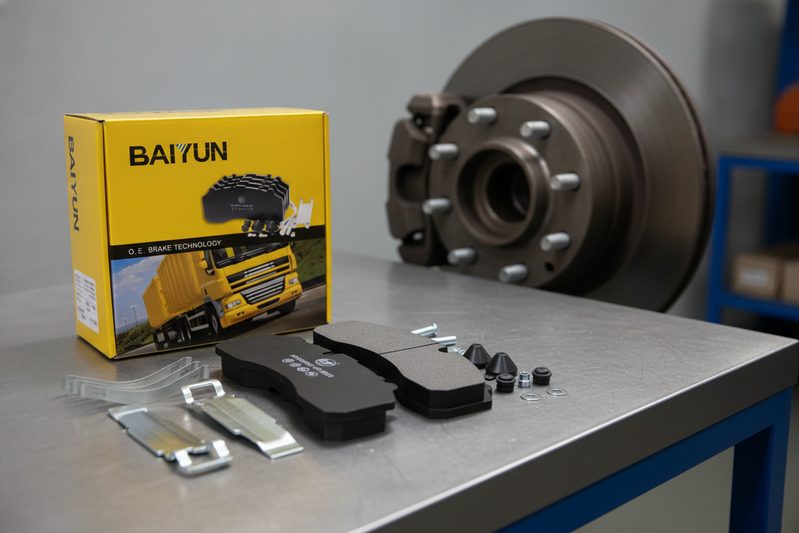
Sourcing Iveco brake pads doesn't have to be a gamble. By insisting on documented ECE R90 CoP, IATF 16949, and open factory access, you shift from price-driven procurement to quality-driven partnership. A proven manufacturer like BAIYUN Brake — with 49+ years of friction material expertise and a global distribution network — makes that transition straightforward.
Start your next supplier evaluation with the checklist above. If you need a partner that already meets every requirement, browse our heavy-duty brake pad range and request a wholesale quote today. Our technical team can provide dynamometer test data for your specific Iveco application and arrange a factory audit short-notice.
Was this article helpful?
Average Rating: 5/5 (1131)