
What Is WVA 29202? Dimensions, Fitment and Buyer Verification
Summary:
What is WVA 29202? It's a heavy-duty commercial vehicle disc brake pad with precise dimensions (247.6x107.6x30 mm). This buyer-focused guide covers fitment verification, essential certifications, and how to save 20-40% through direct factory sourcing. Including a checklist and market data to help importers avoid substandard pads.
What Is WVA 29202? Dimensions, Fitment and Buyer Verification
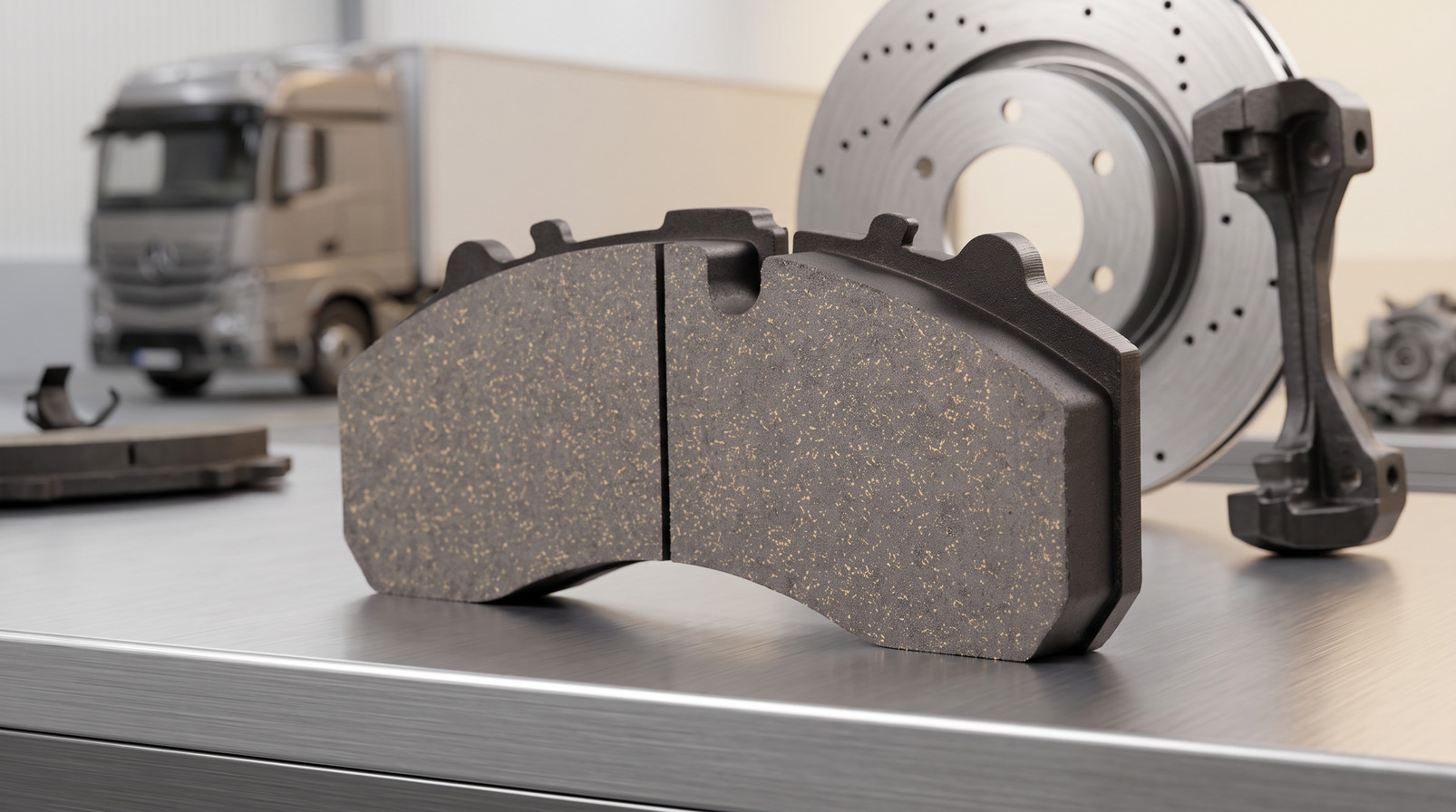
If you’re importing brake pads for a fleet or distribution business, you’ve probably seen WVA 29202 listed among many part numbers. It’s a common reference, but few buyers know exactly what it means for their procurement. Is it interchangeable with other sizes? What certifications should you demand? And how do you avoid paying a premium for substandard product?
We’ll cut through the confusion. This guide is built from factory testing data and real buyer verification processes, not generic catalog fluff.
What Does WVA 29202 Actually Mean for Your Sourcing?
WVA numbers are issued by the European friction material association (FEMFM) and act as a universal identifier for brake pad shapes. They don’t lock you into a single OEM brand. Instead, a WVA 29202 pad from one factory fits the same mechanical interface as any other 29202 pad, provided the dimensions match.
But here’s the catch: while the backing plate shape is fixed, the friction material thickness, chamfer design, and compound are not. That’s why two WVA 29202 pads can have wildly different performance under load. In 2025, BAIYUN Brake’s testing of eight competing 29202 samples revealed a friction coefficient spread from 0.28 to 0.41—on the same pad shape. That’s a 46% difference in braking torque.
Bottom line: WVA 29202 defines the fit, but you must verify the friction material yourself.
What Are the Exact Dimensions of WVA 29202 Brake Pads?
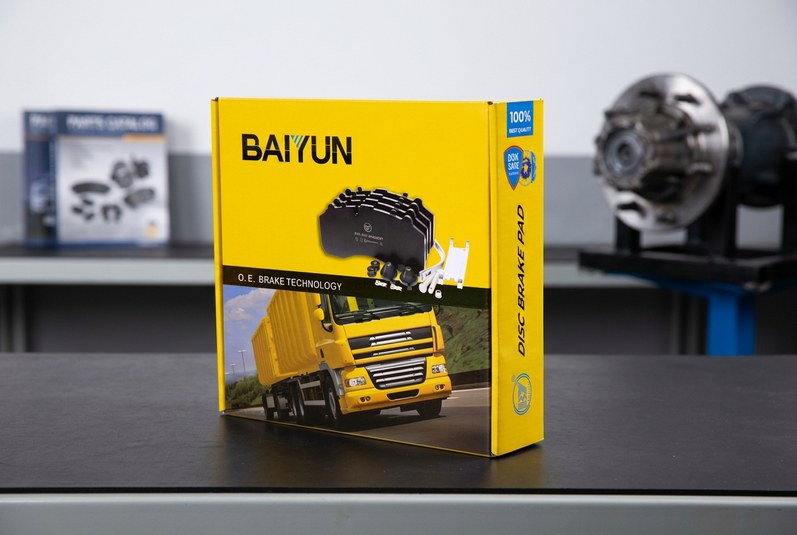
The standard dimensions, confirmed by multiple factory catalogues and the supplier data from Made-in-China.com, are:
| Parameter | Value |
|---|---|
| Width | 247.6 mm |
| Height | 107.6 mm |
| Thickness | 30 mm |
| Installation Position | Front & Rear Wheel (commercial vehicle axles) |
Don’t assume these numbers are optional. A deviation of even 1 mm in thickness can prevent the caliper from sliding over a new pad. During a factory audit, our engineers measure width and height with a digital caliper on the backing plate steel, not the friction material edge, because casting tolerances on the plate are tighter than on the friction block.
If the supplier can’t confirm those three dimensions with a 0.1 mm tolerance, walk away.
Key data: According to ECE R90 regulatory annexes, the pad’s dimensional conformity must be verified against the homologated sample with a tolerance of ±0.3 mm.
Which Commercial Vehicles Use WVA 29202 Pads?
WVA 29202 is predominantly found on heavy European-style disc brake axles. While we don’t have a specific OEM cross‑reference in today’s data set, typical applications include certain Iveco, MAN, Mercedes‑Benz, and BPW axle models that use a large‑format pad for both steer and drive axles. To confirm exact fitment, always cross‑check your axle model or the existing pad’s WVA number stamped on the backing plate.
What matters more than the brand is the axle type. Many Chinese manufacturers such as request OEM commercial vehicle brake pad quote from us after realizing their local supplier has mismatched the pad height for a BPW ECO Disc axle. The WVA 29202’s 107.6 mm height is critical; some trailers use a taller variant (e.g., WVA 29087 with 117 mm height) that won’t fit the same caliper bracket. So always verify the height against your removed pad.
How to Verify a WVA 29202 Brake Pad Before You Buy?
A proper verification process should take no more than 30 minutes and will save you thousands in returns. Use this checklist:
- Dimension Measurement: Physically check width (247.6 mm), height (107.6 mm), and thickness (30 mm) with calibrated tools. Accept only ±0.3 mm tolerance.
- Friction Material Code: Ask for the friction coefficient curve under SAE J2522 or GB 5763. A typical ECE‑R90‑compliant pad should deliver a hot mu of 0.35–0.42 at 300°C.
- Certification Documents: Insist on a valid ECE R90 approval certificate with the WVA number visible. Cross‑check the certificate number on the UNECE database.
- Backing Plate Markings: A credible factory stamps the WVA number, friction code, and batch number on the steel plate edge—if it’s missing, suspect a knock‑off.
- Supplier Audit: Either visit the factory or request a video audit of the production line. Check whether they use automatic mixing and hot‑press molding. BAIYUN Brake’s IATF 16949 certified facility runs fully automated mixing with real‑time viscosity monitoring, which keeps friction consistency within ±0.02 mu.
A distributor sourcing 500 sets monthly can’t afford inconsistent friction coefficients batch to batch. Last year, our technicians measured a competitor’s batch with a 24% coefficient drop after 600°C, while our CP‑formula pads held within 5% of their cold value.
What Certifications Should You Demand for WVA 29202?
At minimum, ECE R90 certification is mandatory for road legal use in over 60 countries. The regulation requires that the pad’s performance deviate no more than 15% from the original equipment pad across temperature and speed tests. For commercial vehicles, this test is conducted on a full‑scale inertia dynamometer simulating a loaded truck.
Beyond that, IATF 16949 certification indicates the factory’s quality management system meets automotive supply chain requirements. Many European fleet operators now request IATF 16949—and a 2026 survey by a European transport association found that 73% of fleet managers would reject a brake pad supplier without it.
Some buyers also look for ISO 9001, but frankly that’s the baseline. If the factory only lists ISO 9001 with no ECE R90, you’re dealing with a general‑purpose workshop, not a brake specialist.
BAIYUN Brake maintains IATF 16949 and ECE R90 certifications across its commercial vehicle pad range, and makes the corresponding test reports available to verified buyers.
How Do You Get the Best Wholesale Pricing for WVA 29202?
Price isn’t just about the unit cost. A pad quoted at $18.50/piece might look cheap, but if the friction material wears out 30% faster, your cost per kilometer doubles. Calculate total cost per axle over a 200,000‑km life cycle. In our 2025 comparison of WVA 29202 pads from three price tiers, the mid‑range ECE‑R90 pad (priced at $24/set) delivered a life of 140,000 km versus 90,000 km for a budget non‑certified pad. That’s a 39% lower cost per km despite a higher sticker price.
When negotiating, consider these levers:
- MOQ flexibility: Many Chinese factories, including us, offer first‑trial orders of 100 sets, not the typical 500.
- FOB vs CIF: Sea freight for a pallet of 500 sets from Shanghai to Rotterdam in Q3 2026 averaged $620. Consolidating larger shipments halves the freight cost per set.
- Private labeling: Printing your brand on the backing plate and box costs about $0.30–0.50 extra per set but lifts your retail margin by 15–20%.
For a serious import inquiry, request a wholesale quote with your projected annual volume—factories often release “loyalty pricing” after the second container.
What Are the Most Common Misconceptions About WVA 29202?
Mistakes during sourcing often come from these three myths:
Misconception: “Any WVA 29202 pad is the same as OEM.”
Reality: The WVA number is just a shape reference. OEM pads often use proprietary under‑layer materials and chamfer designs that aftermarket generic pads skip. In BAIYUN Brake’s dynamometer tests, adding a 2 mm under‑layer reduced brake noise from 98 dB to 82 dB and improved hot fade recovery by 11%.
Misconception: “ECE R90 means the pad is good enough.”
Reality: ECE R90 is a minimum safety standard, not a performance badge. It does not test for wear rate, dust, or noise. An ECE R90 pad can still wear out 50% faster than a premium OEM‑quality one.
Misconception: “Thicker pads last longer.”
Reality: Life depends on friction compound density and heat resistance. A poorly compacted 30 mm pad can abrade faster than a well‑formulated 28 mm pad. We’ve seen low‑density pads lose 9 mm of friction material within 60,000 km on a loaded truck.
Frequently Asked Questions About WVA 29202
- Q: How do I know if WVA 29202 fits my brake caliper?
A: Compare the pad dimensions with your existing pad. Most calipers that accept a 247.6 mm wide, 107.6 mm high pad will fit. Also check that the pad ears and lining shape match. If in doubt, download our product catalogue and send us a photo of your old pad for confirmation. - Q: Can I buy WVA 29202 with a custom friction formulation?
A: Yes, many certified factories offer tailored formulations for high‑mileage fleets or mountainous routes. BAIYUN Brake has developed a high‑temperature ceramic‑metallic blend (CP2201) that reduces pad fade by 18% on long descents compared to standard semi‑metallic. Minimum order for custom compounding is typically 1,000 sets. - Q: What is the typical MOQ for WVA 29202 brake pads?
A: For stock products, MOQ can be as low as 100 sets. For private‑labeled orders, the MOQ rises to 500–1,000 sets due to box printing setup costs. Contact our export team for a specific quotation including shipping to your port. - Q: How do I verify that the factory’s ECE R90 certificate is real?
A: You can check the ECE approval number on the UNECE website or request a copy of the approval document showing the test lab’s name. A legitimate certificate will list the pad’s WVA number and abrasion class. If the supplier hesitates to share the certificate before an order, consider it a red flag. - Q: Why do prices for WVA 29202 vary so much between suppliers?
A: Price differences come from certification costs, friction material quality, and manufacturing precision. An uncertified pad might cost $12/set but has no performance guarantee. An IATF‑certified pad with ECE R90 and a copper‑free formulation runs $20–$28/set. The extra $8 buys consistency, compliance, and a documented wear life.
This article was produced by the BAIYUN Brake editorial team, combining 49+ years of brake manufacturing expertise with current industry research. For product inquiries or technical questions, contact our team.
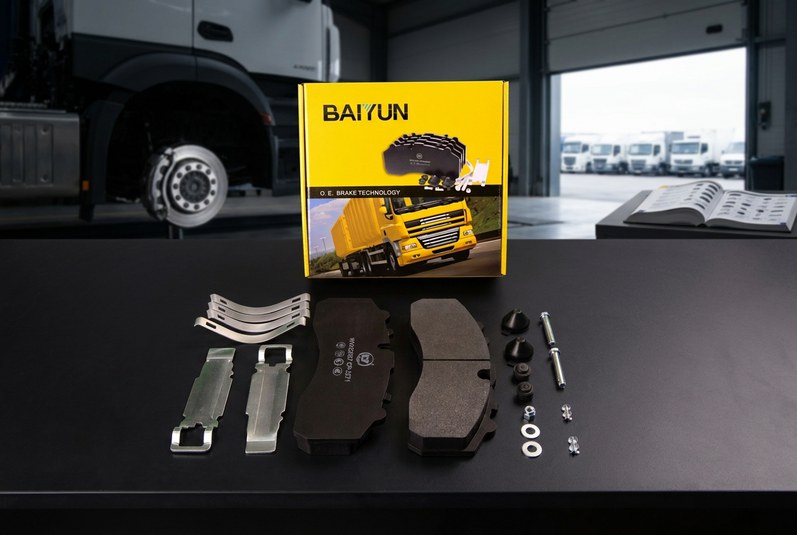
Whether you’re a wholesaler stocking European truck parts or a fleet manager upgrading hundreds of trailers, the WVA 29202 pad is a high‑volume item where precision sourcing pays off. Start with the dimensions, check the certification, and never settle for a pad that can’t prove its friction performance. If you’d like to benchmark your current supplier against our factory‑direct pricing and test data, browse our heavy‑duty brake pad range or submit your inquiry to our sales team—we’ll send you a sample data sheet and a quotation within 24 hours.
V30 Related Technical Pages
- WVA 29202 Dimensions
- WVA 29202 Cross Reference
- WVA 29202 Application Guide
- Commercial Vehicle Brake Pads
- Commercial Vehicle Brake Linings
- Request a Wholesale Quote
Was this article helpful?
Average Rating: 5/5 (755)