
What Is the Typical MOQ for Brake Pads from China?
Summary:
The brake pad MOQ China benchmark ranges from 20 to 400 sets per model, depending on supplier type and product line. Customer-oriented manufacturers like BAIYUN Brake support trial orders of 20–50 sets per commercial vehicle brake pad reference, while high-volume commodity factories often require 400 pieces per model. This article breaks down why MOQ varies, how it affects unit price, lead time and cash flow, and which buyer verification steps protect importers and fleet distributors. It also covers common misconceptions, recommended trial order structure, and questions to ask before signing a proforma invoice. BAIYUN Brake holds IATF 16949 and ECE R90 certification, with 49+ years of friction material manufacturing experience. For wholesale buyers sourcing truck, bus and trailer brake pads, a flexible MOQ paired with batch-level dynamometer data reduces sourcing risk more than chasing the lowest price.
What Is the Typical MOQ for Brake Pads from China?
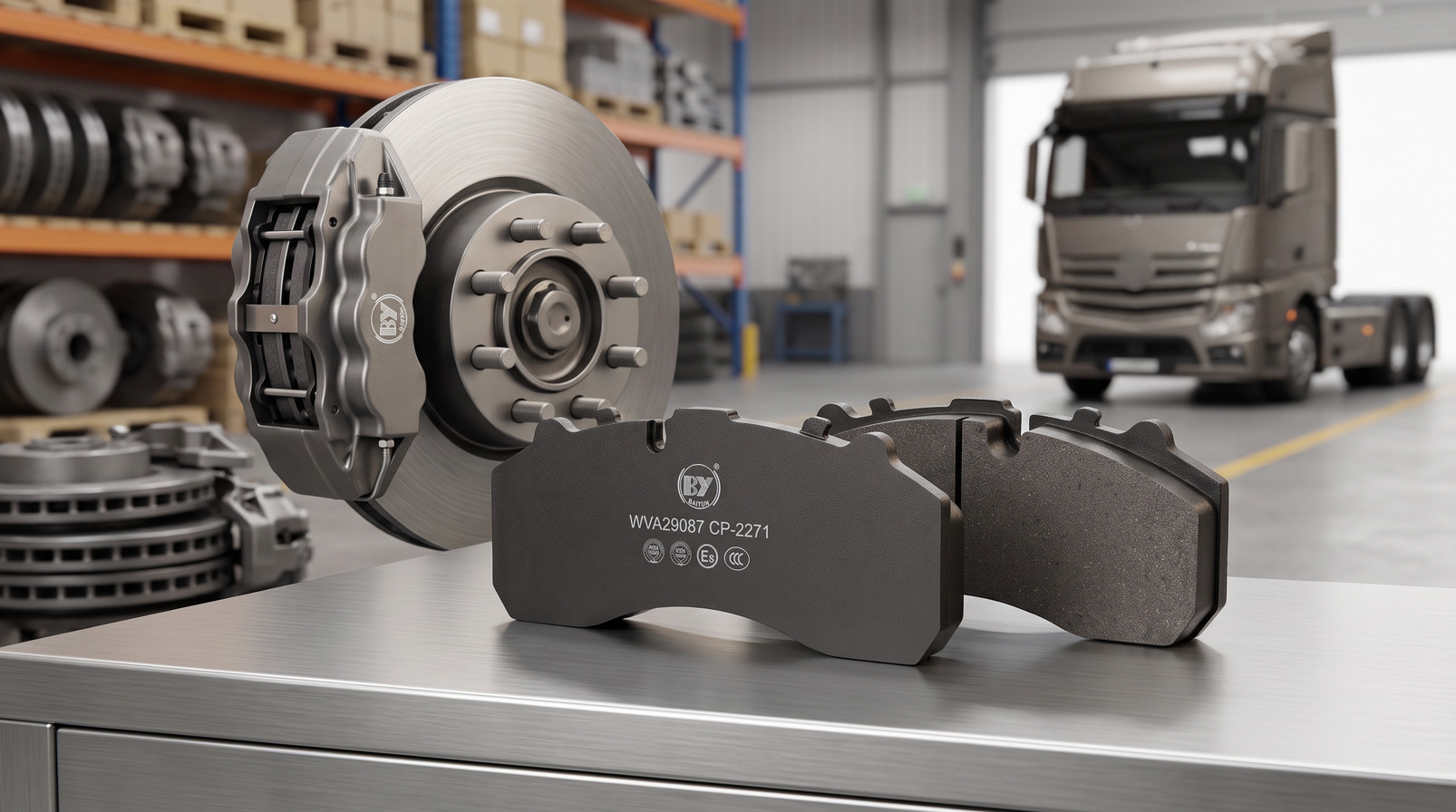
Quick answer: Most Chinese brake pad exporters quote MOQs between 20 and 400 sets per reference. Customer-oriented manufacturers like BAIYUN Brake typically start at 20–50 sets per model for commercial vehicle brake pads, while high-volume commodity plants may require 400 pieces. Payment terms often run 30% deposit and 70% before shipment. Certification and material consistency matter more than a low number.
Why Do Chinese Brake Pad MOQs Vary So Much Between Suppliers?
MOQ differences in China's brake pad industry come down to production batch economics, not supplier goodwill. A customer-oriented line making 20–50 sets per model will change press tooling more often and still keeps the batch small, while a high-volume commodity plant pushes 400 pieces per model to cover die set-up and mixing time.
Commercial vehicle brakes complicate this further. Truck and bus pads use larger backing plates, heavier friction material and more aggressive formulations than passenger car parts. A manufacturer has to allocate a separate mixing cycle and curing press for a DAF, Volvo or Mercedes-Benz truck reference. That's why the brake pad MOQ China number you hear from one factory may be 20 sets, and 400 from another.
If you're sourcing for trailers, buses or fleet maintenance, confirm whether the supplier actually runs commercial vehicle brake compounds in-house. Some traders simply repackage passenger-grade material in a commercial backing plate, which shows up later as noise, heat fade or rapid drum scoring. Request OEM commercial vehicle brake pad quote only after checking the material data sheet and homologation approvals.
Key takeaway: MOQ is a production-batch signal, not a value judgment. Lower MOQ often means a flexible manufacturer with smaller changeover costs.
What Should a Distributor Budget for a First Trial Order?
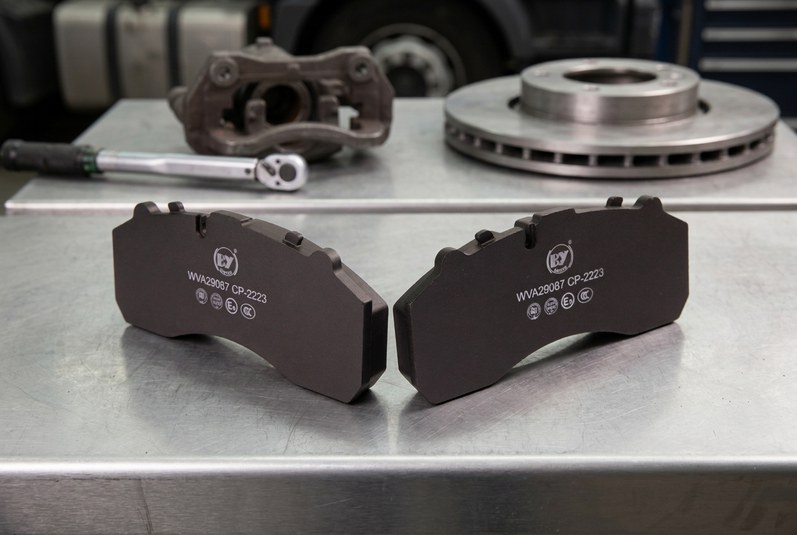
A sensible first order from a reputable Chinese brake pad supplier is rarely the absolute minimum MOQ. Buyers who request 20 sets of one model end up with high air freight cost per set and no data on batch consistency. Most experienced importers place 50–100 sets across 2–4 commercial vehicle references for a first evaluation.
That structure gives you enough volume to test on a few trucks or buses under real braking cycles without locking up cash. If the supplier requires 400 pieces per model, the trial order becomes a commercial commitment before you've validated material performance. This is where a flexible MOQ is worth more than a small price saving.
For distributors carrying both disc pads and drum linings, mixed-model trial shipments reduce risk further. A truck fleet rarely consumes one reference only. Pairing brake pads with commercial vehicle brake linings in one consolidated order helps you check friction pairing, packaging and labeling at once.
Lead time also shifts with trial order structure. Standard references in 50–500 set batches usually ship in 20–35 days after deposit. Custom formulations or new WVA references can stretch to 45–60 days because the friction material needs separate mixing and testing cycles.
Key takeaway: Budget for 50–100 sets across multiple references, not the absolute minimum, to get meaningful field data and logistics efficiency.
How Does MOQ Affect Unit Price, Lead Time, and Cash Flow?
Raising an order from 20 sets to 400 sets per model typically cuts unit cost by 8–15% in Chinese brake pad factories. That saving comes from fewer press set-ups, longer continuous mixing runs, and cheaper packaging per piece. But the arithmetic only works if the stock turns fast.
Table 1 compares three common supplier profiles in the brake pad MOQ China market.
| Supplier Type | Typical MOQ | Unit Price Impact | Lead Time | Best For |
|---|---|---|---|---|
| Customer-oriented manufacturer | 20–50 sets per model | Slightly higher per unit | 20–30 days | Distributors testing new markets |
| Mid-size exporter | 100–300 sets per model | Moderate discount | 25–40 days | Growing importers with repeat demand |
| High-volume commodity factory | 400+ pieces per model | Lowest per unit | 30–50 days | Large wholesalers with stable SKUs |
Cash flow should be part of the MOQ decision. A 400-set order for one truck brake pad reference ties up working capital for 60–90 days once you add production, freight and customs clearance. If that reference is slow-moving, the unit saving disappears into storage and obsolescence. Ask any brake pad supplier what happens to unsold stock after 12 months, and the answer usually isn't friendly.
Payment terms matter too. Standard terms remain 30% deposit, 70% before shipment across much of the industry. Some flexible suppliers accept lower deposits for repeat buyers, but don't confuse that with contract security. The real protection is a documented ECE R90 approval and batch-level test data. For that, working with a trusted brake pad supplier reduces the chance you'll be repurchasing sooner than planned.
Key takeaway: Lower unit price from high MOQ only beats flexible MOQ if your inventory turns in under 90 days and the part reference is proven in service.
What Buyer Verification Steps Should You Complete Before Committing to an MOQ?
Before you accept a brake pad MOQ China quote, run the same verification you'd use for any safety-critical commercial vehicle component. IATF 16949 certification confirms the production quality management system, while ECE R90 approval proves the specific brake pad part passed aftermarket performance and dimensional checks for Europe-bound vehicles.
Use this checklist:
- Request a copy of the current IATF 16949 certificate and check the audit scope includes brake pad or friction material manufacturing.
- Ask for the ECE R90 approval number for the exact commercial vehicle part reference, not a generic company certificate.
- Request batch-level dynamometer test reports, preferably SAE J2522 or GB5763, showing cold and hot friction coefficient.
- Confirm the friction material formulation is designed for commercial vehicle axle loads, not adapted from light vehicle compounds.
- Check the supplier's IATF 16949 certified facility through a live video tour or third-party audit report before opening a letter of credit.
- Verify packaging standards, private labeling options, and the minimum guarantee for shelf life or rust prevention.
One practical tip: ask for the same reference's historical friction coefficient range across three production batches. A range of 0.38–0.42 at 100–350°C is healthy for many commercial vehicle friction materials. If the supplier can't produce that data, an attractive MOQ means very little.
Key takeaway: Certification and batch test data convert a low MOQ into a controllable sourcing decision, not a leap of faith.
How Does BAIYUN Brake Approach Low-MOQ Commercial Vehicle Brake Programs?
At BAIYUN Brake, the commercial vehicle brake pad MOQ starts around 20–50 sets per model for standard references. That number isn't a marketing trick. It reflects a factory layout built for frequent changeovers and in-house mixing of commercial vehicle friction materials. With our 49+ years of manufacturing experience, the production team runs smaller batches without losing press cycle consistency.
As a case example, BAIYUN Brake's 2025 dynamometer testing on commercial vehicle formulations showed a friction coefficient of 0.38–0.42 across the 100–350°C temperature range, consistent with ECE R90 requirements for aftermarket brake pads. That stability matters more for a bus fleet than a 5% price difference on the first container.
What changes if you request a rare WVA number? The MOQ may rise because the backing plate die and mixing formula are not currently in rotation. Standard references used by European trucks, trailers and buses generally stay at the lower end because production frequency is high. This is why you should share your part numbers early rather than asking for a universal quote.
Key takeaway: BAIYUN Brake's flexible MOQ works because frequent changeover capability and in-house formulation data support small-batch consistency, not because quality is reduced.
What Are the Most Common Misconceptions About Brake Pad MOQ in China?
Three myths distort buyer expectations around brake pad MOQ China.
Misconception: A lower MOQ always means a smaller or less capable factory.
Reality: Some large, certified manufacturers run flexible lines precisely because they serve diverse export markets. BAIYUN Brake supports 20–50 sets per model while holding IATF 16949 and ECE R90 certification.
Misconception: High MOQ suppliers automatically deliver more consistent quality.
Reality: Batch size does not fix a poor friction formula or weak process control. A 400-piece batch of an untested compound still fails the same dynamometer cycle. Batch data matters more than batch quantity.
Misconception: MOQ only refers to finished brake pads.
Reality: MOQ often applies per model reference and can also apply to private-label packaging, custom friction codes, or mixed WVA orders. Ask what the minimum is for each variable, not just the first number in the quotation.
Key takeaway: MOQ is a multi-variable commercial condition. Evaluate it alongside certification, test data and reference availability.
How Should You Run a Trial Order Without Exposing Your Cash Flow?
A commercial vehicle brake pad trial order should be a controlled experiment, not a leap to a full container. Start with 2–4 fast-moving references at the supplier's lower MOQ band. Install on fleet trucks, buses or trailers that run predictable routes and maintenance intervals.
Measure pad wear, disc temperature, noise and pedal feel over 10,000–20,000 km if possible. Compare against the previous supplier's data on the same vehicle class. ECE R90 already requires that the brake pad maintain at least 80% of cold effectiveness after thermal cycling to 400°C, but real route data shows how the pad behaves in your ambient conditions.
Commercial vehicle brakes punish cheap materials. A pad that looks identical but lacks the correct hot shear strength may micro-crack at the friction boundary or fade on a long downhill. That's why you ask for batch-level shear, hardness and compressibility data before you commit to repeat orders.
Once the trial passes, you can scale the order and negotiate better pricing inside the same supplier relationship. Buyers who skip the trial and jump to a 400-piece MOQ often discover the problem only after complaints from fleet customers.
Key takeaway: Use the low MOQ to run a structured field trial. Scale only after the pad survives your operating conditions, not after a sales pitch.
What Are the Most Common Questions Importers Ask About Brake Pad MOQ in China?
Q: Is 20–50 sets per model a realistic MOQ for commercial vehicle brake pads?
A: Yes, from customer-oriented manufacturers like BAIYUN Brake. Standard references with existing backing plate tooling often start at 20–50 sets, but rare WVA numbers or custom friction codes may need a higher minimum.
Q: Can I get a mixed container of brake pads and brake linings under one MOQ?
A: Many suppliers allow mixed shipments, but each model usually has its own minimum batch. BAIYUN Brake supports combined commercial vehicle brake pad and lining orders so distributors can balance inventory without bloating one reference.
Q: Does the ECE R90 approval number need to match the exact part reference?
A: Yes. ECE R90 approval is part-specific. You should verify the homologation number against the actual commercial vehicle brake pad reference and axle application before accepting the MOQ.
Q: How quickly can a low-MOQ brake pad order ship from China?
A: Standard commercial vehicle brake pad batches of 50–500 sets typically ship in 20–35 days after deposit. New friction formulations or private-label packaging can extend lead time to 45–60 days.
Q: What payment terms apply to a first brake pad MOQ order?
A: The usual terms are 30% deposit with 70% balance before shipment, paid by TT or L/C. Some repeat buyers negotiate lower deposits, but the first order normally follows the standard structure.
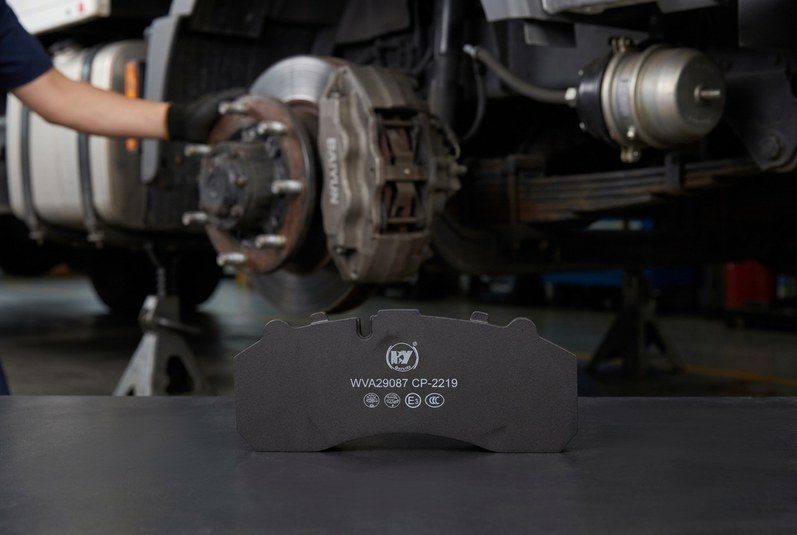
What's the Next Step for Your Brake Pad Sourcing Plan?
MOQ is just one variable. A low number without verified friction data, ECE R90 approval and stable batch control won't protect your fleet or your margin. Start with a flexible supplier that can handle commercial vehicle references without forcing you into a 400-piece gamble.
Browse our heavy-duty brake pad range or request a wholesale quote for your truck, bus or trailer program. Share your WVA numbers and annual volume, and the BAIYUN Brake export team will confirm an MOQ that fits your cash flow and test plan.
Was this article helpful?
Average Rating: 5/5 (571)