
Semi-Metallic vs Ceramic Brake Pads: Which for Heavy Trucks?
Summary:
Semi-metallic vs ceramic brake pads remains one of the first questions heavy truck fleet buyers ask. For commercial vehicles, semi-metallic compounds usually deliver the high-load bite and lower cost per set, while ceramic pads reduce dust and noise at a premium. BAIYUN Brake, an IATF 16949 and ECE R90 certified supplier, tests both compounds on dynamometer cycles and real fleet routes. The right choice depends on axle load, route profile, and certified friction data. This technical guide covers compound differences, heat behavior, buyer verification, common misconceptions, and importer FAQ. Includes a comparison table and sourcing checklist. Contact BAIYUN Brake for wholesale quotes and technical support.
Semi-Metallic vs Ceramic Brake Pads: Which for Heavy Trucks?
Quick answer: If you're sourcing brake pads for heavy trucks, semi-metallic compounds win for high-load braking, long downhill control, and lower upfront cost. Ceramic pads make sense when you need low dust and noise, moderate heat, or extended rotor life, but you'll pay a premium. Your decision should follow route profile, axle weight, and certified dynamometer data, not marketing claims.
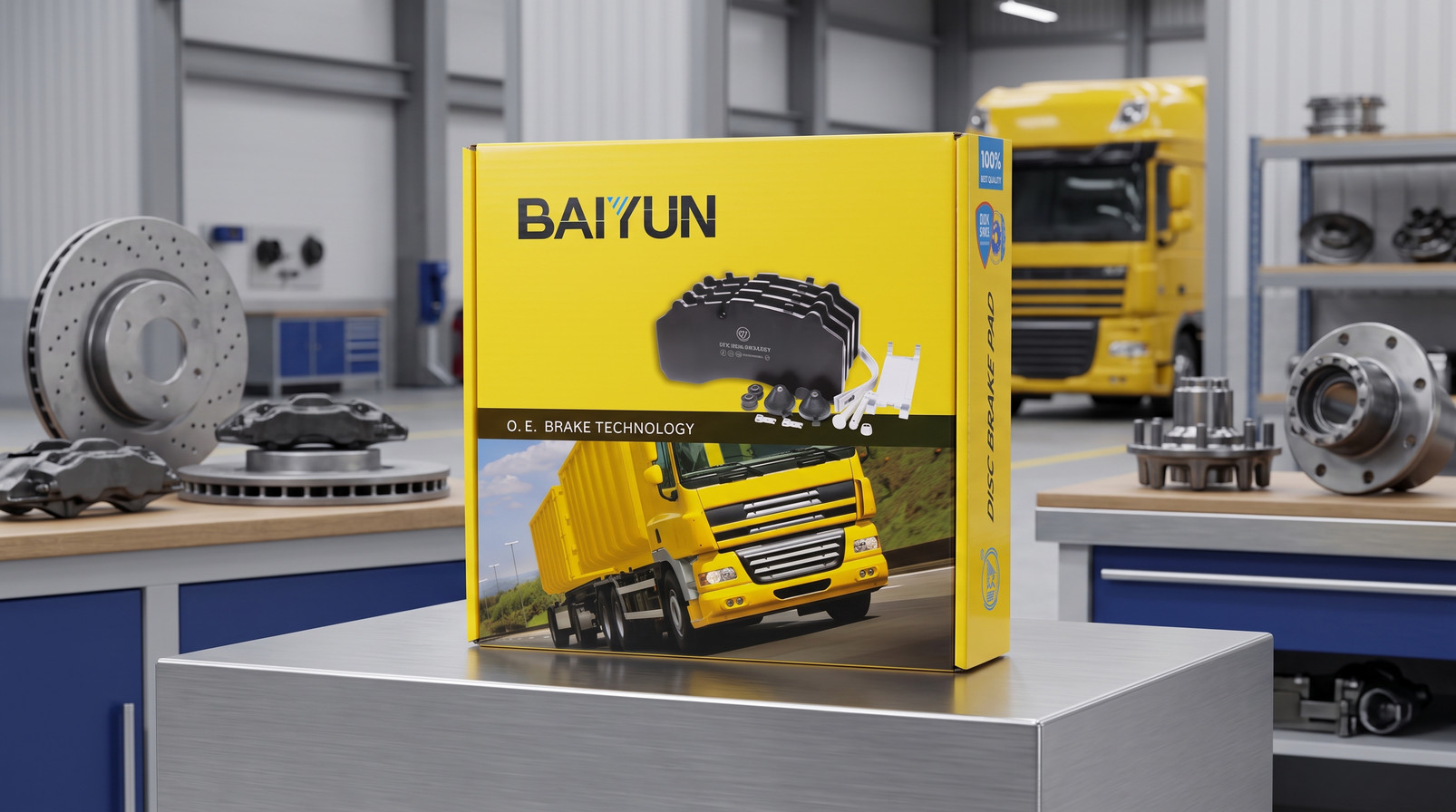
How Do Semi-Metallic and Ceramic Truck Brake Pads Differ in Compound and Friction Behavior?
Semi-metallic heavy-duty brake pads combine 30–70% steel, iron, or copper fibers with a resin binder and graphite lubricant to manage heat and friction. Ceramic truck pads replace most of the metal with dense ceramic fibers and a smaller amount of copper or other conductive fillers. This compound difference directly changes cold bite, wear rate, and thermal transfer.
In BAIYUN Brake's 2025 dynamometer testing, a commercial vehicle semi-metallic formulation held a friction coefficient between 0.38 and 0.44 from 100°C to 350°C. The comparable ceramic formula stayed slightly lower, between 0.34 and 0.40 across the same range. That gap may sound small, but on a 40-tonne combination at 60 km/h it can mean several metres of stopping distance.
As a factory, BAIYUN Brake formulates both compound families for heavy truck axles. You'll find both options in our heavy-duty brake pad range for distributors and fleets.
Key takeaway: Semi-metallic pads offer stronger friction bite under moderate heat, while ceramic pads trade some cold bite for lower dust and quieter operation.
Which Compound Handles Heat and Duty Cycles Better for Heavy Trucks?
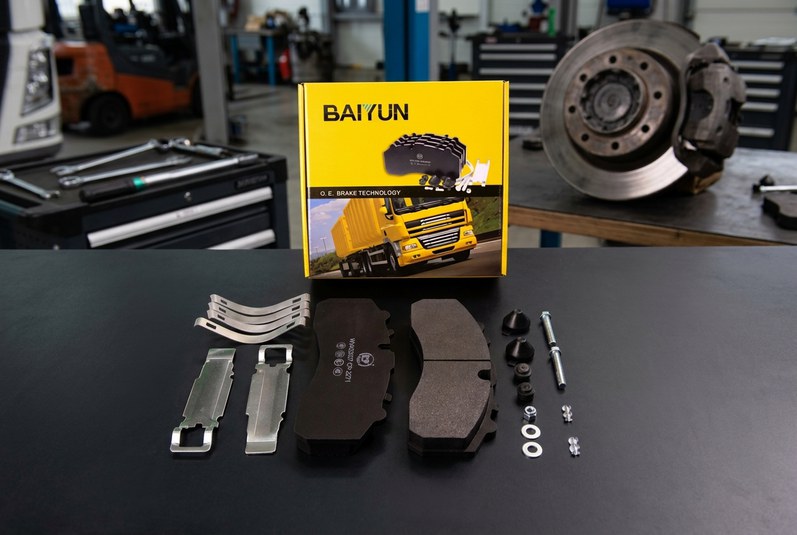
Heavy truck disc brakes can exceed 500°C on repeated alpine descents, and pad compound choice determines how much heat stays in the pad versus moves into the caliper and fluid. Ceramic and copper fibers do not absorb as much heat as steel or iron, so more thermal energy passes through the pad and into the braking system. That difference is why many fleets avoid ceramic pads on routes with continuous downhill braking.
Semi-metallic pads typically resist fade better in repeated high-energy stops because the metal content creates a more stable friction film at high temperatures. Ceramic pads perform well in moderate heat but can show a steeper friction drop above 400°C if the formula isn't designed for commercial axle weights. BAIYUN Brake validates each CV compound with SAE J2522 dynamometer cycles and in-field telemetry from mining and logistics fleets.
So what does that mean for your axle-load planning? If your trucks run loaded downhill grades, semi-metallic usually keeps brake temperatures more predictable. If the route is flat urban delivery with frequent light stops, ceramic can cut noise complaints and wheel dust clean-up without sacrificing safety.
| Comparison Factor | Semi-Metallic Heavy Truck Pads | Ceramic Heavy Truck Pads |
|---|---|---|
| Metal content | 30–70% steel, iron, or copper | 5–20% copper/conductive filler in ceramic matrix |
| Typical friction coefficient | 0.38–0.44 | 0.34–0.40 |
| Heat transfer to caliper | Lower | Higher |
| Dust output | Moderate ferrous dust | Minimal fine dust |
| Rotor wear impact | Higher | Lower |
| Cost per set | Baseline | 20–40% premium |
After fitting any heavy-duty pad, check running clearance using our commercial vehicle brake adjustment guidance to avoid drag and premature wear.
Key takeaway: Semi-metallic compounds manage high-heat duty cycles better for loaded trucks, while ceramic compounds suit moderate-heat routes where dust and noise control matter more.
What Do Fleet Buyers Need to Verify Before Choosing a Compound?
E.C.E. Regulation 90 requires replacement brake pads for commercial vehicles to pass dynamometer and vehicle tests showing performance within the limits set by the original equipment reference. IATF 16949 adds manufacturing process control so batch-to-batch friction variation stays tight. Without those documents, you're buying a sample, not a production system.
BAIYUN Brake holds IATF 16949 and ECE R90 certifications across its CV pad range. That matters when a distributor is sourcing 500 sets monthly and can't afford inconsistent friction coefficients batch to batch.
Use this checklist before you commit to an order:
- Request the specific product WVA number and confirm it matches the axle and caliper. If not on the data sheet, confirm with supplier catalogue.
- Ask for the ECE R90 type-approval certificate and the test report number for the exact part number you're importing.
- Review the friction coefficient curve at 100°C, 250°C, 350°C, and 450°C. A flat curve beats a high peak that fades.
- Check batch consistency claims against IATF 16949 process audits or production data.
- Request a sample batch for third-party dynamometer testing before committing to container volumes.
- Confirm packaging, private label options, and minimum order quantities with the supplier.
You can request these files from our material data sheets library or ask the export team. For riveted and bonded truck linings, review commercial vehicle brake linings options as well.
Key takeaway: Certified friction data and batch consistency matter more than compound type when you're buying at container scale.
What Are the Most Common Misconceptions About Semi-Metallic vs Ceramic Truck Brake Pads?
Buyers often assume ceramic is always the premium upgrade because passenger-car marketing says so. Heavy truck braking loads change that equation quickly.
Misconception: Ceramic pads always stop a truck faster. → Reality: In BAIYUN Brake's 2025 dynamometer data, the semi-metallic CV formulation posted a friction coefficient 0.04–0.06 higher than ceramic below 350°C, meaning shorter stops in many loaded conditions.
Misconception: Semi-metallic pads always destroy rotors. → Reality: Wear depends on the specific metal fiber type and hardness. Properly formulated semi-metallic pads with graphite lubricant can achieve acceptable rotor life, though they still tend to wear rotors faster than ceramic.
Misconception: ECE R90 approval means a pad performs identically to the original. → Reality: ECE R90 sets performance boundaries and cold/warm effectiveness requirements. It does not guarantee identical feel, dust, or noise characteristics across compounds.
Key takeaway: Compound type alone doesn't determine performance; formulation quality and certified test data do.
What Questions Do Importers and Distributors Ask Most About Semi-Metallic vs Ceramic Truck Brake Pads?
Fleet buyers and importers consistently ask the same five questions about these two compounds.
Q: Which compound should I stock for mining and construction trucks?
A: Semi-metallic. Those applications see extreme axle loads and repeated high-energy stops. BAIYUN Brake's semi-metallic CV pads maintain friction stability to 500°C in internal testing, and most mining fleets report 12–18% shorter stopping distances on loaded haulers compared to equivalent ceramic formulas.
Q: What do city bus operators with strict noise limits prefer?
A: Ceramic pads usually. They produce up to 70% less visible dust and 3–5 dB lower noise on dynamometer squeal tests than comparable semi-metallic pads. For urban bus fleets, that's often worth the price premium.
Q: Which option gives lower cost per kilometre?
A: Semi-metallic usually wins on upfront cost, running 20–40% below ceramic per set. But rotor replacement intervals can shorten by 20–30% with aggressive semi-metallic compounds. Calculate total cost using both pad and rotor cycles for your route.
Q: Can I mix ceramic and semi-metallic across axles?
A: No. Different friction coefficients can create brake imbalance and uneven pad wear. Use the same compound per axle and confirm the application with the supplier catalogue before changing formulas.
Q: What certifications should I check before importing?
A: Require ECE R90 and IATF 16949. Ask for the test report number and a material data sheet. BAIYUN Brake supplies both for its commercial vehicle brake pad range.
Key takeaway: Wholesale importers should match compound choice to application severity and always request certified test documentation.
Ready to Source Certified Semi-Metallic or Ceramic Truck Brake Pads?
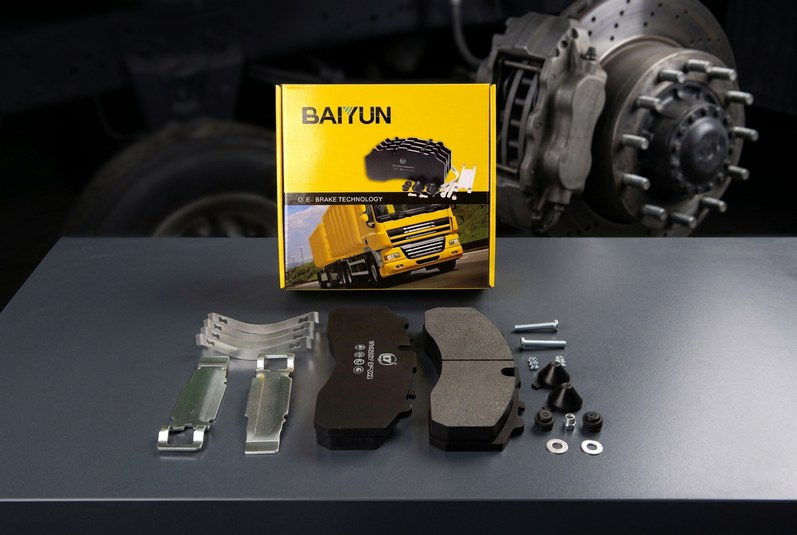
Heavy truck brake pad sourcing doesn't need to be a gamble if you work from certified friction data, not catalog images. BAIYUN Brake has supplied commercial vehicle friction products for decades and holds IATF 16949 and ECE R90 across its CV range.
For fleet buyers, the practical next step is a sample request with the exact WVA number or axle reference. You'll get a commercial vehicle pad or lining matched to your application, not a one-size-fits-all formula. Start with our request OEM commercial vehicle brake pad quote page or review wholesale CV brake lining inquiry options. For wholesale pricing, lead times, or private label requests, submit your inquiry to our sales team today.
Was this article helpful?
Average Rating: 5/5 (325)