
How to Choose a Brake Pad Supplier: 9-Point Checklist
Summary:
Choosing a brake pad supplier in China requires more than a low unit price, especially for commercial vehicle brake pads. This 9-point checklist for importers and distributors examines IATF 16949 and ECE R90 certificate verification, batch-level SAE J2522 and GB 5763 friction test data, live factory audit methods, MOQ, lead-time, and landed-cost drivers, plus common sourcing misconceptions. It explains how to compare Chinese factories, request third-party pre-shipment inspection, and run a 300–500 set pilot order before committing to container volumes. BAIYUN Brake uses 49+ years of friction manufacturing experience to show what real supplier qualification looks like for truck, bus, and trailer applications. Use these checks to avoid trading companies that cannot trace batches. Landed cost comparison, part number scope, and warranty terms complete the evaluation.
How to Choose a Brake Pad Supplier: 9-Point Checklist
Quick answer: To choose a brake pad supplier in China, verify IATF 16949 and ECE R90 certificates, request SAE J2522 or GB 5763 dynamometer reports for commercial vehicle formulations, check friction stability across 100–350°C, demand real truck, bus, and trailer references or sample testing, and confirm MOQ, lead time, packaging, and warranty terms before ordering. A supplier with in-house mixing, pressing, and testing controls typically reduces warranty claims by 20–30% compared with a trading company that cannot trace batches.
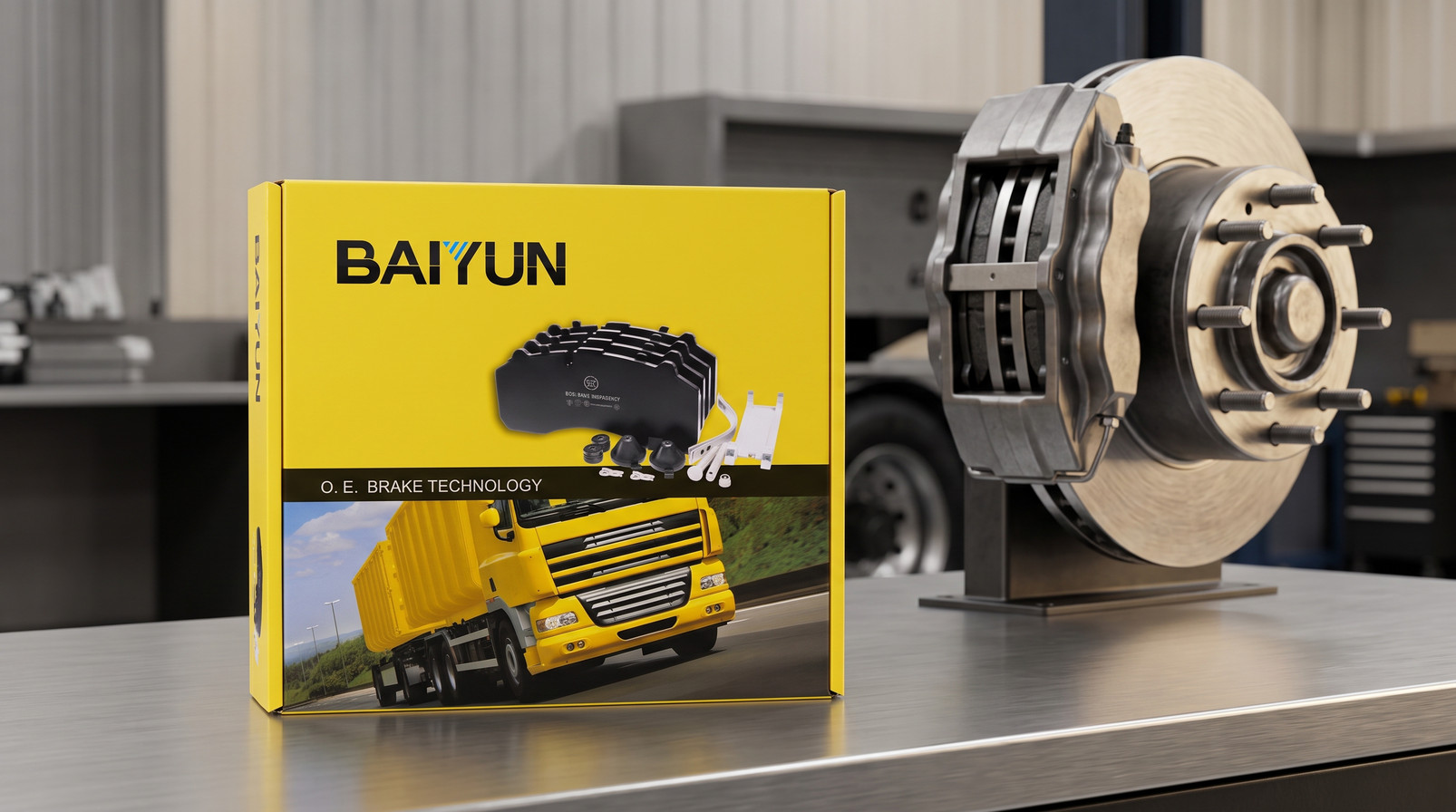
What Does a Reliable Brake Pad Supplier in China Actually Look Like?
Most buyers start with price. That's a mistake. A brake pad supplier in China should look like a manufacturer with direct control over friction material, steel backing plates, and testing, not a desk trader forwarding your inquiry to three different factories.
For commercial vehicles, the consequences are sharper. A distribution partner supplying 500 sets a month to bus fleets or truck workshops cannot afford batch-to-batch friction variation. One bad container can trigger warranty returns, roadside failures, and lost fleet contracts. That's why you need a supplier with 49+ years of manufacturing experience and documented process control, not just a good storefront.
China holds more than 55% of global brake pad production capacity. Within that base, maybe 10–15% of factories have meaningful international audit history and ECE R90 approvals for heavy-duty applications. You want the second group.
Supplier profile that fits importer needs: IATF 16949 for commercial vehicle brake pads, in-house friction mixing, batch-specific test reports, and an export team that speaks in part numbers, not excuses.
Supplier shortlisting decision: choose a factory with in-house friction control and commercial vehicle test history, not just a product catalog.
What Certifications Separate Serious Brake Pad Exporters from Trading Companies?
Certificates are the first filter. They don't guarantee every batch, but they prove the factory has passed an independent audit of its quality management system and product approval process.
IATF 16949 matters more than generic ISO 9001 for commercial vehicle brakes. IATF 16949 requires process capability studies, traceability, and product safety planning. A good audit will expect a Cpk above 1.33 on key characteristics like compressibility, shear strength, and pad thickness. If a supplier cannot explain what Cpk means, walk away.
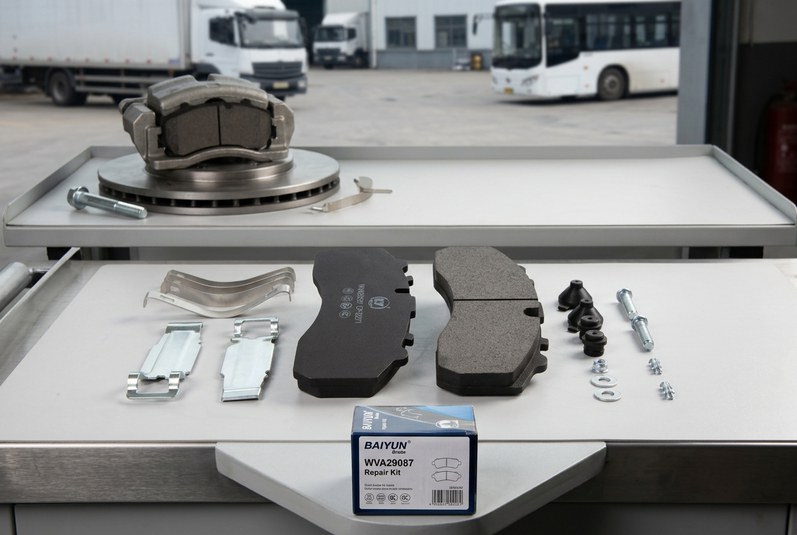
ECE R90 is the product-level approval you need for Europe and many markets that follow ECE regulations. ECE R90 requires aftermarket brake pads to stay within 15% of the original equipment braking force across cold, speed, fade, and recovery tests. A certificate without a matching part number range does you no good.
| Verification item | What it proves | Red flag if missing |
|---|---|---|
| IATF 16949 | Quality management system designed for automotive and commercial vehicle series production | Only ISO 9001, no process capability data |
| ISO 9001 | Basic quality management framework | Expired certificate or wrong product scope |
| ECE R90 | Product-level braking performance approval for aftermarket replacement pads | Certificate does not list your part numbers or axle applications |
| Batch test report | Friction performance and physical properties for a specific production lot | Only a generic brochure, no lot traceability |
| Export license | Legal authority to ship goods internationally | No export history, no port of loading reference |
BAIYUN Brake runs an IATF 16949 certified facility and maintains ECE R90 approvals for commercial vehicle brake pads and linings. Specific WVA numbers, OE cross references, and Meritor/BPW/SAF compatibility data are not listed here; confirm with supplier catalogue.
Certification filter summary: match certificate number, product scope, and part number range before comparing prices.
What Friction and Test Data Should Importers Demand for Commercial Vehicle Brakes?
Brake pads are a friction product. If you don't see dyno data, you're buying a box, not a braking component. For truck, bus, and trailer applications, ask for SAE J2522 or GB 5763 dynamometer test reports that cover cold performance, high-temperature fade, and recovery cycles.
A normal commercial vehicle brake pad friction coefficient sits between 0.34 and 0.46 across the 100–350°C working band. Repeated cycles should stay within a 0.04–0.05 spread. Wider variation means inconsistent stopping force, increased brake imbalance risk, and more heat checking on drums or discs.
In BAIYUN Brake's 2025 dynamometer audit, a heavy-duty commercial vehicle brake pad formulation held a friction coefficient of 0.38–0.42 across that temperature range, consistent with ECE R90 requirements. That's the type of batch-level data you should demand, not just a one-time certificate.
Want to see the range? Browse our heavy-duty brake pad range for commercial vehicle applications, then ask your shortlist suppliers for the same level of test transparency.
Friction data summary: require batch-level dyno data with a friction coefficient of 0.34–0.46 and repeat-cycle spread under 0.05.
How Do You Verify a Chinese Brake Pad Factory Without Flying There?
Buyer verification does not require travel. But you do need to verify three things: the factory exists, it owns its production processes, and it can ship the batch you ordered.
Start with a live video audit. Walk the supplier through friction mixing, hot pressing, curing, grinding, and packaging. A real factory will show you ongoing production, not a borrowed showroom. Ask for a sample batch with batch number, production date, and lot traceability to a specific test report.
Third-party pre-shipment inspection is worth the $300–600 per lot for first orders. Inspectors check dimensions, labeling, packaging, and random sample friction testing. Over 12–18 months, that cost usually pays for itself through fewer rejected containers.
BAIYUN Brake supports live video factory audits and third-party inspection at our facility. You can see our 49+ years of manufacturing experience in the blending room, press shop, and testing lab.
Verification summary: live video audit plus third-party inspection beats a plane ticket for most buyers.
What Are the Real Cost and Lead-Time Drivers for Wholesale Brake Pads?
Price per set is only one number. Landed cost includes sea freight, duty, packaging, documentation, and the cost of fixing a bad batch. For a 40-foot container from China, sea freight can swallow 8–15% of the product value, depending on fuel charges and port pairs.
Production lead time for commercial vehicle brake pads usually runs 25–35 days after drawing approval and sample confirmation. Sea freight to Europe, the Middle East, or Africa adds 15–25 days. So plan 40–60 days from order to warehouse. Air freight for samples typically takes 5–7 days, but you'll pay 4–6 times sea freight rates.
MOQ is another lever. Some export factories quote 1,000 sets per part number. Others, including BAIYUN Brake, accommodate 300–500 sets per reference for mixed-container trial orders because they understand importer cash flow. A trusted brake pad supplier will align MOQ to your testing and reorder cycle, not punish you for starting smart.
Cost summary: compare landed cost and 40–60 day lead time, not factory gate price alone.
What Are the Most Common Misconceptions About Choosing a Brake Pad Supplier in China?
Misconception: The lowest unit price always creates the highest margin. Reality: Hidden warranty returns, reshipment fees, and brand damage can raise total acquisition cost by 18–25% if batch consistency fails. Frankly, the price gap between certified and uncertified pads rarely justifies the warranty risk.
Misconception: An ECE R90 certificate guarantees every shipment meets performance standards. Reality: ECE R90 is design-level approval. Batch-level variation requires in-process control and lot-specific test reports. Demand both.
Misconception: Chinese factories cannot supply heavy-duty truck, bus, and trailer brake pads to Western standards. Reality: A tier of IATF 16949 and ECE R90 certified Chinese manufacturers already supplies independent aftermarket distributors globally. The issue isn't capability; it's whether the buyer verifies properly.
Misconception summary: certificate plus batch evidence, not certificate alone, is the buying standard.
Which 9 Checks Should You Complete Before Signing a Brake Pad Supply Contract?
- Confirm the factory name, address, and export license match the invoice and certificates.
- Verify IATF 16949 and ISO 9001 certificate numbers and product scope.
- Request ECE R90 approval documents for the exact commercial vehicle part numbers you plan to buy.
- Demand SAE J2522 or GB 5763 dynamometer test data showing friction coefficient between 100–350°C.
- Ask for batch-level test reports with lot numbers and traceability to raw material batches.
- Check truck, bus, or trailer reference fits and confirm with supplier catalogue for WVA numbers and OE cross references.
- Record MOQ, production lead time, freight term, and payment terms in writing.
- Clarify warranty coverage: replacement only, or labor and freight contribution for confirmed defects?
- Run a pilot order of 300–500 sets before committing a full container.
A supplier that passes all 9 checks reduces sourcing risk substantially.
What Other Questions Should I Ask a Chinese Brake Pad Supplier?
Q: What documents prove a Chinese brake pad supplier is legitimate?
A: Ask for a Chinese business license, export license, IATF 16949 or ISO 9001 certificate, and ECE R90 approval for your part numbers. Check that the certificate scope includes brake friction products and verify the factory address against your export invoice.
Q: What MOQ should I accept when choosing a brake pad supplier China?
A: Many export-oriented suppliers offer 300–500 sets per part number for trial orders and 500–1,000 sets for private label. Confirm whether the MOQ covers mixed references in one container, because fixed MOQ per reference can strain a startup distributor's cash flow.
Q: How do I confirm friction stability for truck and bus brake pads?
A: Request SAE J2522 or GB 5763 dynamometer reports showing the friction coefficient across 100–350°C. Look for a repeat-cycle spread under 0.05, because wider variation creates braking imbalance across commercial axles.
Q: What lead time should I plan for wholesale CV brake pads from China?
A: Plan 25–35 days for production after sample approval and 15–25 days for sea freight, so 40–60 days total. Sample orders often ship by air in 5–7 days, but that costs 4–6 times sea freight per kilogram.
Q: Should I visit the factory or use third-party auditing?
A: A pre-production audit is best. If travel is not practical, use a live video audit and a third-party pre-shipment inspection. BAIYUN Brake supports both approaches for commercial vehicle brake pad and lining orders.
Should You Shortlist BAIYUN Brake for Your Commercial Vehicle Brake Program?
If you've read this far, you're doing the work most buyers skip. And that's the whole game. Choosing a brake pad supplier in China is not about finding the lowest price; it's about reducing the probability of a failed load arriving at your warehouse.
BAIYUN Brake offers IATF 16949 and ECE R90 certified commercial vehicle brake pads and linings, with 49+ years of friction manufacturing behind every batch. We publish test data, support live video audits, and accept structured trial orders so you can validate before scaling. For a deeper look, request a quote for commercial vehicle brake linings or request a wholesale quote directly from our export team.
Was this article helpful?
Average Rating: 5/5 (432)