
What is the best brake pad material for trucks: Practical Guide for Commercial Vehicle Buyers
Summary:
What is the best brake pad material for trucks? For most heavy-duty trucks and trailers, semi-metallic disc brake pads deliver the best heat tolerance, pad life, and cost per kilometer. Ceramic compounds reduce noise and dust for regional haulers, while organic pads suit light-duty or low-speed vocational vehicles only. This practical guide for commercial vehicle buyers compares the three materials, explains ECE R90 certification, and walks through fitment verification and replacement checklists. Importers and fleet managers will learn how to avoid wrong part numbers, batch inconsistency, and costly downtime. BAIYUN Brake's IATF 16949 certified facility supplies commercial vehicle brake pads to distributors in 40+ countries, with friction coefficient drift held below ±0.03 across production runs. Use the specification table and buyer verification checklist to source truck brake pad material with confidence.
What is the best brake pad material for trucks: Practical Guide for Commercial Vehicle Buyers
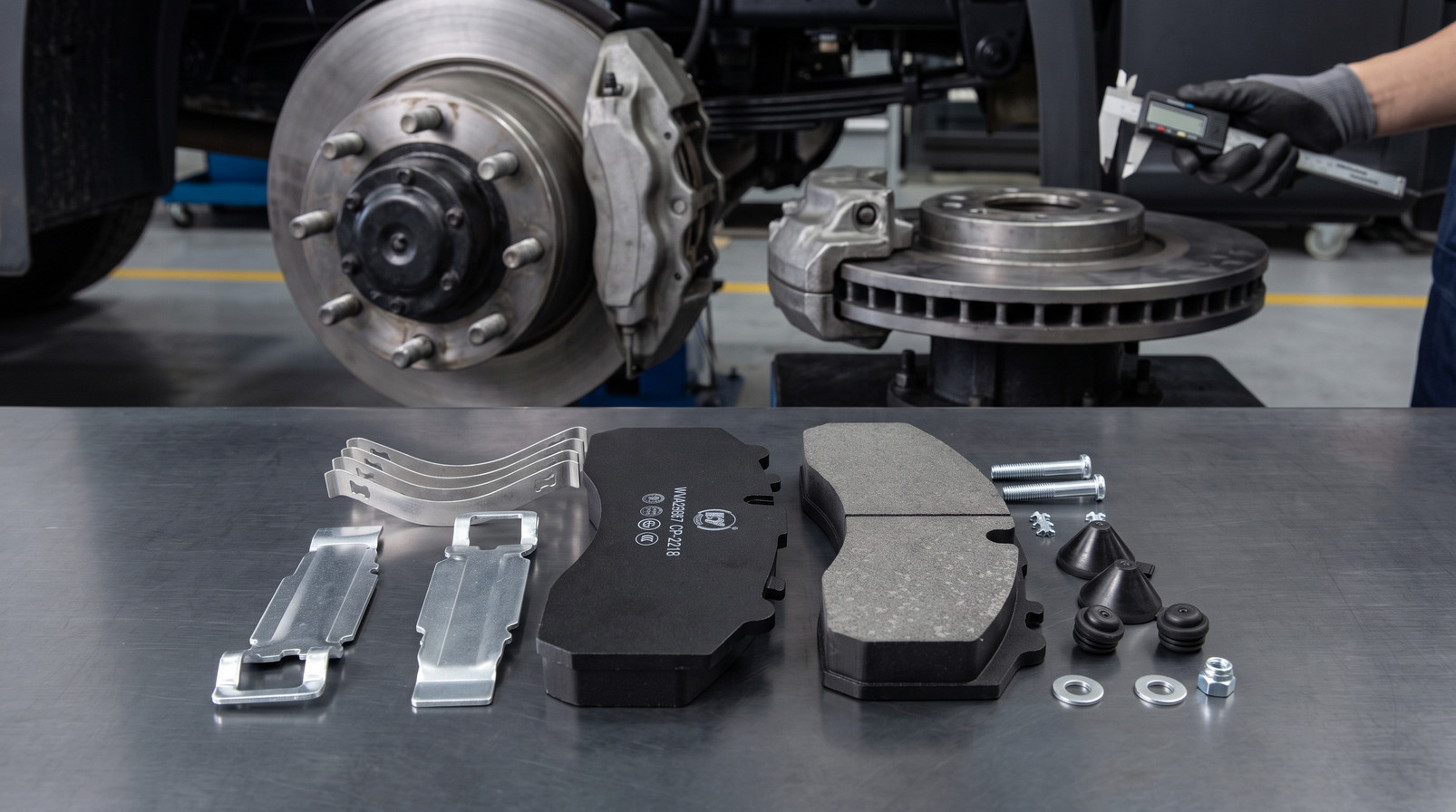
Quick answer: For most heavy-duty trucks and trailers, semi-metallic brake pads give the best balance of heat tolerance, pad life, and cost per kilometer. Ceramic compounds reduce noise and dust for regional haulers, while organic pads suit light-duty or low-speed applications only. Your real decision hinges on axle load, braking duty cycle, and fitment verification. We'll cover the material trade-offs, a specification table, and a replacement checklist below.
Which Brake Pad Material Holds Up on a Loaded Semi?
A 40-ton combination truck descending a 6% grade generates enough heat to push brake pad surface temperatures past 600°C. That's the reality behind choosing disc brake pads for commercial vehicles: the material has to work when the rotor is already glowing hot. Three material families dominate the commercial vehicle aftermarket.
Semi-metallic pads contain 30–65% steel, iron, or copper fibers mixed with graphite and high-temperature resins. The metallic content pulls heat away from the rotor face, which is why they survive repeated hard stops from highway speed. Ceramic pads use ceramic fibers and nonferrous fillers. They run quieter, dust less, and keep wheel rims cleaner on regional delivery trucks and buses. Organic pads—non-asbestos organic compounds—work well only in light-duty, low-speed, or older drum-compatible setups where temperatures stay below 250°C.
Most fleets don't actually care about the chemistry. They care about cost per kilometer, brake fade, and whether the pad matches original equipment fitment. That's why semi-metallic pads still account for roughly 7 out of 10 heavy-duty truck pad sales in the global aftermarket, based on supplier shipment data BAIYUN Brake reviews annually. If you're evaluating pads for a mixed truck fleet, start with a wholesale CV brake pads inquiry to see how material options map to axle positions.
What Do the Three Materials Actually Trade Off?
Let's put the marketing aside. Here's a side-by-side look at what matters for a commercial vehicle buyer sourcing 300 to 1,000 sets a month.
| Material Type | Typical Friction Coefficient (μ) | Heat Tolerance | Best Application | Main Trade-off |
|---|---|---|---|---|
| Semi-metallic | 0.35–0.45 | Up to 650°C | Long-haul trucks, loaded trailers, buses | Higher rotor wear; moderate dust |
| Ceramic | 0.32–0.42 | Up to 500°C | Regional delivery, urban buses, refuse trucks | Higher pad cost; slightly less bite at low temp |
| Organic (NAO) | 0.28–0.38 | Up to 250°C | Light-duty trucks, low-speed vocational vehicles | Faster wear; fade under heavy load |
Don't read those friction numbers as absolute. ECE R90 approval requires a formula to stay within ±15% of its reference coefficient across the full temperature cycle, so a certified ceramic pad might outperform an uncertified semi-metallic pad from an unknown factory. The certification matters more than the material label.
For a fleet running 120,000 km a year, a semi-metallic pad that lasts 30% longer and costs 18% less per kit than a premium ceramic pad often wins—unless the municipality specifies low dust. I've seen that exact debate in city bus tenders. Ceramic wins on wheel cleanliness and noise, not necessarily on price. If your truck uses drum brakes on the trailer axle, request a quote for commercial vehicle brake linings—the material logic changes for drum friction surfaces.
How Do You Verify Fitment Before Signing a Container Order?
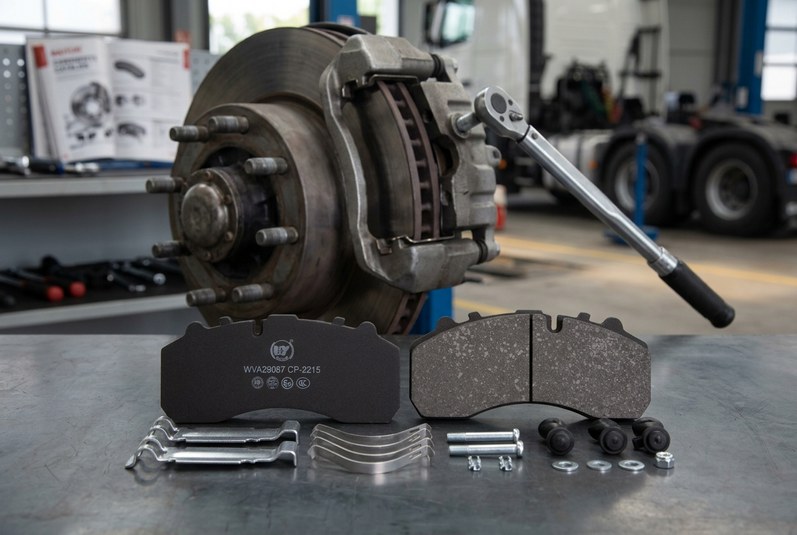
A distributor in Southeast Asia once ordered 2,000 sets based on a photo and a part number that looked right. The pads arrived with the wrong retainer clip orientation. Half went back. Fitment verification isn't paperwork—it's the difference between a repeat customer and a chargeback.
Before you confirm any truck brake pad order, run through this checklist:
- OEM or cross-reference number: Match the original equipment part number to the supplier's part number. If no number is supplied, write Confirm with supplier catalogue.
- Axle position and wheel end type: Steer axle, drive axle, and trailer axle often use different friction formulations and backing plate designs.
- Disc brake vs. drum brake: Disc brake pads and drum brake linings are not interchangeable. Confirm your application before quoting.
- Caliper manufacturer and model: Meritor, WABCO, Knorr-Bremse, Haldex, and BPW calipers all use different pad spring and abutment designs.
- Pad width, length, and thickness: Cross-check against supplier drawings. A 3 mm difference in overall thickness can trigger installation problems.
- Wear sensor or indicator requirement: Specify if the truck uses electronic wear sensors or mechanical clips.
- ECE R90 approval marking: Ensure the pad carries the approval number for the intended market. Some Gulf and African markets will reject non-R90 stock at customs.
BAIYUN Brake publishes material data sheets for commercial vehicle applications because importers need more than a photo to validate fitment. You'll want the friction curve, wear rate, and dimensional drawing in one file.
What Replacement Checklist Keeps a Fleet Rolling Without Surprises?
Replacement intervals on a 40-ton truck can range from 80,000 km to 200,000 km, depending on terrain and pad material. That's a huge range. The only way to hit the high end is to treat replacement like a system check, not a pad swap.
My go-to replacement sequence for mixed commercial fleets:
- Measure remaining pad thickness across all pads on the axle. Uneven wear across the same caliper often points to a seized guide pin or a failing brake chamber.
- Inspect the rotor or drum surface. If the rotor has deep scoring or heat cracks, new pads will wear prematurely.
- Check the caliper guide bolts and dust boots. A stiff caliper will drag, overheat the pad, and cut pad life by 40% or more.
- Verify running clearance after installation. Too little clearance builds heat; too much clearance delays brake response. For drum applications, review the supplier's brake lining installation guide.
- Bed in the new pads. On a controlled route, perform 15–20 moderate stops from 60 km/h to 20 km/h without coming to a full stop. This transfers a uniform friction film to the rotor.
- Log the replacement date and mileage. This gives you real data for comparing material choices next year.
If your maintenance team skips bedding, they'll blame the pad supplier for poor initial bite—when the real problem is a glazed surface. I've seen that misunderstanding cost a supplier a contract. Don't let it happen to your fleet.
Frequently Asked Questions for Commercial Vehicle Buyers
What is the best brake pad material for trucks that carry heavy loads?
Semi-metallic pads usually handle heavy loads best. Their 0.35–0.45 friction coefficient and 650°C heat tolerance give consistent stopping on long grades. Ceramic pads work for heavy loads only if the duty cycle stays moderate and noise control is a priority.
Are ceramic truck brake pads worth the higher cost?
It depends on the route. Ceramic pads reduce dust and noise by roughly 20–30% compared with semi-metallic pads, which matters for urban buses and delivery trucks. If your fleet runs loaded long-haul, the extra cost rarely improves pad life enough to justify it.
How do I know if a truck brake pad is ECE R90 certified?
Look for the ECE R90 approval mark on the pad backing plate or packaging. The approval number includes the country code, regulation number, and approval serial. If a supplier can't show the certificate for the specific part number, walk away.
How often should heavy-duty truck brake pads be replaced?
Replacement intervals vary from 80,000 km to 200,000 km. Terrain, axle load, and material type drive that spread. Measure pad thickness every service interval and replace before friction material drops below the manufacturer's minimum spec, typically 2–3 mm above the backing plate.
Can I mix brake pad materials on different axles?
You can, but match the formulation to the work. Many fleets run semi-metallic pads on the steer axle and ceramic pads on the drive axle to manage noise. Just don't mix materials on the same axle—that creates uneven braking and premature wear.
What's the Sourcing Angle for Importers and Distributors?
If you're importing 500 or 5,000 sets a quarter, the material question is only half the story. The other half is whether the supplier's batch consistency, certification file, and dimensional accuracy hold up over repeated orders. A pad that passes one lab test but drifts in production will cost you more in warranty than the margin you saved.
BAIYUN Brake runs an IATF 16949 certified facility with ECE R90 approval across its commercial vehicle range. We've supplied distributors in 40+ countries, and we keep friction coefficient drift below ±0.03 across production runs—something we track with SAE J2522 dynamometer tests, not just once a year.
For buyers who need bulk truck brake pads with verified fitment and export documentation, request OEM commercial vehicle brake pad quote or submit your inquiry to our sales team. We'll help you match axle positions, verify cross-reference numbers, and lock in lead times.
Was this article helpful?
Average Rating: 5/5 (332)