
Fleet brake pad sourcing checklist: Practical Guide for Commercial Vehicle Buyers
Summary:
Fleet brake pad sourcing checklist: How commercial vehicle buyers can verify certifications, friction consistency, and fitment before ordering. This practical guide covers ECE R90 evidence, IATF 16949 audit checks, batch-to-batch dynamometer data, WVA reference confirmation, delivery performance, and total cost of ownership for trucks, buses, and trailers. You will find a 10-point buyer verification checklist, a comparison table of acceptable evidence and red flags, and five FAQs targeting distributors and importers. BAIYUN Brake's 49+ years of manufacturing experience and IATF 16949 certified production lines support trial orders and quarterly re-verification. Learn how to avoid batch drift, verify certificate authenticity, and reduce brake-related downtime. Request a wholesale quote to start sourcing with confidence.
Fleet brake pad sourcing checklist: Practical Guide for Commercial Vehicle Buyers
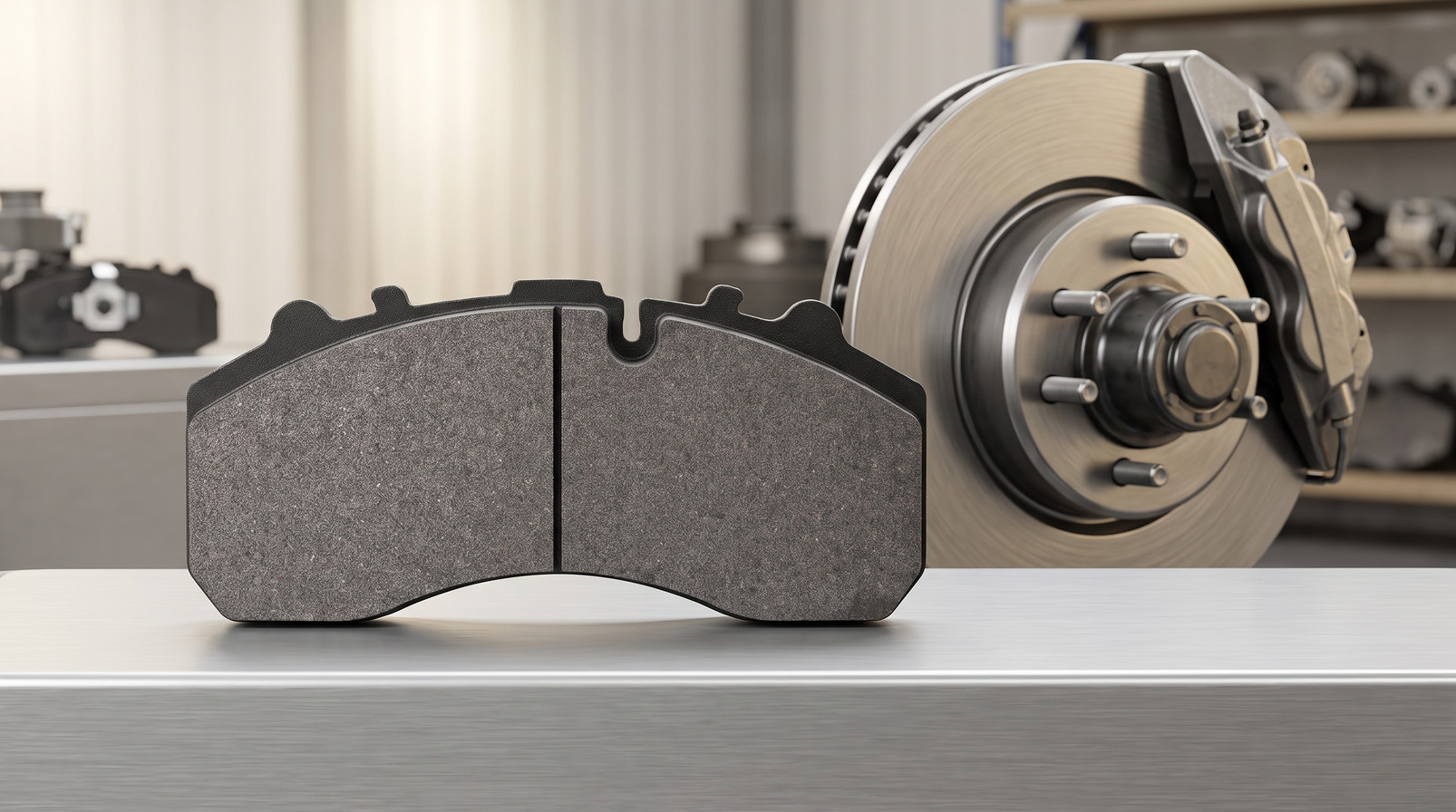
Quick answer: Start with OE and WVA reference numbers for every truck and trailer in your fleet, then request ECE R90 and IATF 16949 documentation from the supplier. Compare friction test reports across at least three production batches, request sample pads for your own validation, and confirm lead times before a container order. A certified manufacturer like BAIYUN Brake reduces warranty returns and unplanned downtime.
Why Should Commercial Vehicle Buyers Treat Brake Pad Sourcing as a Compliance-First Exercise?
A mixed fleet of 40 line-haul trucks can lose $800 to $1,500 per unscheduled brake-related road call, once towing, driver time, and missed delivery windows are factored in. That's the real cost of a cheap brake pad that fades or delaminates early. Fleet buyers don't have the luxury of testing every batch like an OEM might. You need a sourcing process that filters out suppliers before a problem reaches the road.
Brake maintenance often accounts for 20–30% of unscheduled heavy-duty vehicle downtime, based on industry fleet maintenance benchmarks. The cheapest pad is rarely the cheapest choice for a fleet. Think in total cost of ownership, not unit price. Before you commit, browse our heavy-duty brake pad range to see how certified commercial vehicle pads are categorized by fitment and friction family.
Key takeaway: Compliance verification is the foundation of the fleet brake pad sourcing checklist, not a paperwork formality.
What Certifications and Test Reports Must a Fleet Brake Pad Supplier Provide?
A supplier can tell you their pads are ECE R90 approved
in a sales email. That means little until you see the numbered certificate and match it to the batch code on the box. Request certification documents showing test laboratory details and approval scope. If the certificate doesn't list the exact pad assembly you're buying, treat it as unverified.
What Does ECE R90 Actually Test for Commercial Vehicle Pads?
ECE R90 requires replacement brake pads to achieve at least 90% of the original equipment cold performance, measured on a dynamometer under specified inertia and temperature conditions. It also evaluates speed sensitivity, cold performance equivalence, and lining recovery. A pad that passes ECE R90 has demonstrated legal minimum performance; it hasn't automatically demonstrated 300,000 km wear life or quiet operation.
Why Does IATF 16949 Matter for Fleet Buyers?
IATF 16949 certification signals that the manufacturer maintains defect prevention and traceability systems, not just final inspection. A mature IATF 16949 certified facility typically targets defect rates under 100 ppm and can provide audit summaries on request. Ask for the last external audit date and the scope of the certificate.
Key takeaway: Certificates are only useful if the batch codes on the physical product match the documents, and the test lab details are independently verifiable.
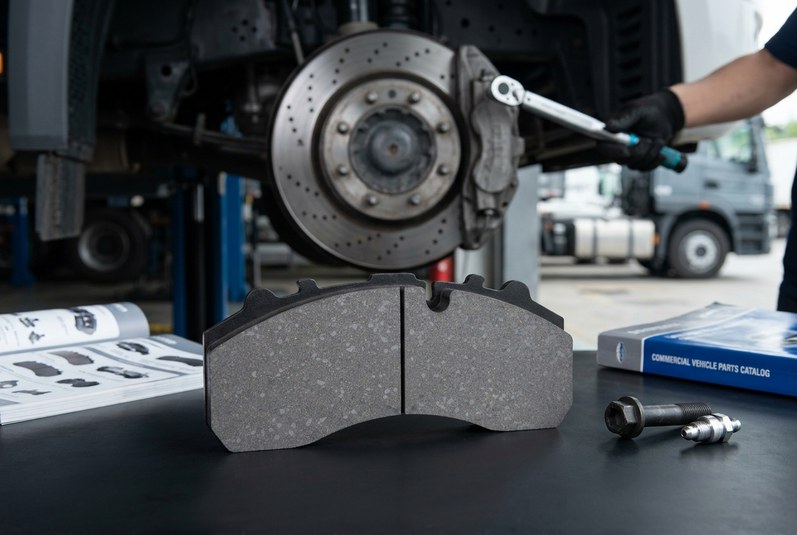
How Can You Verify Friction Consistency and Pad Life Before Committing to a Container Order?
Batch #7 behaving differently from batch #1 is the quickest way to trigger driver complaints and warranty returns. Friction coefficient drift of just 0.03 can alter stopping distance by more than 5% on a loaded tractor-trailer. Ask for dynamometer test reports from three non-consecutive production batches, not just a single golden sample. For drum-brake fleets, the same logic applies—request a wholesale CV brake lining inquiry that includes batch friction data, not just a price list.
Heavy-duty truck and bus disc brake pads typically operate with a friction coefficient of 0.36–0.42 across the 100–350°C range. Values below 0.30 often signal excessive high-temperature fade. Batch-to-batch variation should stay within ±0.02. Line-haul tractor-trailers commonly see 200,000–300,000 km per pad set with correct installation and regular adjustment, assuming no severe mountain duty cycles.
Key takeaway: Demand dynamometer data from multiple batches and validate at least one batch yourself before integrating a new pad into fleet-wide maintenance schedules.
What Fitment Data and WVA Numbers Do Fleet Buyers Need to Lock Down?
Exact fitment is where most sourcing mistakes happen. A mixed fleet of European and North American trucks can require 20 to 40 distinct pad references, and guessing is not a sourcing strategy. Identify each reference by OEM and WVA number before requesting pricing. Specific WVA numbers, dimensions, and OE cross-references for BAIYUN Brake products: Confirm with supplier catalogue.
| Checklist Area | What to Verify | Acceptable Evidence | Red Flags |
|---|---|---|---|
| Regulatory approval | ECE R90 certificate number and scope | Certificate lists the exact pad assembly; batch code matches | Generic certificate covering other part numbers |
| Quality system | IATF 16949 / ISO 9001 status | Last external audit date within 12 months; audit summary provided | No documented internal audits or expired certificate |
| Friction stability | Dynamometer reports across 3+ batches | Coefficient 0.36–0.42; variation ≤ ±0.02 | Data from only one batch or unexplained spikes |
| Fitment data | OEM and WVA cross-reference for every vehicle | Supplier confirms each reference before order | Vague 'fits most trucks' language |
| Batch traceability | Batch codes on packaging match certificates | Printed batch code and readable QR link to test summary | Handwritten labels or missing batch code |
| Delivery performance | Lead time and on-time rate | 95%+ on-time history over two peak seasons | Peak-season lead time doubles without notice |
Key takeaway: Fitment errors don't show up in a certificate; they show up as stuck calipers, premature wear, and inventory dead stock.
What Does a Practical Fleet Brake Pad Sourcing Checklist Look Like?
Here's a 10-point checklist used by distributors and fleet managers before placing a purchase order. Don't skip the sample validation step, even if the supplier has great paperwork.
- Request the ECE R90 certificate and match the batch code on every box.
- Ask for IATF 16949 audit status and the last external audit date.
- Request dynamometer friction test reports for three non-consecutive production batches.
- Confirm WVA numbers and OEM fitment for every vehicle class in your fleet.
- Request sample pads for third-party or in-house dynamometer validation.
- Confirm MOQ, lead times, packaging standards, and warranty terms in writing.
- Check the supplier's on-time delivery rate for the last two peak seasons.
- Request a written batch traceability and recall procedure.
- Review rotor wear and noise test data if available.
- Negotiate a trial order before committing to full container volumes.
Key takeaway: A disciplined checklist cuts supplier qualification time from weeks to days and prevents costly brake-related road failures.
How Does BAIYUN Brake's Production Data Support Fleet Buyer Verification?
Fleet buyers often ask what real verification looks like from a manufacturer. In BAIYUN Brake's 2025 dynamometer testing, a commercial vehicle disc brake pad formulation maintained a friction coefficient of 0.38–0.42 across the 100–350°C range, based on internal test summaries. After 200 thermal cycles, friction variation stayed within ±0.02, consistent with ECE R90 equivalence thresholds. That's the kind of data a serious supplier should be willing to share, not hide behind an NDA.
BAIYUN Brake brings our 49+ years of manufacturing experience to fleet brake pad sourcing, with IATF 16949 and ECE R90 certified production lines. For a mixed commercial vehicle fleet, that means one supplier can cover disc brake pad and brake lining requirements under a consistent quality system.
Key takeaway: A manufacturer that publishes batch friction data and supports trial orders gives fleet buyers a repeatable verification path, not a one-time promise.
What Are the Most Common Misconceptions About Fleet Brake Pad Sourcing?
Misconception: All ECE R90 approved pads are identical in quality. → Reality: ECE R90 only establishes minimum legal performance equivalence; it does not cover noise, wear life, or batch consistency. Two certified pads can differ widely in durability and driver satisfaction.
Misconception: Higher price always means longer pad life. → Reality: Total cost depends on friction stability, rotor wear, and vehicle duty cycle. A pad that saves $2 per unit but accelerates rotor wear by 15% often costs more per km in the long run.
Misconception: Once a supplier is approved, you can skip re-verification. → Reality: Production creep happens. Re-check batch certificates and friction test reports at least quarterly; reputable manufacturers like BAIYUN Brake provide these to qualified fleet customers.
Key takeaway: The strongest sourcing relationships are built on recurring verification, not a single passed audit.
What Are the Most Frequent Fleet Brake Pad Sourcing Questions From Importers?
Q: What is the first step in a fleet brake pad sourcing checklist?
A: Confirm exact fitment for each vehicle in the fleet using OEM references and WVA numbers, then request an ECE R90 certificate. A qualified supplier should provide batch traceability documents within 48 hours.
Q: How do I verify a supplier's ECE R90 certificate is genuine?
A: Ask for the certificate number and testing laboratory details, then match the batch code on the packaging. Genuine documents reference specific pad assemblies, not a universal range.
Q: What friction coefficient should commercial vehicle brake pads have?
A: Heavy-duty truck and bus pads typically operate at 0.36–0.42 across the 100–350°C range. Values below 0.30 often indicate excessive fade or poor high-temperature recovery.
Q: How can fleet buyers reduce total brake maintenance cost without sacrificing safety?
A: Buy from suppliers with documented batch consistency and ECE R90 performance. Stable wear rates and predictable friction cut unscheduled downtime by up to 20–30% in mixed fleets.
Q: What is the minimum order quantity (MOQ) for fleet brake pad sourcing?
A: MOQs vary by manufacturer. BAIYUN Brake offers flexible trial orders for qualified fleet buyers and distributors; always confirm lead times and buffer stock before committing to a full container.
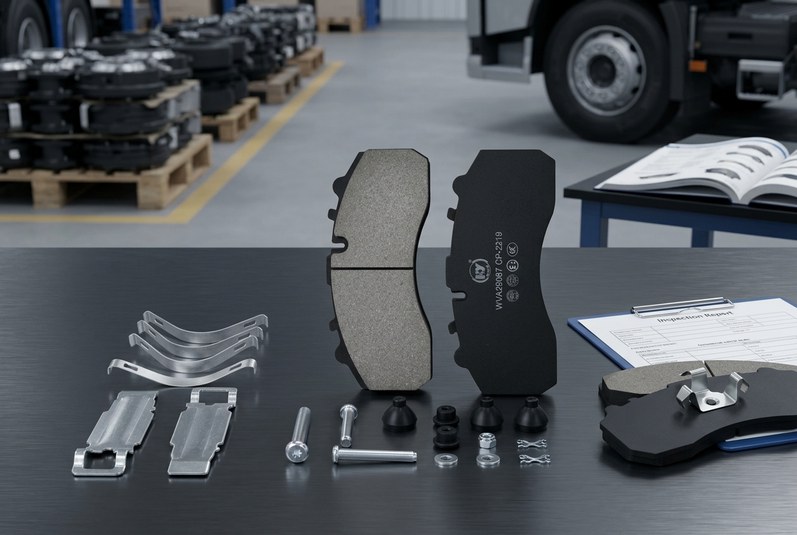
How Should You Start Your Fleet Brake Pad Sourcing Conversation?
Start with a short list of your fleet's top 10 brake pad references. Send those WVA numbers to BAIYUN Brake and ask for certification evidence, batch friction data, and a trial order quote. You'll know within a week whether the supplier can back up its claims. For a reliable starting point, request OEM commercial vehicle brake pad quote and let our team match your fleet to the right friction family. Then request a wholesale quote to lock in MOQ and lead time terms.
Was this article helpful?
Average Rating: 5/5 (295)